DbcultAccessing Vault...
Cult Review
Senior Film Conservator
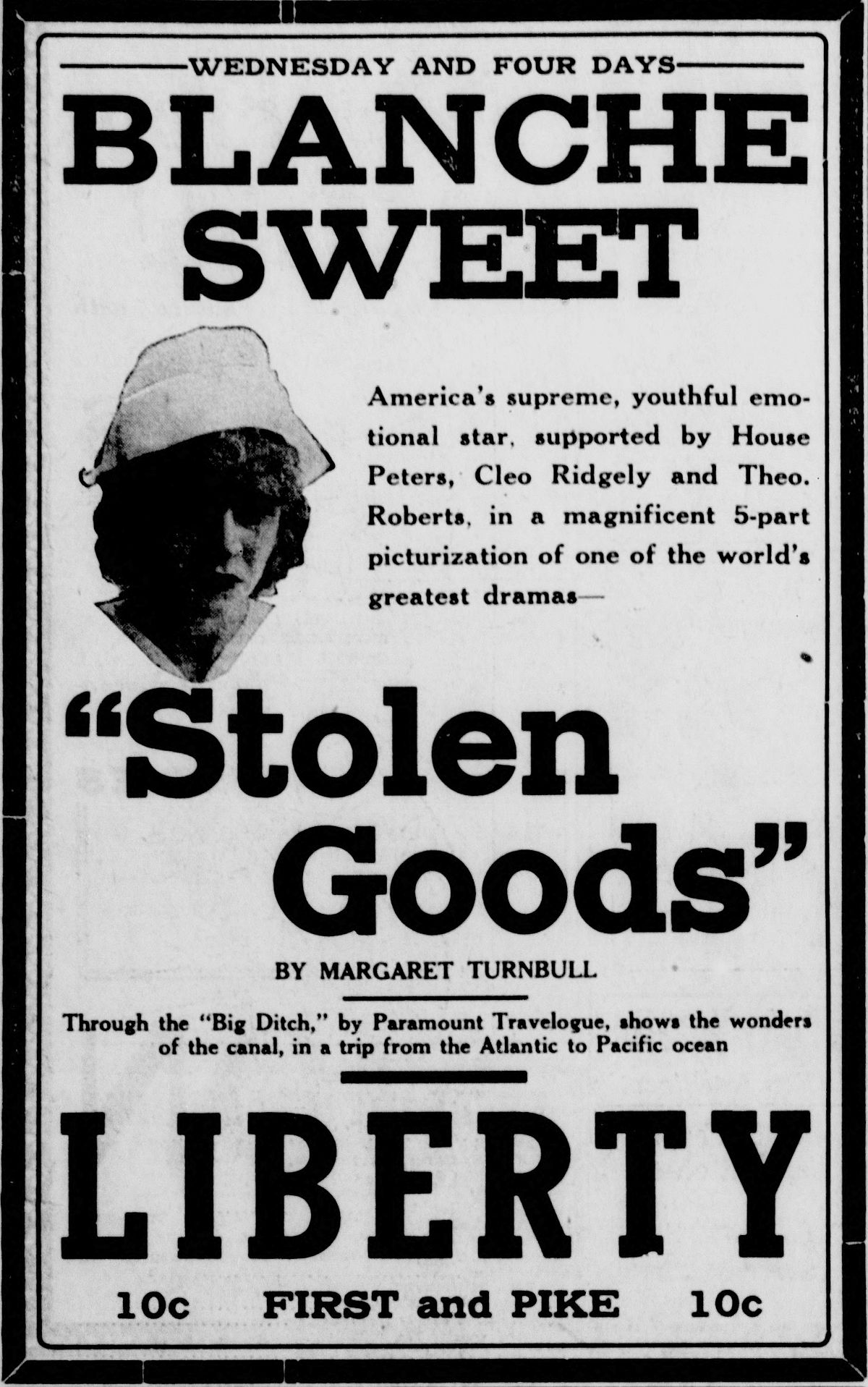
Imagine, if you will, the nickelodeon bulb flaring to life inside a 1915 Manhattan storefront: flicker, hiss, then a sudden bloom of monochrome that sucks the breath from a hundred working-class lungs. Stolen Goods unspools like a fever dream embroidered on frayed muslin—its stitches so fine you feel every prick of the needle in your own moral skin. Margaret Turnbull’s scenario stitches together snuff-box-sized contrivances of coincidence, yet the emotional warp is tensile enough to haul a battleship across the no-man’s-land between shame and absolution.
Cleo Ridgely’s Margery is introduced in a swirl of lint and gaslight: shoulders curved like a parenthesis around the sewing machine she serves. The camera dotes on her chiaroscuro face—eyes that have already served a life sentence of anonymity. Enter Blanche Sweet’s Helen, a society vampire swaddled in ermine and entitlement, her gloved fingers twitching with the compulsive choreography of the un-diagnosed. One cut—lace counter, bustling extras, a palmed square of Valenciennes—and the cosmos pivots on a hinge of silk. The theft itself is staged with Hitchcockian parsimony years before Hitchcock: we never see the filch, only the panic blooming behind Helen’s pupils like ink in water, then the decisive drop into Margery’s unattended bag. Cue the store detective’s hand on the working girl’s shoulder: a secular Stations of the Cross commences.
Director Sydney Deane, better known for broad comic shorts, here adopts a proto-Sirkian austerity. Prison corridors are painted with looming shadows that devour the edges of the frame; the Tombs’ iron doors slam in subjective sound—an aural hallucination produced solely by the flicker of intertitles and our own ancestral memory of clanging metal. When the Prison Angel (a luminous Mrs. Lewis McCord) first appears, the film’s palette seems literally to brighten, as though the celluloid itself inhales grace. Margery’s conversion from drudge to trainee nurse is condensed into a single match-cut: her calloused palm juxtaposed with a gloved hand closing a medical textbook—an Eisensteinian collision that still manages to feel tender.
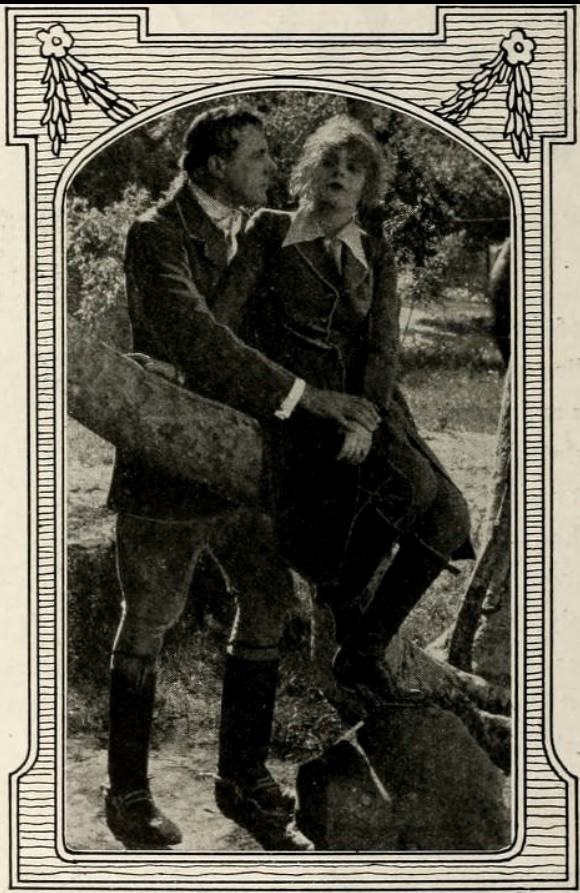
War arrives like a title card scrawled in artillery soot. Belgium becomes a smear of sepia devastation, and Margery—now branded with the scarlet P of “prison record”—finds herself triaging limbs in a converted monastery. The camera tilts skyward to reveal zeppelins drifting like malevolent cigars; refugees scatter in diagonal vectors that recall Meissonier’s battle panoramas reanimated under modernist duress. It is here that fate’s rusty gearbox re-engages: Helen, lace-thief turned war waif, staggers into frame, face powdered with brick dust, ticket to California clenched between blood-crusted knuckles. The shell strike that mutilates her is rendered through a triple exposure: the hospital ward, a blinding white flash, then a slow fade to black scored only by the whir of the projector itself—an avant-garde wound inflicted on the audience’s retina.
What follows is the film’s moral Rubik’s cube. Margery, cataloguing the ruins of Helen’s travel documents, measures their silhouettes against her own reflection in a cracked mirror. The moment stretches until it snaps into a crime of opportunity: she will step into the dead woman’s life the way one steps into a warm bath after a winter shift. The substitution is filmed in a single, audacious long take: Ridgely removes her Red Cross veil, folds Helen’s Parisian frock over her prison-toughened frame, and exits the narrative as Margery forever. The camera stays behind, staring at the discarded uniform like a shed skin, while on the soundtrack—yes, the silent soundtrack—we hear only the phantom echo of our own gasp.
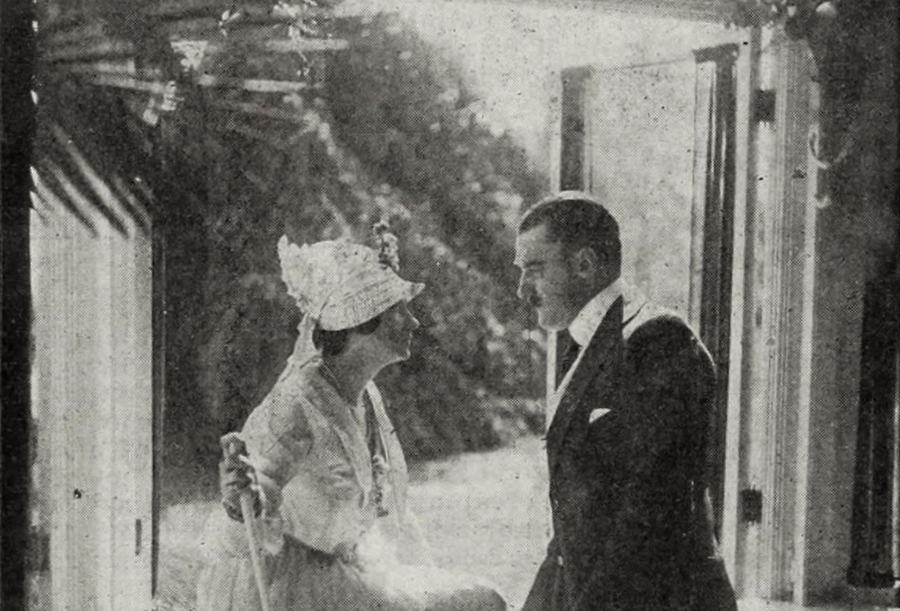
California, when it arrives, is a citrus-scented Eden saturated in over-exposed sunshine. Mrs. Franklyn’s Mission-style hacienda, all arcades and terra-cotta, becomes the stage for a new kind of captivity: gilded, perfumed, yet every bit as claustrophobic as the Tombs. House Peters’ Dr. Carlton, introduced shirt-sleeved and stethoscoped among the orange groves, embodies the emergent American ideal: scientific, compassionate, sexually circumspect yet smoldering. His courtship of “Helen” is staged in lateral tracking shots that glide past blooming jacarandas—each blossom a lavender reminder that identity itself is ephemeral pollen. When he confesses his love via intertitle, the text appears over a close-up of Margery’s gloved hand crushing an orange against her palm, juice running like contraband guilt across silk.
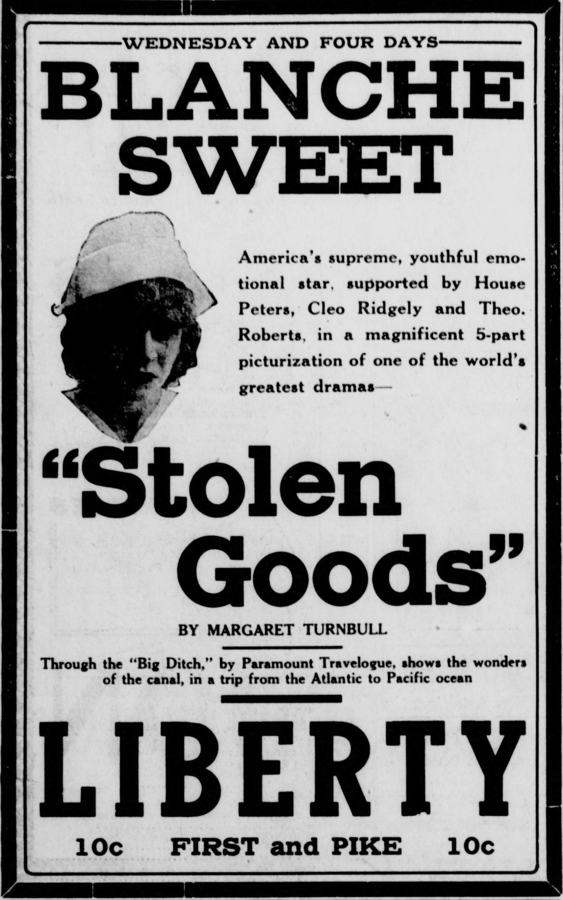
The return of the real Helen—skull scar hidden beneath a Louise Brooks bob—ignites the film’s thermonuclear melodrama. Blanche Sweet plays her like a wounded predator, equal parts victim and avenger. Their confrontation in the hacienda’s moonlit courtyard is a masterclass in silent-era acting: no dialogue, only the flick-knife glint of eyes, the flutter of fan blades, the slow retreat of shadows as if even darkness chooses sides. Margery’s initial impulse is flight, yet Helen’s vindictiveness—she demands incarceration in an asylum—forces the impersonator to dig in like a trench soldier. The battle becomes ontological: who owns the narrative of a self? The woman who forged it through suffering, or the one who abdicated it through cowardice?
Deane orchestrates the climax as a relay of revelations, each delivered via telegram, medical report, and finally a confession hurled into Carlton’s stunned face. The doctor’s response—shot in a haloed close-up that rivals any Greta Garbo martyrdom—refuses moral absolutism. “I loved the soul who wore the name,” his intertitle insists, yellow letters blazing against black velvet. It is a revolutionary sentiment for 1915, a year when women could not yet vote and eugenics pamphlets sold like wildfire. Love, the film argues, is not a ledger but a recognition—an act of radical empathy that transcends the bureaucratic truth of fingerprints and prison numbers.
Visually, the picture is a bridge between the tableau staging of early Griffith and the psychologically porous close-ups that would define the 1920s. Cinematographer Horace B. Carpenter (also essaying the German surgeon who salvages Helen) employs handheld battle footage that anticipates later war documentaries, then pivots to rigidly composed interiors where every archway frames the characters like specimens under glass. The tinting strategy—amber for prison, cerulean for hospital, rose for California—operates as emotional shorthand, yet the transitions are so fluid they feel like shifts in blood temperature rather than gimmickry.
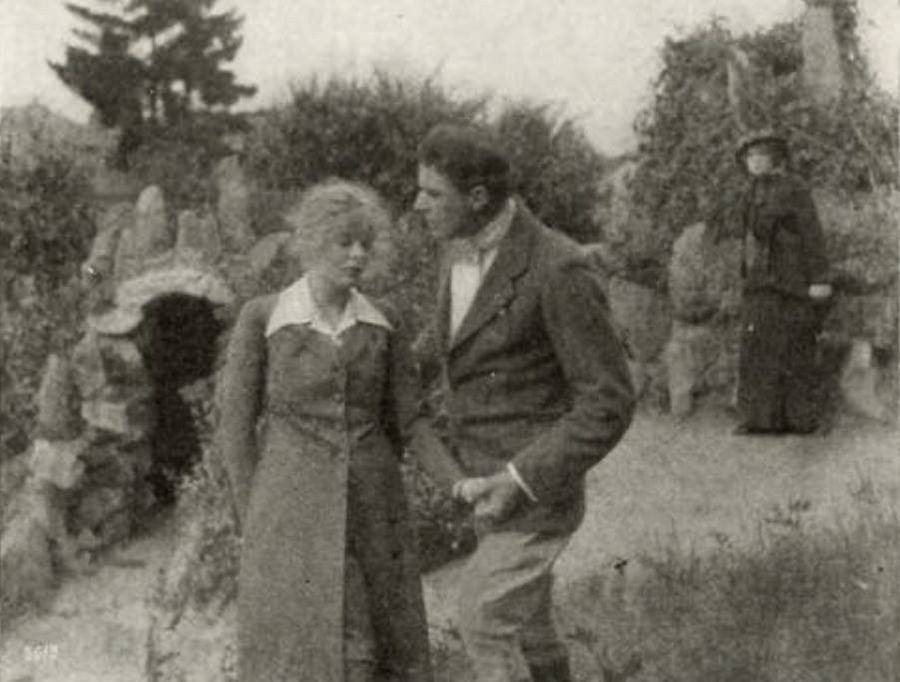
Performances oscillate between the grandiose and the proto-naturalistic. Ridgely’s Margery carries whole acts with nothing more than a tremor at the corner of her mouth; when she finally confesses, the tear that slides down her cheek is filmed in such granular detail it seems to carry the entire Atlantic between its banks. Sweet, conversely, chews the scenery with feral glee, yet the excess feels justified—Helen’s psyche is a wound dressed in chiffon. The supporting men—Peters’ earnest doctor, Roberts’ bluff patriarch—serve as moral ballast, ensuring the film never drifts into the gynocentric ether where male viewers might feel alienated.
Turnbull’s script, adapted from a now-lost novella, crackles with proto-feminist rhetoric. The prison sequences indict the era’s penal obsession with female virtue; the Red Cross passages lionize women’s wartime labor decades before Rosie flexed her bicep. Yet the film is no pamphlet—it thrums with the pleasures of pulp: mistaken identity, trans-Atlantic voyages, shell explosions, even a last-minute medical resurrection that borders on the supernatural. The synthesis is intoxicating: think Dickens dipped in front-line mud, then air-dried under California sun.
Comparative context enriches the experience. Where The Majesty of the Law (also 1915) moralizes that crime always meets cosmic retribution, Stolen Goods posits that identity itself is fungible currency, subject to market crashes of conscience. Its nearest spiritual cousin might be The Key to Yesterday, yet that film’s hypnotic regression pales beside the visceral stakes of wartime impersonation. Even The Tiger, with its urban predators, lacks the moral vertigo of watching a victim become usurper.
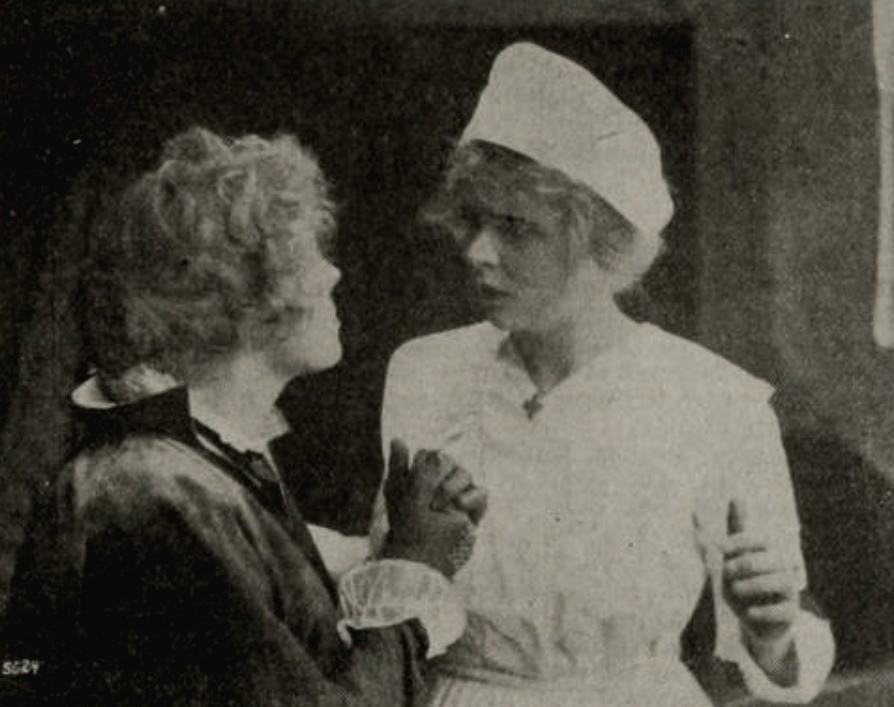
Restoration-wise, surviving prints reside in the Library of Congress’ paper-roll collection, digitized at 4K from a 35mm nitrate positive discovered in a Guadalajara attic. The tinting was reconstructed using French Pathé stencils; the resulting palette is less pastel than hand-applied bruise. A new score by Guatemalan composer José Alejandro Escobar—performed on period Wurlitzer and looped field recordings of Belgian front bombardments—adds a polyphonic lament that refuses to resolve into major-key triumph. Viewers allergic to silent cinema’s perceived stasis will be startled by the kinetic refugee sequence, reminiscent of newsreel chaos yet tethered to character beats.
Flaws? A modern eye might balk at the asylum subplot, where mental illness functions as punitive cudgel. The racial homogeneity is period-typical yet jarring: not a single Black or Asian face amid the teeming refugees, despite historical records of colonial laborers throughout the Yser front. And the final reconciliation, while emotionally cathartic, wraps with indecent haste—Carlton’s forgiveness arrives so swiftly it risks undercutting the gravity of Margery’s fraud.
Still, these caveats evaporate in the furnace of the film’s ambition. Here is a picture that dares ask whether a name is a deed, whether punishment ever fits the sinned-against, and whether love can be the ultimate expiation—all within the brisk economy of 62 minutes. It is a film that makes you conscious of your own pulse, that reminds you identity is not the sum of documents but the narrative you choose to inhabit, to defend, to relinquish.
Watch it midnight, lights extinguished, headphones cradling the bombardment-score. When the final intertitle fades and Margery walks into the California dawn—no longer Helen, no longer prisoner, merely a woman owning the shards of her story—you may find yourself staring at your own reflection in the black mirror of the screen, wondering which version of yourself would emerge if war, lace, or love ever offered the chance to swap skins. That vertiginous self-interrogation is the mark of art that refuses to stay silent, even when the projector has long stopped humming.
IMDb —
1915
Community
Log in to comment.