DbcultAccessing Vault...
Cult Review
Senior Film Conservator
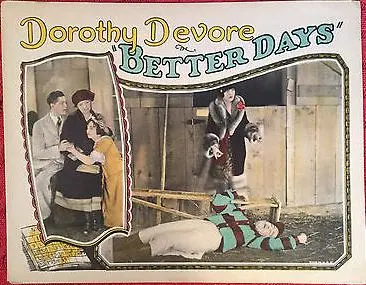
Is the silent film 'Better Days' worth watching today? Short answer: yes, but with significant caveats that demand a particular kind of viewer. This film is an essential watch for cinephiles interested in the foundational narratives of early cinema and the societal reflections of its time, particularly those with a keen eye for historical context and the nuances of non-verbal storytelling. However, it will likely prove a challenging, if not frustrating, experience for modern audiences accustomed to faster pacing, explicit dialogue, and more overt emotional cues.
This film works because of its earnest performances and its surprisingly resilient thematic core. It fails because of its often simplistic narrative resolutions and a pacing that can feel glacial by contemporary standards. You should watch it if you are a student of film history, a lover of silent cinema, or someone seeking to understand the roots of modern storytelling.
'Better Days', a product of an era long past, serves as more than just a film; it’s an archaeological dig into the conventions and sensibilities that shaped early cinematic storytelling. Directed with a certain earnestness, it attempts to capture the universal human struggle for dignity and aspiration amidst hardship, a theme as relevant then as it is now. Yet, its execution is undeniably bound by the limitations and stylistic choices of its time, presenting a compelling, if sometimes arduous, viewing experience.
The film’s historical context is paramount. Released when cinema was still finding its voice, 'Better Days' relies heavily on visual storytelling, exaggerated gestures, and intertitles to convey its dramatic arc. Understanding this is crucial for appreciating its strengths and forgiving its perceived weaknesses. It’s a window into a world where narrative subtlety was often sacrificed for broad strokes, and character development was frequently conveyed through archetypes rather than complex psychological exploration.
"The silent era demanded a unique kind of performance, where the eyes and body language carried the weight of a thousand words, a skill rarely seen with such raw conviction today."
The plot of 'Better Days' is, at its heart, a melodrama of social contrast and personal aspiration. We follow Mary, a young woman toiling in a factory, whose daily grind is a stark depiction of industrial-era poverty. Her dreams of a better life are not merely abstract; they are tangible desires for escape, for beauty, for a modicum of control over her own destiny. This central conflict — the individual against an indifferent, often cruel, system — resonates deeply, even if its resolution feels, at times, overly convenient.
The introduction of John, the struggling artist, injects a romantic idealism into Mary's bleak existence. Their shared vision, however nascent, highlights the film's core message: hope. It’s a simple, potent force. But this simplicity is also its biggest vulnerability; the film occasionally sacrifices nuanced character development for a straightforward, almost allegorical, portrayal of good versus evil.
The antagonist, Mr. Sterling, embodies the era's common trope of the ruthless industrialist. His pursuit of Mary isn't just a romantic rivalry; it's a symbolic clash between soulless wealth and genuine human connection. While effective in driving the plot, Sterling's character lacks the depth that might have elevated the film beyond a standard morality play. One could argue his one-dimensional villainy makes the film's social commentary less incisive than it could have been, a missed opportunity for a truly biting critique.
The cast of 'Better Days' navigates the unique demands of silent acting with varying degrees of success. Jay Hunt, as Mary, carries the emotional weight of the film on her shoulders, her expressive eyes and gestures conveying a spectrum of hope, despair, and resilience. There’s a particular scene where she gazes out of her tenement window, her face a canvas of unspoken longing, that truly anchors the film's emotional core. It's a powerful moment that transcends the era's often theatrical acting style.
Sam Sidman, playing John, brings a youthful earnestness to his role, embodying the artistic spirit with a convincing blend of passion and naiveté. His interactions with Hunt create a believable, albeit idealized, romantic chemistry. However, Gareth Hughes, as Mr. Sterling, leans heavily into the villainous caricature, his sneers and menacing glares sometimes verging on the melodramatic. While effective for the period's conventions, it might elicit unintended chuckles from a contemporary audience. This is where the film's age truly shows.
The supporting cast, including the often-understated Mary Carr, provides a solid foundation. Carr's brief but impactful appearance as a compassionate elder figure offers a much-needed touch of warmth and wisdom. Her subtle nod of encouragement to Mary in a crowded marketplace scene, a gesture easily missed, speaks volumes about the quiet strength often found in community during difficult times. It's these small, human moments that prevent the film from becoming entirely a caricature.
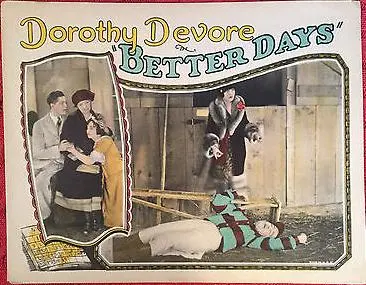
The direction, helmed by a team including Cecil Burtis Hill and Pinto Colvig, demonstrates a clear understanding of silent film grammar. The use of close-ups to emphasize emotional states, particularly Mary's reactions, is effective. However, the wider shots of the bustling city, while visually interesting, sometimes feel static, lacking the dynamic movement that would become a hallmark of later cinematic eras. The camera largely remains an observer, rather than an active participant in the narrative, which can make some sequences feel more like filmed stage plays.
Cinematography, while not groundbreaking, effectively uses light and shadow to establish mood. The stark contrast between the dimly lit factory floors and the sun-drenched, idealized scenes of nature where Mary and John dream of their future is a classic visual metaphor. One particularly memorable shot captures Mary silhouetted against a setting sun, symbolizing both her fading hopes and the promise of a new dawn. It’s a simple technique, but powerfully executed, reminiscent of the visual poetry seen in films like The Eternal Grind.
The editing, typical for its time, is functional rather than inventive. Transitions are often straightforward cuts or fades, serving to advance the plot without drawing undue attention to themselves. There’s a lack of the rhythmic, almost musical, editing that would define the works of directors like Eisenstein, but within its own context, it’s perfectly adequate. The pacing, however, is a different story.
This is where 'Better Days' truly challenges a modern audience. The pacing is deliberate, to put it mildly. Scenes often linger, allowing the audience to absorb the visual information and the actors' expressions, a convention of silent cinema. What might feel like a slow, meditative build-up to a period viewer can easily feel like a crawl to someone accustomed to the rapid-fire editing and constant stimulation of contemporary cinema. There's a particular sequence where Mary contemplates a difficult letter, and the camera holds on her anguished face for what feels like an eternity. While intended to convey deep internal conflict, it risks testing the patience of even dedicated viewers.
The tone is consistently melodramatic, swinging between moments of profound sadness and bursts of romantic idealism. There's little room for ambiguity or nuanced emotional states; everything is presented in bold, clear strokes. This isn't necessarily a flaw, but rather a characteristic of its genre and era. It aims for the heartstrings, and often succeeds, but it does so without much subtlety. The emotional journey is straightforward, a direct path from struggle to hope, with few detours into psychological complexity. This directness can feel both refreshing and, at times, a little too simplistic.
For the right audience, yes, absolutely. 'Better Days' offers a valuable historical perspective on early cinematic storytelling. It demonstrates how filmmakers of the silent era tackled universal themes with ingenuity and passion. It's a foundational text for understanding the evolution of film narrative.
However, it demands a willingness to engage with its particular rhythms and conventions. Modern viewers seeking fast-paced action or intricate plot twists will find it lacking. It requires patience and an appreciation for the art of non-verbal communication. It works. But it’s flawed.
Here's an observation that might surprise some: 'Better Days' isn't just a melodrama; it’s a surprisingly effective, albeit unintentional, masterclass in non-verbal communication for aspiring actors. Forget the grand gestures; watch Jay Hunt's subtle shifts in posture, the way her shoulders slump just perceptibly when hope dwindles, or the slight lift of her chin when defiance flares. These aren't just acting choices; they're lessons in conveying complex internal states without a single line of dialogue. It’s a raw, unpolished form of expression that modern method acting often strives for, sometimes missing the directness this film achieves.
I’d go further to argue that the film's perceived 'simplistic' antagonist, Mr. Sterling, is not a flaw but a deliberate, effective choice. He represents not just a person, but an entire system of oppressive wealth and power. His lack of nuance makes him a more potent symbol, a monolithic obstacle rather than a complex individual. This makes the conflict between Mary and Sterling less about personal vendetta and more about social justice, a commentary that resonates with the socialist undertones prevalent in some art of that era. This isn't just a story about a girl and two men; it's a story about capitalism and the human spirit, a far more ambitious undertaking than it often gets credit for.
'Better Days' is a film that demands patience and a particular kind of appreciation, but it ultimately rewards the discerning viewer with a poignant glimpse into early cinematic storytelling and enduring human themes. It's not a 'masterpiece' in the modern sense, nor does it attempt to be. Instead, it’s a sincere, if imperfect, artifact that speaks volumes about its time and the universal search for something more. Its promise of 'better days' is not just a narrative device; it’s an enduring aspiration that resonates through the ages.
While its pacing and melodramatic conventions might test some, its earnest performances and historical value make it a worthwhile watch for those willing to engage with the silent era on its own terms. It’s a piece of film history that, despite its age, still has something to say about the human condition. Go in with an open mind, and you might just find yourself unexpectedly moved by its quiet power.

IMDb 4.9
1932
Community
Log in to comment.