DbcultAccessing Vault...
Cult Review
Senior Film Conservator
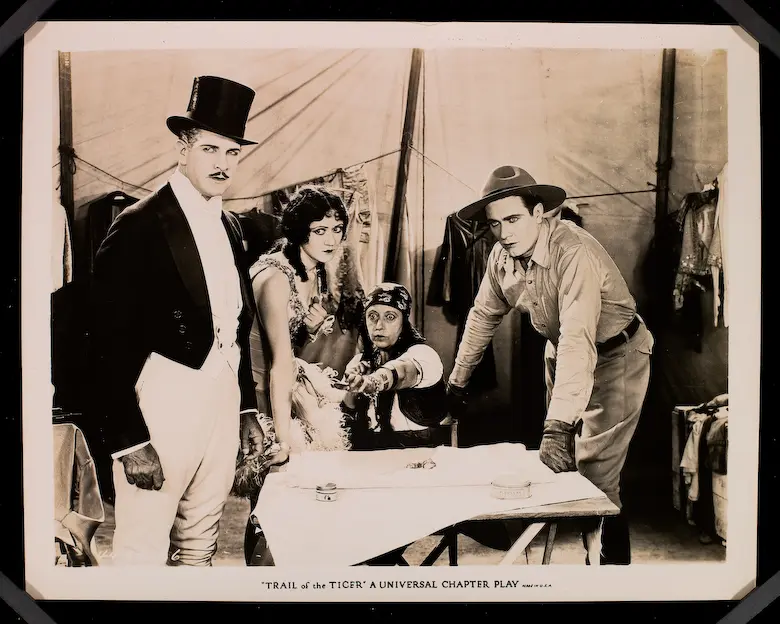
Can a silent film from the early 20th century still hold an audience captive in our fast-paced, sound-saturated world? Short answer: yes, but with significant caveats. The Trail of the Tiger is a fascinating historical artifact that occasionally transcends its era, offering glimpses of genuine adventure and visual storytelling prowess, yet it demands a certain patience from modern viewers.
This film is for the cinephile, the silent film enthusiast, and anyone interested in the foundational elements of the adventure genre. It is decidedly not for those who require constant dialogue, rapid-fire editing, or sophisticated CGI to maintain engagement. If you appreciate the art of visual narrative and the raw charm of early cinema, settle in. If not, you might find its pace a challenge.
This film works because it commits wholeheartedly to its adventure premise, leveraging the visual medium to build a surprisingly effective sense of peril and discovery. It fails because its narrative predictability and the limitations of its era occasionally undermine its potential for deeper impact. You should watch it if you seek an authentic, unvarnished look at early cinematic storytelling and enjoy classic jungle adventure tropes.
In The Trail of the Tiger, the directorial choices, particularly in establishing tone, are a masterclass in silent film ingenuity. The director, working without spoken dialogue, relies heavily on visual cues and the sheer physicality of the performances. From the outset, there’s an underlying tension that permeates the jungle setting, a palpable sense of the unknown that goes beyond mere exoticism.
The film cleverly uses shadow and light to enhance this feeling. When Captain Jack Mower (Jack Mower) first ventures into the deepest parts of the jungle, the cinematography bathes the dense foliage in stark contrasts. This visual language isn't just aesthetic; it’s narrative. It signifies danger, concealment, and the primal struggle inherent in the quest.
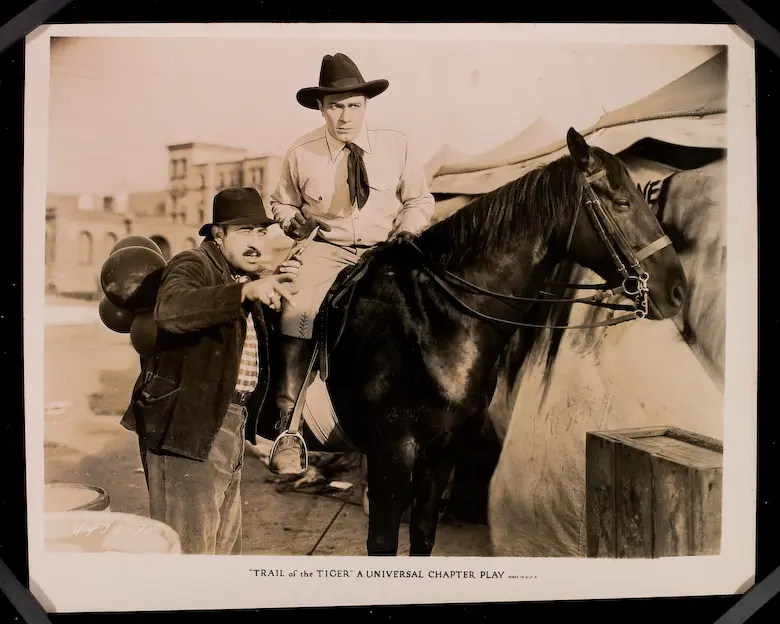
One particularly effective sequence involves the initial 'sightings' of the titular tiger. Instead of showing the beast directly, the film focuses on the terrified reactions of the villagers and the gruesome aftermath of its attacks. This builds a far more potent sense of dread than any direct depiction could have achieved with the special effects of the day. The unseen is often far more terrifying.
The tone oscillates between thrilling adventure and moments of genuine suspense, particularly when the human antagonist, John Webb (John Webb Dillion), makes his presence felt. Webb’s sneering villainy is conveyed through exaggerated gestures and piercing stares, a common silent film trope but effectively deployed here. His actions, rather than the tiger's, often drive the most immediate sense of threat, making him the metaphorical 'tiger' of the title.
There's a certain earnestness to the filmmaking that, while occasionally naive by modern standards, lends the film a charming authenticity. It doesn't attempt to be anything more than what it is: a thrilling tale of good versus evil in a dangerous land. This directness, free from postmodern irony, is surprisingly refreshing.
The cinematography in The Trail of the Tiger is, for its time, quite ambitious. The film makes extensive use of location shooting, which, even through the grainy lens of archival footage, conveys a genuine sense of the wild. The sweeping vistas of the jungle, while likely shot on a studio backlot with cleverly integrated matte paintings, still manage to evoke a grand scale.
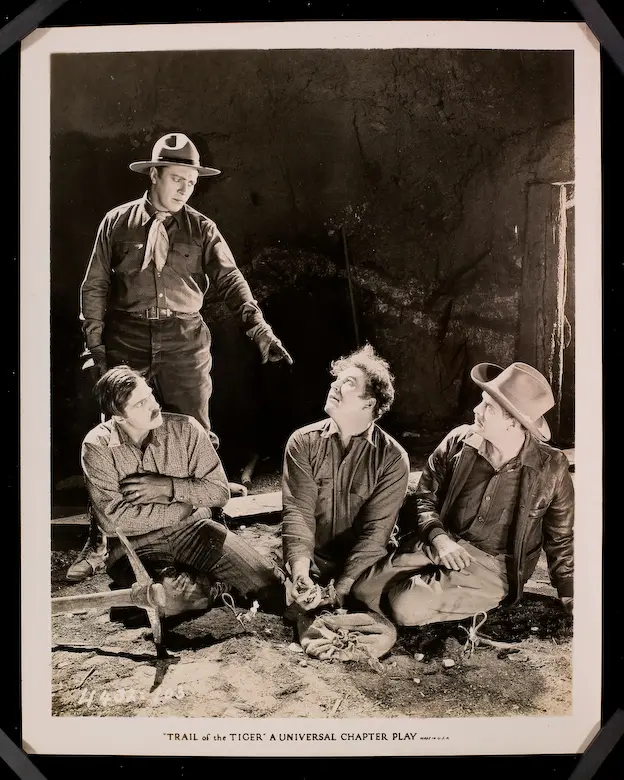
Close-ups are employed strategically to convey emotion, particularly during moments of high drama. When Professor Elara Teague (Frances Teague) realizes the true extent of Webb's treachery, her wide-eyed horror is amplified by a tight shot, allowing the audience to intimately connect with her predicament. This was a sophisticated technique for the era, moving beyond mere tableau shots.
Pacing, as expected with silent films, is a deliberate affair. The narrative unfolds at a measured tempo, allowing scenes to breathe and emotions to register. This isn't to say it's slow; rather, it’s a different rhythm. Action sequences, such as Mower's pursuit of Webb through dense undergrowth, are punctuated by quick cuts and dynamic angles, creating a surprising sense of urgency.
The use of intertitles is, of course, crucial. They serve not just to convey dialogue but also to advance the plot, explain complex motivations, and occasionally inject moments of wry humor. While some might find them disruptive, they are an integral part of the silent film experience, acting as a narrator and translator simultaneously.
One could argue that the film occasionally lingers too long on certain establishing shots or reaction shots, which might test the patience of a contemporary viewer accustomed to rapid-fire editing. However, this deliberate pacing also allows for a deeper appreciation of the visual storytelling, forcing the audience to actively engage with the imagery rather than passively consume it. It’s a give and take.
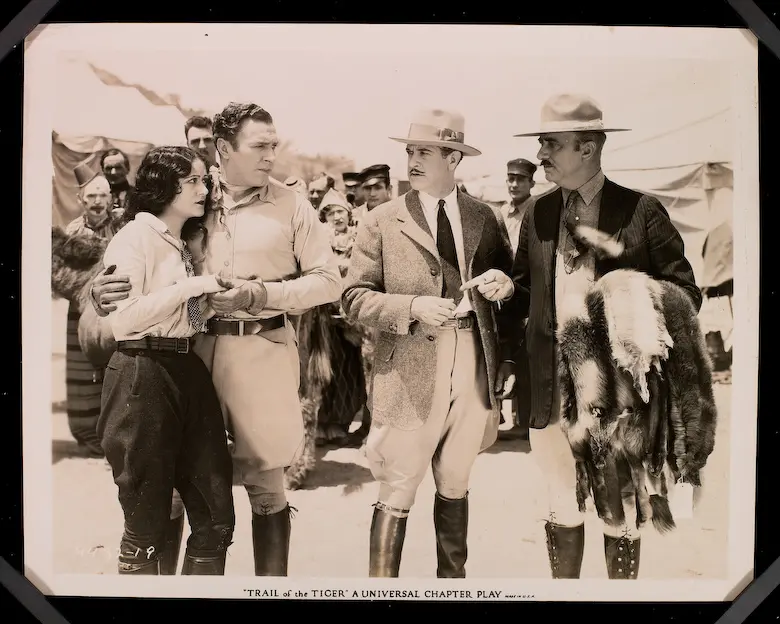
The cast of The Trail of the Tiger delivers performances that are very much of their time, characterized by broad gestures and expressive facial work, yet within that framework, some genuine strengths emerge. Jack Mower, as Captain Jack Mower, embodies the quintessential stoic hero of the era.
His performance is less about nuanced emotion and more about projecting an unwavering sense of duty and courage. He’s the strong, silent type, capable of conveying determination with a set jaw and a resolute gaze. There’s a particular scene where he confronts a group of hostile locals; his posture alone communicates authority without a single intertitle needed. It’s effective, if a little two-dimensional.
Frances Teague, as Professor Elara Teague, is more than just a damsel in distress. She brings a surprising intelligence to the role, even through the heightened acting style. Her initial scenes depict her as a capable scientist, driven by discovery, which makes her eventual predicament more impactful. Her expressions of fear and resolve feel genuine, adding depth to what could have been a purely ornamental role.
John Webb Dillion, as the villainous John Webb, is a standout. He relishes his role, chewing the scenery with a theatrical flair that is perfectly suited for a silent antagonist. His smirks, his menacing glares, and his furtive movements are all perfectly calibrated to convey pure, unadulterated evil. He’s the kind of villain you love to hate, and his presence elevates every scene he’s in. He's arguably the most memorable element of the film, stealing focus with every wicked gesture.
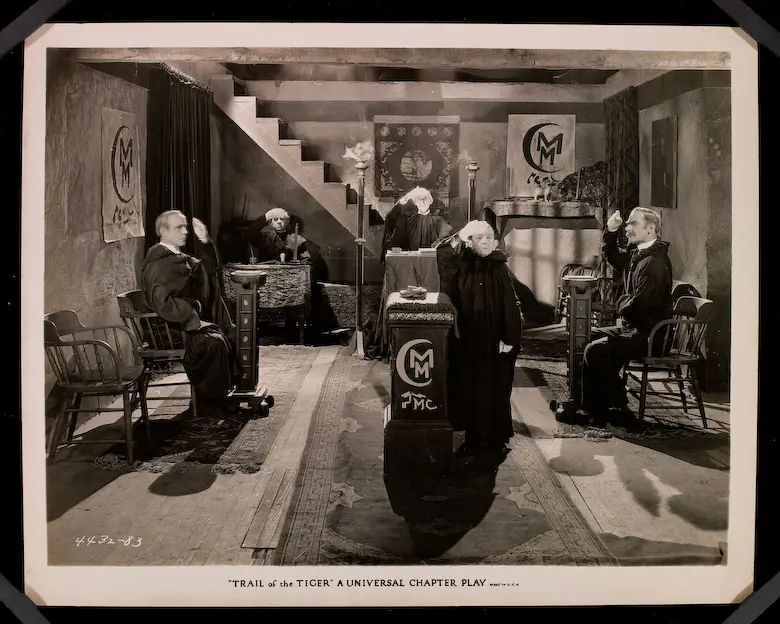
Billy Platt, as the loyal guide Billy, provides much-needed comic relief. His bumbling antics and exaggerated expressions of fear offer a counterpoint to the more serious dramatic elements. While his character borders on caricature, he serves his purpose well, lightening the mood and providing moments of levity amidst the jungle's dangers. The dynamic between Mower's stoicism and Platt's animated fear is a classic pairing that still works.
Yes, The Trail of the Tiger is worth watching today for specific audiences. It’s a valuable piece of cinematic history, showcasing the craft of early adventure filmmaking. Its visual storytelling and commitment to genre tropes are commendable.
However, it requires an appreciation for the silent era's unique conventions. If you approach it with an open mind, ready to engage with its particular language, you’ll find moments of genuine excitement and historical insight. It's not a casual viewing experience, but a rewarding one for the patient viewer.
The Trail of the Tiger, beneath its surface of adventure, explores the classic theme of man versus nature, not just in the literal sense of hunting a dangerous animal, but also in the metaphorical struggle against the 'wildness' within humanity. John Webb is not merely a greedy villain; he represents the predatory instincts of man, more dangerous and cunning than any beast.
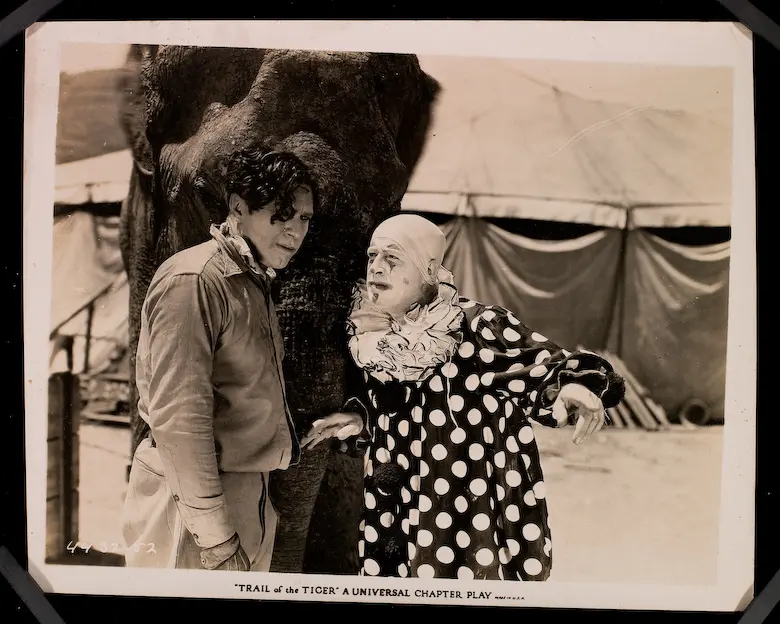
An unconventional observation here is how the film subtly critiques colonial attitudes, or at least hints at the complexities. While the 'natives' are often depicted through the lens of early cinema stereotypes, there are moments where their agency, their fear, and their knowledge of the jungle are acknowledged as legitimate forces, not just background dressing. It's a fleeting nod, but present nonetheless.
The film also touches on the pursuit of knowledge versus greed. Professor Teague's quest for a rare orchid symbolizes pure scientific endeavor, starkly contrasted with Webb's ruthless pursuit of treasure. This moral dichotomy is clear, if somewhat simplistic, but it provides a sturdy thematic backbone to the adventure.
Comparing it to other adventure films of the era, The Trail of the Tiger sits comfortably alongside a film like The House of Fear in its building of suspense through visual atmosphere, though perhaps without the gothic undertones. Its more direct adventure narrative feels akin to the spirit of A Wild Goose Chase, prioritizing forward momentum and daring exploits.
It's also fascinating to consider how much of the film's 'punch' comes from the audience's imagination filling in the blanks. The lack of sound forces a deeper engagement, making the roar of the tiger, the rustle of leaves, and the clash of fists all the more vivid in the mind's eye. This active participation is a unique strength of silent cinema that modern films rarely achieve.
The Trail of the Tiger is more than just a relic; it's a vibrant, if imperfect, piece of cinematic history that still possesses a primal charm. It works. But it’s flawed. While it may not roar with the same visceral impact as a modern blockbuster, its silent growl is enough to remind us of the enduring power of classic adventure.
For those willing to adjust their viewing expectations and embrace the unique artistry of the silent era, this film offers a rewarding journey into the heart of early filmmaking. It’s a testament to how compelling stories could be told with just images, intertitles, and the raw talent of performers. It’s not going to convert everyone to silent film, but for the curious, it’s a worthy expedition.
IMDb —
1918
Community
Log in to comment.