DbcultAccessing Vault...
Cult Review
Senior Film Conservator
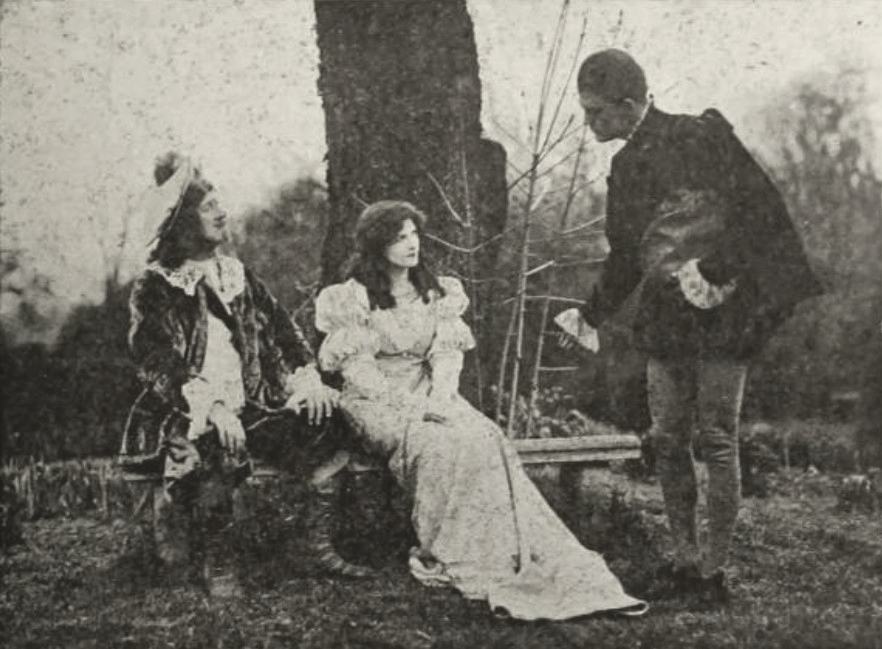
Ah, the allure of classic cinema! There's a particular charm, an almost ethereal quality, to narratives spun in the early days of film, where grand allegories and moral parables often took center stage. Such is the case with The Princess' Necklace, a cinematic gem that, despite its seemingly simple premise, delves into profound philosophical questions about the nature of happiness, the power of love, and the heroism inherent in selflessness. It's a journey not just for the characters on screen, but for the discerning viewer seeking deeper meaning beyond mere spectacle.
Our tale commences in Happyland, a realm whose very name suggests an Edenic existence, ruled by a monarch whose wisdom is matched only by his benevolence. His daughter, Princess Loree, portrayed with a delicate grace by Kathleen Townsend, is a figure of luminous beauty and inherent goodness. The bestowal of a priceless pearl necklace upon her by her father is more than a mere act of paternal affection; it's a symbolic anchor, representing the kingdom's serenity and Loree's own untainted joy. This initial tableau establishes a world of enviable contentment, setting a stark contrast for the arrival of an outsider.
Enter the enigmatic stranger, brought to life with compelling earnestness by William Calhoun. He hails from a land shrouded in perpetual gloom, a place where the concept of happiness is a forgotten relic. His pilgrimage to Happyland is a quest for enlightenment, a noble endeavor to unearth the 'Master Secret' of joy for his benighted people. This premise immediately elevates the film beyond a simple romance, imbuing it with a universal, almost spiritual, resonance. It's a narrative thread that resonates with the introspective journeys seen in other moral fables, perhaps even evoking the quest for understanding and redemption found in more dramatic character studies.
The instant connection between the stranger and Princess Loree is depicted with a tender sincerity that transcends mere physical attraction. It's a meeting of kindred spirits, a recognition of innate goodness that sparks a profound, instantaneous love. This burgeoning romance serves as a crucial catalyst for the stranger's initial, albeit incomplete, understanding of happiness. His early adventures, though not fully detailed in the plot synopsis, are implied to be lessons gleaned from the joyful interactions and harmonious existence of Happyland's denizens, guided by the subtle influence of his burgeoning affection for Loree. The film skillfully uses this emotional core to propel the narrative, suggesting that love is not just an outcome of happiness, but a powerful pathway to its discovery.
The writers, E. Clement D'Art and Clare Freeman Alger, craft a narrative that, while archetypal, feels surprisingly fresh in its philosophical ambition. They don't shy away from presenting happiness as a complex, multi-faceted concept, rather than a simple emotional state. This intellectual curiosity is one of the film's enduring strengths, inviting audiences to ponder alongside the stranger.
The narrative's inflection point arrives with the malevolent intervention of a goblin, who, in a moment of pure mischief or perhaps envy, absconds with Loree's priceless pearl necklace. This act of theft is more than a simple crime; it's a symbolic shattering of Happyland's tranquility, plunging both the Princess and her people into profound grief. The necklace, once a symbol of joy, now becomes a poignant emblem of loss and vulnerability. The collective sorrow is palpable, underscoring the deep connection between Loree's happiness and the well-being of her kingdom.
The stranger's decision to retrieve the necklace is a pivotal moment, transforming him from a mere seeker of knowledge into a true hero. His love for Loree, combined with his burgeoning understanding of happiness, compels him to act. This selfless resolve marks a significant step in his personal evolution, moving beyond intellectual curiosity to active compassion. The theme of a precious item being stolen and its subsequent recovery as a central plot device is a classic narrative trope, echoing the urgency and stakes found in films like Stolen Goods, where the restoration of what's lost often signifies the restoration of order and justice.
The stranger's journey into the Enchanted Woods is depicted as a classic heroic odyssey, fraught with peril and mystery. These woods, a liminal space between the known and the unknown, test his courage and resourcefulness. The film, even in its early cinematic form, likely used visual cues and perhaps intertitles to convey the treacherous nature of this environment, building suspense and highlighting the stranger's unwavering determination. His eventual discovery of a secret passage leading into the Goblins' Cave is a testament to his persistence and perhaps, a touch of destiny.
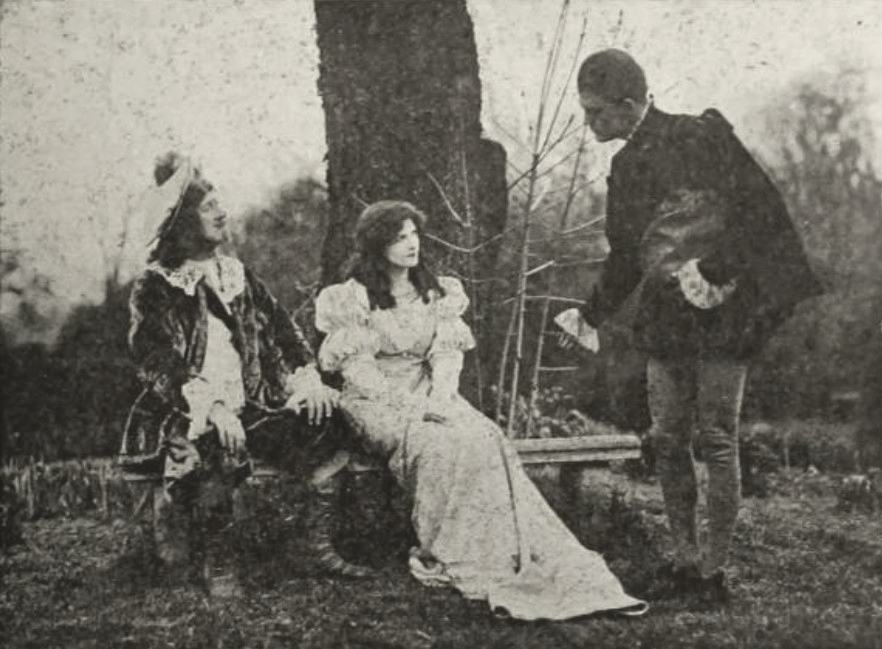
Inside the shadowy confines of the Goblins' Cave, he confronts the chief, a figure of potential menace and cunning. The bargain struck — the return of the necklace in exchange for enduring any perils — is a classic test of character. The stranger's consent, and his subsequent undaunted passage through these trials, are crucial for his growth. This sequence, while perhaps not visually spectacular by modern standards, represents a profound internal triumph. It’s here that the principles of courage and self-sacrifice are not just theorized, but actively embodied. This bravery in the face of adversity could be conceptually contrasted with the themes of fear and overcoming personal demons explored in a film like The Man Who Was Afraid, highlighting the stranger's heroic transformation.
With the necklace triumphantly reclaimed, the stranger returns to Happyland, restoring Loree's happiness and, by extension, the joy of the entire kingdom. The scene of the necklace's return would have been imbued with immense emotional weight, a powerful visual representation of order restored and sorrow vanquished. The King, overwhelmed with gratitude, offers the stranger half his kingdom – a king's ultimate reward. Yet, the stranger's request is far more telling: a mere hour each day for seven days to speak with Princess Loree. This humble request speaks volumes about his character and the true nature of his affections. He seeks not material wealth or power, but connection, understanding, and the deepening of his bond with the woman he loves. This selfless desire for companionship over dominion foreshadows his eventual revelation about happiness, suggesting that true value lies beyond tangible possessions.
The seven days of intimate discourse are a period of profound connection, allowing the stranger and Loree to solidify their bond on an intellectual and emotional level. It's a courtship built on shared values and mutual respect, transcending the initial 'love at first sight.' His departure, albeit with a promise to return, introduces a period of anxious anticipation, a clever narrative device to build suspense and allow the audience to ponder the implications of his quest for the 'Master Secret.'
Weeks pass, turning into months, and the kingdom, along with Loree, awaits his promised return. The King's announcement of the newly crowned King of Roseland's visit, intended to pay homage to Happyland, serves as the grand culmination of the stranger's journey. The suspense as Loree prepares, unaware of the identity of this illustrious guest, is masterfully built. The moment of recognition, when Loree beholds the King of Roseland and realizes he is her beloved stranger, is the emotional crescendo of the film. It's a beautifully executed reveal, bringing together the two narrative threads – the quest for happiness and the blossoming romance – into a single, satisfying resolution. This kind of romantic unveiling, where a beloved figure returns transformed and elevated, shares a thematic kinship with the grand romantic gestures and fulfilling unions found in films like A Love Sublime, where love's triumph is paramount.
The climax of the film, and indeed its philosophical core, lies in the stranger-turned-king's revelation of the 'Master Secret' of happiness. He has not only discovered it but has embodied it through his actions. His profound insight – that true happiness consists in deeds that bring happiness to others, in the realization of one's ideals, with love crowning all – is a timeless and universal truth. This isn't a simplistic, self-help adage, but a deeply nuanced understanding that integrates altruism, personal fulfillment, and the transformative power of love. It’s a message that resonates deeply with the spirit of humanism, perhaps drawing parallels to the profound moral lessons embedded in narratives like Humanity, which explore the nobler aspects of the human spirit.
The genius of writers E. Clement D'Art and Clare Freeman Alger lies in their ability to weave such a complex philosophical tapestry within the accessible framework of a fairy tale. They avoid didacticism, instead allowing the stranger's journey and experiences to organically reveal the 'Master Secret.' The plot is not merely a sequence of events but a carefully constructed allegory, where each adventure, each interaction, contributes to the stranger's evolving understanding. The characters, though archetypal, are imbued with enough warmth and conviction to make their journey emotionally engaging. The Princess Loree, portrayed by Kathleen Townsend, is more than just a damsel in distress; she is the emotional anchor, the inspiration, and eventually, the partner in the realization of true happiness. William Calhoun, as the stranger, carries the weight of the narrative's central quest with commendable gravitas, his transformation from a melancholic seeker to a wise and loving monarch being the film's emotional backbone.
The Princess' Necklace stands as a testament to the enduring power of storytelling. It reminds us that cinema, even in its nascent stages, was capable of exploring profound human truths with grace and conviction. Its message about the interconnectedness of happiness, selflessness, and love remains as relevant today as it was upon its release. It challenges us to look beyond superficial pleasures and to find joy in contributing to the well-being of others, in striving for our highest ideals, and in cherishing the love that crowns all our endeavors.
While we might compare its narrative structure to classic fables or even the bildungsroman style of David Copperfield, where a protagonist undergoes significant moral and personal development, The Princess' Necklace carves its own niche through its explicit focus on the philosophical quest for happiness. It's a film that leaves the viewer not just entertained, but enriched, contemplating the very essence of a well-lived life. The performances, particularly from Townsend and Calhoun, convey the emotional arc with sincerity, even within the stylistic constraints of early cinema. Dorothy Graham, Susan Mitchell, Wallace MacDonald, and Roy Adams, while perhaps in supporting roles, undoubtedly contributed to the rich tapestry of Happyland's populace and the challenging denizens of the Enchanted Woods and Goblin's Cave, each playing their part in the stranger's transformative journey.
In an era often preoccupied with cynicism, The Princess' Necklace offers a refreshing affirmation of human goodness and the attainable nature of true joy. It's a cinematic experience that, much like the priceless pearls themselves, holds an inherent, radiant value that continues to shine brightly through the annals of film history. A true classic, not just for its age, but for the timeless wisdom it imparts.
IMDb —
1928
Community
Log in to comment.