DbcultAccessing Vault...
Cult Review
Senior Film Conservator
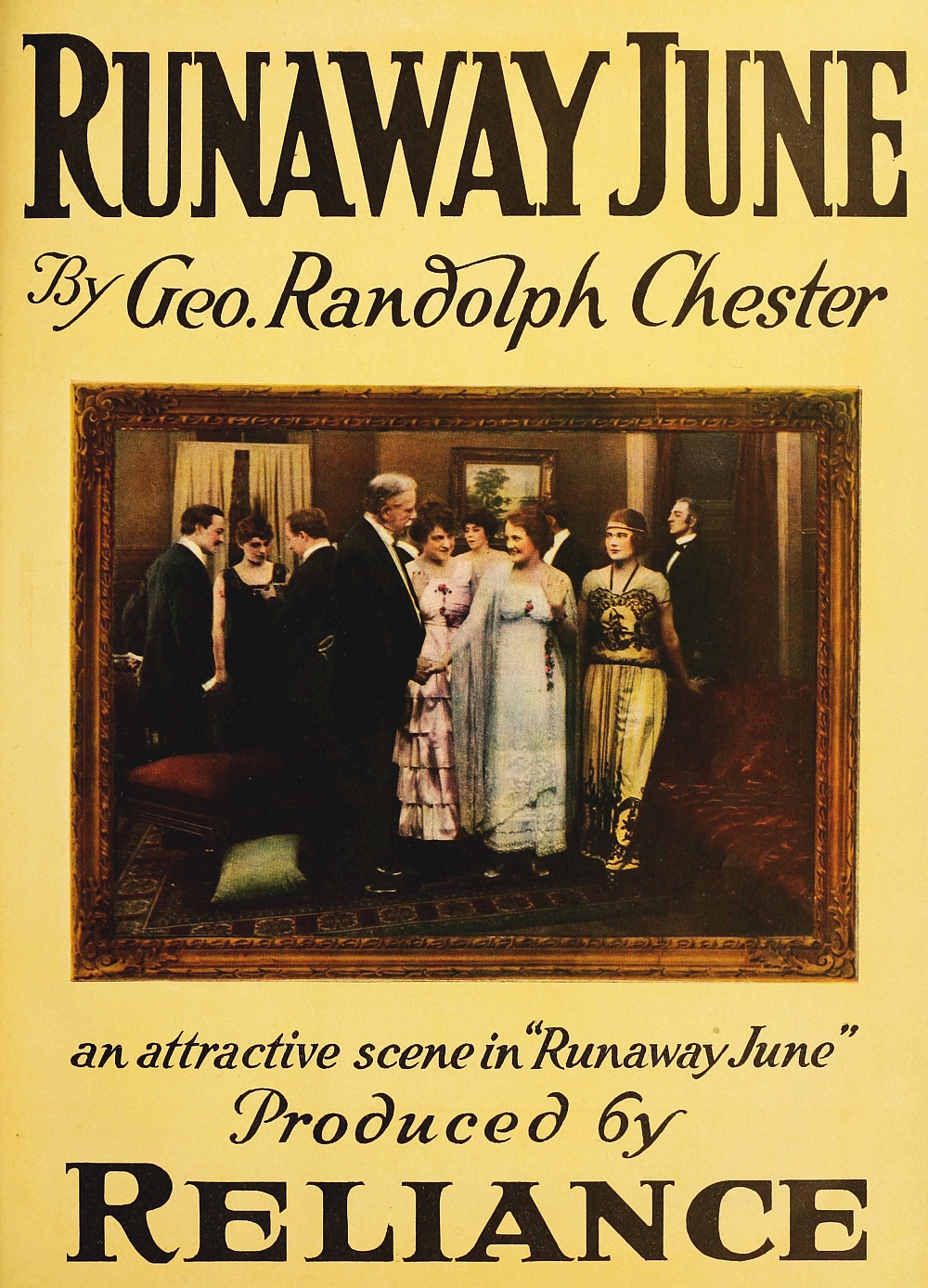
Stepping into the flickering glow of early cinema, one might expect a straightforward melodrama, a tale of love lost and found, or perhaps a cautionary narrative of societal transgression. Yet, Runaway June defies such simplistic categorization, unfolding instead as a remarkably intricate and surprisingly prescient commentary on female agency, economic independence, and the very nature of storytelling itself. This isn't merely a silent film; it's a cinematic proto-puzzle box, a narrative Russian doll that continuously recontextualizes its own reality, culminating in a reveal that is as audacious as it is intellectually stimulating.
From its bustling opening scenes, capturing the nervous energy of June Moore's wedding day, the film immediately establishes a world ripe with domesticity and expectation. The quaint charm of a pet collie, Donnie, interrupting the solemnity, and June's father's perspiring discomfort, paint a vivid picture of a seemingly idyllic, albeit slightly chaotic, bourgeois existence. However, the first tremor of discord, the seed of June’s eventual flight, is sown subtly, almost imperceptibly. It’s not an overt conflict but a quiet, internal revolt against the looming specter of financial dependence. Ned Warner, the doting bridegroom, offers his 'bulky roll' with bluff heartiness, a gesture intended to reassure, but which June perceives as a gilded cage. Her internal monologue, visualized through dream sequences, of herself as a 'beggar, helpless, dependent upon Ned’s generosity,' is a powerful, if wordless, articulation of a nascent feminist consciousness. This isn't merely a bride with cold feet; it's a woman recoiling from a societal construct that threatens to subsume her identity. Her impulsive departure from the train at Tarnville, a blur of confusion and dazed urgency, marks the true beginning of her labyrinthine journey.
The ensuing episodes plunge June into a frenetic, almost picaresque series of adventures, each designed to test her resolve and further entangle her in a web of mistaken identities and escalating peril. The introduction of Gilbert Blye, the mysterious man with the black Vandyke, immediately complicates the narrative. Is he a villain, a suitor, or a guardian angel? His actions are consistently ambiguous: he buys June's watch only to return it, appears at opportune moments to offer assistance, yet his presence often precedes further complications for June. Meanwhile, Ned's desperate pursuit transforms him from a loving husband into a frantic, almost comically obsessed figure, his journey mirroring June's in its escalating absurdity. The film masterfully uses the parallel pursuits to amplify the sense of urgency and confusion, constantly shifting perspectives between hunter and hunted.
The societal backdrop of early 20th-century America, with its burgeoning cities and shifting social norms, provides a vibrant canvas for June's escapades. Her brief stint as a model, orchestrated by Blye and his associates, highlights the precariousness of women's work and the ever-present 'money question.' The department store scene, where June is discharged for being too engrossed in a couple's financial argument – a poignant echo of her own internal struggle – is a particularly sharp piece of social commentary. The film doesn't shy away from depicting the darker underbelly of urban life, from the illicit gambling dens to the river pirates, each encounter adding another layer of danger and moral ambiguity to June's quest for self-sufficiency. The character of Aunt Debby, the Moore's old colored servant, adds a touch of earthy humor and resilience, her wrestling match with Marie a testament to the film's unexpected moments of levity amidst the drama.
As the narrative progresses, the line between reality and performance begins to blur, though the audience, like Ned and the Moores, remains largely unaware. Blye’s intricate network of associates, including the seemingly innocuous Tommy Thomas and the shadowy Cunningham, orchestrate events with a precision that hints at a larger design. June's various 'employments' – governess, companion to Mrs. Villard – are revealed to be carefully constructed scenarios, each pushing her further into the heart of the mystery. The dramatic climax, involving a yachting trip to Bermuda, kidnappings, and a desperate struggle against river thieves, is executed with a relentless pace, typical of the serials of the era. The silent film medium, with its reliance on expressive acting, dramatic intertitles, and dynamic visual storytelling, is utilized to its fullest potential here, conveying terror, confusion, and fleeting moments of hope with remarkable efficacy. The sequence involving the quicksands and Durban the artist, for instance, is a stark, almost surreal moment of natural peril that stands out amidst the human-driven conflicts.
The emotional core of the film, despite its high-octane plot, remains June's internal battle. Her repeated refusals of financial aid, even from her loyal friend Iris, underscore her unwavering commitment to earning her own way, to forging an identity independent of male benefaction. This theme resonates powerfully, particularly for audiences of the time, grappling with evolving gender roles. It’s a bold statement, subtly woven into a thrilling adventure story. The journey through the various settings, from the bustling streets of New York to the tranquil yet dangerous shores of Bermuda, serves not just as exotic backdrops but as arenas for June's continuous self-discovery and assertion. The character of Giovanni, the old Italian fisherman, and his tale of Marietta and her two lovers, for instance, offers a brief, almost allegorical interlude that reinforces the film's overarching concern with money's corrupting influence on relationships.
The performances, particularly Marguerite Marsh as June, are central to the film's success. Marsh imbues June with a captivating blend of vulnerability, resilience, and quiet determination. Her facial expressions and body language convey a complex inner life, allowing the audience to empathize with her motivations even when her actions seem baffling to those around her. Arthur Forbes as Ned Warner delivers a performance that oscillates between heartfelt anguish and almost comedic desperation, effectively conveying the husband’s bewilderment. Gilbert Blye, portrayed by Arthur Donaldson, is a masterclass in silent film ambiguity, his piercing gaze and knowing smiles hinting at depths far beyond what is initially revealed. The ensemble cast, including Ezra Walck and Mildred Cheshire as June's parents, and Grace Ady as Tommy Thomas, contribute to a rich tapestry of characters, each playing their part in the elaborate deception.
The aesthetic choices of the film, from its rapid-fire editing during chase sequences to the evocative use of light and shadow, are indicative of the innovative spirit of early cinema. The scene where Blye breaks a bottle to cause a taxi blowout is a clever visual device, showcasing resourceful villainy (or perceived villainy). The constant motion, the frantic intercutting between pursuer and pursued, keeps the audience on the edge of their seats, creating a dynamic energy that transcends the limitations of the silent medium. The use of intertitles is judicious, providing essential plot points and character thoughts without overwhelming the visual narrative. One might draw parallels to the propulsive action of other early thrillers, though The Danger Signal, for instance, tends towards more overt suspense rather than the meta-narrative complexity found here.
Then comes the grand revelation, a stroke of narrative genius that elevates Runaway June from a mere serial melodrama to a sophisticated piece of meta-commentary. The entire elaborate charade – June’s flight, Ned’s pursuit, Blye’s enigmatic manipulations, and the myriad dangers – were all meticulously staged scenes for a motion picture production. June, far from being a runaway bride, is a leading lady, fulfilling her contract with Blye’s film company, thereby achieving the very financial independence she initially craved. This twist is not just a clever plot device; it’s a profound statement on the burgeoning power of cinema to create alternate realities, to offer women new avenues for self-expression and economic freedom, and to playfully deceive its audience in the process. It recontextualizes every tense moment, every tear, every desperate dash, transforming them into a testament to the art of cinematic illusion.
The film, in its final moments, brings together the bewildered parties – Ned, the Moores, Mrs. Blye, and the detectives – for a collective understanding of the elaborate ruse. The scene in the glass-roofed studio, with Edwards as the paymaster distributing salaries, is a beautifully understated moment of clarity. Ned’s humble apology and June’s gracious forgiveness underscore the film’s ultimate message of reconciliation, not just between husband and wife, but between traditional expectations and modern aspirations. It suggests that true understanding can bridge even the most seemingly insurmountable gaps, and that a woman's desire for independence need not be at odds with love and partnership, but can, in fact, enrich it. The resolution, with June and Ned resuming their interrupted honeymoon, is imbued with a new layer of meaning, a celebration of a partnership redefined by mutual respect and a deeper appreciation for June’s unique path.
Runaway June stands as a fascinating artifact of its time, not only for its thrilling narrative but for its bold thematic explorations. It tackles the 'money question' head-on, a pervasive concern that resonated deeply with audiences navigating the economic shifts of the era. The film implicitly argues for a woman’s right to earn her own living, to be self-reliant, and to pursue a career, even one as unconventional as acting in the nascent film industry. This makes it a surprisingly modern text, anticipating debates about gender roles and economic equality that would continue for decades. One might compare its portrayal of women's agency, albeit through a different lens, to films like A World Without Men, though June’s journey is ultimately about integration, not separation.
The film's technical execution, under the direction of Lillian Christy Chester and George Randolph Chester, demonstrates a sophisticated understanding of cinematic language. The use of multiple locations, the intricate staging of chase scenes, and the seamless integration of a large cast speak to a high level of production ambition for a serial. The narrative's sustained mystery, punctuated by moments of genuine suspense and emotional intensity, keeps the audience invested, making the final reveal all the more impactful. It's a testament to the power of early filmmakers to craft narratives that were both entertaining and thought-provoking, pushing the boundaries of what the medium could achieve. The meticulous planning required to stage such a complex series of events, both within the diegesis of the 'film within a film' and the actual production, is truly remarkable.
In conclusion, Runaway June is far more than a simple serial. It is a clever, multi-layered work that uses the conventions of melodrama to explore deeper themes of identity, independence, and the transformative power of art. Its meta-narrative twist is a stroke of genius, inviting viewers to reconsider everything they’ve witnessed and to appreciate the ingenious construction of the story. For those interested in the evolution of cinematic storytelling, the representation of women in early film, or simply a compelling narrative with a satisfyingly clever resolution, Runaway June is an essential viewing experience. It reminds us that even in the silent era, filmmakers were capable of crafting narratives that were not only thrilling but also intellectually stimulating and deeply resonant with the social questions of their time. It’s a testament to the enduring appeal of a well-told story, especially one that dares to challenge expectations and redefine its own terms. The ingenuity of its plot structure, where the audience is as much a participant in the deception as the characters within the film, makes it a standout example of early cinematic artistry.
IMDb 5.2
1924
Community
Log in to comment.