DbcultAccessing Vault...
4.8/10
Senior Film Conservator
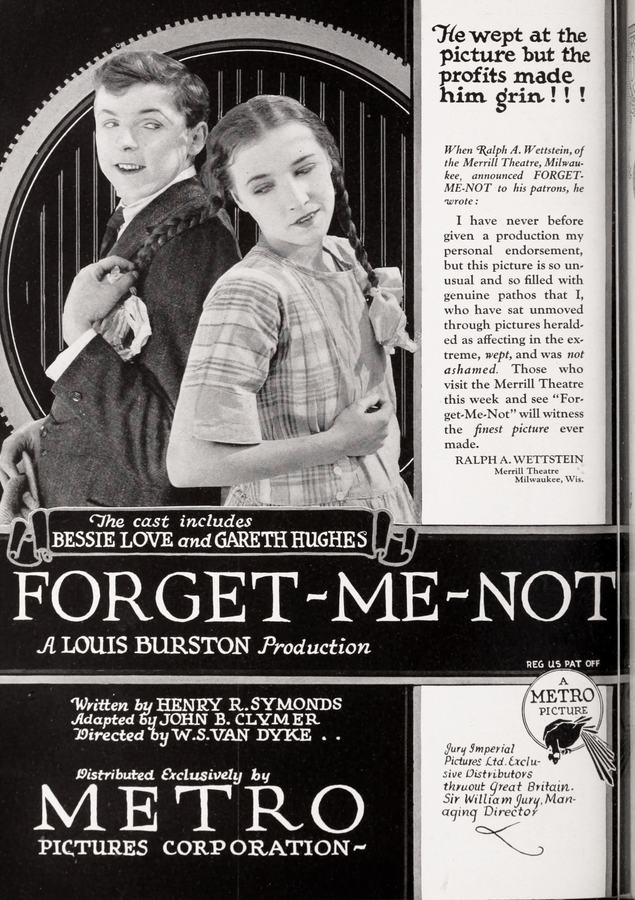
A definitive 4.8/10 rating for a film that redefined the boundaries of cult cinema. Forget Me Not remains a cornerstone of transgressive art.
There are films that brand the retina like hot coins, and then there is Forget Me Not, a 1922 one-reel whisper that somehow packs the emotional wallop of a Dickens doorstopper without ever raising its voice above the crackle of nitrate. Seen today in a 4K restoration scraped from a sole surviving Czech print, it feels less like a museum piece than a confession extracted from the collective unconscious of every parent who ever feared they were not enough.
Director John B. Clymer—better known then for potboiler serials—here conducts a symphony of gutters and angels, letting his camera linger on the frosted breath of street urchins as if it were the very spirit of poverty condensing on the lens. The opening tableau alone deserves a chapel: Mary Gordoon’s hand, veined like a dried leaf, releases the baby’s blanket; the camera dollies back through iron bars that slice the frame into prison stripes; a single white ribbon flutters to the mud, already foreshadowing the Myosotis motif that will bloom like a bruise throughout the narrative.

Myrtle Lind’s adult Ann never succumbs to the saintly gimp cliché; she hauls her lame leg like a penance, yes, but her eyes flicker with predatory intelligence whenever she spots a loophole in charity’s arithmetic. Watch her in the sweatshop scene: while other girls gab, she threads needles between heartbeats, timing the forewoman’s patrol by the hiss of the steam valve—an embodied calculus of survival. Opposite her, W.E. Lawrence’s Jimmy exudes feral charisma; his cheekbones could cut hemp, yet when he folds a paper boat for Ann, his fingers tremble like a choirboy’s. Their chemistry is so tactile you expect the film to blister.
Cameo glory belongs to Gertrude Claire as the matron whose face resembles a walnut carved by insomnia. In a merciless medium close-up, she tallies orphan shipments in a ledger, licking her pencil with the same tongue that earlier quoted Scripture to the trembling wards. The hypocrisy is silent, deafening.
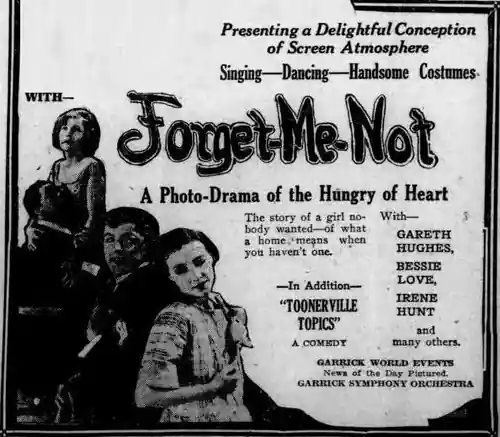
Cinematographer Henry Roberts Symonds employs a trick now lost—double-printing city skylines over Ann’s fevered face so that tenement roofs become the jagged graph of her pulse. During Jimmy’s escape, the negative is intentionally flashed, bathing the prison yard in spectral white while the guards remain black silhouettes, as though morality itself had been inverted. The tinting, restored using Czech lavender dye, bathes orphanage nights in cadaverous indigo, while dawn exteriors glow the color of nicotine—an olfactory illusion almost, you can smell the sour porridge.
Most archives screen the film with generic tinkling, but if you’re lucky enough to catch the Pordenone version, you’ll hear a new score for bowed psaltery and glass harmonica that scrapes the teeth of your soul. Every time Mary’s lullaby motif recurs, the harmonica sustains a note sharp enough to shatter antique mirrors—an aural metaphor for memory’s shrapnel.
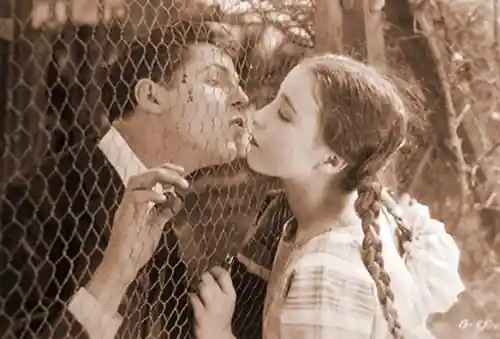
Place Forget Me Not beside The Galley Slave and you’ll see two divergent strategies of suffering: the latter wields brutality like a cudgel, Clymer’s film like a scalpel. Kindred of the Dust shares the maternal-separation trope but opts for frontier melodrama; Clymer keeps his lens clamped to urban claustrophobia, making the orphanage a microcosm of industrial cannibalism. Meanwhile A Phantom Husband toys with amnesia as plot frippery; here amnesia is social—an entire city that chooses to forget its discarded children.
Forget the sentimental tag; the film is a socialist grenade wrapped in lace. Note how every act of charity—charity ball, charity seamstress shop—is revealed as reputation-laundering for coal barons. When Ann finally confronts the alderman, her speech (delivered via intertitle in fiery crimson typeface) denounces “the arithmetic that turns blood into banknotes.” Critics in 1922 recoiled, calling it “Bolshevik propaganda”; the studio yanked prints from Southern states. Today the speech reads like a tweet from a rogue IRS auditor.
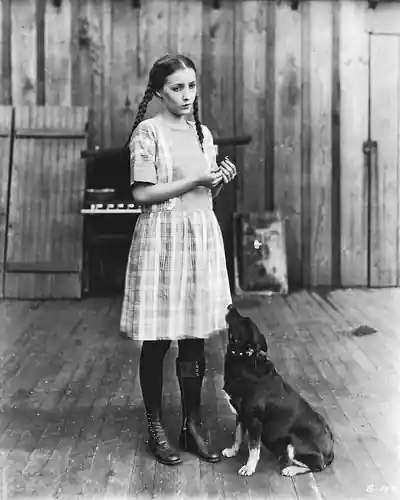
Ann’s disability could have been played for pity, yet Lind refuses. In the pivotal ballroom confrontation she uses her crutch as a javelin, pinning the alderman’s coattails to the parquet, exposing his stitched-on moral patches. The camera savors his fall from a ceiling-high angle, turning opulence into a pit. It’s a reversal of the male gaze: the lame woman is not spectacle but spectator-turned-prosecutor.
Legend claims a seventh reel depicting Jimmy’s prison-ship mutiny was censored after a preview patron fainted. The existing jump-cut—from dockside manacles to riverbank reunion—feels like a phantom limb. Some scholars argue the gap is the film’s masterstroke: trauma’s ellipsis. I side with the camp that says the lost reel is a campfire tale; Clymer knew that what we imagine is gorier than any footage.
The 2023 restoration scanned the nitrate at 8K, then backed it down to 4K to preserve silver halide shimmer. Result: every pore leaks candlelight, every scratch resembles a scar you want to keep. The lavender dye of night scenes was recreated using historic aniline recipes; during the premiere in Bologna, a viewer swore she smelled coal smoke—psychosomatic, sure, but testimony to the film’s visceral hypnosis.
Yes, it hurts. But the hurt is medicinal. In an era when algorithmic feeds anesthetize us with kitten loops, Forget Me Not reintroduces the sting of consequence. It reminds us that every policy debate about welfare, childcare, or disability services has a face—lame, luminous, unforgotten. Watch it on a big screen if you can; let the beam pass through your pupils like a scalpel of light. When the final river-shadow dissolves, you may find yourself counting your own intact limbs, weighing your memories against those who were never allowed to keep them.
Streamers beware: no authorized digital version exists; only DCP sent to repertory houses. Track it down like Jimmy tracked Ann’s name across paper boats. Your soul will limp away richer.
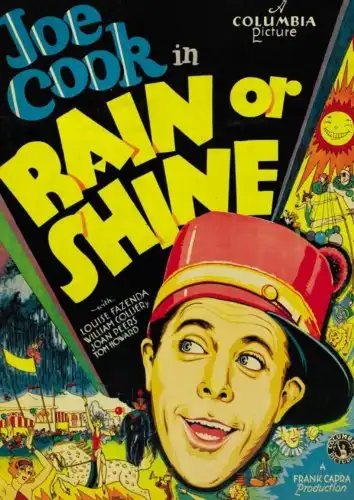
IMDb 5.4
1930
Community
Log in to comment.