DbcultAccessing Vault...
Cult Review
Senior Film Conservator
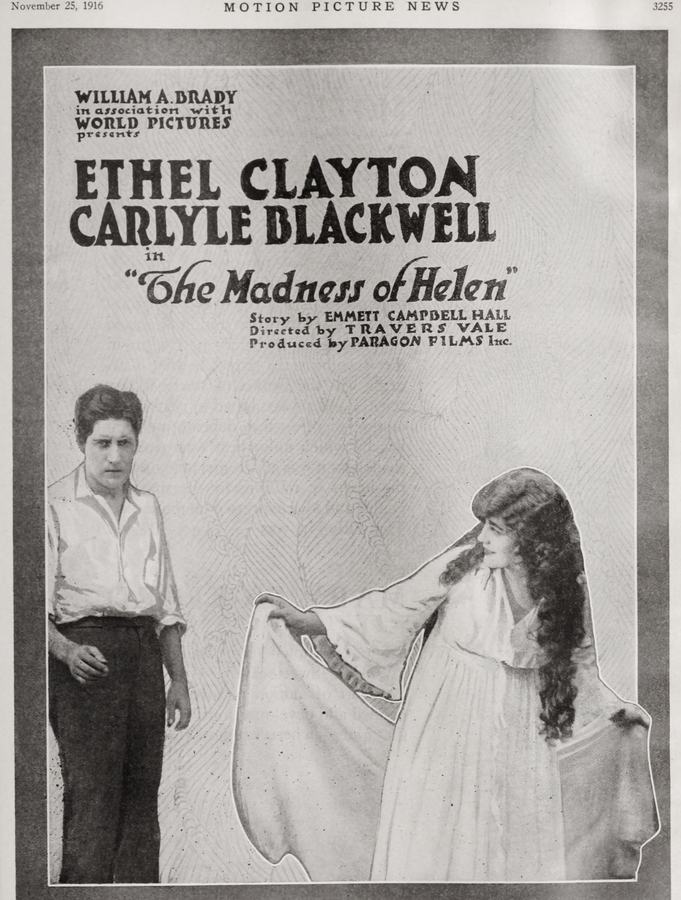
In the annals of early cinema, few narratives unfurl with the intricate psychological tapestry and emotional resonance of Beyond the Wall. This compelling drama, penned by Emmett C. Hall, transcends its era, offering a poignant exploration of identity, societal judgment, and the profound sacrifices made in the name of familial love. It’s a film that doesn't merely tell a story; it invites the viewer to disentangle a web of perception and reality, where the truth is as elusive as the shadows that dance across the screen.
Our journey begins with Dane Ashley, portrayed with a contemplative intensity by Carlyle Blackwell. A successful author, Dane finds himself at a precipice of disillusionment, the city’s relentless clamor having dulled his creative spirit and wearied his soul. He yearns for a respite, a sanctuary where the muse might once again whisper, and so he retreats to a newly inherited estate in a tranquil, unassuming village. This bucolic setting, however, quickly reveals its undercurrents of mystery and veiled tragedy.
Dane’s idyllic retreat is shattered by a scene of stark brutality: a young woman, later identified as Miss Virginia Carlton, besieged by a band of cruel children, their jeers and stones a harrowing testament to communal prejudice. His chivalrous intervention marks the genesis of a profound, albeit perplexing, connection. Virginia, brought to life with an exquisite blend of vulnerability and defiance by Ethel Clayton, embodies an ethereal purity that instantly captivates Dane. Yet, her hurried retreat through a mysterious door in the high stone wall separating their properties, coupled with the villagers’ chilling pronouncements of her "madness," casts a long, unsettling shadow over her persona. These insidious rumors, however, fail to deter Dane. His intuition, perhaps his heart, senses a deeper, more tragic truth beneath the surface of these cruel whispers. He embarks on a subtle, yet determined, quest to unravel the enigma of Virginia, employing gentle ruses to deepen their acquaintance, each interaction further cementing his conviction that she is anything but insane.
The burgeoning friendship between Dane and Virginia quickly blossoms into an undeniable, fervent love. The chemistry between Blackwell and Clayton is palpable, their performances imbued with a tender yearning that transcends the silent film medium. Yet, even as their affections deepen, Virginia remains agonizingly distant, her heart a fortress built from an unspoken sorrow. She articulates a poignant truth: "a wall of shame and misery" stands irrevocably between them, a barrier that prevents their union. This metaphorical wall, more formidable than the physical stone structure, becomes the central axis of the narrative, a symbol of the hidden burdens and societal judgments that can tragically sever human connection. It forces Dane, and by extension the audience, to grapple with the nature of perceived impediments to love. Is it a past transgression? A societal taboo? Or something far more complex and heartbreaking?
The mystery deepens with the faint, yet unmistakable, sound of a baby’s playful cries emanating from Virginia’s side of the wall. Dane, in a moment of understandable, though ultimately flawed, deduction, concludes that Virginia must be the victim of an "unwise and too-great love," a secret mother bearing the stigma of an illegitimate child. This interpretation, while seemingly plausible in the context of the era’s social mores, is immediately contradicted by Virginia’s unwavering purity and inherent innocence, qualities Ethel Clayton portrays with such conviction that Dane’s theory feels increasingly incongruous. It’s a masterful stroke of writing by Emmett C. Hall, keeping the audience perpetually off-balance, questioning every assumption. The film expertly plays with our expectations, much like The House of Lies, where appearances are consistently deceiving, or even the subtle societal critiques found in Hoodman Blind, though perhaps with a more pronounced romantic tragedy.
The narrative takes a decidedly Gothic turn with the introduction of a spectral doppelgänger. One night, Dane is startled by a face at his window, strikingly similar to Virginia’s, yet illuminated by a "wild and impish gleam." This apparition, fleeing over the high stone wall, marks the beginning of a series of bewildering nocturnal excursions. The village becomes rife with whispers of a beautiful, evil spirit, a siren luring men from their hearths, only to escape their grasp, leaving them maddened by unfulfilled desires. Dane’s heart is torn asunder. How could the pure-souled Virginia he adores be responsible for such wanton acts? Yet, her daytime demeanor remains steadfastly sweet and simple, leading him to the agonizing conclusion that she must be afflicted by moments of temporary insanity, a fragmented psyche that unleashes a darker, uninhibited self under the cloak of night. This duality is a powerful cinematic device, exploring themes of hidden identities and the societal pressures that can drive individuals to extreme measures, echoing the complexities of films like The Battle of the Sexes in its examination of human passion and societal constraint.
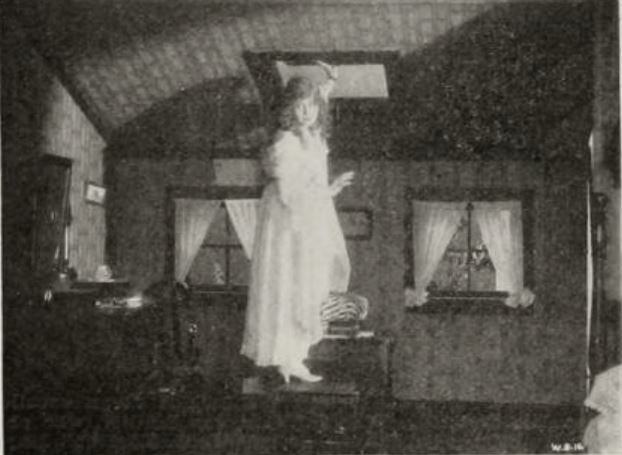
The emotional tension reaches its zenith when Virginia, no longer able to bear the weight of her secret, confides in Dane. Her confession is a heartbreaking revelation, a testament to selfless love and profound familial devotion. Two years prior, her twin sister, Helen, had fallen deeply in love with a young naval surgeon. Their father, embodying the rigid societal expectations of the era, sternly forbade their union. Impulsive and headstrong, Helen defied him, eloping with the surgeon and living as his wife for two weeks before his sudden deployment to foreign waters. This clandestine marriage, a desperate act of love, set in motion a chain of tragic events. Helen, returning home, was involved in a devastating automobile wreck, which shattered not only her physical form but also her mind. The shock of these events proved too much for their father, who succumbed to grief. Virginia, witnessing her sister’s broken state and the societal scorn that would undoubtedly follow, made a monumental decision. She rented the secluded country house, creating a haven where Helen's child could be born in secret, protected from a judgmental world. In doing so, Virginia willingly embraced the mantle of perceived madness, sacrificing her own reputation and happiness to shield her fragile sister and her innocent nephew. This act of profound altruism elevates Virginia to a truly heroic figure, her quiet suffering a stark contrast to the dramatic flourishes often seen in period melodramas.
Dane’s reaction to this truth is a catharsis of immense proportions. The burden of Virginia’s presumed insanity, of her imagined past, lifts instantly, replaced by an overwhelming surge of love and admiration. The girl he loves is neither mad nor the mother of a child born of shame; she is a paragon of selflessness. His resolve solidifies: he will locate Helen and restore her to her rightful place. In a move that underscores his pragmatic nature, he dispatches his friend, Dr. Robert Haskell, to Virginia’s aid. This introduces a new layer of complexity, as Dr. Haskell (played by Stanhope Wheatcroft, whose character often carries a certain gravitas) is not merely a physician but is soon revealed to be the very naval surgeon Helen married. Virginia, unaware of this crucial detail, denounces Haskell for what she perceives as his treachery, his abandonment of her sister. The dramatic irony is exquisite, heightening the tension before the final, heart-wrenching reveal.
Just as Virginia confronts Haskell, Dane arrives, bearing the unconscious form of Helen, whom he has found wandering disoriented in the streets. The scene is charged with raw emotion, a confluence of desperation, hope, and impending revelation. Dr. Haskell, now revealed as Helen’s husband, works feverishly over his wounded wife. As they await the outcome of his operation, he clarifies the devastating misunderstanding to Virginia. He explains their marriage, his desperate search for Helen since his return from foreign waters, and the grave injustice Virginia has unwittingly done to both herself and her sister by perpetuating the illusion of Helen’s abandonment. This moment is a masterclass in narrative economy, resolving multiple plot threads with a single, potent explanation. It’s a testament to Emmett C. Hall’s skillful writing that such complex emotional and plot points converge so elegantly.
The film culminates in a profoundly moving sequence. Gradually, life and memory return to Helen. Her eyes open, slowly recognizing the man who has been her husband, her arms reaching out to embrace him in a tearful reunion. Virginia and Dane, observers to this deeply personal moment, share a look of profound understanding and renewed love. The "wall of shame and misery" that Virginia had so bravely erected, brick by painful brick, crumbles, replaced by the enduring strength of truth and the redemptive power of love. The film doesn't just offer a happy ending; it provides a deeply earned catharsis, a testament to the resilience of the human spirit and the enduring bonds of family.
Ethel Clayton, as Virginia, delivers a performance of remarkable depth and nuance. Her ability to convey both the quiet dignity of her sacrifice and the internal torment of her secret, often through subtle gestures and expressive eyes, is truly exceptional. She embodies the film’s central conflict – the clash between appearance and reality – with compelling grace. Carlyle Blackwell, as Dane, provides a steadfast anchor, his unwavering belief in Virginia serving as the audience’s moral compass. His journey from urban ennui to fervent love and determined truth-seeker is charted with conviction. Stanhope Wheatcroft’s Dr. Haskell, though appearing later, brings a necessary gravitas and ultimately, a redemptive presence. The supporting cast, including Maude George, Earl Schenck, and Julia Stuart, contribute to the village's atmospheric texture, their judgmental glances and whispered rumors effectively building the sense of societal pressure that Virginia so bravely defies. Even the seemingly minor roles, like those of the children in the opening scene, underscore the pervasive cruelty that Virginia endure.
Emmett C. Hall’s screenplay is a masterclass in suspenseful melodrama, carefully constructing a mystery that unfolds with deliberate pacing, each revelation deepening the emotional stakes. The narrative avoids simplistic villainy, instead focusing on the tragic consequences of misunderstanding, societal expectations, and selfless love. The "wall" itself is a powerful metaphor, representing not just physical barriers but the invisible divides of prejudice, fear, and unspoken truths that separate individuals. The film subtly critiques the rigid social codes of its time, where a woman’s reputation could be irrevocably shattered by perceived indiscretion, regardless of the underlying truth. This makes Beyond the Wall feel surprisingly contemporary in its exploration of character and circumstance, much like the enduring appeal of character-driven dramas such as Merely Mary Ann, which also delves into societal perceptions and personal integrity. The film's ability to maintain a sense of foreboding and mystery while simultaneously developing a tender romance is a testament to its narrative strength.
In an era often stereotyped for its straightforward narratives, Beyond the Wall stands out as a remarkably complex and emotionally resonant work. It leverages the inherent strengths of silent film – the power of visual storytelling, the eloquence of facial expression, and the potent symbolism of its settings – to craft a story that is both deeply moving and intellectually engaging. The film challenges its audience to look beyond superficial judgments, to question rumors, and to seek the deeper, often painful, truths that lie beneath appearances. It’s a compelling argument for empathy and understanding, wrapped in a gripping tale of love, sacrifice, and the ultimate triumph of truth. For cinephiles and casual viewers alike, Beyond the Wall offers a rich, rewarding experience, proving that great storytelling, regardless of its technological era, possesses an enduring power to captivate and provoke thought. It reminds us that sometimes, the greatest acts of love are performed in silence, behind an invisible wall, waiting for the right moment to reveal their profound, beautiful truth. The film’s lasting impression is not just its dramatic conclusion, but the journey of emotional and intellectual discovery it takes the viewer on, navigating the intricate labyrinth of human perception and the enduring resilience of love. It certainly leaves a more profound emotional imprint than many of its contemporaries, offering a narrative depth that resonates long after the final frame. The subtle interplay of light and shadow, the expressive intertitles, and the powerful non-verbal performances converge to create a truly immersive experience, a silent symphony of human emotion that speaks volumes without uttering a single word. It is a cinematic triumph, a testament to the power of a well-crafted story and finely honed performances to transcend time and technological limitations, delivering a timeless message of compassion and the pursuit of truth.
IMDb 6.2
1934
Community
Log in to comment.