DbcultAccessing Vault...
4.4/10
Senior Film Conservator
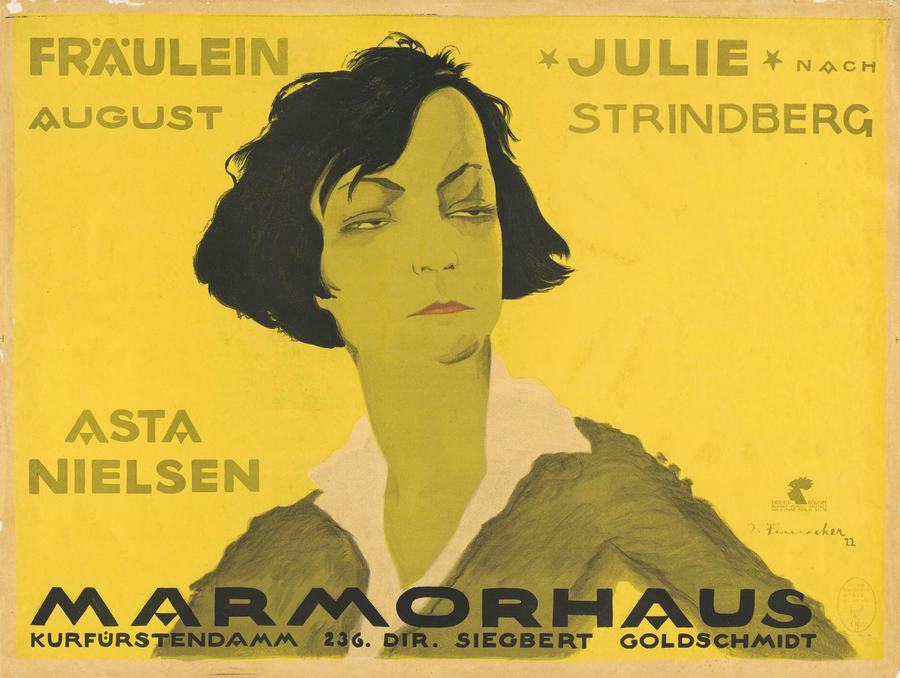
A definitive 4.4/10 rating for a film that redefined the boundaries of cult cinema. Fräulein Julie remains a cornerstone of transgressive art.
The cinematic landscape of Fräulein Julie is a rich tapestry of nuanced performances, masterful direction, and a narrative that probes the very fabric of societal norms. At its core, the film is a scathing critique of the class system, one that lays bare the hypocrisies and contradictions of a world governed by rigid social hierarchies. The character of Julie, played with remarkable depth and vulnerability by Asta Nielsen, is a powerful embodiment of the suffocating nature of aristocratic life, her desires and aspirations constantly at odds with the stifling expectations of her social station.
In contrast, the figure of Jean, brought to life by the inimitable William Dieterle, represents a world of sophistication and refinement, his travels and readings having endowed him with a sense of cultural and intellectual breadth that transcends the narrow confines of his role as a valet. As their relationship deepens, the film raises fundamental questions about the nature of love, class, and identity, refusing to offer easy answers or sentimental resolutions. Instead, it presents a complex, often brutal, portrait of a world in which social conventions are constantly at war with human emotions.
The direction, courtesy of William Dieterle, is a masterclass in subtlety and restraint, eschewing melodrama and sentimentality in favor of a more understated, naturalistic approach. The cinematography, meanwhile, is a character in its own right, capturing the oppressive grandeur of the noble estate and the cramped, claustrophobic world of the servants' quarters with equal aplomb. As the narrative unfolds, the camera becomes an unflinching observer of the characters' inner lives, laying bare their thoughts, feelings, and desires with a sense of unvarnished honesty.
In terms of its thematic concerns and dramatic structure, Fräulein Julie invites comparison with other films of the era, such as The Last of the Mafia and The Man o' War's Man. However, it is in its nuanced exploration of the human condition, its refusal to simplify or sentimentalize the complexities of love and relationships, that the film truly distinguishes itself. Like My Lady Nicotine and A Kiss in Time, Fräulein Julie is a film that lingers in the memory long after the credits have rolled, its characters, themes, and emotions continuing to resonate with audiences like a haunting melody.
As a work of cinematic art, Fräulein Julie is a triumph, a film that balances intellectual rigor with emotional depth, and visual beauty with dramatic intensity. It is a testament to the power of cinema to capture the essence of the human experience, in all its complexity and messiness. Like The Frame-Up and The Dwelling Place of Light, it is a film that challenges our assumptions, provokes our thoughts, and lingers in our memories like a ghostly presence. Whether you are a cinephile, a scholar of literature, or simply a lover of great storytelling, Fräulein Julie is a film that demands to be seen, and savored.
In the context of film history, Fräulein Julie occupies a unique position, one that reflects the changing social mores, cultural values, and artistic expression of its time. Like A Gamble in Souls and Swat the Spy, it is a film that captures the essence of an era, with all its attendant joys, sorrows, and contradictions. As such, it is a vital piece of cinematic heritage, one that continues to inspire, educate, and entertain audiences to this day. Whether you are interested in the silent era, the golden age of Hollywood, or the contemporary cinematic landscape, Fräulein Julie is a film that will enrich your understanding of the medium, and leave you in awe of its enduring power, and beauty.
The influence of Fräulein Julie can be seen in a wide range of films, from the literary adaptations of The New Exploits of Elaine to the social dramas of The Perfect Thirty-Six. Its themes of love, class, and identity continue to resonate with audiences, inspiring new generations of filmmakers, writers, and artists. Like The House of a Thousand Candles and Oliver Twist, it is a film that reminds us of the transformative power of cinema, its ability to capture the essence of the human experience, and to inspire us to think, feel, and act in new, and unexpected ways.
In conclusion, Fräulein Julie is a film that will continue to haunt, inspire, and provoke audiences for generations to come. Its nuanced exploration of the human condition, its refusal to simplify or sentimentalize the complexities of love and relationships, and its masterful balance of intellectual rigor, emotional depth, and visual beauty make it a true masterpiece of cinematic art. Like Buried Treasure and Her Face Value, it is a film that reminds us of the enduring power of cinema to capture the essence of our shared humanity, and to inspire us to think, feel, and act in new, and unexpected ways. Whether you are a scholar, a cinephile, or simply a lover of great storytelling, Fräulein Julie is a film that demands to be seen, and savored, a true masterpiece of the cinematic medium.
As we reflect on the significance of Fräulein Julie, we are reminded of the importance of preserving our cinematic heritage, and of ensuring that films like this one continue to be seen, studied, and appreciated by audiences around the world. Like Democracy: The Vision Restored, it is a film that challenges our assumptions, provokes our thoughts, and inspires us to think, feel, and act in new, and unexpected ways. As such, it is a vital part of our shared cultural heritage, a testament to the enduring power of cinema to capture the essence of the human experience, and to inspire us to build a better, more just, and more compassionate world.
IMDb —
1931
Community
Log in to comment.