DbcultAccessing Vault...
7.1/10
Senior Film Conservator
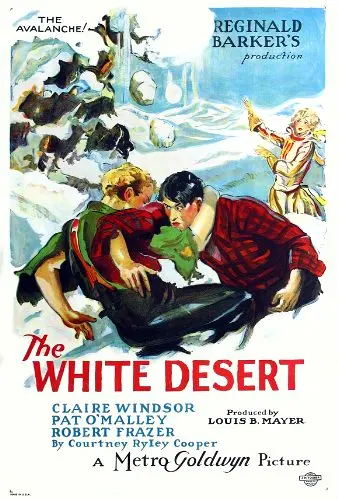
A definitive 7.1/10 rating for a film that redefined the boundaries of cult cinema. The White Desert remains a cornerstone of transgressive art.
The White Desert, a 1925 silent film directed by William A. Wellman, is a cinematic tour de force that masterfully weaves a tale of suspense, human drama, and redemption. Set against the rugged backdrop of the Colorado mountains, the film tells the story of a railroad tunnel project fraught with danger and uncertainty.
The narrative centers around Barry Houston, the stalwart superintendent played by Matthew Betz, who finds himself at odds with John Keith, the project's engineer, portrayed by William Eugene. Keith's reckless disregard for Houston's warnings about excessive blasting ultimately leads to a catastrophic avalanche that destroys the line camp, leaving the crew stranded and in dire need of assistance.
As Keith and Houston venture out to procure aid, the film expertly ratchets up the tension, plunging the viewer into a world of desperation and survival. The cinematography is breathtaking, capturing the harsh beauty of the Colorado mountains and the desolate landscape that serves as the backdrop for the crew's struggle.
Upon their return with food and medical aid, the crew faces new challenges, including Buck Carson's descent into madness, driven by hunger and despair. The scene in which Buck attacks Robinette, played by Priscilla Bonner, and is subsequently thwarted by Houston, is a masterclass in suspense, with the audience on the edge of their seats as they witness the dramatic confrontation.

The film's portrayal of Robinette's confession of love for Houston is a poignant moment, underscored by the chemistry between the leads. This subplot adds a layer of depth to the narrative, elevating The White Desert from a simple tale of survival to a nuanced exploration of human relationships.
In terms of direction, Wellman demonstrates a keen sense of pacing, effortlessly shifting between moments of high tension and introspection. The film's score, although not explicitly mentioned, is equally effective in enhancing the overall atmosphere, with the sound design complementing the on-screen action to create a truly immersive experience.
When compared to other films of the era, such as The Red Circle and Sally of the Sawdust, The White Desert stands out for its coherent narrative structure and strong character development. While films like The Dumb-Bell and Queen of the Sea may share similar themes, The White Desert's execution is unparalleled.
The White Desert's exploration of the human condition, set against the unforgiving backdrop of the Colorado mountains, is a testament to the film's enduring appeal. This 1925 silent film is a masterpiece of cinematic storytelling, with a narrative that continues to captivate audiences to this day.
In conclusion, The White Desert is a must-see for film enthusiasts and historians alike, offering a glimpse into the past while remaining remarkably relevant in its exploration of human drama and suspense. With its strong performances, breathtaking cinematography, and coherent narrative structure, this film is an absolute treasure that deserves to be rediscovered by modern audiences.
IMDb —
1918
Community
Log in to comment.