DbcultAccessing Vault...
Cult Review
Senior Film Conservator
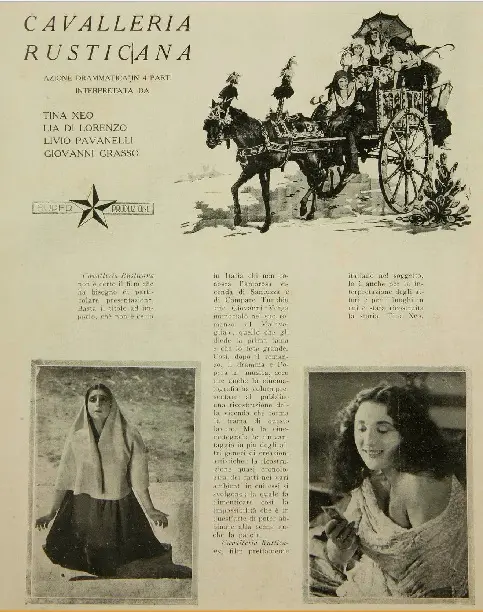
The flickering shadows and stark contrasts of early cinema found a profoundly fertile ground in Giovanni Verga’s brutal, beautiful narrative, Cavalleria Rusticana. This cinematic rendition, far from being a mere transcription, is an evocative tapestry woven from the threads of primal human emotions: love, jealousy, honor, and the crushing weight of societal expectation. It is a testament to the power of the source material that even in an era before synchronized sound, the film manages to convey the operatic scale of its tragedy, a silent symphony of Sicilian passion that resonates with an almost visceral intensity. The film doesn't just present a story; it plunges the viewer headfirst into a world where every glance, every gesture, every whispered secret carries the potential for catastrophic consequences.
Verga's original novella, a cornerstone of Italian verismo, is a stark, unvarnished portrayal of life in rural Sicily, a world governed by ancient codes and fierce loyalties. The film, in its silent grandeur, endeavors to capture this raw authenticity, often succeeding through the sheer force of its performers and the meticulous framing of its scenes. One cannot discuss this adaptation without acknowledging the monumental task of translating such a vocally driven narrative (given its operatic fame) into a purely visual medium. Yet, the filmmakers, with remarkable ingenuity, employ visual storytelling that speaks volumes, allowing the audience to intuit the unspoken dialogues and the internal turmoil of its characters. The dust of the village roads, the rustic textures of the homes, and the expressive faces of the ensemble cast become the primary conduits for this poignant drama.
At the heart of this tumultuous tale are performances that, even through the veil of time and the limitations of early film technology, manage to burn brightly. Tina Xeo, as Santuzza, delivers a portrayal of heart-wrenching vulnerability and desperate strength. Her expressive eyes and anguished gestures convey the profound torment of a woman caught between societal condemnation and an unyielding, unrequited love. Xeo’s Santuzza is not merely a victim; she is a force of nature, driven by a conviction that ultimately seals her own fate and that of others. Her sorrow is palpable, a silent scream that echoes through the sun-baked landscapes, a testament to her mastery of the nascent art of cinematic emoting. One might even draw a parallel to the intense, almost spiritual suffering depicted in films like The Faith Healer, where characters grapple with profound internal conflicts that manifest in outward displays of anguish and fervent belief.
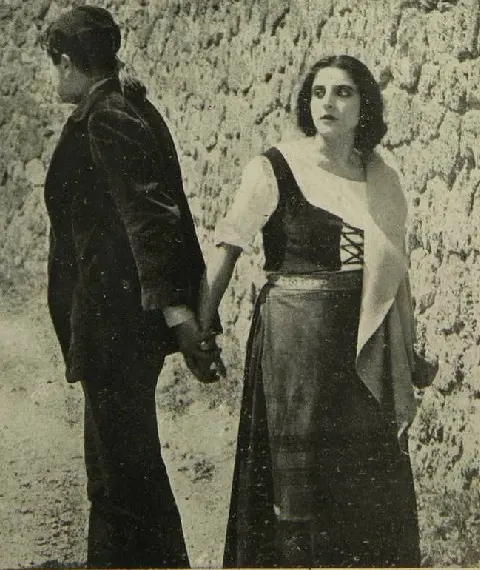
Giovanni Grasso Sr., embodying the volatile Turiddu, is a whirlwind of conflicting desires. His Turiddu is a man torn between the allure of the forbidden and the demands of honor, a character whose impulsiveness ultimately leads to his tragic downfall. Grasso Sr. projects a masculine bravado that is both charming and dangerous, a man whose passions are too grand for the confined world he inhabits. His interactions, particularly the subtle shifts in his demeanor when confronted by Santuzza or seduced by Lola, speak volumes without a single uttered word. He captures the essence of a man destined for a violent end, a figure whose reckless abandon is both his greatest charm and his gravest flaw. His portrayal resonates with a certain fatalism often found in early melodramas, where characters are often prisoners of their own intense emotions, much like the tragic figures in My Official Wife, though the contexts differ greatly.
The role of Lola, the object of Turiddu’s rekindled desire and Alfio’s wife, is handled with a captivating blend of innocence and cunning by Mary Cleo Tarlarini. Tarlarini’s Lola is not a villain in the traditional sense, but rather a woman whose flirtatious nature and perhaps a touch of vanity inadvertently ignite the tragic conflagration. Her beauty is undeniable, and her actions, though seemingly light-hearted, carry a devastating weight. She represents the temptation that disrupts the fragile peace of the community, a catalyst for the unfolding drama. Lia Di Marzio and Lola Romanos, though perhaps in smaller roles, contribute to the rich tapestry of village life, providing authentic background and reactions that ground the central performances in a believable social context. Livio Pavanelli, as Alfio, the wronged husband, delivers a performance of simmering rage that eventually erupts into righteous vengeance. His initial calm demeanor makes his eventual fury all the more terrifying, a slow burn that culminates in a devastating explosion of masculine pride and Sicilian honor. Pavanelli masterfully conveys the quiet dignity that turns to a terrifying resolve once his honor is stained, a transformation that is chilling in its inevitability.
The directorial choices in Cavalleria Rusticana are particularly noteworthy for their ability to convey complex emotions and narrative developments without the aid of spoken dialogue. The use of intertitles is judicious, serving to advance the plot or provide essential context rather than merely narrating the action. Instead, the camera itself becomes a storyteller, lingering on faces to capture subtle emotional shifts, or sweeping across the rural landscape to emphasize the isolation and timelessness of the setting. The cinematography, though rudimentary by modern standards, effectively utilizes natural light and shadow to create a palpable atmosphere, enhancing the dramatic tension. The bright, unforgiving Sicilian sun often casts long, stark shadows, mirroring the moral ambiguities and dark secrets harbored within the community.
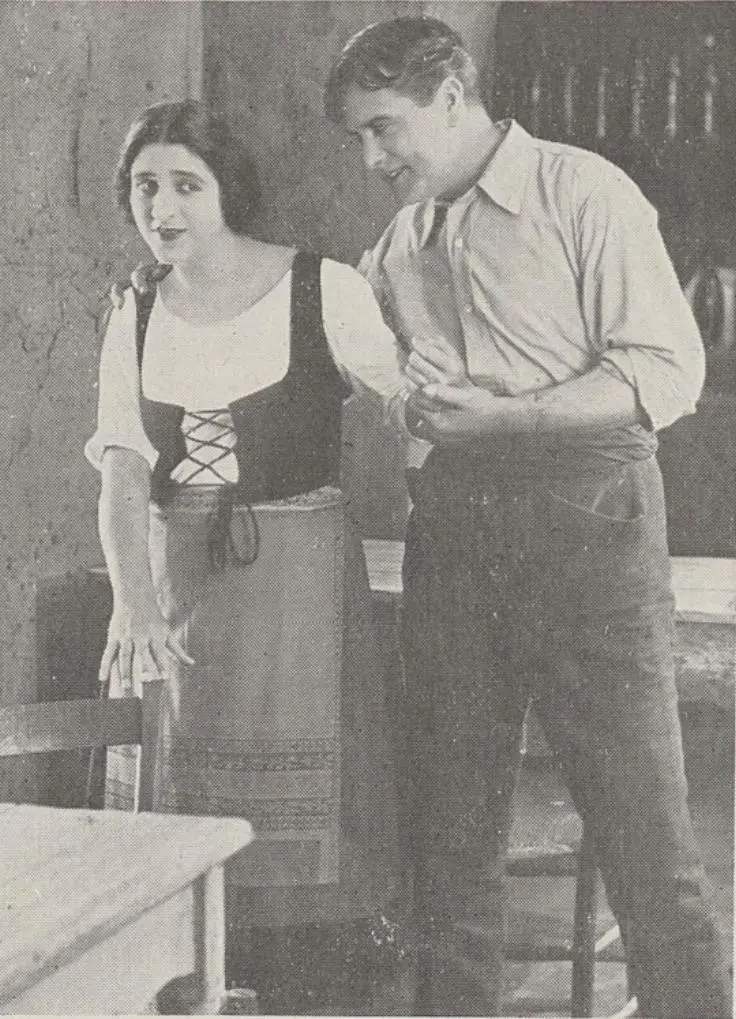
One of the film's greatest strengths lies in its depiction of the village as a character in itself. The close-knit community, with its gossiping women, watchful elders, and rigid social codes, acts as a powerful, almost suffocating presence. Every action, every transgression, is observed and judged, adding an oppressive layer to the personal dramas unfolding. This sense of communal scrutiny is brilliantly conveyed through crowd scenes and the reactions of onlookers, who become a silent chorus to the tragedy. The Easter Sunday procession, for instance, is not just a religious ceremony; it's a backdrop against which the personal betrayals become all the more stark and sacrilegious. The solemnity of the religious rites is brutally interrupted by the raw, untamed human passions, creating a powerful juxtaposition that underscores the film's central themes. This aspect of societal pressure and its impact on individual lives can also be seen, albeit in different cultural contexts, in films like Once to Every Woman, where moral choices are weighed heavily by community judgment.
The core themes of Giovanni Verga's original work—honor, betrayal, and the inexorable pull of fate—are meticulously preserved and amplified in this cinematic adaptation. The concept of onore, or honor, is not merely an abstract idea but a tangible force that dictates the lives and deaths of the characters. For Alfio, his honor is inextricably linked to his wife's fidelity; once that is compromised, his path to vengeance is predetermined by the strictures of his society. For Santuzza, her honor is shattered by Turiddu's abandonment and her pregnancy out of wedlock, leaving her with little recourse but to expose the truth, however devastating it may be. The film meticulously builds this sense of inevitability, each character's choice leading them further down a path from which there is no return. It’s a relentless march towards a tragic conclusion, much like the somber progression of fate in Dead Men Tell No Tales, where past actions inevitably catch up with characters.
The interplay of passion and restraint is a recurring motif. Turiddu's inability to control his desires, Lola's casual flirtatiousness, and Santuzza's overwhelming devotion all contribute to the escalating tension. The film excels at depicting these internal struggles through powerful visual cues. A lingering shot on a character's face, a clenched fist, a hurried glance – these non-verbal expressions speak volumes, immersing the audience in the emotional maelstrom. The film captures the suffocating atmosphere of a community where personal lives are public spectacles, and transgressions are met with swift, often brutal, judgment. The ultimate duel, far from being a mere act of violence, is a ritualistic affirmation of a deeply ingrained cultural code, a tragic resolution to an unbearable stain on honor. This raw depiction of human conflict and its societal repercussions stands as a powerful example of early cinematic realism, drawing viewers into a world both foreign and profoundly familiar in its depiction of human nature.
While often overshadowed by Mascagni's iconic opera, this silent film adaptation of Cavalleria Rusticana holds its own as a significant piece of cinematic history. It demonstrates the early potential of film to convey complex literary narratives with emotional depth and visual artistry. The performances, particularly those of Tina Xeo and Giovanni Grasso Sr., are powerful examples of silent acting at its finest, relying on exaggerated yet nuanced expressions and body language to communicate profound emotional states. The film's aesthetic choices, its stark realism, and its unflinching portrayal of human tragedy set a precedent for future adaptations and for the development of Italian cinema itself. It’s a foundational work that speaks to the enduring power of Verga's story, a narrative that continues to resonate across different artistic mediums and generations.
The enduring appeal of Cavalleria Rusticana, in all its forms, lies in its universal themes. While set in a specific time and place, the story of love, jealousy, betrayal, and vengeance transcends cultural boundaries. It explores the darker facets of human nature, the destructive power of uncontrolled passion, and the tragic consequences that arise when personal desires clash with rigid societal codes. This film serves as a potent reminder of cinema's early capacity to capture these timeless struggles, to freeze moments of intense human drama and present them for contemplation. It stands as a powerful artifact, a silent scream of passion and despair from the nascent years of moviemaking, inviting modern audiences to witness the birth of a cinematic language capable of expressing the most profound human experiences. The raw emotional landscape it paints is as vivid today as it was when first unveiled, offering a profound glimpse into a world where life and death hung precariously on the delicate balance of honor and desire. Its influence, though perhaps subtle in the grand scheme of film history, is undeniable in its contribution to the art of visual storytelling, proving that even without words, a story can possess an echoing, unforgettable voice.
IMDb —
1927
Community
Log in to comment.