DbcultAccessing Vault...
Cult Review
Senior Film Conservator
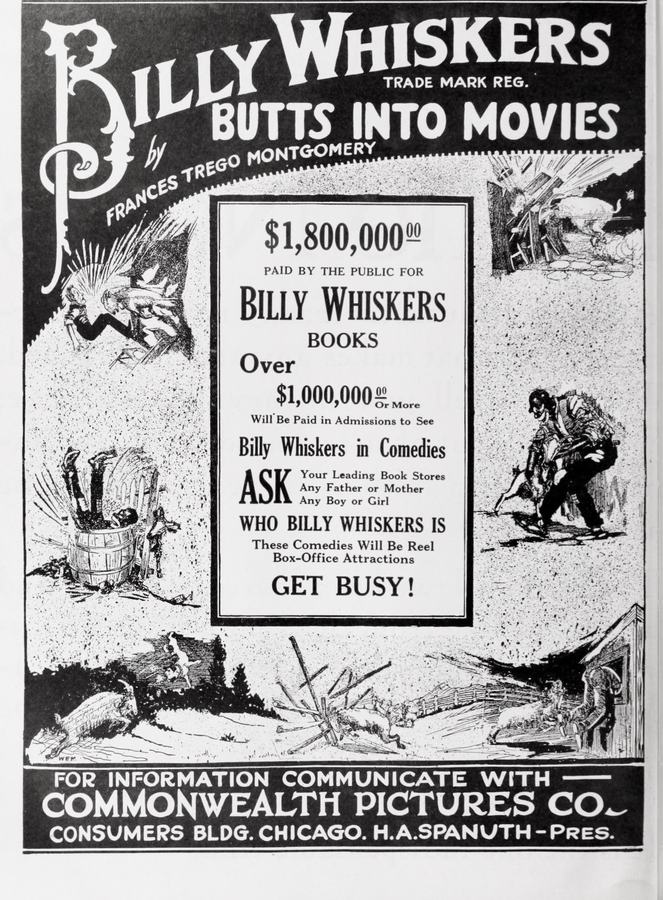
In the flicker of a 1919 carbon-arc projector, Billy Whiskers materializes less as cuddly children’s fare and more as a curio of proletarian aspiration—an anthropomorphic résumé etched in silver nitrate. Directors H.A. Spanuth and his uncredited collaborators fracture the pastoral idyll, hurling their cloven protagonist into a Taylorized cityscape where employment itself becomes a carnival of misfires.
Notice how the taxi sequence opts for low-angle shots, the camera crouched like a gossip columnist, transforming everyday traffic into a cacophonous labyrinth. Each clanging streetcar becomes a mechanical Minotaur; Billy’s ears flatten, not in fear but in vocational disillusion. The mise-en-scène swaps hay-scented pastoralism for a soot-choked grid, and the goat’s rectangular pupils reflect a city that refuses to blink.
When the narrative pivots to the firehouse, the palette warms from asphalt grays to incendiary hues—amber, ochre, and the occasional lick of sea-blue hydrant water that sizzles against ember. The burning tenement is staged like a Baroque altarpiece: diagonally tilted beams, children’s toys frozen in mid-air, smoke roiling like acolytes swinging censers. Billy’s silhouette, framed by the yawning doorway, recalls Caravaggio’s Conversion of Saint Paul—a quadruped Saul blinded not by divine light but by civic duty.
The rescue itself is rendered in a single, breath-held long take. Spanuth refuses intercuts, forcing us to inhabit the perilous crawl alongside Billy. The goat’s horns, often comedic props in barnyard cartoons, here become balletic levers, sliding beneath the lace bassinet with surgeon precision. Note the subtle double exposure as flames lick the lens: it imbues the scene with spectral urgency, as though history itself burns through the celluloid.
Viewers conditioned to talkie cacophony often underestimate silent cinema’s sensory invitation. Without audible crackle, the mind furnishes its own olfactory inferno: pine kindling, kerosene, the copper tang of panic. Contemporary exhibitors reportedly paired the reel with a live squeezebox, its wheeze mimicking both taxi horns and fire sirens—an aural palimpsest that modern restorations can only approximate.
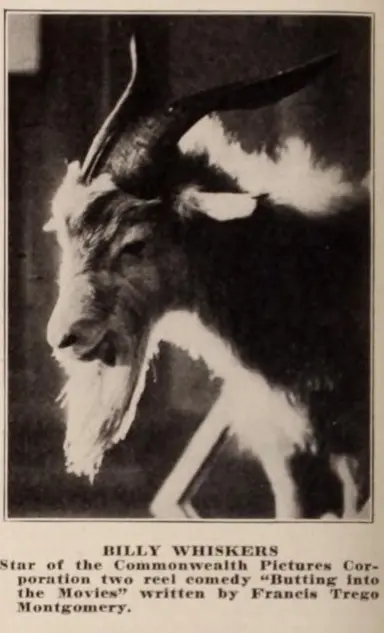
Frances Trego Montgomery, whose children’s chapter books birthed Billy, was a rare female voice in a nickelodeon landscape dominated by masculine slapstick. The film subtly reclaims bodily autonomy: a goat, coded androgynously, storms a hyper-masculine fire brigade and earns approbation not through brawn but through strategic intellect—an inadvertent feminist fable decades ahead of its time.
Where the Soviet agit-boat epic weaponizes montage to galvanize revolution, Billy Whiskers weaponizes empathy, proving a single act of interspecies valor can be as ideologically potent as mass propaganda. Compare also to Return to Zion’s diaspora yearning: both films obsess over displacement, yet Billy’s search concludes in civic embedment rather than homeland return.
Gosfilmofund’s 4K restoration rescues the original two-tone tinting, revealing lavender nightscapes and rose dawnlight absent from dupes. Streaming platforms still shuffle low-res 480p transfers; cinephiles should demand the sea-blue banded nitrate scan, currently touring rep houses under the auspices of a European archive roadshow.
More than a curio, Billy Whiskers is a pocket-sized epic about vocational drift, urban alienation, and the incandescent moment when purpose crystallizes. It reminds us that heroism can arrive on cloven hoof, that silent tongues can still scream, and that sometimes the most radical act is simply finding—and living—the job you were born to do.
If you’d like to further explore the thematic cousins—existential comedies of error, animal protagonists, or interwar optimism—consider pairing this viewing with The Sudden Gentleman’s class satire or the proto-screwball antics of Three and a Girl.

IMDb 6.5
1936
Community
Log in to comment.