DbcultAccessing Vault...
Cult Review
Senior Film Conservator
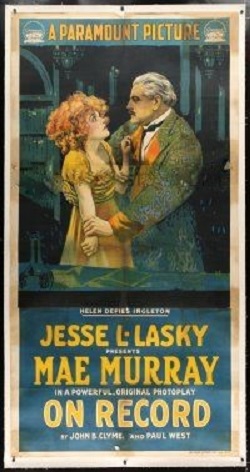
The silent film era, often dismissed by casual viewers as a quaint precursor to sound, was in fact a vibrant, sophisticated crucible for cinematic storytelling, grappling with profound societal questions through visual poetry. Among its myriad offerings, the 1917 drama On Record stands as a particularly compelling testament to the period's narrative prowess. Directed by a collaborative effort from the writing team of John B. Clymer, Beulah Marie Dix, Paul West, and George DuBois Proctor, this film, while perhaps less frequently celebrated than some of its contemporaries, offers a deeply resonant exploration of reputation, social mobility, and the brutal consequences of a single, devastating misunderstanding. It's a narrative that, even a century later, speaks volumes about the enduring human struggle against prejudice and the relentless pursuit of justice.
At its heart is Helen Wayne, brought to vivid, if silent, life by the luminous Mae Murray. Murray, a significant star of the era known for her 'bee-stung lips' and expressive dance, imbues Helen with a captivating blend of innocence, ambition, and a nascent worldliness. Her character is not merely a damsel in distress; she is a young woman of agency, albeit one whose agency is tragically curtailed by external forces. Helen's initial motivation for leaving the pastoral tranquility of the country for the bustling anonymity of the big city is immediately relatable: a hunger for more, a desire to transcend the perceived limitations of her provincial existence. This aspiration, a universal human impulse, sets the stage for her subsequent trials. The city, in its dual nature, promises both opportunity and peril, a dichotomy that On Record expertly navigates.
The narrative’s pivotal turning point arrives with a chilling swiftness. Just as Helen is poised to embark on her new life as a secretary for the prominent Calder family, she encounters Martin Ingleton. Ingleton, portrayed with a sinister charm that hints at his underlying malice, extends an invitation to dinner. For a young woman new to the city, perhaps a touch naive, and certainly hungry for connection and experience, this gesture might have seemed innocuous, even flattering. However, this seemingly benign offer is a meticulously crafted trap. When Helen arrives at the prearranged meeting place, she is summarily arrested, her name irrevocably inscribed on a police record. The film, through its masterful use of visual storytelling and intertitles, conveys the profound shock and humiliation of this moment. It’s an act of bureaucratic cruelty, a bureaucratic branding that ignores context and intent, reducing an individual to a single, damning entry.
This incident, an arbitrary act of injustice, serves as the narrative’s foundational trauma. It’s not a consequence of Helen’s moral failing, but rather of her vulnerability and another’s calculated malevolence. The film subtly critiques the judicial systems of the era, where a mere arrest, regardless of the eventual outcome or the circumstances surrounding it, could permanently tarnish a person’s character. This theme resonates strongly with films like The Ticket-of-Leave Man, where a character released from prison finds himself perpetually shadowed by his past, unable to escape the societal judgment that accompanies a criminal record. Both films explore the insidious ways in which a legal mark can become a social stigma, trapping individuals in a cycle of suspicion and exclusion, regardless of their present conduct or true character.
Time, as it often does in compelling dramas, moves forward, allowing Helen to build a new life, albeit one always under the unspoken shadow of her past. She finds employment with the Calder family, establishing herself as a diligent and capable secretary. It is here that she encounters Rand Calder, portrayed by Tom Forman, whose youthful earnestness provides a stark contrast to Ingleton’s duplicity. Their romance blossoms organically, a tender subplot that highlights Helen’s inherent goodness and Rand’s ability to see beyond superficialities. Their impending engagement symbolizes a fresh start, a triumph of genuine affection over the arbitrary dictates of fate. The audience, having witnessed Helen’s earlier ordeal, yearns for her happiness, making the subsequent turn of events all the more agonizing.
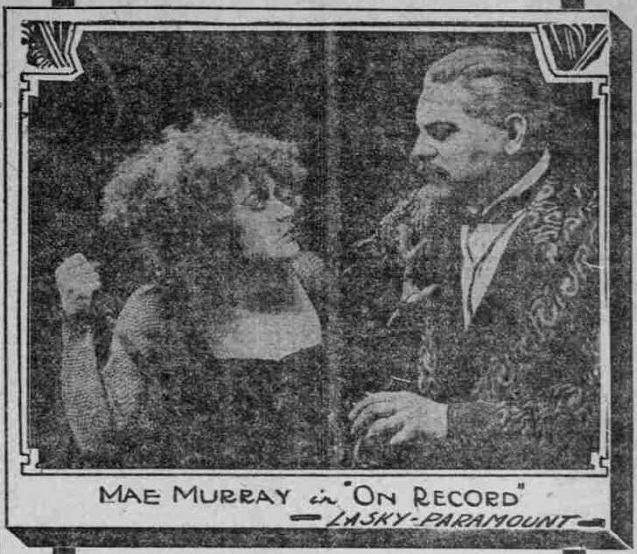
The re-entry of Martin Ingleton into Helen's life is a masterstroke of dramatic tension. He is not merely a forgotten figure; he is the embodiment of her past trauma, a living reminder of the injustice she endured. Ingleton’s motivations are multifaceted: a desire for revenge, perhaps a thwarted romantic interest, or simply a malicious delight in destroying others’ happiness. His attempt to sabotage Rand's business ventures is a calculated act, designed to unravel the fabric of the Calder family’s prosperity. But his true target, the more insidious blow, is aimed squarely at Helen's character. Recognizing her, he seizes the opportunity to weaponize her past arrest, intending to expose her as a woman of 'unworthy character' and thus dismantle her burgeoning relationship with Rand and her hard-won social standing.
The climax of On Record unfolds in the hallowed, yet often brutal, arena of the courtroom. This setting, a classic dramatic device, provides the perfect stage for the confrontation between truth and calumny. The presence of all the principal characters—Helen, Rand, Ingleton, and the Calder family matriarch, Mrs. Lewis McCord (played by Mrs. Lewis McCord herself, a common practice in early cinema where socialites or well-known figures might appear)—amplifies the tension. Ingleton’s accusations are designed to devastate, to paint Helen as a disreputable woman, unworthy of Rand’s affection or the Calder name. The audience, having been privy to Helen’s innocence, experiences a visceral sense of outrage at this unjust assault on her character.
What makes this courtroom scene particularly powerful is its subversion of typical melodramatic tropes. Instead of Rand abandoning Helen in shame or doubt, Ingleton’s malicious attack has the opposite effect. It galvanizes Helen. The film, through this crucial turning point, champions the power of an individual’s voice. Rather than succumbing to the shame Ingleton intends, Helen is instigated to speak her truth. Mae Murray’s performance here, though silent, would have relied heavily on facial expressions, body language, and the emotional resonance conveyed through intertitles, depicting a woman who, having been silenced by circumstance, finally finds her voice. Her narration of the story, her recounting of the original injustice, transforms her from a victim into a powerful advocate for her own innocence. This moment of self-assertion is a profound act of courage and dignity.
The courtroom drama of On Record also draws parallels with other narratives of societal judgment and personal vindication. While vastly different in scope and setting, the thematic undercurrents of a woman facing public scrutiny for her perceived moral failings can be seen in the tragic trajectory of characters like Anna Karenina in Anna Karenina, though Helen's story ultimately offers a more hopeful resolution. The sheer injustice of her situation, where an innocent act leads to a criminal record, speaks to a broader critique of societal mechanisms that often fail to distinguish between true culpability and circumstantial misfortune. The film’s writers—John B. Clymer, Beulah Marie Dix, Paul West, and George DuBois Proctor—demonstrate a keen understanding of dramatic structure, building suspense and empathy, ultimately delivering a cathartic resolution.
Mae Murray's portrayal of Helen is undoubtedly the anchor of the film. Her ability to convey Helen’s initial optimism, her shock and despair after the arrest, her quiet resilience, and finally, her defiant strength in the courtroom, would have been crucial to the film’s success. Silent film acting required a heightened sense of theatricality, relying on exaggerated gestures and expressive eyes to communicate complex emotions without dialogue. Murray, a seasoned performer, would have navigated these demands with grace and conviction, making Helen a deeply sympathetic figure. The supporting cast, including Louis Morrison, Henry A. Barrows, Lucien Littlefield, Jane Wolfe, Bliss Chevalier, and Charles Ogle, all contribute to the rich tapestry of the film’s world, creating a believable social milieu against which Helen’s drama unfolds.
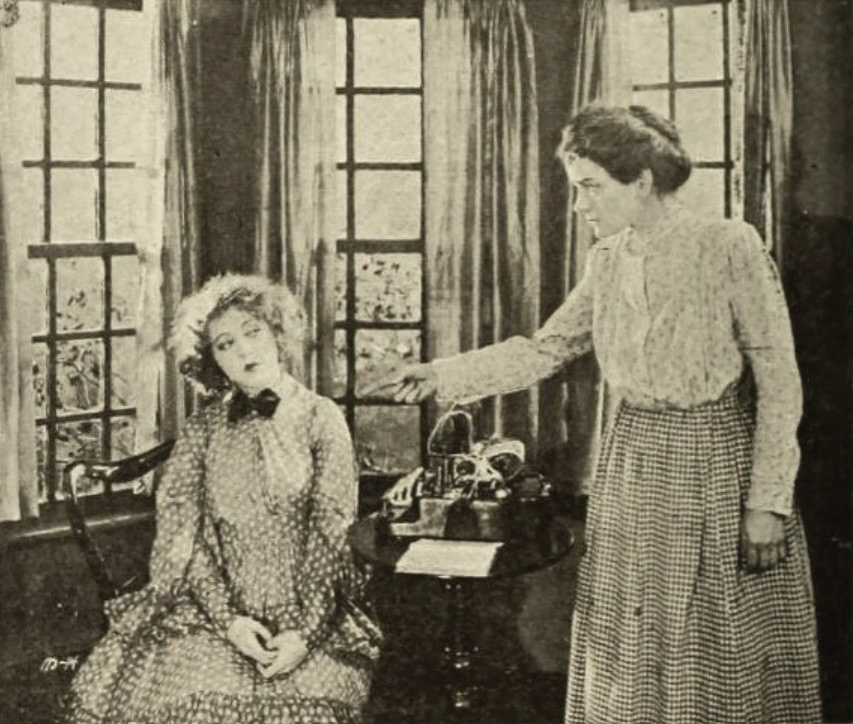
The cinematography of the era, while lacking the elaborate tracking shots and rapid cuts of later periods, possessed its own unique aesthetic. Films like On Record would have utilized carefully composed tableaux, strategic lighting, and often symbolic imagery to convey meaning. The contrast between the drab country life and the vibrant city, the starkness of the courtroom, and the intimate moments between Helen and Rand would have been visually articulated to enhance the emotional impact. The intertitles, far from being mere plot devices, were often crafted with poetic language, serving as an integral part of the narrative and emotional expression. They guided the audience’s understanding, providing insights into characters’ thoughts and motivations, and were as much a part of the storytelling as the visual action.
Beyond the individual drama, On Record functions as a potent piece of social commentary. It critiques the punitive nature of a society that often prioritizes legalistic records over individual truth and character. The film highlights the vulnerability of women in particular, who, in that era, were often judged more harshly by societal standards, where a single perceived blemish could unravel their entire social fabric. Helen’s journey is one of profound resilience, a refusal to let an unjust past define her future. Her ultimate exoneration is not just a personal victory but a symbolic triumph against the rigid, unforgiving social norms that sought to ensnare her.
The film’s title itself, On Record, is exceptionally well-chosen, encapsulating the central conflict. It refers not only to the literal police record but also to the indelible mark a reputation leaves in the public consciousness. The narrative arc from being 'on record' as a criminal to being 'on record' as a woman of integrity through her own testimony is a powerful journey. It emphasizes that while external forces can attempt to define us, true character ultimately shines through, especially when given the chance to speak its truth. This universal theme ensures the film’s enduring relevance, echoing similar struggles for vindication seen in countless narratives across cinematic history.
The complexities of urban life versus rural simplicity, another subtle undercurrent, are also explored. Helen’s initial yearning for the city is met with its harsher realities, a common trope in early cinema reflecting societal anxieties about rapid urbanization. However, the film avoids a simplistic condemnation of city life, instead focusing on the specific malevolence of an individual and the systemic flaws that allow such injustice to persist. The film ultimately champions the individual’s right to a fair hearing and the restorative power of truth, regardless of the daunting obstacles.
In conclusion, On Record is far more than a mere historical curiosity; it is a meticulously crafted drama that delves into the human condition with remarkable insight. Its exploration of false accusations, the fragility of reputation, and the power of personal narrative remains as compelling today as it was over a century ago. The film, through the compelling performance of Mae Murray and the thoughtful screenplay by John B. Clymer, Beulah Marie Dix, Paul West, and George DuBois Proctor, offers a timeless narrative of injustice confronted and ultimately, truth triumphant. It reminds us that while records can be written, they can also be rewritten through courage and conviction. For aficionados of silent cinema, or anyone interested in the enduring power of dramatic storytelling, On Record stands as a vibrant, emotionally resonant testament to the era’s artistic achievements, deserving of renewed appreciation and study.
IMDb 6.5
1934
Community
Log in to comment.