DbcultAccessing Vault...
Cult Review
Senior Film Conservator
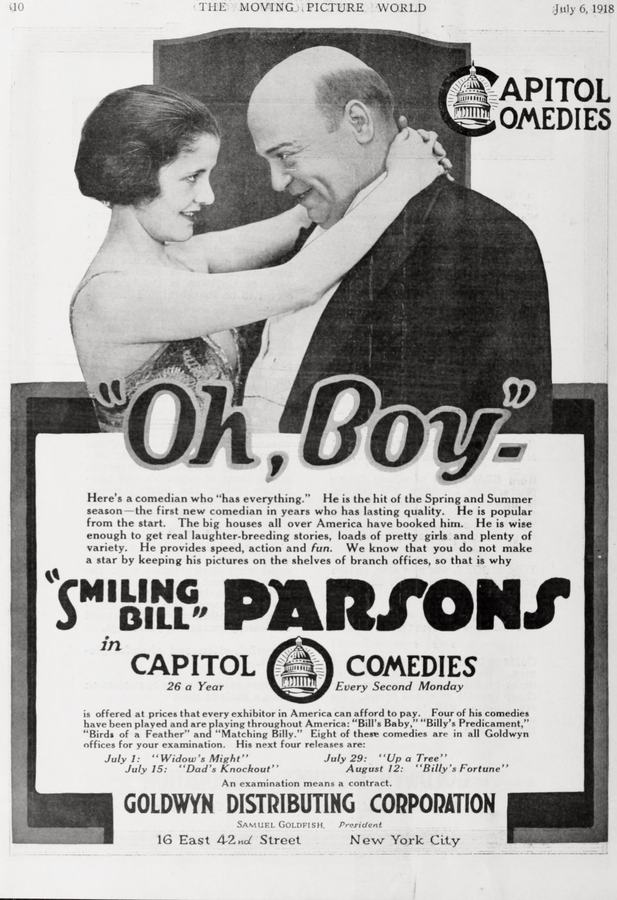
Tom Bret's cinematic endeavor, Billy's Fortune, stands as a fascinating artifact, a narrative tapestry woven with threads of innocence, avarice, and eventual enlightenment. From its initial frames, the film establishes a compelling dichotomy: the pastoral simplicity of its protagonist, Billy, starkly contrasted against the impending opulence that will soon engulf him. It’s a classic setup, yet Bret, with a keen eye for human frailty and resilience, manages to imbue it with a fresh, almost startling urgency. The sudden windfall that transforms Billy from a humble, unassuming young man into a reluctant millionaire isn't merely a plot device; it's a catalyst, a crucible designed to test the very essence of his being.
William Parsons, in the titular role, delivers a performance that is nothing short of masterful. His portrayal of Billy is a delicate dance between wide-eyed naivete and burgeoning wisdom. Initially, Parsons imbues Billy with a palpable sense of bewilderment, a deer-in-headlights quality as he grapples with the sheer scale of his inheritance. This isn't a man who has ever coveted riches; he is, rather, a man upon whom riches have been unceremoniously dumped. Parsons’ physical presence, his hesitant gestures, and the almost pained expression in his eyes convey a profound discomfort with his new station. He doesn't revel in the luxury; he endures it, a stranger in a strange land of silk and champagne. The subtle shifts in his demeanor as he encounters the various denizens of high society are particularly impressive. We witness his initial trust, his subsequent disillusionment, and the slow, arduous process of developing a discerning eye for true character.
The challenge for any actor playing such a character lies in preventing him from becoming a mere cipher for the plot's machinations. Parsons deftly avoids this pitfall. His Billy is not simply a passive recipient of fate's whims; he is an active participant in his own moral education. The internal struggle is etched onto Parsons' face, visible in every hesitant smile and every furrowed brow. This nuanced performance elevates Billy's Fortune beyond a simplistic morality play, transforming it into a character study of considerable depth. One might draw parallels to the earnestness found in the protagonist of Half a Hero, though Billy's journey is arguably more profound in its exploration of inherent values versus acquired status.
Tom Bret's screenplay is particularly incisive in its portrayal of the social milieu into which Billy is thrust. The world of the wealthy is depicted not as a paradise, but as a gilded cage, a viper's nest where genuine affection is often a commodity, and integrity is a weakness to be exploited. The supporting cast, though perhaps less fleshed out than Parsons' Billy, serves their purpose admirably as archetypes of greed and superficiality. The charming yet utterly ruthless socialite, Evelyn, is a particularly potent antagonist, her honeyed words and captivating smile masking a calculating heart. Her machinations, designed to separate Billy from his fortune, form the central external conflict of the narrative.
The film doesn't shy away from depicting the insidious nature of financial manipulation and social climbing. It's a stark reminder that wealth, while offering liberation from certain constraints, can simultaneously introduce a whole new set of moral quandaries. The audience is invited to witness Billy's painful education, to feel the sting of his betrayals, and to empathize with his growing cynicism. This thematic exploration of societal corruption and its impact on an innocent individual resonates powerfully, echoing the disillusionment found in narratives like The Whirlpool of Destiny, where characters are similarly caught in currents beyond their control.
The visual language of Billy's Fortune is integral to its thematic impact. The stark contrast between the humble, sun-drenched landscapes of Billy's origins and the shadowy, ornate interiors of his new world is masterfully employed. The rural scenes are often bathed in natural light, conveying a sense of openness and honesty, while the urban mansions are frequently shot with dramatic chiaroscuro, emphasizing the hidden motives and moral ambiguities lurking within. The costumes, too, play a significant role, with Billy's initial plain attire gradually giving way to tailored suits that seem to imprison him rather than adorn him. This visual progression underscores his journey from authentic self to a person attempting to conform to an alien environment.
The production design is meticulous, creating a believable and immersive world. From the opulent ballrooms to the quiet, contemplative spaces Billy seeks refuge in, every set piece contributes to the narrative's emotional resonance. The film uses these visual cues not merely as backdrop, but as active participants in the storytelling, reflecting Billy's internal state and the external pressures he faces. The camera work, often lingering on Parsons' expressive face, ensures that the audience remains intimately connected to Billy's emotional turmoil, even amidst the grandeur. This careful attention to visual detail and mood can be seen as a precursor to the evocative cinematography that would later define films such as Don Juan, though with a different thematic focus.
At its core, Billy's Fortune is a profound meditation on the true nature of wealth. It deftly argues that material riches, while capable of providing comfort, are ultimately hollow without a foundation of integrity, genuine connection, and self-awareness. Billy's path is fraught with moral dilemmas, forcing him to confront the ethical compromises that often accompany great fortune. His eventual realization, that his 'fortune' lies not in bank accounts but in his uncorrupted spirit and the authentic love he discovers, forms the emotional bedrock of the film. This journey of self-discovery and moral fortitude is a timeless theme, one that continues to resonate with audiences across generations.
The film introduces Clara, an artist or intellectual character, who serves as a crucial counterpoint to the superficiality embodied by Evelyn. Clara represents a different kind of wealth: that of intellect, creativity, and spiritual depth. Her interactions with Billy are pivotal, offering him a glimpse into a world where value is not measured in currency but in ideas, art, and sincere human connection. This contrast is vital, providing Billy with an alternative path and ultimately guiding him toward his eventual epiphany. The portrayal of their burgeoning relationship is handled with a delicate touch, emphasizing mutual respect and shared values over material considerations. This search for genuine connection amidst adversity is a theme beautifully explored in films like Rose o' Paradise, though Billy's context is uniquely tied to financial upheaval.
Tom Bret’s direction is marked by a steady hand and a clear vision. The pacing of Billy's Fortune is deliberate, allowing the audience to fully absorb Billy's transformation and the nuances of his moral quandaries. Bret avoids sensationalism, opting instead for a more introspective approach, letting the emotional weight of each scene unfold naturally. The film's climax, involving the public exposure of Evelyn's deceit and Billy's decisive act of integrity, is handled with dramatic precision, providing a satisfying resolution without resorting to simplistic heroics. It's a testament to Bret's skill that the audience is left with a sense of earned triumph, rather than a mere plot convenience.
The dialogue, while occasionally leaning into the dramatic conventions of its era, largely serves to advance character and theme. There are moments of genuine wit and poignant introspection that elevate the screenplay beyond the ordinary. Bret’s ability to craft a narrative that is both entertaining and morally instructive is one of the film's enduring strengths. It’s a film that asks profound questions about identity, social responsibility, and the true meaning of happiness, without ever feeling preachy. The narrative arc, from initial bewilderment to eventual self-possession, is meticulously constructed, ensuring that Billy's journey feels authentic and resonant.
Billy's Fortune, while perhaps not as widely discussed as some of its contemporaries, deserves a place in the cinematic canon for its insightful character study and its timeless thematic concerns. It is a film that rewards repeat viewings, revealing new layers of meaning with each watch. William Parsons' performance alone is worth the price of admission, anchoring the entire narrative with his compelling portrayal of a man grappling with the double-edged sword of prosperity. Tom Bret’s vision, executed with both artistic flair and narrative discipline, ensures that the film transcends its period setting to speak to universal human experiences.
In an age often preoccupied with material success, Billy's Fortune serves as a salient reminder that true richness lies not in what one possesses, but in who one is. It’s a compelling argument for integrity, humility, and the pursuit of genuine human connection over the ephemeral allure of wealth. The film's concluding message, delivered with understated power, leaves a lasting impression, urging viewers to reflect on their own definitions of success and happiness. It’s a cinematic gem that, like its protagonist, finds its true value not in the superficial shine, but in the unwavering strength of its core. Its exploration of character transformation under pressure can be compared to the moral dilemmas presented in The Cross Bearer, albeit with a distinctly different context of personal responsibility and societal expectations.
The film's subtle critique of high society, its portrayal of false friendships, and the protagonist's journey towards self-realization offer a rich tapestry for analysis. It’s a work that challenges viewers to look beyond the surface, to question the inherent values of a materialistic world, and to appreciate the enduring power of an honest heart. The emotional arc is deeply satisfying, providing a cathartic experience as Billy finally sheds the expectations placed upon him by his fortune and embraces a life defined by his own terms. This enduring relevance solidifies Billy's Fortune as more than just a period drama; it is a timeless narrative on the human spirit's quest for authenticity in a world often blinded by glitter.
IMDb 6
1915
Community
Log in to comment.