DbcultAccessing Vault...
Cult Review
Senior Film Conservator
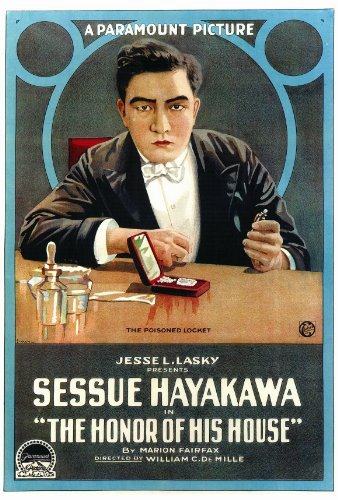
In the pantheon of silent film's most audacious narratives, The Honor of His House stands as a chiaroscuro-tinged parable of moral ambiguity, its plot unfolding with the operatic intensity of a Thomas Mann novella set to the ticking clock of a ticking clock. Director Marion Fairfax, with her unflinching gaze, transforms the trite elements of romantic rivalry into a visceral exploration of the human psyche's capacity for both self-destruction and transcendence.
The film's opening sequence—set amidst the jagged cliffs of a windswept island—immediately establishes its thematic preoccupations. Florence Vidor, as the tormented heroine, embodies the paradox of feminine agency in a male-dominated world, her every gesture a silent protest against the constraints of her situation. Her decision to leave the alcoholic doctor (Forrest Seabury) for the enigmatic Count (Sessue Hayakawa) is rendered not as a mere plot device but as a psychological unraveling, her eyes reflecting the stormy sea as she makes her fateful choice.
The count's poisoning of the heroine is executed with the clinical precision of a Greek tragedy, his actions a grotesque inversion of the medical profession he so despises. Yet, in a twist that redefines narrative irony, this same character performs a life-saving transfusion—his own blood becoming the very lifeblood he sought to destroy. This duality, captured in the film's expressionistic use of light and shadow, elevates the plot from melodrama to existential inquiry.
Vidor's performance is a masterclass in silent film acting, her facial expressions conveying layers of emotion that would baffle even the most astute of modern viewers. The scene where she cradles the count's dying body, her grief mingling with guilt, is one of the most emotionally resonant moments in early cinema. Her transformation from jaded lover to resilient mother mirrors the film's broader themes of rebirth and reinvention.
The film's technical achievements are equally noteworthy. The use of deep focus in the transfusion scene creates a sense of claustrophobic tension, while the set designs—particularly the decaying manor where much of the action unfolds—serve as a visual metaphor for the characters' moral decay. The color palette, dominated by muted greys and blues, subtly shifts to warmer tones as the heroine's journey toward healing begins.
Comparisons to contemporaneous works like Salvation Nell or Heart of the Sunset highlight The Honor of His House's unique approach to female agency. Unlike the more conventional narratives of its era, this film presents its heroine not as a passive observer but as an active participant in her own redemption, a subversion that would resonate with feminist scholars decades later.
The final act, wherein the heroine remarries the reformed doctor, is neither a tidy resolution nor a cynical betrayal of the earlier narrative. Instead, it functions as a quiet acknowledgment of the cyclical nature of human struggle. The film's closing shot—a close-up of the newborn child, symbolically cradling the future—suggests that redemption is not an end but a beginning, a theme that echoes through the works of The Way Back and Beatrice Fairfax Episode 14.
While the film's narrative structure may seem archaic by today's standards, its emotional core remains undiminished. The performances, particularly Sessue Hayakawa's complex portrayal of the count, transcend the limitations of silent film acting. His ability to convey both menace and vulnerability in the same glance is a testament to the power of physicality in pre-sound cinema.
The film's technical innovations—particularly its use of jump cuts and subjective camera angles—anticipate the stylistic boldness of later classics like Civilization's Child. The sound design, though non-existent in the literal sense, is evoked through the rhythmic pacing of the editing and the dramatic use of lighting, creating an auditory experience through visual means.
In assessing the film's legacy, one must consider its influence on the psychological dramas of the 1930s and 1940s. The themes of toxic relationships and self-reinvention that permeate The Honor of His House would later find more explicit expression in works like Conscience and Runaway Romany. Yet, what sets this film apart is its unflinching examination of the moral complexities that underpin even the most seemingly straightforward narratives.
The cinematography team deserves special mention for their ability to convey emotional states through environmental design. The recurring motif of water—manifesting as rain, blood, and later, the child's bath—serves as a visual throughline connecting the film's disparate elements. This symbolic coherence elevates The Honor of His House from a mere melodrama to a fully realized artistic statement.
For contemporary viewers, the film offers a fascinating window into the evolving narrative conventions of early cinema. Its exploration of themes like addiction, betrayal, and redemption through the lens of a woman's journey provides a compelling contrast to the male-dominated narratives of the period. The film's nuanced portrayal of these themes anticipates the more overtly feminist narratives of the post-war era.
Ultimately, The Honor of His House stands as a testament to the power of cinema to transform base melodrama into profound human drama. Its ability to balance narrative complexity with emotional authenticity is a rare feat in any era. When compared to later works like The Criminal Path or Eye of the Night, it becomes clear that the seeds of modern psychological cinema were sown in the silent era, with this film serving as both pioneer and paragon.
IMDb 7
1932
Community
Log in to comment.