DbcultAccessing Vault...
4.2/10
Senior Film Conservator
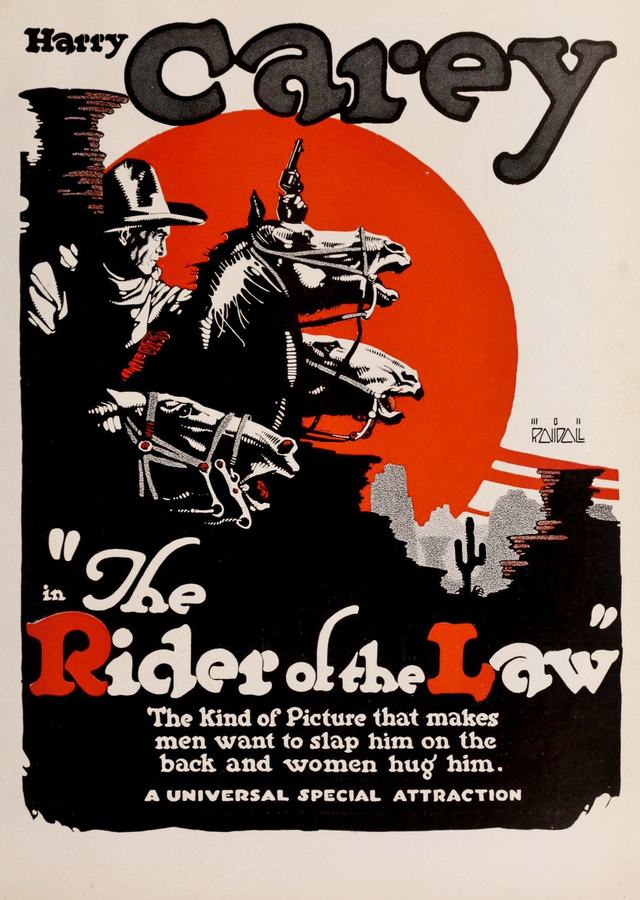
A definitive 4.2/10 rating for a film that redefined the boundaries of cult cinema. Rider of the Law remains a cornerstone of transgressive art.
The cinematic tapestry of the American West has long been woven with threads of heroism, villainy, and the stark, often brutal, choices that define a man's character. In this rich tradition, Rider of the Law emerges not merely as another dusty trail ride, but as a compelling exploration of moral ambiguity and the crushing burden of duty. This is a film that transcends its genre trappings, delving into the very heart of what it means to forge a new identity while simultaneously being shackled to the ghosts of a tumultuous past. It presents a narrative that, even a century later, resonates with a potent, raw emotionality, challenging viewers to consider the true cost of redemption.
At its core, Rider of the Law is the story of Jim Kyneton, portrayed with a stoic intensity by Duke R. Lee. Kyneton is no ordinary lawman; his past is stained with the ink of outlawry, a chapter he has ostensibly closed by embracing the Texas Rangers' star. This isn't a simple transition from bad to good; it's a profound metamorphosis, fraught with internal friction. The film masterfully establishes Kyneton's struggle, painting him as a man perpetually caught between two worlds. His previous life, one of camaraderie and shared transgression, now stands in stark opposition to his sworn allegiance to justice. This dichotomy forms the bedrock of the film's dramatic tension, demanding of Lee a nuanced performance that speaks volumes through gesture and expression, a testament to the power of silent cinema.
The narrative thrust comes when Kyneton is tasked with tracking down a gang responsible for a series of audacious gold mine robberies. The cruel twist of fate, however, reveals that this very gang includes his former compatriots, individuals with whom he once shared campfires and illicit spoils. But the most agonizing revelation is the presence of his own half-brother, Nick, among the ranks of the felons. This familial bond transforms a standard pursuit into a deeply personal odyssey, a journey into the moral abyss where personal loyalty clashes violently with the uncompromising demands of the law. Kyneton’s plight becomes a microcosm of a larger societal struggle, a battle for order in a world still grappling with its untamed edges.
While Duke R. Lee anchors the film with his compelling portrayal of Kyneton, the supporting cast imbues the narrative with additional layers of authenticity and grit. Jack Woods, as Nick, Kyneton's half-brother, provides the crucial emotional counterpoint. Their shared lineage, now fractured by diametrically opposed paths, creates a palpable tension that elevates the dramatic stakes beyond mere good-versus-evil. Nick is not simply a villain; he is a living, breathing link to Kyneton's discarded past, a constant reminder of the life Kyneton chose to abandon. This relationship is handled with a commendable subtlety, relying on implied history and unspoken pain rather than heavy-handed exposition, a characteristic strength of the era's storytelling.
Claire Anderson, though often relegated to roles that served primarily as romantic interests or damsels in distress in many Westerns of the period, brings a certain grace to her character, whatever its specific contours may be within the plot's unfolding. Her presence often symbolizes the stabilizing force, a beacon of normalcy or potential future that stands in contrast to the chaotic, violent world of the outlaws and the relentless pursuit of the Rangers. Veterans like Harry Carey and Joe Harris, alongside Jennie Lee and Gloria Hope, contribute to the film’s robust atmosphere, each face telling a story of the harsh frontier. Their collective performances, even in smaller roles, lend a crucial weight to the film's portrayal of a community grappling with lawlessness, solidifying the world in which Kyneton's personal drama unfolds. This ensemble craftsmanship is a hallmark of the period, where character actors often provided the vital texture that made these cinematic worlds feel lived-in and real.
The thematic richness of Rider of the Law is perhaps its most enduring quality. The film grapples with the timeless conflict between personal loyalty and the abstract ideal of justice. Kyneton's journey is a profound meditation on where one's ultimate allegiance lies: with the bonds of blood and shared history, or with the unwavering principles of the law he has sworn to uphold. This isn't a simple equation; the film refuses easy answers. The struggle is visceral, an internal torment that mirrors the rugged external landscape of the West.
The concept of redemption is also central. Kyneton's transformation from outlaw to Ranger isn't a magical absolution; it's a continuous process, each decision a reaffirmation of his new path. His past isn't merely forgotten; it actively hounds him, manifesting in the faces of his former associates and, most painfully, his own brother. This makes his redemption a hard-won victory, not a given. In this regard, the film shares a thematic resonance with narratives like The Courage of the Common Place, where protagonists must confront and overcome deeply ingrained personal histories to forge a new identity. However, Rider of the Law elevates this by introducing the direct, familial conflict, making Kyneton's courage not just about self-improvement, but about the painful severance of deeply rooted ties.
Furthermore, the film subtly explores the very definition of 'family' in a frontier setting. Is it purely blood, or is it the shared experience, the bonds forged in adversity, even if that adversity is on the wrong side of the law? Kyneton's agonizing choice forces him to redefine these parameters, to prioritize a broader sense of societal good over the intimate, albeit corrupt, ties of kinship. This is a mature theme, handled with a gravity that belies the often simplistic portrayals of good and evil found in some contemporary Westerns.
While specific directorial credits for such early films can sometimes be murky or collaborative, the visual storytelling in Rider of the Law is remarkably effective, showcasing a keen understanding of the silent medium's power. The cinematography, though limited by the technology of the era, makes excellent use of the vast Western landscapes, employing them not just as backdrops but as active participants in the drama. The expansive plains and rugged mountains underscore Kyneton's isolation and the formidable task before him. There’s a stark beauty in the wide shots, a visual poetry that speaks to the raw, untamed nature of the frontier, a stark counterpoint to the internal turmoil of its characters.
The pacing is deliberate, allowing the emotional weight of Kyneton's dilemma to sink in, yet punctuated by bursts of classic Western action – horse chases, shootouts, and tense confrontations. These sequences, while perhaps less elaborate than later sound-era spectacles, possess an undeniable kinetic energy, driven by clear visual blocking and dynamic editing. The use of close-ups, particularly on Lee’s expressive face, is crucial in conveying Kyneton’s internal conflict, allowing the audience to witness the silent torment of a man torn between two irreconcilable duties. The film's overall mood is one of gritty realism, punctuated by moments of genuine pathos, a tonal balance that speaks to a sophisticated approach to narrative construction.
Rider of the Law stands as a compelling example of the silent Western's capacity for complex storytelling. At a time when the genre was rapidly evolving, moving beyond simple morality plays, this film dared to explore the nuances of human nature. It arrived in an era that also saw films like The Dark Road, which often delved into societal ills and moral dilemmas, albeit in different settings. The writers, H. Tipton Steck and G.B. Lancaster, crafted a narrative that is both archetypal and deeply personal, leveraging established Western tropes while injecting them with a potent dose of psychological realism.
The film's enduring appeal lies in its exploration of universal themes: the struggle for personal integrity, the conflict between individual desire and societal expectation, and the profound impact of one's past on their present and future. It reminds us that the West, despite its romanticized image, was a place of harsh realities and even harsher moral choices. The legacy of films like Rider of the Law is not just in their historical significance, but in their continued ability to provoke thought and stir emotion, proving that a compelling story, well told, transcends the limitations of its medium or its era.
Duke R. Lee's performance as Jim Kyneton is particularly noteworthy. He embodies the 'strong silent type' archetype, yet infuses it with an undercurrent of profound sadness and internal conflict. His eyes, even without spoken dialogue, convey the weight of his decisions, the sorrow of betrayal, and the unyielding resolve of a man committed to his chosen path. This is acting that relies on presence, on subtle shifts in posture, and on facial expressions that speak volumes, a masterclass in silent film performance. Claire Anderson, too, manages to convey depth, often acting as a silent emotional anchor, her reactions reflecting the broader impact of the unfolding drama.
The film's exploration of the lawman torn between duty and personal ties is a trope that would be revisited countless times in Western cinema, but Rider of the Law handles it with a stark authenticity that few could match. It’s a foundational text in understanding the evolution of the Western hero, moving beyond the simplistic 'white hat vs. black hat' dichotomy towards a more complex, psychologically driven protagonist. Its influence, though perhaps not overtly acknowledged in every subsequent Western, lies in its contribution to the genre's maturation, proving that even in its nascent stages, cinema was capable of grappling with profound ethical quandaries.
In a landscape saturated with cinematic offerings, both past and present, Rider of the Law remains a testament to the enduring power of classic storytelling. It’s a film that asks uncomfortable questions about loyalty, justice, and the heavy price of redemption, questions that resonate as powerfully today as they did when first projected onto flickering screens. It reminds us that the true essence of a compelling narrative lies not in its special effects or its bombastic declarations, but in its ability to illuminate the human condition, even in the most rugged and unforgiving of settings. A true classic, deserving of renewed appreciation.
IMDb —
1918
Community
Log in to comment.