DbcultAccessing Vault...
Cult Review
Senior Film Conservator
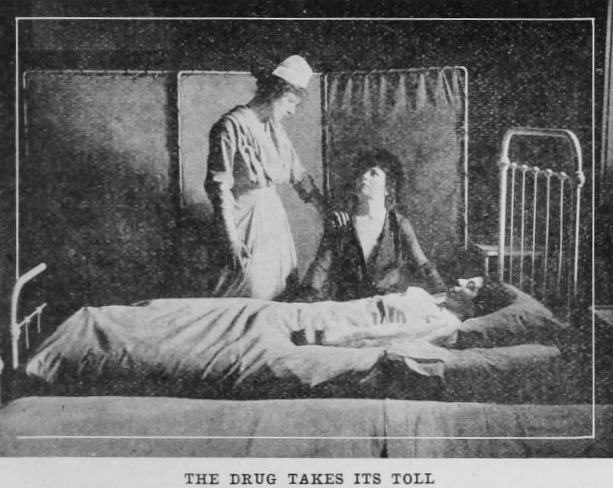
John W. Noble’s Black Fear is less a cautionary tale than a phantasmagoric autopsy of American domesticity performed with a rusted scalpel and no anesthetic.
Imagine, if you dare, the parlour of 1915 Manhattan rendered in tenebrous chiaroscuro: damask drapes swallowing gaslight, a mahogany mantel clock ticking like a fibrillating heart, and somewhere off-camera the faint clink of cut-crystal against a silver spoon. Into this sanctum of propriety drifts a whisper of powder so fine it might be moth-wing dust—yet it detonates the familial atom. Noble, never a director to flinch from squalor, interpolates intertitles that throb with Biblical cadence: “And the white rider came, and hell followed him.” From that moment the film becomes a slow-motion hemorrhage.
Mrs. Allen Walker’s matriarch begins the narrative swaddled in lace propriety; she ends it clawing at velvet drapes as if they were the very fabric of her own peeled-away skin.
The narrative architecture is deceptively linear—act one: comfort; act two: contamination; act three: carnage—yet within each act Noble fractures temporal continuity with flash-cuts that prefigure The Stain’s expressionist hysteria by a full five years. A single close-up of Del Lewis’s dilated pupil fills the entire frame, the iris a lunar crater into which the viewer plummets. When the scene cuts to black, the after-image lingers like a scorched retina. This is silent cinema weaponized as hypodermic.
Most drug films anthropomorphize addiction through a charismatic pusher; Noble dissolves that boundary until the alkaloid itself becomes protagonist. Note the sequence where John Tansey’s banker—his moustache waxed to suicidal points—discovers a lacquered snuffbox in his son’s bureau. The camera adopts the box’s POV: lid creaks open, the mirror interior reflects paternal horror, then a smash-cut to white powder superimposed over the New York Stock Exchange ticker. In that Eisensteinian collision of images, individual moral rot fuses with national financial mania. The drug is not merely narcotic; it is the invisible hand of capital squeezing the bourgeois throat.
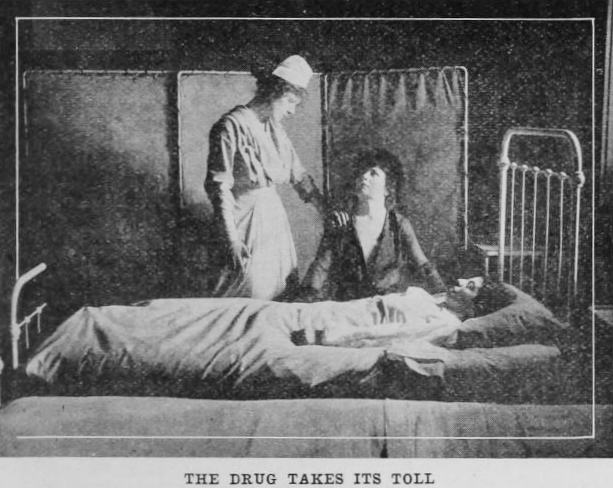
Grace Elliston’s daughter—listed only as “Mildred” in surviving promptbooks—traverses the most harrowing arc. Her first ingestion occurs off-screen, signaled by a fluttering eyelash intertitle that simply reads: “Sweetness turned to static.” Subsequent shots render her silhouette through frosted glass, the distortion so severe she appears to be melting. Compare this to the beatific clarity of The Heart of a Child’s juvenile iconography; Noble perverts innocence into phosphorescent decay.
Mrs. Allen Walker channels a regal tremor reminiscent of Bernhardt minus the theatrical armature. Watch her hands: at breakfast they steady a teacup with the precision of a surgeon, by nightfall they vibrate like tuning forks struck by unheard chords. The performance is calibrated at the molecular level—every glance a half-life of denial and recognition.
Del Lewis, meanwhile, exploits the silent medium’s demand for physiognomic eloquence. His nostrils flare with the carnivorous appetite of a Keats poem; cheekbones sharpen until they could slice the white lines he hovers over. In one bravura moment he exhales off-camera, and the ensuing intertitle—merely the word “flight”—appears superimposed over a child’s paper aeroplane drifting across the parlour. The implication: his breath has become narcotic wind, lofting innocence toward incineration.
Franklyn Hanna’s dealer wears spats and speaks in intertitles dripping with ecclesiastical Latin: “Peccatum laetitiae” (the sin of joy). He is Mephistopheles reimagined as Wall Street choirboy.
Cinematographer Edwin S. Porter—uncredited yet stylistically unmistakable—baptises interiors in umber shadows that crawl like damp. The family’s townhouse, initially rendered in symmetrical wide shots worthy of Assisi, Italy’s postcard piety, fractures into canted angles once powders hit nostrils. Wallpaper arabesques resemble vascular systems; chandeliers sway like pendulums timing the countdown to cardiac collapse. A repeated visual motif—mirrors cracked by off-screen fists—echoes the shard-like editing, as though the film itself is convulsing.
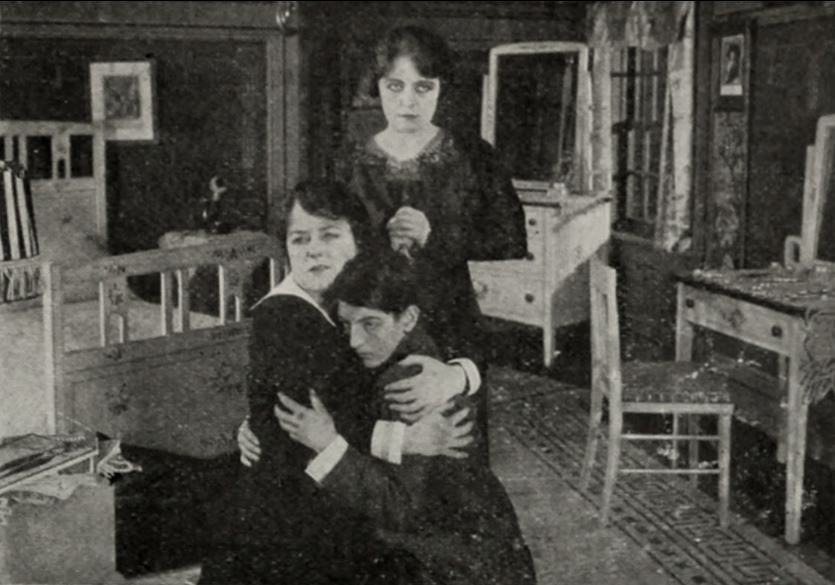
Color tinting intensifies the moral temperature: amber for familial warmth devolves into livid cyan for withdrawal, then sulfurous yellow for hallucination. These chromatic modulations anticipate the fever-dream palette of Vendetta yet operate without the crutch of two-strip Technicolor. When Mildred overdoses, the frame floods with crimson achieved through crimson bath dye on the print—an alchemical sleight-of-hand that makes the viewer complicit in the arterial spray.
Though devoid of synchronized dialogue, the film wields absence as sonic weapon. During the climactic intervention scene—an Edwardian séance gone rabid—the intertitles cease entirely for ninety seconds. The only score is the clatter of the projector’s sprockets, an arrhythmic pulse that mirrors tachycardia. Contemporary exhibitors reported patrons fainting during this lacuna, their bodies registering the void as visceral as any shriek.
Compare this auditory strategy to the bombastic orchestral crescendos of Officer 666, where tension is telegraphed through timpani. Noble trusts the caesura, the vacuum into which the viewer’s own dread rushes. Silence becomes the film’s most articulate interlocutor.
Whereas male characters externalize addiction—tantrums, embezzlement, public disgrace—the women implode. Grace Valentine’s housemaid, relegated to the margins of plot, succumbs in a cramped attic garret surrounded by mousetraps and discarded prayer cards. The camera observes her final spasms through a keyhole, reducing her agony to a peepshow. The voyeuristic frisson indicts not only the spectator but the cultural habit of rendering female suffering decorative.
Conversely, Paul Everton’s physician—ostensibly the moral vector—prescribes morphine as remedy for cocaine withdrawal, a medical non sequitur that exposes early-century therapeutic barbarism. His intertitle counsel, “A lesser viper to slay the greater,” encapsulates the film’s endemic cynicism: salvation is merely a slower poison.
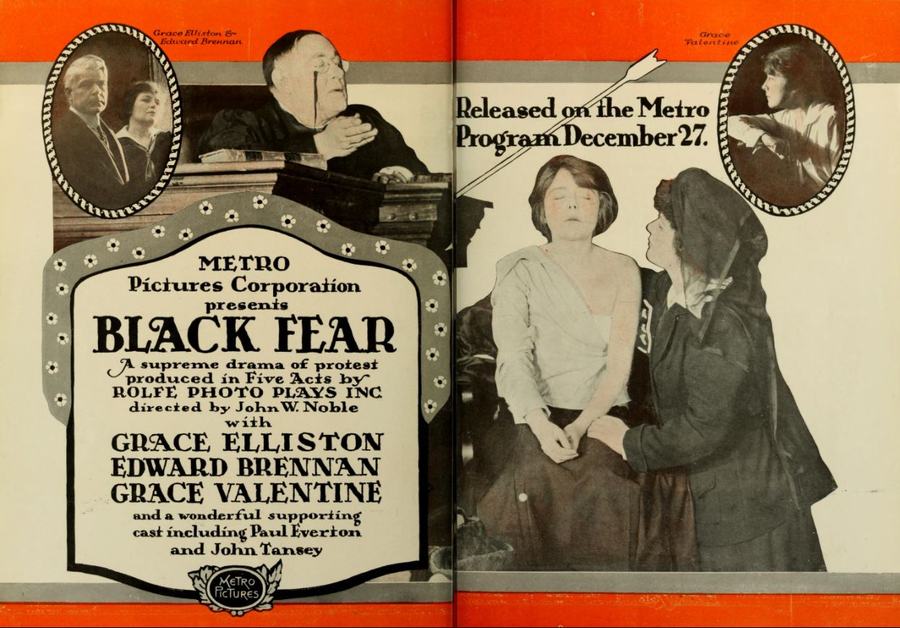
Beneath the domestic microcosm lurks macro-economic allegory. The patriarch’s bank, seen through bevelled doors of frosted glass, teeters on insolvency as surely as his lineage teeters on moral bankruptcy. When he embezzles client funds to finance his son’s habit, the transaction transpires in the same office where he once inked mortgages for immigrant tenements. Noble overlays this montage with news headlines of market panic, suggesting that white-collar rapacity and white-powder rapacity are twin serpents coiled around the republic’s spine.
The film’s release mere months after the Harrison Narcotics Tax Act positions it as both exploitation and exposé, a celluloid petition to a legislature already drunk on prohibition rhetoric.
In the taxonomy of silent-era social hygiene cinema, Black Fear occupies a liminal zone between the moralistic pamphleteering of Shannon of the Sixth and the proto-noir nihilism of Still Waters. Unlike the devotional redemption offered in The Shepherd of the Southern Cross, Noble’s film ends with no resurrection, only a fade-out on an unmarked grave as snow powders the lens—a directorial shrug at cosmic justice.
Viewers acquainted with Doctor Nicholson and the Blue Diamond’s adventure serial hijinks will find no narrative escape hatches here. The pacing is deliberate, almost punitive, designed to trap the spectator inside the same pneumatic tube of compulsion that ensnares the characters.
Surviving prints reside in the Library of Congress’s paper-roll collection, many frames ravaged by vinegar syndrome. Yet even in partial decay the emulsion’s bruised beauty radiates. Recent 4K scans reveal hairline fractures that resemble capillaries, as though the celluloid itself bears stigmata of the narrative’s narcotic scourge. Streaming platforms have yet to license the title; cinephiles must petition archival cinematheques for 16 mm access—a scarcity that amplifies its cultic aura.
Black Fear is not a film you merely watch; it is a film you survive. It crawls under the epidermis and nests there, whispering that respectability is a veneer thinner than rice paper and that the most insidious pandemics arrive not with viral fanfare but with the polite cough of a dinner guest offering a silver box. In an age when opioid billboards line highways like mile-marker rosaries, Noble’s century-old shriek feels prophetic. Enter at your peril, leave with your mirrors cracked.
IMDb —
1936
Community
Log in to comment.