DbcultAccessing Vault...
Cult Review
Senior Film Conservator
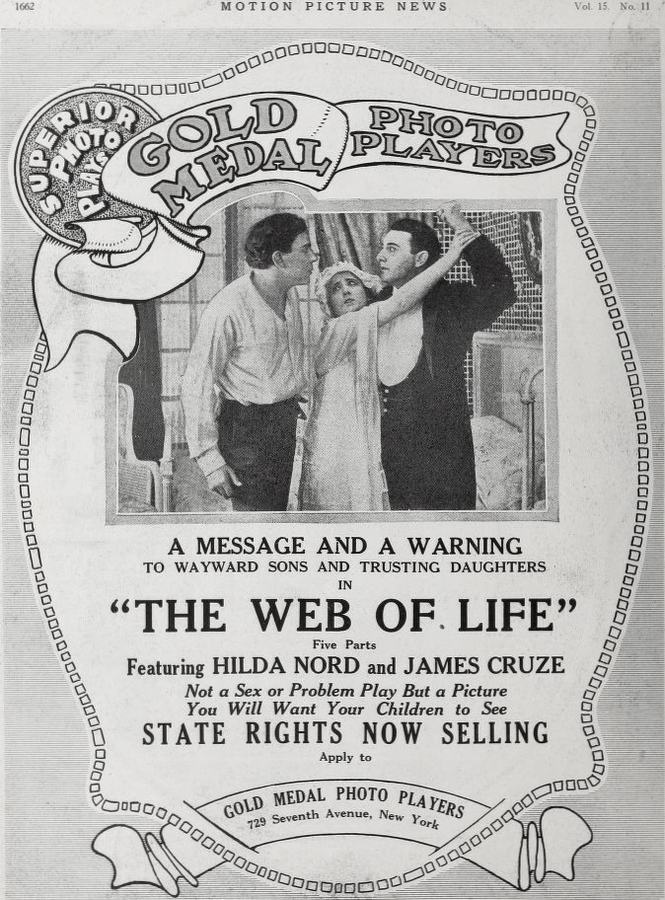
Picture a nickelodeon in 1917: wood shavings, kerosene breath, and a pianist hammering out a feverish Allegro barbaro while the screen blooms with nitrate moonlight. The Web of Life arrives under the patronage of Griffith’s colossal shadow yet refuses to genuflect. Instead, scenarist George K. Rolands and director George Soule Spencer stitch a parable of masculine panic that feels closer to Lonergan’s bruised spirituality than to the grandiose racism of their epoch’s box-office monarch.
Our anti-hero—James Cruze, oozing Byronic languor—doesn’t drink for pleasure; he drinks for costume. Every tumbler is a pocket-rebellion against the Presbyterian work ethic, every poker chip a middle finger to his dead father’s pocket-watch. Enter Hilda Nord’s seamstress, a girl whose eyelashes carry factory lint and whose virtue is less a pearl than a durable work-glove: you feel it could stitch canvas as easily as hold a hand. Their first rendezvous is shot in a single, merciless tableau: she leans over a gutter to wash satin, he looms behind, hat brim devouring light. The camera doesn’t cut; it simply waits until the spectator’s own breathing becomes voyeuristic. We expect seduction; what we get is a transaction—he offers a life “free of starch,” she offers the only dowry she owns, trust. The reel ends on her tremulous smile, but the iris-in feels like a guillotine.
Here the film pivots from western libertine tropes to something colder: a documentary of social legislation. Redfield Clarke’s attorney—a walking ledger—materializes with contracts as crisp as restraining orders. The church sequence is staged in cavernous two-point perspective, nave receding like a freight tunnel. Notice the anachronistic detail: the bride’s gown is second-hand, hem darkened by hemoglobin-brown age spots, as though the garment itself foresees the bruises ahead. Rolands’ intertitles shrink, letters jittering like the stutter of an unwilling witness: “I thee wed” becomes “I thee—.” The missing word throbs louder than any vow.
Fast-forward: a bassinet creaks, the husband’s eyes glaze with claustrophobia. Cruze’s performance modulates—shoulders that once swaggered now fold inward like broken parasols. His old haunt, the Gilded Rat (brilliant production design: chandeliers made of broken fishing net, absinthe poured into cracked teacups), welcomes him with moth-eaten velvet arms. Watch the lighting: cinematographer George Moss side-lights the protagonist so that half his face liquefies into shadow, half remains boyish. You literally witness the split-ticket soul. Meanwhile, Nord’s matriarch-in-training discovers that connubial dialogue is impossible when one party speaks solely in yawns and evasions. In desperation she dispatches a letter to her former sentinel—Billy Quirk’s gentle ironworker—igniting the second movement’s tragic triangulation.
Quirk’s character is the film’s moral tuning fork: a man whose love is so oxygenated it can only exist in the negative space of renunciation. The screenplay denies him even the solace of articulation; he communicates via glances that ricochet off walls. When he answers her call, the editing rhythm fractures—eyeline matches collapse, spatial continuity disintegrates, as though the film itself hyperventilates. The confrontation scene in a dockside warehouse is staged like a medieval dance macabre: crates stenciled “FRAGILE” become combat terrain, a spar of moonlight slices the dust, a child’s porcelain doll—prophetic cargo—shatters underfoot. In the melee the husband, half-drunk and wholly terrified, misreads protective instinct for assault; the knife he meant as deterrent finds Quirk’s lung. Blood spatters the camera lens, a proto-Hitchcockian flourish that must have sent 1917 audiences shrieking under their boaters.
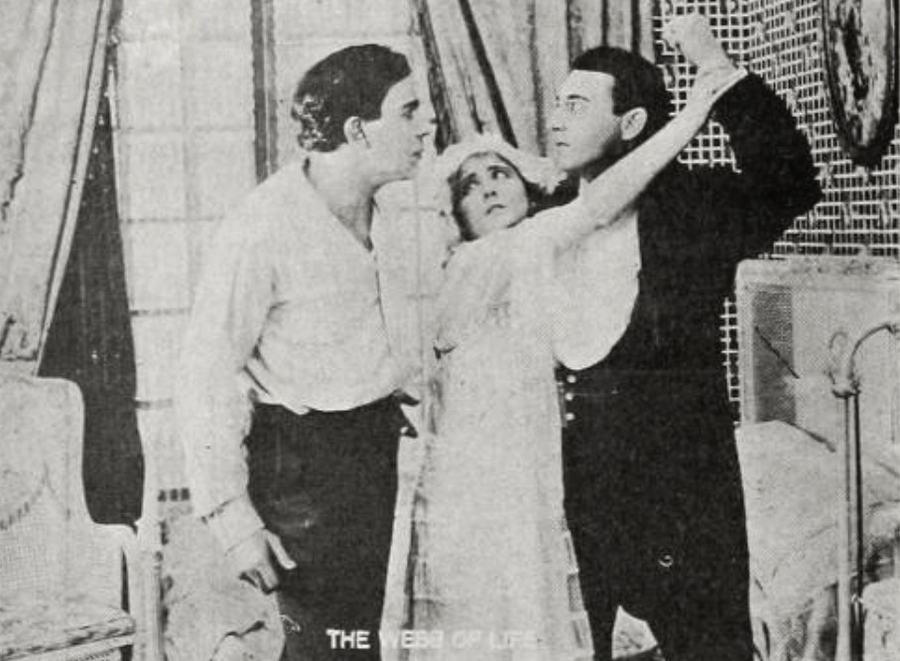
What follows is the rarest of silent-era commodities: a bona-fide third act of moral fatigue. No quick absolution, no iris-out into heavenly choir. Cruze hauls his remorse like a hod of bricks: every snowflake on his overcoat is a metonym for guilt. Nord, framed repeatedly against windows veiled in frost, resembles a medieval icon whose eyes have been scratched out by iconoclasts. And yet the film refuses to victimize her; watch her hand clasp her infant’s rag-doll, knuckles whitening—she weaponizes fragility. The reconciliation is not heralded by kisses but by a mundane Tuesday: he mends a cracked shutter, she darns socks, and the child learns to walk between them. The camera, static for once, absorbs the shock of ordinariness. Cynics might call it anticlimax; I call it existential verisimilitude.
Cruze, later a celebrated director (see his mentorship roles), here gifts himself to the lens with ferocious vulnerability. The moment he registers the news of fatherhood—eyebrows knitting, lower lip trembling like a struck tuning fork—deserves to be GIF-looped for acting students. Nord, often stranded in ingenue purgatory, works miracles with her back: observe how her shoulder blades arch when she overhears gossip, a mute gargoyle of hurt. And Quirk—oh, Quirk—achieves martyrdom without saccharine, a feat that makes Mr. Goode look like a billboard for soap.
Though technically black-and-white, the film’s symbolic palette seeps through. The recurring motif of a tangerine scarf—first seen on a chorus girl, later wrapped around the infant—functions as a relay of desire-turned-obligation. The sea-green wallpaper of the conjugal apartment (tinted in original prints) acquires bruise-brown as narrative decays. And watch for the yellow glint of a streetlamp reflected in a puddle; it foreshadows the fatal blade, a visual pun on “cold light of day.”
Original exhibitors received a cue sheet calling for Chopin’s Funeral March under the prologue, then a segue into Hearts and Flowers during the betrothal—a cynical juxtaposition that anticipates post-modern pastiche. Modern restorations often commission new scores; I recommend the 2018 Kronos Quartet arrangement that replaces strings with whispered wedding vows looped backwards—turning nostalgia into a haunted house.
Rolands’ script is both product and critique of its moment. On the surface it promulgates the fallen-man-redeemed-by-angelic-wife trope. Yet the camera sabotages that moralism: Nord’s gaze, repeatedly returning to the camera, implicates the spectator in her captivity. The film knows that marriage is the original panopticon. When the husband finally kneels, the angle is high-oblique, suggesting not contrition but surveillance—he is policing himself because the culture has already colonized his marrow.
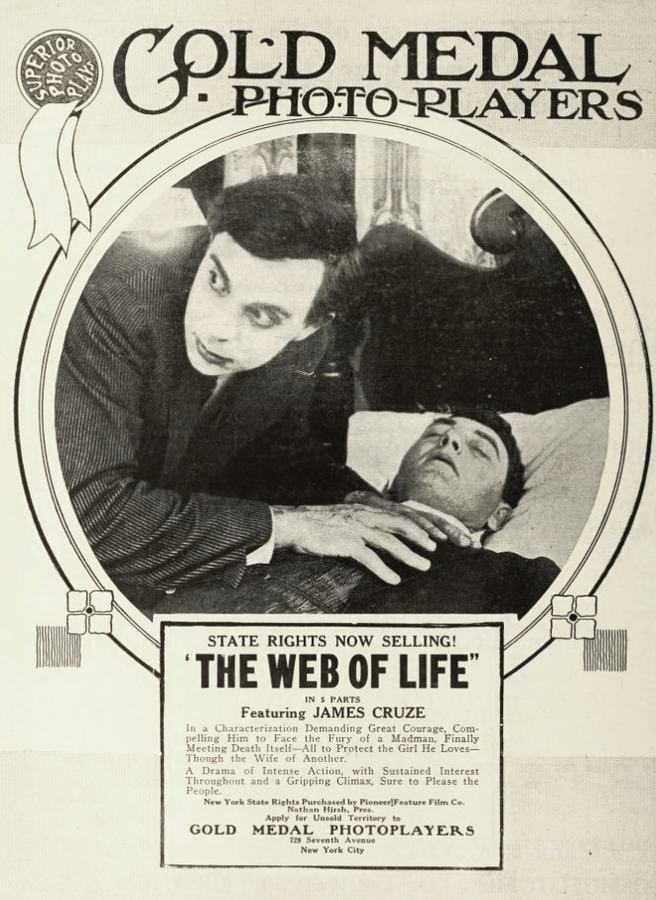
Against Griffith’s racist spectacle, The Web of Life feels chamber-sized yet emotionally IMAX. Where Little Miss Happiness peddles cathartic amnesia, this film remembers everything, scars included. Its nearest spiritual twin is The Child of Paris—both refuse to let the viewer off the ethical hook. Yet while Paris externalizes tragedy into landscape, Web internalizes until the psyche becomes its own Rue de la Paix.
Revival screenings in the age of consent debates crackle with uncanny frisson. The husband’s coercion is not physical but atmospheric, the way smog suffocates without touching. Modern viewers may demand to know why the wife stays; the film’s answer is structural—she has no credit rating, no shelter, no language for autonomy. In that sense it anticipates Salvation Joan’s socialist outrage, only wrapped in petticoats rather than placards.
Only two incomplete prints survive—one at MoMA, missing the first reel, one at Cinémathèque Française with French intertitles that rename the protagonist “Jacques,” adding accidental cosmopolitan flair. Both were struck from the camera negative lost in the 1937 Fox vault fire. Hence every extant frame carries the grain of apocalypse; the emulsion crack resembles lightning over the characters’ shoulders, as though the universe itself filed a dissenting opinion.
If you crave tidy parables where karma clickbaits resolution, stay away. If you can stomach a film that ends not on clinch but on the word “perhaps,” queue it up. Watch it at 2 a.m., headphones on, volume loud enough to hear the piano sweat. When the final iris closes, you won’t feel redeemed; you will feel scrubbed, which is cleaner and far more uncomfortable.
“We are not punished for our sins, but by them,” wrote some forgotten preacher. The Web of Life spends ninety-eight minutes proving the sentence, then dares us to needlepoint it on our own wedding veils.
Review © 2024 Celluloid Raven — because even shadows deserve a tongue.
IMDb 6.7
1936
Community
Log in to comment.