DbcultAccessing Vault...
Cult Review
Senior Film Conservator
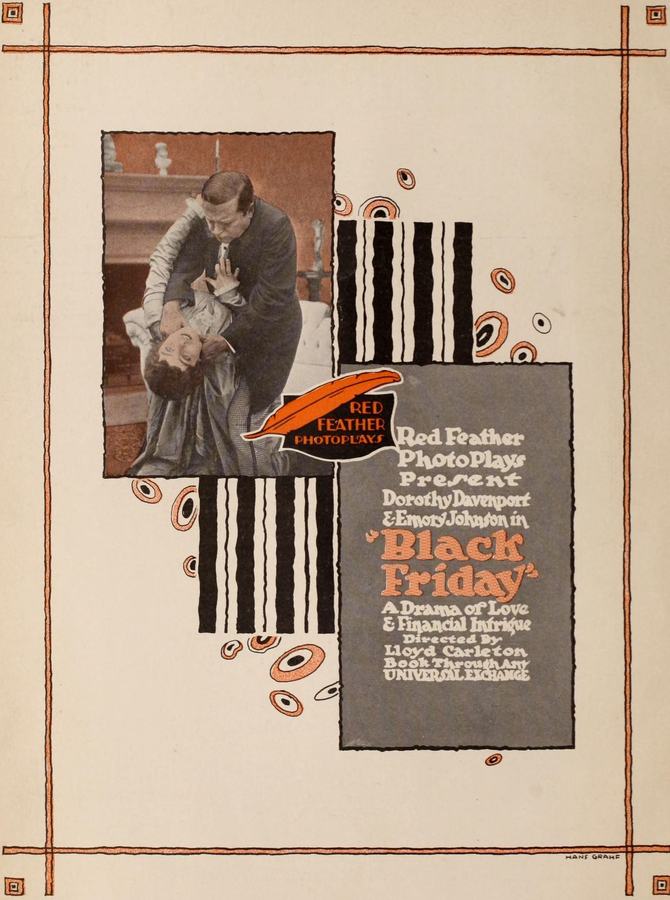
The flickering shadows of 1916 bring forth ‘Black Friday’, a cinematic artifact that, even a century hence, resonates with an almost prophetic understanding of the cutthroat world of high finance. Directed by Wilfred Rogers, this silent drama plunges viewers into an intricate web of corporate espionage and personal entanglement, a narrative crafted with a keen eye by writers Frederic S. Isham and E. Magnus Ingleton. It’s a film that, despite its vintage, speaks to timeless themes of ambition, betrayal, and the precarious balance of power, echoing the grand, often melodramatic, narratives prevalent in the era, yet possessing a distinct gravitas that sets it apart from many of its contemporaries.
At its core, ‘Black Friday’ is a compelling study of a man pushed to the brink. Richard Strong, portrayed with a formidable blend of resolve and vulnerability by Mark Fenton, is a titan of the railroad industry. His empire, built on steel and ambition, suddenly finds itself under siege. A cabal of shadowy, avaricious enemies, their faces often obscured by the very machinations they orchestrate, conspires to dismantle his fortune, aiming to bankrupt him through a series of shrewd, underhanded maneuvers. The tension is palpable from the outset, a silent crescendo building with each intertitle revealing another layer of the plot against Strong. He is not merely a victim, however; Strong is a fighter, a man whose very identity is intertwined with his vast enterprise. His response is not one of passive despair, but of strategic counter-offense, embodying the spirit of the entrepreneurial age.
Enter Charles Dalton, a character brought to life by Richard Morris with an air of quiet competence and sharp intellect. Strong, recognizing the depth of the threat and the need for extraordinary measures, enlists Dalton’s aid. Dalton is not just a hired gun; he is a strategist, a keen observer of human nature and financial currents. Together, they embark on a meticulous unraveling of the conspiracy, piecing together fragments of information, anticipating their enemies’ next moves, and orchestrating a defense that is as intricate as the attack itself. The film dedicates considerable screen time to depicting this intellectual battle, relying on the actors’ expressions and the clever use of intertitles to convey the complexity of the financial maneuvers. It’s a testament to the early filmmakers’ ability to craft suspense without dialogue, where a furrowed brow or a determined stride spoke volumes. The eventual foiling of the plot is not merely a triumph of good over evil, but a vindication of shrewdness and resilience, a narrative thread that might resonate with similar themes of corporate struggle found in films like ‘Samson’ (1915), where powerful figures face monumental challenges.
Yet, amidst this high-stakes corporate drama, a different kind of tension emerges. By chance, Charles Dalton encounters Elinor Strong, Richard Strong’s wife, portrayed by the captivating Dorothy Davenport. This meeting, seemingly innocuous, introduces a subtle, yet potent, personal dimension to the narrative. Elinor is not merely a decorative spouse; Davenport imbues her with an enigmatic quality, a quiet dignity that hints at unexplored depths. The film, in its silent eloquence, allows this chance encounter to ripple with unspoken possibilities, suggesting that even as Strong’s professional life is secured, his personal world might be on the cusp of unforeseen shifts. This delicate interplay between public triumph and private uncertainty adds a layer of human fragility to the otherwise robust tale of financial combat.
The success of any silent film hinges almost entirely on the expressive capabilities of its cast, and ‘Black Friday’ is no exception. Mark Fenton, as Richard Strong, delivers a performance that anchors the film’s emotional weight. His portrayal of a man battling not just external foes but internal anxieties is nuanced, conveying a range of emotions from steely determination to moments of profound worry, all without uttering a single word. His large gestures, characteristic of the era, are nevertheless imbued with genuine feeling, making Strong’s plight deeply engaging. Richard Morris, as Charles Dalton, provides a compelling counterpoint. His character is the embodiment of calm strategic thinking, and Morris communicates this through subtle facial expressions and a commanding physical presence, making Dalton a believable intellectual force against the conspirators. The dynamic between Fenton and Morris forms the professional backbone of the film, a partnership built on trust and shared purpose.
Dorothy Davenport, however, is arguably the film’s quiet revelation as Elinor Strong. In an era where female roles were often confined to damsels in distress or vamps, Davenport crafts a character of understated strength and intriguing complexity. Her scenes with Morris’s Dalton are particularly charged, not with overt romanticism, but with a nascent awareness, a recognition that transcends the immediate circumstances. Her eyes, in particular, convey a rich inner life, hinting at emotions and thoughts that the narrative only subtly touches upon. This depth of characterization for Elinor elevates her beyond a mere plot device, making her a memorable presence long after the credits roll. Other supporting cast members, including Mary Maurice, Gretchen Lederer, and Virginia Southern, contribute to the film’s rich tapestry, each playing their part in the intricate social and corporate landscape. Even in smaller roles, the meticulous attention to character acting, a hallmark of early cinema, ensures that the world of ‘Black Friday’ feels fully realized and populated.
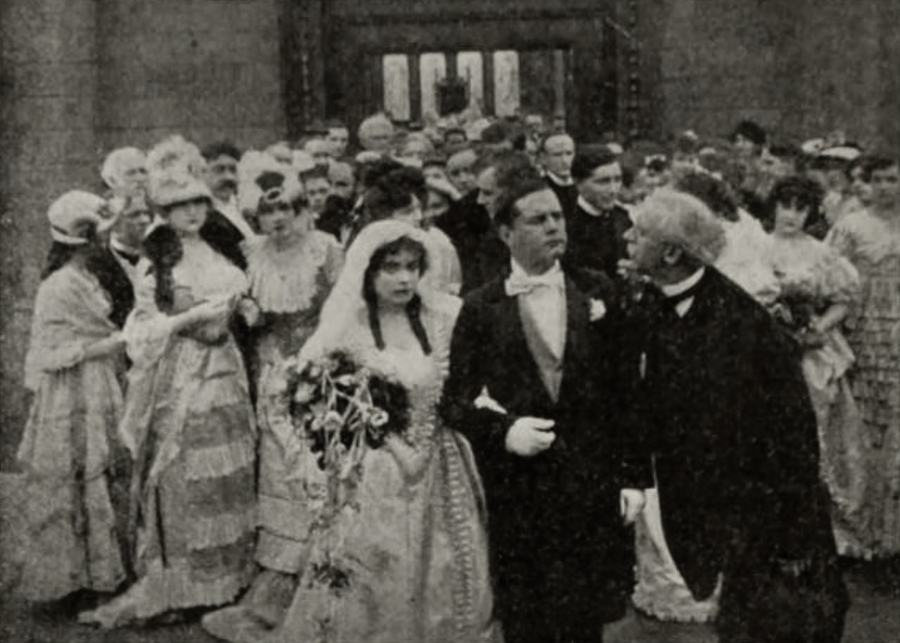
Wilfred Rogers’ direction of ‘Black Friday’ is a masterclass in silent film narration. The pacing is deliberate, allowing the audience to absorb the intricacies of the financial plot without feeling rushed, yet never allowing the tension to dissipate. Rogers employs a variety of cinematic techniques, from close-ups to emphasize emotional states, to wider shots that establish the grandeur of Strong’s industrial empire and the claustrophobia of the conspirators’ clandestine meetings. The use of intertitles is particularly effective, not just to convey dialogue, but to explain complex financial concepts and to move the plot forward with expository efficiency. Unlike some films of the period that relied too heavily on text, ‘Black Friday’ integrates its intertitles seamlessly, making them feel like an organic part of the visual flow.
The cinematography, while perhaps lacking the groundbreaking experimentation of later years, is nevertheless competent and contributes significantly to the film’s atmospheric quality. The use of light and shadow, particularly in scenes depicting the conspirators, creates a sense of foreboding and moral ambiguity. The stark contrasts often employed in black and white photography are utilized to great effect, emphasizing the clear-cut battle between Strong’s integrity and his enemies’ duplicity. One might draw parallels to the visual storytelling in films like ‘The House of Mystery’, where atmosphere plays a crucial role in building suspense. Emory Johnson, often known for his acting, also had a significant hand in the production side of many films during this period, and his influence, if present, would undoubtedly contribute to the film’s overall polish and narrative coherence, ensuring a tight, engaging cinematic experience.
Beyond the immediate thrills of financial intrigue, ‘Black Friday’ delves into deeper thematic waters. It is, first and foremost, a commentary on the ruthless nature of early 20th-century capitalism. The film doesn’t shy away from depicting the moral compromises and ethical ambiguities inherent in the pursuit of wealth and power. Richard Strong, while a protagonist, is also a symbol of industrial might, and his struggle highlights the fragility of even the most formidable empires when faced with concerted malice. This exploration of the darker side of ambition feels remarkably prescient, anticipating later critiques of unrestrained corporate power.
The theme of loyalty is also central. Strong’s trust in Charles Dalton is a pivotal element, demonstrating the importance of alliances in a world rife with betrayal. Conversely, the faceless conspirators represent the ultimate disloyalty, driven purely by avarice. The narrative implicitly asks: in a world where money is king, what price loyalty? This question resonates strongly, grounding the high-stakes financial drama in very human terms. Furthermore, the film subtly explores the intersection of professional and personal lives. The introduction of Elinor Strong and her chance meeting with Dalton is not merely a romantic subplot; it underscores how even the most calculated business decisions can have unforeseen ripple effects on one’s private world. It adds a layer of vulnerability to Strong’s otherwise impregnable persona, reminding us that even titans of industry are susceptible to the complexities of human relationships.
The narrative strength of ‘Black Friday’ owes much to the meticulous storytelling of Frederic S. Isham and E. Magnus Ingleton. Their screenplay (or scenario, as it was known then) demonstrates a sophisticated understanding of dramatic structure, building suspense gradually and revealing plot points with precision. They manage to make complex financial schemes understandable to a general audience, a challenge even for modern filmmakers. The character arcs, though conveyed through silent acting, are clearly defined, allowing the audience to invest emotionally in Strong’s struggle and Dalton’s cleverness. The seamless integration of the personal subplot with the main corporate conflict is a testament to their skillful crafting of a multi-layered narrative. Their ability to weave together a tale of high finance with human drama without the benefit of spoken dialogue is a remarkable feat, showcasing the potential of early cinematic writing.
‘Black Friday’, while perhaps not as widely known as some other silent classics, holds a significant place in the history of cinematic thrillers. It demonstrates the early capabilities of film to tackle complex, contemporary issues with engaging drama. Its exploration of corporate malfeasance and the fight for financial survival remains pertinent, making it a film that, in certain respects, feels surprisingly modern. For enthusiasts of silent cinema, it offers a rich viewing experience, showcasing strong performances, astute direction, and a compelling narrative that transcends the limitations of its medium.
Comparing it to other films of its era, one can see its unique position. While films like ‘The Case of Becky’ might delve into psychological suspense, ‘Black Friday’ grounds its tension in the very real-world anxieties of economic power. It lacks the overt fantastical elements of ‘Neptune’s Daughter’, choosing instead to focus on a more grounded, albeit dramatic, reality. Its narrative of a powerful individual fighting against systemic corruption could even be seen as a precursor to modern political and corporate thrillers. The film serves as a valuable historical document, reflecting the anxieties and aspirations of an industrializing nation, captured through the nascent art form of cinema. It reminds us that the fundamental human struggles for power, wealth, and integrity are timeless, and that even a century ago, filmmakers were expertly crafting narratives that spoke to the heart of these universal experiences. It’s a recommended watch for anyone interested in the foundational elements of suspense and drama in early cinema, a testament to the enduring power of a well-told story, regardless of whether it whispers or shouts.
IMDb —
1914
Community
Log in to comment.