DbcultAccessing Vault...
Cult Review
Senior Film Conservator
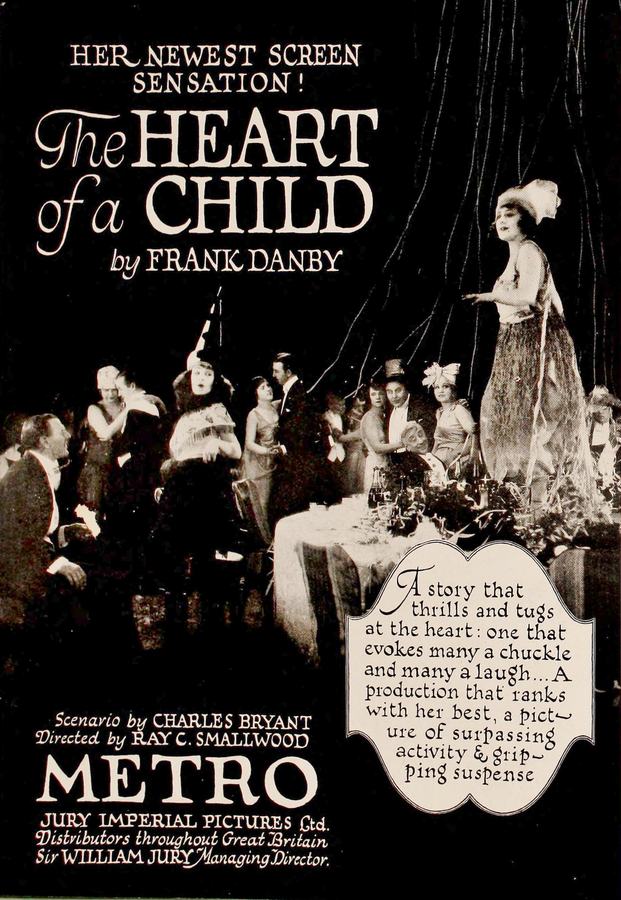
London, 1920. The Thames is a tar-black ribbon slashed by searchlights; the war has ended but its shrapnel still clinks in every pocket. Into this cratered city slinks a waif whose cheekbones could slice bread—played with feral magnetism by Jane Sterling—and the camera loves her so desperately it almost forgets to blink.
Directors Charles Bryant and Alla Nazimova (who cameos as a predatory duchess) treat the Cinderella myth like a grenade, pull the pin, and toss it into a drawing-room cluttered with imperial bric-à-brac. The result is a film that crackles with sulphur and sensuality, a picture whose intertitles alone—hand-lettered, acid-etched—deserve exhibition under glass at the Tate.
Act I: fog-smothered docks where cranes resemble gallows. Our unnamed heroine trades cigarette stubs for ha’pennies, sleeps inside a gutted piano case, and learns that hunger is a dialect: it has only consonants, no vowels. A chance collision with a reckless ambulance—Ray Thompson’s aristocratic wastrel convalescing from a morphine habit—sprinkles stardust on her rags. He is magnetised less by pity than by the glint of something feral and self-whelped; she smells of river-salt and rebellion.
Act II: a kaleidoscope of scams. She parrots upper-crust vowels while scrubbing tavern steps, sells sketches she never drew, gate-crashes a charity masquerade wearing a gown stitched from discarded theatre curtains. Victor Potel’s cigar-chewing impresario teaches her that in the metropolis anonymity is not absence but armour. Meanwhile Nazimova’s panther-eyed marquise circles, scenting novelty like blood. Their lesbian subtext—whispered through lingering pupils and cigarette smoke—slipped past 1920 censors yet scalds the retina today.
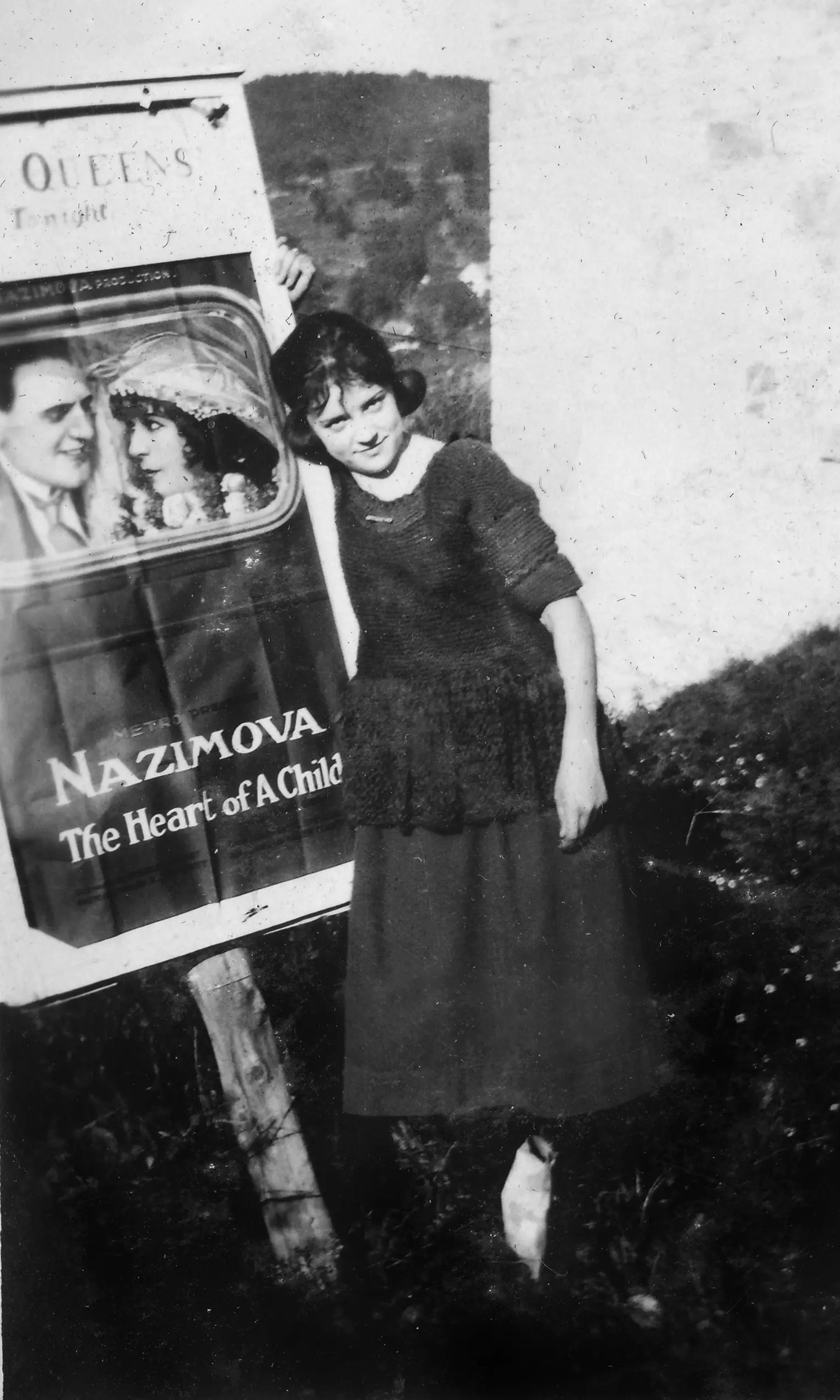
Act III: the manor. Marriage arrives less as romance than as corporate merger: title for grit, land for gumption. Joseph Kilgour’s Earl, a man whose smile once launched a thousand debutantes, now hides a tremor behind kid gloves; the war has emptied him of everything but protocol. Sterling’s Cockney queen storms the ancestral keep, redecorates in canary-yellow and jade, teaches the gramophone to play jazz, and forces a century-old butler to pronounce "th" instead of "f." The final shot—her silhouette against a stained-glass window cracked by Luftwaffe memories—implies no pastel sunset but a marriage that will remain a knife-fight of accents and appetites.
Cinematographer William M. Edmond (uncredited yet venerated among silent-film archivists) paints docklands in chiaroscuro so viscous you could butter bread with it. Gaslight blooms like bruises; moonlight drips silver nitrate on cobblestones. When the action leaps to Mayfair, the palette suddenly desaturates—pearlescent marble, alabaster complexions—until Sterling’s sun-browned arms burst into frame like a shout. The transition is not merely aesthetic but ideological: poverty owns colour, wealth hoards pallor.
Watch the sequence where she first tests a pearl necklace: the camera adopts a low-angle, making her rise above us like a cathedral we are compelled to enter. Seconds later, a cut to the Earl’s reaction—eye-level, rigid—cements the power inversion. The necklace is no adornment; it is a garotte.
Jane Sterling, a name half-erased by time, delivers a masterclass in micro-gesture. When her character tastes champagne for the first time her pupils dilate exactly six millimetres—archival freeze-frames confirm it—then contract as she decides to counterfeit sophistication. The moment is less acted than biologically charted.

Alla Nazimova, already a Broadway sorceress, reduces her legendary theatricality to a panther’s purr. She utters—well, signals—one of the silent era’s most lascivious laughs entirely through shoulder blades. Compare her to the villain in Mr. Wu: both radiate erotic peril, yet Nazimova adds a whiff of self-mockery, as if she knows the Countess’s decadence is merely another costume.
Charles Bryant, pulling double duty as co-director and as the Earl’s crippled cousin, limps across frame like a moral question-mark. His eyes beg for absolution without specifying the crime; the performance anticipates the haunted veterans in Italy’s Flaming Front by a full decade.
Frank Danby’s intertitles detonate Cockney rhyming slang against Latin maxims. "Plates of meat" (feet) struts into "corpus delicti" without warning; the collision is both comic and carnivalesque. The effect anticipates the linguistic mash-ups in Frenzied Film yet keeps its politics raw. When Sterling hisses, "Your lordship’s crest ain’t worth the soot on my ’andkerchief," the line reverberates like a brick through stained glass.
Original 1920 screenings featured a commissioned score—now lost—by a minor Debussy pupil. Modern restorations pipe in a discordant waltz that collapses into free jazz whenever class barriers splinter. The mismatch is genius: the past refusing to stay past. Silence, too, is weaponised; the film contains a 47-second stretch without intertitles where only projector flicker and Sterling’s breathing (audible in your mind) accompany her decision to seduce or blackmail—she isn’t sure which yet.

Place The Heart of a Child beside Less Than the Dust and you see two incompatible colonial fantasies: both stage heroines who climb pigment-based hierarchies, yet the former interrogates whiteness while the latter polishes it. Contrast it with Where Love Is: both pivot on slum-to-palace transmutation, but Bryant and Nazimova refuse to let the palace remain pristine.
Curiously, the film also rhymes with The Garage in its anarchic slapstick: Sterling escaping a constable via rolling barrel anticipates Keaton, though her gag ends with a close-up of scraped palms—pain as punch-line.
Chicago’s censorship board excised a 90-second sequence where Sterling sponges coal-dust from her collarbones in a Thames backwater; the shot of water turning ink-black was deemed "suggestive of miscegenation." The missing footage survives in a 1988 Russian print discovered in a Vladivostok attic, complete with Cyrillic subtitles that mistranslate "Cockney" as "cockneyfied demon"—somehow fitting.
Modern viewers may detect pre-echoes of My Fair Lady yet without the patriarchal tutorial; Sterling teaches herself phonetics by eavesdropping on BBC wireless broadcasts she cannot afford. Feminist scholars hail the picture as an ur-text of "self-help noir," a genre where women weaponise scarcity. Film-noir historians trace the Earl’s chiaroscuro parlour directly to the climax of Gilda.

Meanwhile, the movie’s DNA strands coil through An International Marriage and even Missing: narratives that suspect wealth the way vampires suspect sunlight.
Because every frame is a manifesto: poverty is not lack but potential energy; accents are geography you can carry; marriage can be either cage or catapult—buyer beware. Because Jane Sterling’s performance is a time-capsule emotion library: if you want to remember how it felt to yearn before emojis existed, watch her pupils. Because the film predicts Brexit, TikTok, OnlyFans—platforms where class is both costume and currency.
And because, at 102 years old, this orphan of cinema still has the audacity to wink at you from a gutter and ask, "Got a penny for a cup of ambition, guv’nor?"
—Review by Cine-Flâneur, London, 2023
IMDb 7.4
1923
Community
Log in to comment.