DbcultAccessing Vault...
4.8/10
Senior Film Conservator
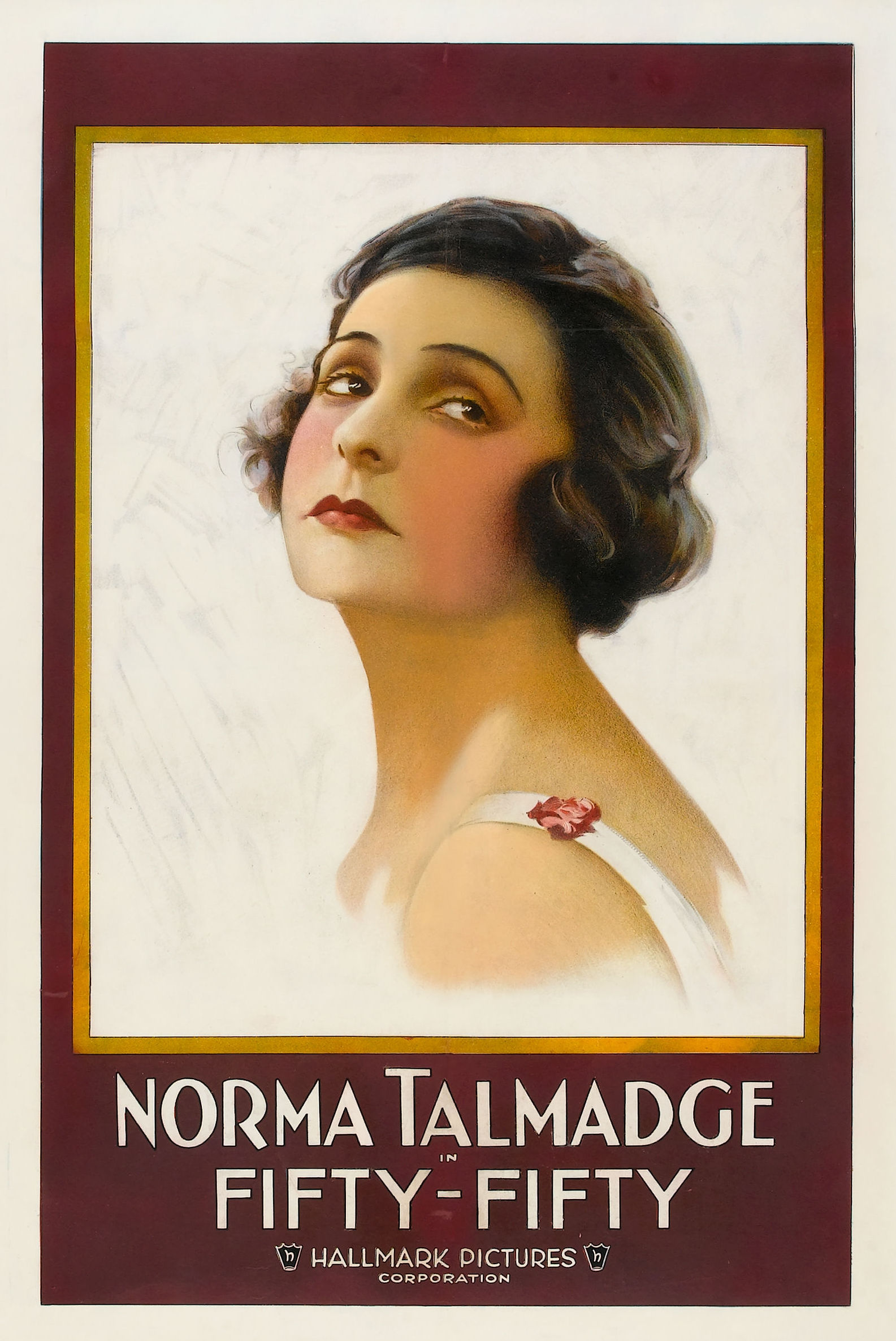
A definitive 4.8/10 rating for a film that redefined the boundaries of cult cinema. Fifty-Fifty remains a cornerstone of transgressive art.
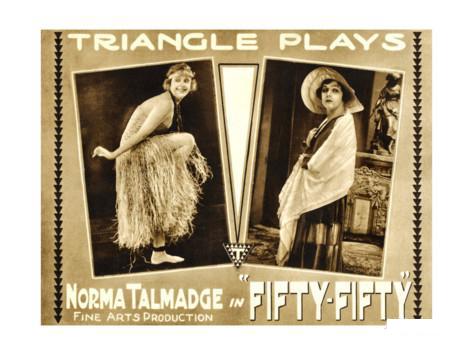
Norma Talmadge, in a role that perfectly showcases her dramatic prowess, embodies Naomi, a character initially defined by an almost reckless exuberance. Hailing from the vibrant, often tumultuous artist quarter of New York, Naomi is a creature of boundless vitality, her spirit alight with an insatiable hunger for frolic and adventure. This isn't a calculated rebellion, but an innate effervescence, a genuine joy for living that, ironically, becomes her initial undoing. Her youthful buoyancy, misinterpreted as a sign of deeper unconventionality, sets the stage for a dramatic turning point. It's a poignant commentary on how superficial perceptions can tragically misrepresent an individual's true nature, especially in a society quick to judge. The film opens a window into a milieu where freedom of expression often brushes against rigid societal expectations, a tension that becomes central to Naomi's journey.
At a particularly boisterous gathering, Naomi's unbridled spirits lead to a perilous misunderstanding. A man, emboldened by her seemingly unconventional demeanor, foolishly wagers he can "prove" her to be more libertine than she is. This moment, steeped in male hubris and societal pressures, is a stark reminder of the vulnerability of women in an era where reputation was paramount. Naomi, utterly unsophisticated beneath her lively exterior, becomes an unwitting pawn in a cruel game. The subsequent trick, luring her to a hotel of dubious repute, culminates in a horrifying police raid. The ensuing night court experience, a crucible of public shame and legal scrutiny, strips away her youthful naivety, exposing her to the harsh realities of a judgmental world. It’s a sequence that resonates with the themes of wrongful accusation and public shaming seen in dramas like Unjustly Accused, where innocent individuals are caught in the merciless gears of circumstance and legal systems. Her release, orchestrated by loyal friends, is a momentary reprieve, but the stain on her character, however undeserved, lingers.

From the ashes of this public humiliation, a new chapter unfolds. Frederic Harmon, a broker whose presence brings an air of stability and conventionality, enters Naomi's life. Their burgeoning romance blossoms into a profound love, culminating in marriage. This union marks a dramatic pivot for Naomi. The birth of their child acts as the ultimate catalyst, transforming her once-frolicsome spirit into one of unwavering devotion. Her character, once defined by a desire for continuous adventure, now finds its complete fulfillment in the sanctity of home, husband, and hearth. It’s a powerful portrayal of a woman finding her true north, prioritizing familial bonds over fleeting pleasures. This transformation is not a diminishment of her vitality but a redirection, a deepening of her emotional landscape. The film beautifully captures the quiet dignity of a woman embracing her role as matriarch, a stark contrast to the bohemian chaos she once inhabited.
However, the domestic bliss that has so profoundly transformed Naomi fails to similarly anchor Frederic. The siren call of the very social set where he first encountered his wife proves irresistible. While Naomi has consciously retreated from the revelry of the Bohemian crowd, finding her joy in the quietude of family life, Harmon remains tethered to its superficial allure. His restless spirit, unwilling to settle into the responsibilities of married life, propels him back into the very circles Naomi has abandoned. This divergence in their paths creates a chasm in their relationship, a silent tension that foreshadows the storm to come. It’s a classic narrative of marital discord, where differing expectations and desires erode the foundations of a once-strong bond. The film subtly critiques the gendered expectations of the era, where a woman's fulfillment was often tied to domesticity, while a man's freedom to pursue external pleasures was more readily tolerated.
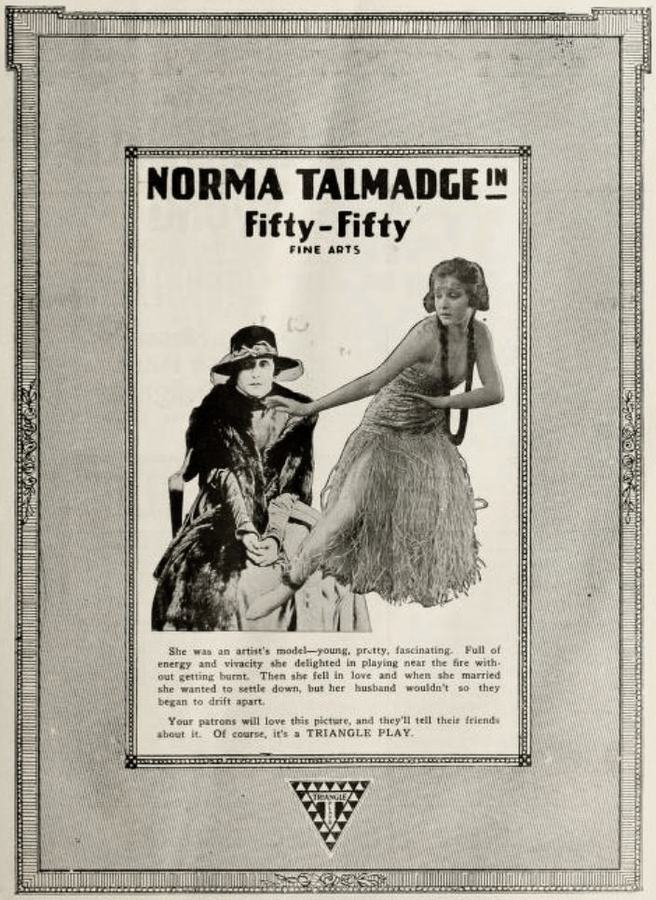
Harmon's solo forays inevitably lead him into the manipulative orbit of Helen Carew. Helen is painted as a woman of stark contrasts: alluring yet utterly devoid of conscience, her past shrouded in shadows, her motivations purely mercenary. She embodies the archetypal femme fatale, a character often explored in silent dramas like Camille, though Helen's malevolence is far less romanticized, more calculated. Her fascination with Harmon is a cold, cynical exercise, partly for her amusement, partly for the material gains she anticipates. Harmon, blinded by infatuation, becomes a malleable plaything in her hands, drawn to her dangerous charm. The film masterfully illustrates how a man's weakness and susceptibility can be exploited by a cunning individual, setting in motion a chain of events that threatens to unravel the lives of all involved. Helen's character serves as a potent antagonist, a symbol of moral decay against Naomi's burgeoning virtue.
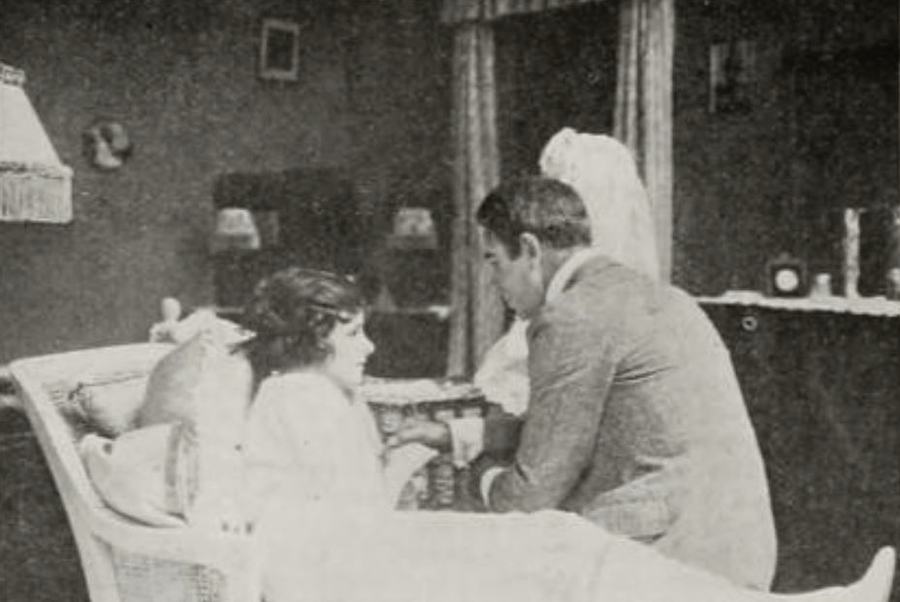
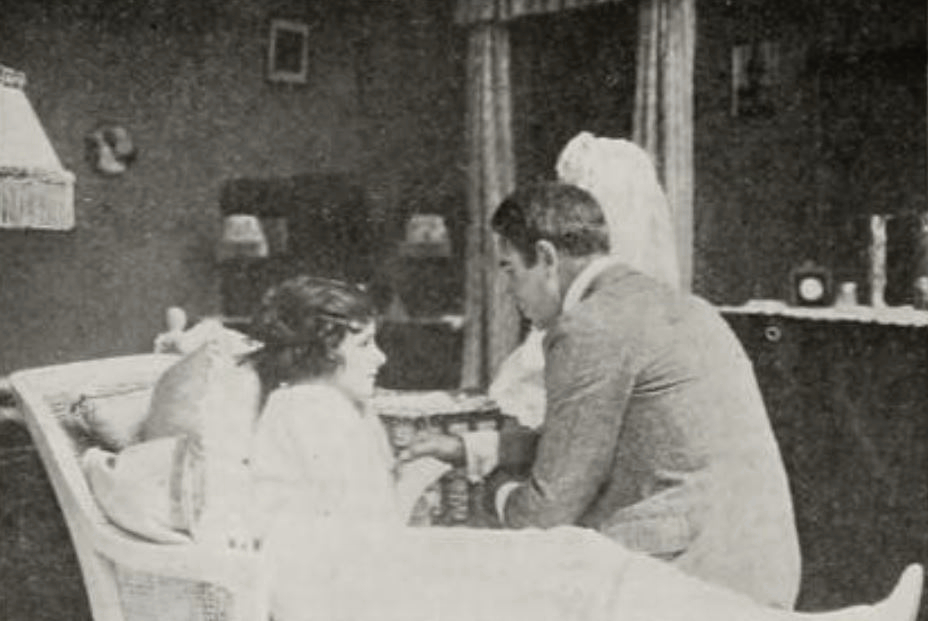
The inevitable revelation of Harmon's infidelity shatters Naomi's world. Her heartbreak is palpable, a visceral portrayal of a devoted wife confronted with the ultimate betrayal. The emotional devastation is compounded when Harmon, under Helen’s insidious influence, asks Naomi for a divorce, intending to marry his paramour. This request is not merely a legal formality; it is a profound assault on Naomi's identity, her role as a wife and mother, and the very fabric of her existence. Yet, in this moment of profound vulnerability, Naomi displays an extraordinary strength. Her refusal to grant the divorce is not out of spite, but a fierce protection of her family, a testament to her unwavering commitment to her vows. It’s a moment of quiet defiance, highlighting her inner fortitude, a stark contrast to her earlier, more frivolous self.
Helen, impatient and ruthless in her pursuit of Harmon, will stop at nothing to secure him. She orchestrates a truly despicable plot, enlisting the aid of a crooked detective. Their scheme is chillingly simple yet devastatingly effective: frame Naomi in a compromising situation, thereby providing Harmon with irrefutable grounds for divorce. The sheer audacity and cold calculation of this plan underscore Helen's utter lack of empathy and her relentless ambition. The detective, a morally bankrupt figure, recruits a fresh-out-of-Sing Sing convict, a man whose desperate circumstances make him an ideal pawn in their malicious game. This intricate web of deceit, designed to destroy an innocent woman's life, is a testament to the dark undercurrents of human nature that the film bravely explores. It’s a narrative device that often drives tension in films like The Coming Power, where hidden agendas dictate tragic outcomes.
The plot unfolds with horrifying precision. A decoy message, meticulously crafted to exploit Naomi's trust or perhaps her lingering sense of duty, lures her to a hotel room. There, the ex-convict awaits, an unwitting participant in Helen's cruel charade. The moment they are together, the room is dramatically raided, not by police, but by a carefully assembled contingent of newspaper reporters and a photographer. The ensuing flashbulb explosion captures a damning image: Naomi, seemingly in the arms of a known criminal. This orchestrated public scandal is designed to inflict maximum damage, to irrevocably tarnish Naomi's reputation and ensure her husband's swift victory in court. The scene is a masterclass in silent film melodrama, relying on visual impact and the audience's understanding of the devastating power of public perception. It’s a moment that parallels the public shaming and dramatic reveals often found in works like The Dragon, where external forces dramatically alter personal fates.
Armed with the sensational newspaper stories and the incriminating photograph, Harmon initiates divorce proceedings, also seeking custody of their child. The courtroom becomes a battleground for Naomi's reputation and her future. In a moment of breathtaking courage and desperate self-sacrifice, Naomi stuns the judge and spectators alike with a shocking declaration: Harmon is not the child's father. This audacious claim, a complete fabrication, is her desperate, final attempt to protect her baby from a life with a father manipulated by a villainess. It is a profound act of maternal love, a willingness to sacrifice her own honor for the sake of her child. The sagacious judge, however, sees through the transparent desperation of her lie. Recognizing the depth of her sacrifice, he calls her into his private chambers. There, away from the public eye and the pressures of the court, he gently elicits the truth from her, understanding that her "confession" was a shield, not an admission of guilt. This scene is a powerful testament to the judge's wisdom and empathy, contrasting sharply with the earlier, harsh judgment Naomi faced in night court.
While Naomi battles for her future, fate, with a delicious sense of irony, begins to unravel Helen's meticulously crafted web. The ex-convict, a man whose past is entwined with Helen's own, proves to be a most unwelcome ghost. Before his incarceration, he had been her lover, and his unexpected re-entry into her life, facilitated by the crooked detective, is a most unpleasant surprise. He appears in Helen's rooms, intent on rekindling their old, sordid association. In a dramatic twist of timing, Harmon arrives to see Helen. Panicked, she hastily hides the jailbird, attempting to maintain her façade of respectability. This scene, fraught with tension and impending exposure, is a prime example of dramatic irony, where the villain's own tools become her undoing. It echoes the dramatic unmasking of antagonists in films like The Luring Lights, where hidden truths inevitably come to light.
The carefully constructed edifice of Helen's deception crumbles spectacularly. While she attempts to placate Harmon, the ex-convict emerges from his hiding place, a living testament to her sordid past. With brutal honesty, he exposes Helen's true character, revealing their intimate connection and her history of deceit. The revelation hits Harmon with the force of a physical blow. Horrified and utterly disillusioned by the true nature of the woman he had so foolishly adored, Harmon immediately and definitively severs all ties with Helen. His infatuation vanishes, replaced by profound disgust and regret. This moment of brutal honesty is his crucible, forcing him to confront his own folly and the devastating consequences of his actions. In the fullness of time, having faced his own shortcomings and recognized the profound value of his true family, Harmon embarks on a journey of repentance and reconciliation. He eventually succeeds in winning his way back into his home, a testament to Naomi's enduring love, forgiveness, and the unbreakable bonds of family. The film culminates not in a simplistic happy ending, but in a hard-earned redemption, where moral reckoning paves the way for a fragile, but hopeful, reunion.
Fifty-Fifty, through its compelling narrative and Norma Talmadge's nuanced performance, transcends its silent film origins to deliver a timeless exploration of human nature. It delves into the fickle nature of reputation, the corrosive power of deceit, and the enduring strength of a woman's love and maternal instinct. The film masterfully navigates themes of societal hypocrisy, marital fidelity, and the arduous path to redemption. Naomi's journey from naive vivacity to hardened resilience, and ultimately to a forgiving strength, is a powerful arc that resonates deeply. Harmon's eventual return, born of profound regret and a clear-eyed understanding of true value, offers a message of hope, suggesting that even after significant transgressions, a path to reconciliation and rebuilding is possible. It reminds us that appearances can be deceiving, that true character is forged in adversity, and that the unwavering commitment to family can ultimately triumph over the machinations of malice. A compelling watch for anyone interested in the dramatic capabilities of early cinema and the enduring power of a well-told story.
IMDb —
1917
Community
Log in to comment.