DbcultAccessing Vault...
6.6/10
Senior Film Conservator
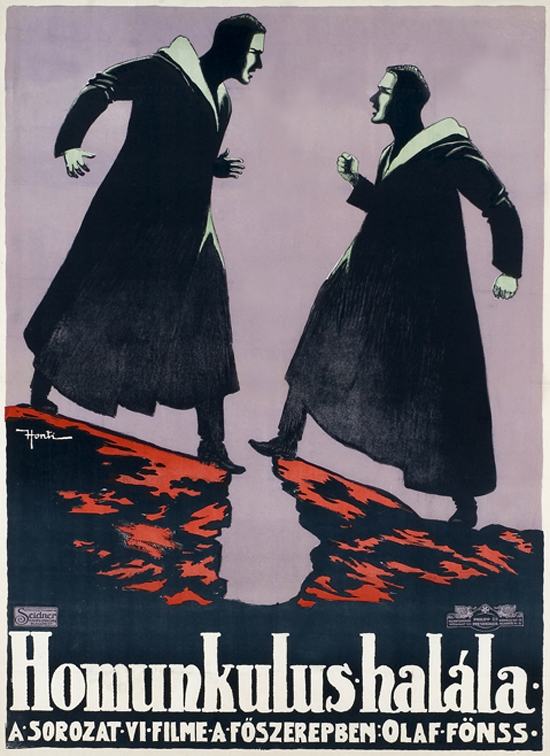
A definitive 6.6/10 rating for a film that redefined the boundaries of cult cinema. Homunculus remains a cornerstone of transgressive art.
There are films that merely entertain, and then there are cinematic behemoths that dare to pry open the very foundational questions of existence, challenging our perceptions of humanity, creation, and the perilous precipice of scientific ambition. Robert Reinert’s Homunculus, a sprawling, six-part German silent epic from 1916, unequivocally belongs to the latter category. It is not merely a film; it is a philosophical treatise rendered in celluloid, a harrowing journey into the heart of an artificially created being, cursed by its very genesis to walk a path of profound, unyielding loneliness. In an era still grappling with the nascent possibilities of cinema, Reinert, with the inimitable Life Without Soul (1915) having just explored similar Frankensteinian themes, constructs a narrative of such audacious scope and psychological depth that it continues to resonate with chilling prescience even a century later.
At its core, Homunculus is the story of Professor Ortmann, a scientist whose intellect rivals his hubris. Driven by an insatiable desire to conquer the mysteries of life, he embarks on an experiment of unprecedented scale: to create a human being not through natural procreation, but through purely scientific means. The result is the Homunculus, portrayed with an unnerving intensity by Olaf Fønss. This creature, a testament to Ortmann's genius, is physically flawless, intellectually acute, and in every discernible way, a human being. Yet, a crucial, devastating ingredient is missing from its manufactured soul: the capacity for love. This isn't merely a minor oversight; it is the fundamental flaw that dictates the creature's tragic trajectory, transforming a miracle of science into an engine of despair.
Fønss’s portrayal of the Homunculus is nothing short of masterful. He conveys the character's initial innocence, its burgeoning intellect, and the creeping realization of its own emotional deficiency with a remarkable subtlety that belies the bombastic nature of the plot. We witness the Homunculus's attempts to integrate into human society, to mimic emotions it cannot feel, and to understand a concept – love – that remains perpetually alien to its synthetic core. His eyes, initially wide with curiosity, gradually harden with a profound, existential bitterness. This isn't the monstrous rage of a brute, but the calculated fury of an intelligence scorned, a being who understands its own incompleteness and resents the world for it.
The film eschews simple monster-movie tropes, instead delving into the psychological torment of its protagonist. The Homunculus is not inherently evil; it is a product of its design, its actions a direct consequence of its inability to form genuine connections. Its quest for love becomes a destructive force, as it seeks to extract what it cannot generate, leading to heartbreak, betrayal, and eventually, a full-blown societal revolt. The narrative unfolds as a series of escalating confrontations, each one highlighting the Homunculus's growing disillusionment and its terrifying capacity for manipulation and destruction. It becomes a figure of terrifying power, capable of inspiring both devotion and terror, all while remaining an island unto itself, utterly alone.
Reinert's screenplay, which he also directed, is a marvel of narrative construction. Across its six installments, the story maintains a relentless pace, building tension and deepening the psychological complexity of its characters. The supporting cast, including Lore Rückert, Lia Borré, and Ernst Ludwig, provide crucial human foils to Fønss's central performance, embodying the very emotions the Homunculus craves and ultimately destroys. Their reactions to the creature – fear, fascination, pity, and eventually outright rebellion – paint a vivid picture of a society grappling with the consequences of unchecked scientific progress.
Beyond the thrilling narrative, Homunculus is a profound meditation on what truly constitutes humanity. Is it merely the biological form, or is it the intricate web of emotions, particularly the capacity for empathy and love, that defines our species? The film argues, quite forcefully, for the latter. The Homunculus, despite its perfect physical manifestation, remains an 'other' precisely because of this emotional void. It's a stark reminder that life, when stripped of its spiritual and emotional dimensions, can become a terrifying, destructive force.
The film also serves as a cautionary tale about scientific hubris. Professor Ortmann, in his pursuit of ultimate knowledge, oversteps ethical boundaries, creating a being whose existence is inherently flawed and tragic. This theme resonates powerfully with other early cinematic explorations of artificial life, such as Life Without Soul, but Homunculus elevates it by focusing not on the outward monstrosity, but on the internal, psychological horror of being emotionally incomplete. It’s a prescient commentary on the dangers of playing God without fully comprehending the spiritual ramifications.
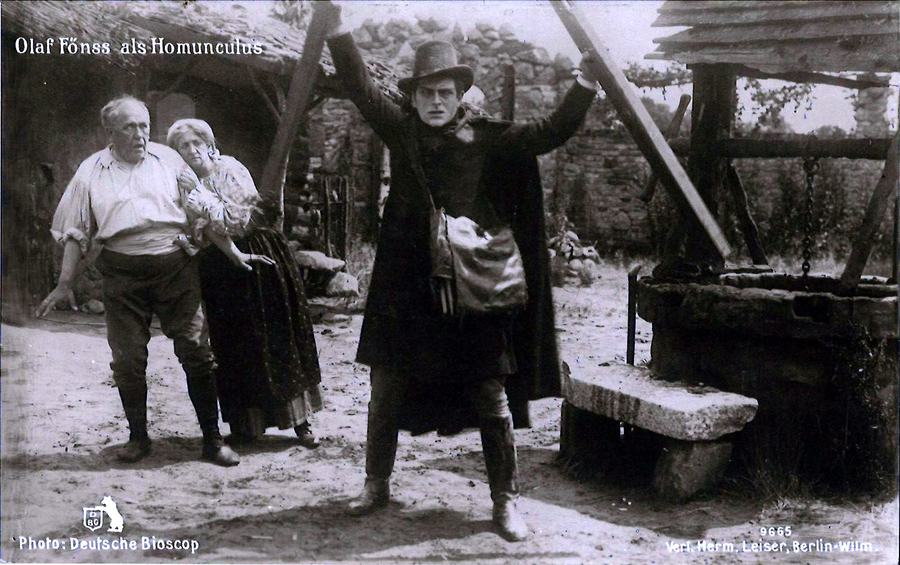
Furthermore, the film's depiction of a society driven to rebellion by the Homunculus’s destructive machinations can be seen as a reflection of the tumultuous socio-political climate of its time. Released during World War I, the film's themes of widespread chaos, societal breakdown, and the rise of a charismatic yet destructive leader (the Homunculus briefly assumes control of a revolutionary movement) might have mirrored the anxieties and fears prevalent in Germany. This imbues the narrative with an additional layer of historical significance, transforming it from a mere sci-fi spectacle into a socio-political allegory.
Technically, Homunculus is a remarkable achievement for its time. Reinert's direction is fluid and dynamic, utilizing innovative camera work and editing techniques to convey emotion and accelerate the narrative. The film's visual style, while not full-blown German Expressionism (which would emerge more prominently in the post-war years), certainly contains proto-Expressionist elements in its dramatic lighting, exaggerated gestures, and heightened sense of theatricality. The sets are elaborate, conveying both the grandeur of scientific laboratories and the crumbling chaos of a society under siege. The use of intertitles is effective, not merely relaying dialogue but often providing philosophical commentary that deepens the viewing experience.
The sheer ambition of a six-part serial, each part designed to build upon the last, was groundbreaking. It allowed for a depth of character development and plot complexity rarely seen in cinema of that period. While few complete prints survive today, the fragments and reconstructions attest to a work of immense scale and profound artistic vision. The influence of Homunculus can be traced through subsequent German cinema, particularly in the sci-fi and horror genres. Its exploration of artificial life and its consequences paved the way for masterpieces like Metropolis and countless other tales of man-made monsters grappling with their existence.
In its exploration of a being that is human in every aspect save for its soul, Homunculus compels us to confront uncomfortable questions about our own nature. What truly makes us human? Is it our physical form, our intellect, or something far more intangible, something rooted in our capacity for connection and empathy? The film suggests that without this emotional core, even the most perfect creation is doomed to a life of profound misery and, ultimately, destructive rage.
This is not a film to be passively consumed; it demands engagement, reflection, and a willingness to confront the darker aspects of human ambition and the tragic consequences of playing God. Olaf Fønss's Homunculus remains one of the most compelling and tragic figures in early cinema, a testament to the power of a performance that transcends the limitations of the silent screen. His journey from innocent creation to vengeful destroyer is a chilling reminder of the delicate balance that defines our humanity. Even today, in an age grappling with artificial intelligence and genetic engineering, the ethical dilemmas posed by Homunculus feel remarkably contemporary, making it not just a historical curiosity, but a timeless piece of speculative fiction that continues to provoke thought and stir the conscience.
While comparisons to other films like The Fifth Commandment or The Purple Lady might arise in the context of early German cinema, Homunculus stands unique in its singular focus on the psychological and existential torment of its artificial protagonist. It avoids the more straightforward melodramas of its contemporaries, choosing instead a path of intricate philosophical inquiry wrapped in a thrilling, albeit tragic, adventure. It is an essential viewing for anyone interested in the origins of science fiction cinema, the development of psychological drama, and the enduring questions that continue to define the human condition.
A truly unforgettable cinematic experience.

IMDb 6.7
1932
Community
Log in to comment.