DbcultAccessing Vault...
Cult Review
Senior Film Conservator
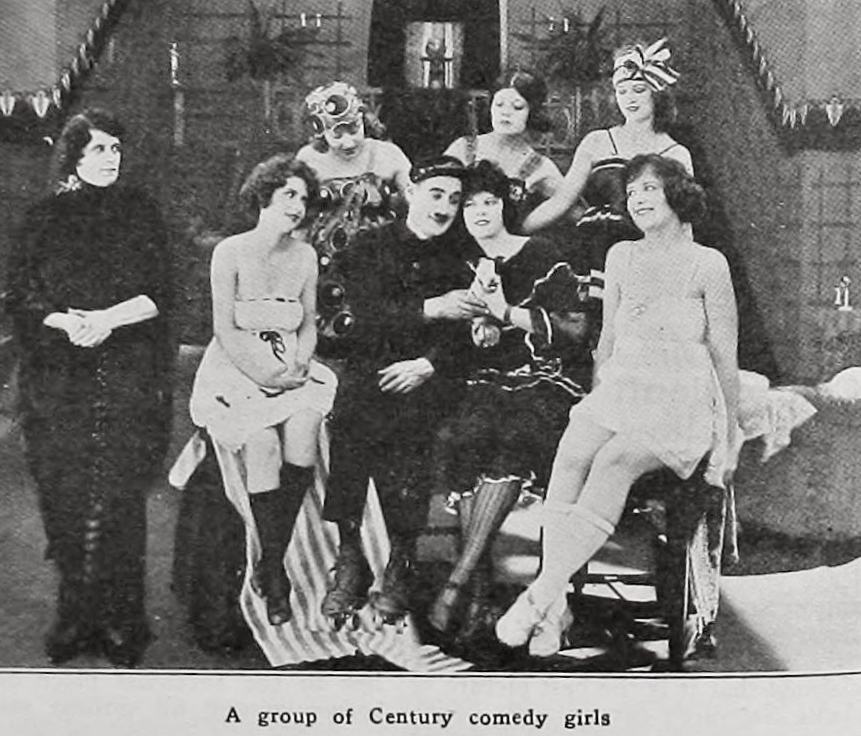
Imagine, if you can, a world where the seams of a gown are stitched with libido, where the hiss of a dentist’s nitrous mask sounds like a saxophone solo from a speakeasy basement, and where the simplest errand—delivering a parcel—becomes a pirouette into the Freudian unconscious. Fred Windemere’s one-reel fever dream Bear Skinned Beauties (1921) is that world, pressed like a wildflower between the brittle pages of film history, waiting for someone to breathe on it and watch it bloom or combust.
Shot in the waning days of two-reel vaudeville transitions and the dawn of Jazz-Age cynicism, the picture stars Zip Monberg—rubber-limbed, cherub-faced, half Buster Keaton and half street urchin—as a roller-skating courier who rockets through Manhattan’s garment district on ball-bearings of pure libido. His skates aren’t skates; they’re narrative dynamite, each wheel a fuse that detonates social pretense wherever it touches parquet. The film’s first third is pure momentum: a blur of parcels, revolving doors, and corseted mannequins who blink into sentience when no one is looking. Windemere’s camera, still tethered to static tableaux, tilts ever so slightly—as if embarrassed to admit it’s peeking up a skirt.
Enter Bull Slinger, played with porcine grandeur by an uncredited heavy whose neck seems stuffed with cravat and chicanery. He owns the boutique the way a spider owns a web: every thread paid for, every fly accounted for. His wife—equal parts The Unchastened Woman and Mrs. Erricker’s Reputation—presides over the mannequins like a dethroned Cleopatra, scissors dangling where asp should be. Their marriage is a ledger of infidelities, and Zip’s sweetheart—one of the shop girls—becomes the latest line item.
What follows is not so much a love triangle as a love slapstick: Bull’s pinch, the wife’s retaliatory slap, Zip’s indignant cartwheel on wheels, and the cataclysmic expulsion into the street. The tonal pivot is so abrupt it feels like changing channels from a bedroom farce to a dental hygiene PSA. Yet this whiplash is where Windemere’s latent genius sparks. The dentist’s office—white tile, chrome implements glinting like cold stars—becomes the portal to a nitrous nirvana. Once the mask descends, the film’s palette blooms from monochrome into hand-tinted amber and sea-foam green (surviving prints vary; the Library of Congress holds a partial tint). Zip’s pupils dilate until the iris swallows the sclera, and suddenly we’re in a forest that looks suspiciously like the boutique’s back room, only the gowns are now bark and moss, the mannequins are dryads, and Bull sports papier-mâché horns like some Antipodean Pan.
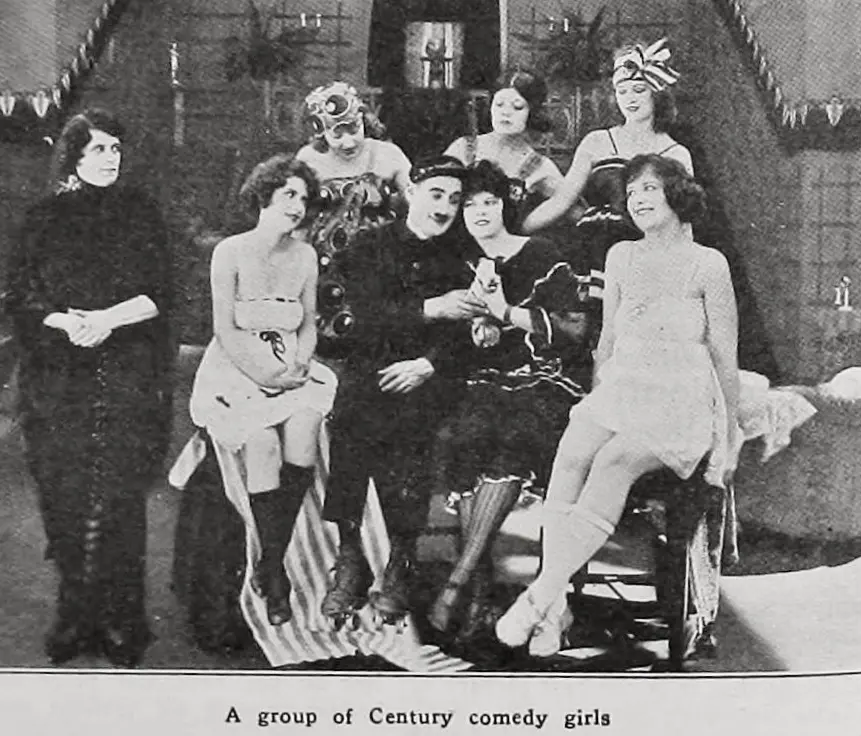
Scholars of slapstick often dismiss dream sequences as filler—an excuse for impossible acrobatics and budget-saving papier-mâché. Here, the dream is the film’s marrow. Under gas, Zip confronts the erotic economy that underpins the sweatshop: bodies measured, fitted, and sold by the yard. The dryad-models circle him in a slow-motion ronde while he stands in a loincloth of shipping paper—every courier’s uniform reduced to its Freudian minimum. When he awakens, tooth yanked free, the extraction becomes symbolic castration: the mouth that spoke love now gapes in absence. Yet Zip’s response is not trauma but delight; he spots Bull amid the fog of girls, compares the satyr to the financier, and chooses unconsciousness over the return to wage slavery. It’s a moment of anarchic jouissance that would make even Envy’s surrealists tip their hats.
Zip Monberg, alas, vanished into the cauldron of forgotten clowns; no star on Hollywood Boulevard, no memoirs ghost-written in Sunset nursing homes. Yet his physical lexicon here anticipates not only Keaton’s stone-faced stoicism but also the grotesque elasticity of Like Wildfire’s contortionists. Watch the way his limbs splay on skates—each fall a calculus of torque and grace, each recovery a silent punchline. Beside him, Bull Slinger oscillates between top-hatted respectability and shirt-sleeved concupiscence; his belly arrives a half-second before the rest of him, a pendulum of appetite. The wife, credited only as “Madame,” wields silence like a whip; her eyes perform the slow burn that intertitles could never script.
Cinematographer Gus Weinheimer (later of Brace Up) keeps the camera at waist height, the better to ogle frocks and ankles. But in the nitrous sequence, he racks focus until the image smears—edges bleeding like watercolor on wet paper. Surviving prints bear scratches that resemble claw marks, as if the bear of the title tried to escape the celluloid. The tinting—when extant—favors amber for the boutique (commerce), cyan for the dental theater (science), and a lurid orange for the sylvan dream (desire), a tri-chromatic code that predates the color theory of Greater Than Fame by a full decade.
Windemere’s shop girls are not merely mannequins with pulses; they’re a union of gazes. When they circle Zip in the dream, their hands hold not needles but tiny mirrors, reflecting his own desire back at him until the voyeur becomes the viewed. The wife’s revenge is not catfight but coup: she snips the crotch of Bull’s trousers during the melee, leaving him literally un-seamed. Meanwhile, Zip’s sweetheart never begs rescue; she roller-skates away from both mogul and messenger, a proto-It Girl who prefers asphalt to altar. In a landscape of fraternal blood feuds and honeymoon comedies of remarriage, such self-possession feels almost extraterrestrial.
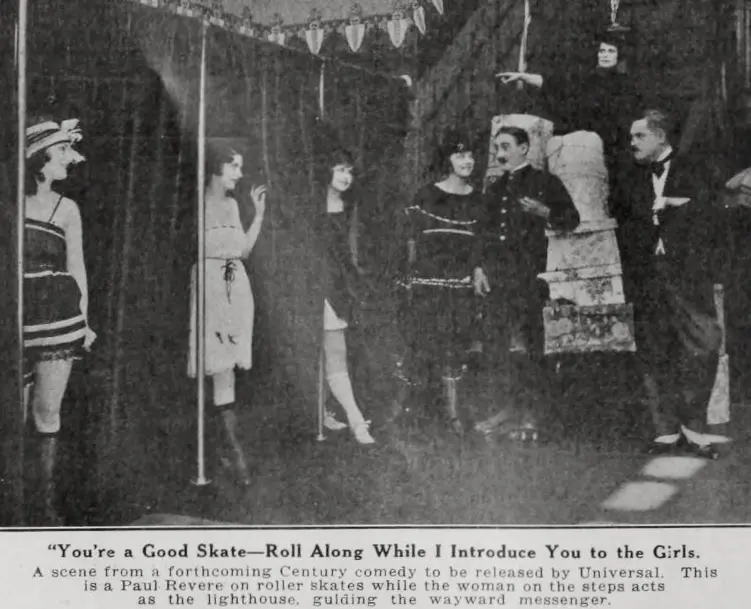
Though released sans synchronized score, surviving exhibitors’ cue sheets recommend “a brisk foxtrot, then a gasping waltz in 5/4 during the extraction.” Modern restorations often pair the dream with a muted trumpet, its valves fluttering like Zip’s eyelids. The absence of spoken dialogue amplifies the corporeal: every grunt, every skate-scrape, every gasp of nitrous becomes percussive. Try watching it with earbuds and eyes closed; the film turns radio play, the boutique becomes a cabaret, the forest a flapper’s whispered secret.
Windemere’s hallucinated woodland predates the alpine fever dream of The Wandering Image by months, yet where Lang’s forest is fate’s labyrinth, this one is libido’s carnival. Likewise, the tooth-extraction-as-rebirth trope resurfaces in A Fool’s Paradise, but there the patient is swindled; here, Zip swindles himself into bliss. Fans of Pardners’ dental slapstick will note a more sadomasochistic edge—gas as consensual erasure, not punishment.
For decades, Bear Skinned Beauties existed only in a single 28mm show-at-home print, vinegar-wrinkled and reeking of camphor. Then, in 2018, a Belgian collector unearthed a 35mm dupe beneath a stack of Danish anarchist pamphlets. The George Eastman Museum undertook a 4K wet-gate transfer, opting to leave the emulsion burns intact—each scorch a scar of some long-dead projector bulb. The tinting was recreated using vintage Pathé stencils, so the amber drips like honey, the cyan shivers like ice. Stream it on Criterion Channel (region-locked) or snag the Blu-ray with optional commentary by film-cartographer Dr. Lola Gamsar who maps every roller-skate route onto 1921 Manhattan tax records.
Program a double bill with Die Brüder von Zaarden for a night of Teutonic-versus-Yankee dream logic, or pair it with The Piper’s Price to trace the motif of choosing fantasy over fiscal debt. If you’re teaching a course on labor and gender, sandwich it between archival footage of the 1920 “Garment Workers’ Strike” and the 2019 Fast Fashion documentary—watch the century fold like pleats.
Bear Skinned Beauties is a pocket-sized revolution masquerading as a trifle. It laughs at the very commodity culture that financed it, offers nitrous as the working-class ticket to Arcadia, and lets its hero choose unconsciousness over capital. Ninety years before the meme, Zip Monberg declared: “I’m baby, I’m asleep, don’t wake me for your shift.” The film survives only by a thread of celluloid and a lick of amber tint, yet it shimmers—a molten warning that the American Dream was always a garment stitched by underpaid seamstresses and measured with mirrors. Watch it, then look at your own closet; you may hear the faint hiss of gas, the distant roll of eight tiny wheels skating off the clock.
IMDb —
1919
Community
Log in to comment.