DbcultAccessing Vault...
Cult Review
Senior Film Conservator
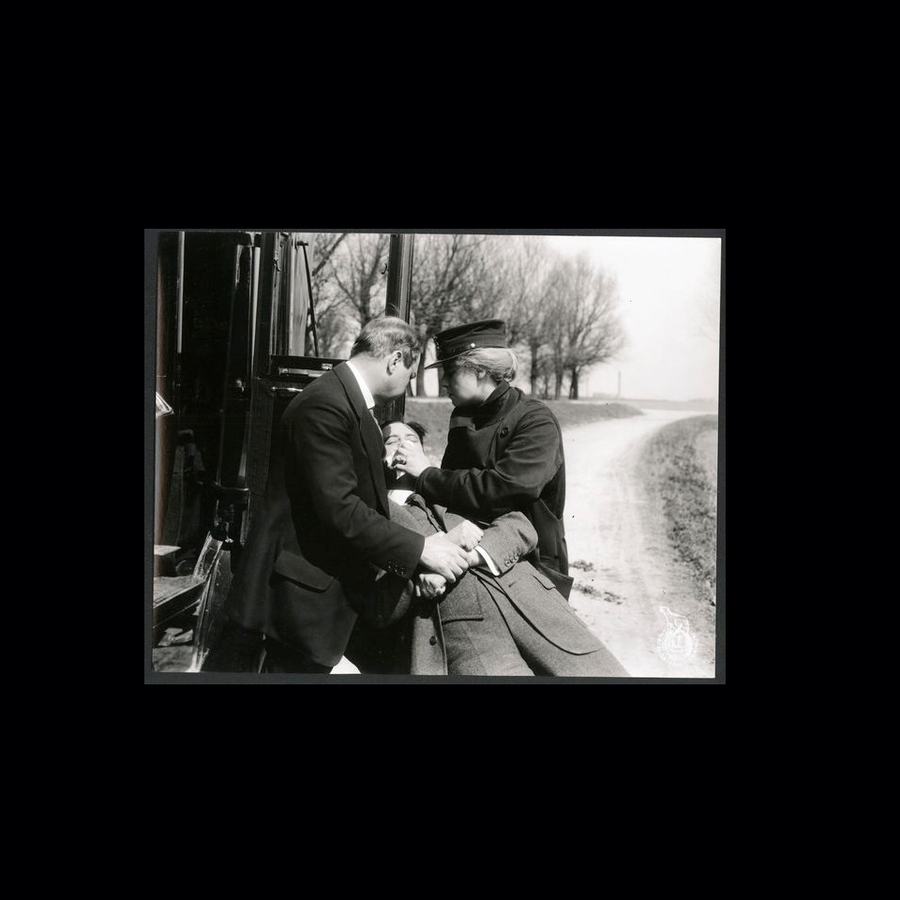
Stepping into the spectral glow of early 20th-century Danish cinema, one encounters a profound tapestry woven with threads of social commentary, ethical quandaries, and the indelible human spirit. "Blandt Samfundets Fjender" (Among Society's Enemies), a title that resonates with an almost prophetic weight, stands as a stark, compelling testament to the era's nascent yet powerful cinematic voice. This isn't merely a period piece; it's a timeless dissection of justice, betrayal, and the often-fragile line between the wronged and the 'wrongdoer.' Ludvig Jensen and Valdemar Andersen, with their keen narrative sensibilities, crafted a story that, even in its silent grandeur, screams volumes about the systemic injustices that can crush an individual's soul.
The film introduces us to Karl Vinter, portrayed with a poignant earnestness by Erik Holberg, a figure who embodies the quintessential tragic hero. Karl is not merely an inventor; he is an idealist, a man whose intellectual prowess is matched only by his deep-seated compassion for the working class. His magnum opus, a safety device designed to safeguard the lives of factory laborers, is born not of ambition but of empathy. It’s a vision of a safer, more humane industrial world. Holberg imbues Karl with a quiet dignity that makes his subsequent downfall all the more heart-wrenching. His initial scenes are suffused with a hopeful, almost naive optimism, a stark contrast to the grim reality that awaits him.
The narrative's central antagonist, Magnus Krogh, brought to chilling life by Henry Seemann, is a masterclass in understated villainy. Seemann’s portrayal eschews overt theatrics, opting instead for a cold, calculating demeanor that makes Krogh’s machinations feel terrifyingly real. He is not a mustache-twirling caricature but a chillingly plausible embodiment of corporate greed and moral decay. The theft of Karl's invention is depicted not as a spontaneous act of malice but as a calculated maneuver within a ruthless industrial landscape, highlighting the film's nuanced critique of unchecked capitalism. The subsequent factory disaster, orchestrated through Krogh's negligence and Karl's wrongful conviction, serves as the narrative's agonizing pivot point, pushing our protagonist into the very abyss of societal rejection.
Upon his release from prison, Karl Vinter is a man transformed, his idealism replaced by a hardened cynicism. He is, by societal decree, an enemy. The film masterfully explores this transformation, delving into the psychological toll of such an injustice. It’s here that Robert Dinesen’s character emerges, a magnetic, enigmatic leader of a subterranean network of outcasts and rebels. Dinesen, with his compelling screen presence, crafts a figure who is both alluring and morally ambiguous, a mentor who offers Karl not just a sanctuary but a path to vengeance. This relationship forms the ethical core of the film, forcing both Karl and the audience to grapple with the complexities of justice sought outside the conventional, often corrupt, legal framework. Dinesen’s performance is a nuanced ballet of charisma and menace, making his character a truly unforgettable guide into the shadows.
In stark contrast to the encroaching darkness, Ebba Thomsen's portrayal of Anna, Karl's fiancée, shines with an unwavering luminosity. Thomsen embodies purity and steadfast devotion, her character a moral anchor in a storm of injustice. Anna's solitary quest for truth, navigating the labyrinthine corridors of a biased legal system and confronting societal apathy, is a powerful testament to the resilience of love and faith. Her scenes provide crucial emotional respite, a reminder of the humanity that Karl risks losing in his pursuit of retribution. The dichotomy between Karl's descent into the underworld and Anna's relentless pursuit of justice forms a compelling narrative tension, underscoring the film's exploration of different responses to profound injustice.
Further complicating Karl’s arduous journey is Maja Bjerre-Lind's character, a captivating socialite whose allure is as dangerous as it is seductive. Bjerre-Lind brings a fascinating ambiguity to her role, embodying the temptations and moral compromises that Karl faces in his new life among society's 'enemies.' She represents a different kind of freedom, one untethered by conventional morality, offering a stark contrast to Anna's earnest devotion. This intricate web of relationships, each character pulling Karl in a different direction, elevates the film from a simple revenge tale to a sophisticated psychological drama, examining the myriad paths an individual might take when pushed to the brink.
The directorial vision behind "Blandt Samfundets Fjender" is remarkably sophisticated for its time. The use of deep focus, the evocative composition of shots, and the subtle yet powerful intertitles all contribute to a rich, immersive cinematic experience. The film employs stark contrasts in lighting to reflect Karl's internal state, moving from the bright, hopeful glow of his early days to the shadowy, chiaroscuro world of his post-prison existence. The pacing, though deliberate, never lags, each scene meticulously building towards the climactic confrontation. The emotional resonance is palpable, a testament to the power of visual storytelling even without spoken dialogue.
The thematic depth of "Blandt Samfundets Fjender" is truly remarkable. It's a searing indictment of social inequality, corporate malfeasance, and the often-blurry lines between law and justice. The film challenges the audience to question who the true 'enemies' of society are: the individuals cast out by the system, or the powerful figures who manipulate it for personal gain? This question is as relevant today as it was a century ago, lending the film an enduring, timeless quality. It delves into the nature of revenge versus redemption, exploring the corrosive effects of bitterness and the redemptive power of truth and unwavering loyalty.
Comparing it to other works of the era, "Blandt Samfundets Fjender" stands shoulder-to-shoulder with the most impactful social dramas. While The Common Law might explore marital and social conventions, and The Spoilers delves into the rugged justice of the frontier, "Blandt Samfundets Fjender" provides a more introspective, psychologically charged examination of individual struggle against systemic oppression. Its focus on a single man's journey from idealism to ostracization, and his subsequent moral dilemma, offers a narrative arc that is both deeply personal and broadly resonant.
The film’s portrayal of the criminal underworld is not romanticized but presented as a stark consequence of societal failure. Robert Dinesen's character, while offering Karl a path, also represents the seductive danger of abandoning all conventional morality. This nuanced depiction avoids simplistic good-vs-evil narratives, instead opting for a more complex exploration of human agency and the choices individuals make when cornered. It's a world where survival often dictates morality, and where the lines between right and wrong become dangerously blurred.
The performances across the board are exemplary. Johannes Ring and Thorleif Lund, though in supporting roles, add significant texture to the narrative. Ring, perhaps as a sympathetic judge or a weary public defender, brings a sense of the institutional fatigue that often perpetuates injustice. Lund, potentially as a corrupt official or a shadowy enforcer for Krogh, embodies the more overt manifestations of the societal 'enemies.' Their contributions, though perhaps less central, are vital in constructing the oppressive world that Karl inhabits and struggles against.
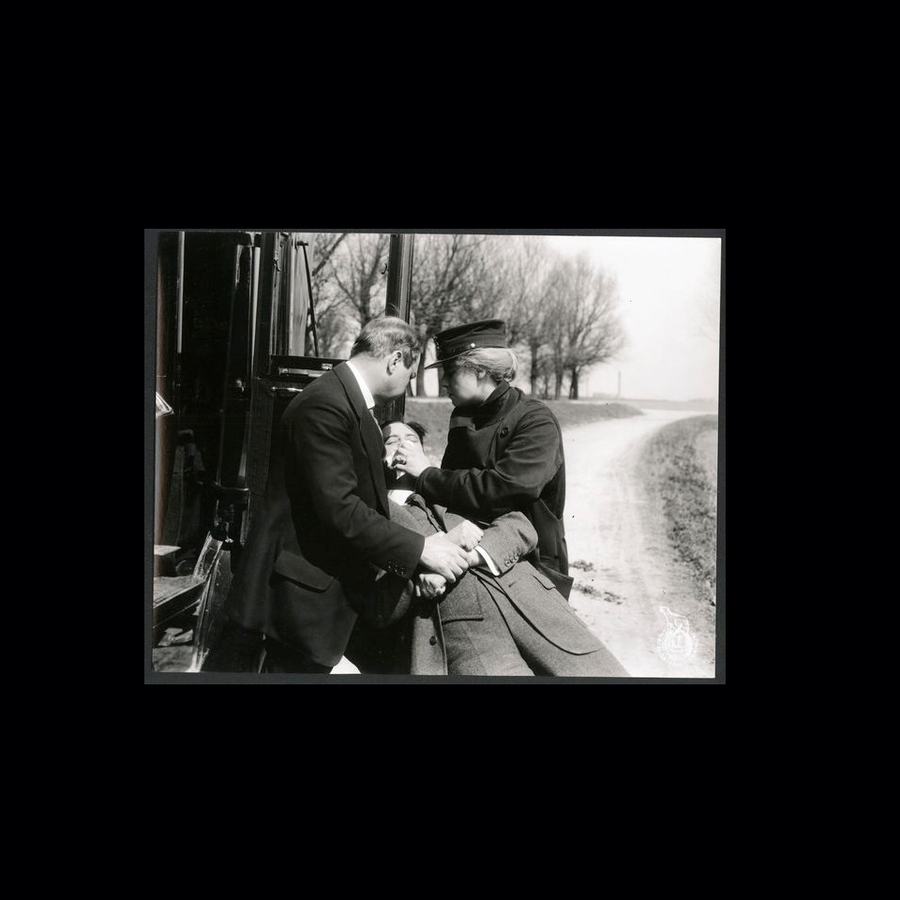
The climax of "Blandt Samfundets Fjender" is a masterclass in silent film drama. It’s not just a confrontation of characters, but a clash of ideologies. The tension is meticulously built, culminating in a sequence that is both visually striking and emotionally devastating. Without giving away the precise resolution, it challenges the audience to ponder the true cost of justice and whether complete vindication is ever truly possible when one has been irrevocably altered by the very forces they seek to overcome. The ending is not necessarily neat or wholly triumphant, but rather thought-provoking, leaving a lingering impression that the battle against societal injustices is an ongoing one.
In terms of its aesthetic, the film showcases the burgeoning artistry of Danish silent cinema. The cinematography, though black and white, is rich with texture and depth. The use of natural light in some scenes, juxtaposed with dramatic stage lighting in others, creates a compelling visual language. The set designs, whether depicting the grime of the factory floor or the opulence of Krogh's mansion, are meticulously crafted, serving as more than mere backdrops but as active participants in the storytelling, reflecting the stark class divides central to the narrative.
While some contemporary films like Homunculus, 1. Teil explored the terrifying implications of scientific creation, "Blandt Samfundets Fjender" grounds its narrative in more immediate, human-centric concerns of social justice. It lacks the fantastical elements of a serial but possesses a gritty realism that makes its emotional impact profound. Similarly, it differs from the wartime narratives like With the Army of France or Somewhere in France, focusing instead on internal societal conflicts rather than external military ones.
The film's enduring legacy lies not just in its powerful narrative but also in its courage to tackle uncomfortable truths. It holds a mirror up to society, questioning its definitions of morality, crime, and justice. It portrays the fragility of an individual's reputation and the devastating consequences of unchecked power. For those interested in the evolution of cinema as a vehicle for social commentary, "Blandt Samfundets Fjender" is an indispensable watch, a silent film that speaks volumes.
The meticulous attention to detail in character development ensures that even minor characters leave a lasting impression. From the weary faces of the factory workers to the smug expressions of the corrupt officials, each individual contributes to the rich tapestry of the film's world. This comprehensive approach to world-building allows the audience to fully immerse themselves in Karl's plight, making his struggles and triumphs feel intensely personal. The film doesn't merely tell a story; it invites you to experience it.
Furthermore, the subtle interplay between light and shadow, a hallmark of early cinema, is utilized with exceptional skill here. The shadowy alleys where Karl finds refuge with Dinesen's character contrast sharply with the sterile, unforgiving light of the courtroom, visually reinforcing the themes of hidden truths and exposed lies. This visual poetry elevates the narrative, adding layers of meaning that transcend the simple plot points. It demonstrates a sophisticated understanding of how visual elements can communicate complex ideas and emotions.
"Blandt Samfundets Fjender" is more than a historical curiosity; it is a vibrant, relevant piece of art that continues to provoke thought and stir emotions. It reminds us that the fight for justice is often a lonely and arduous one, and that the true enemies of society are not always those who stand accused, but sometimes those who wield power with impunity. Its timeless message, delivered through the powerful medium of silent cinema, resonates deeply, urging us to look beyond superficial judgments and question the very foundations of our social structures.
The emotional arc of Karl Vinter, from hopeful innovator to embittered outcast and ultimately to a man grappling with his moral compass, is a journey that captures the very essence of the human condition. His struggle for self-definition in the face of overwhelming adversity is universally relatable. The film's ability to evoke such profound empathy for its protagonist, even as he contemplates morally dubious paths, is a testament to the powerful storytelling and the nuanced performances. It's a profound exploration of what it means to lose everything and then find a new, albeit darker, purpose.
In an era of rapidly evolving cinematic techniques, "Blandt Samfundets Fjender" stands out for its narrative ambition and thematic courage. It doesn't shy away from depicting the grim realities of industrial society and the corrupting influence of power. Instead, it confronts these issues head-on, using the nascent language of film to articulate a powerful social critique. It's a film that demands to be seen, studied, and appreciated for its contribution to both Danish and world cinema, offering insights that remain acutely pertinent in our contemporary world. Its exploration of societal scapegoating and the individual's fight for integrity ensures its place as a significant work in film history.
The film's exploration of loyalty, particularly through Anna's character, provides a counterbalance to the bleakness of Karl's journey. Her unwavering belief in him, even when all evidence points to his guilt, highlights the profound impact of human connection and steadfast love. This emotional core prevents the film from descending into pure cynicism, offering a glimmer of hope amidst the pervasive injustice. It's a powerful reminder that even in the darkest of times, genuine human connection can serve as a beacon, guiding individuals towards redemption or at least towards a sense of purpose beyond mere revenge.
Ultimately, "Blandt Samfundets Fjender" transcends its historical context to deliver a universal message about the cyclical nature of injustice and the perpetual struggle for a more equitable world. It's a film that leaves an indelible mark, prompting introspection on our own societal structures and the individuals who are often marginalized within them. A truly exceptional work that continues to resonate with powerful relevance. Its masterful blend of compelling narrative, profound themes, and evocative silent film artistry makes it a must-see for any serious cinephile.

IMDb 5.8
1932
Community
Log in to comment.