DbcultAccessing Vault...
Cult Review
Senior Film Conservator
Jacques de Baroncelli’s 1946 adaptation of Jules Mary’s bestseller arrives like a battered brass mirror flung onto the Seine at midnight—its reflection is cracked, lurid, impossible to ignore. The title card, scrawled in crimson that refuses to dry, already accuses the viewer: Roger la Honte. Say it aloud and you taste rust; swallow it and you inherit a century of rot.
Forget linearity. The film loops, recoils, and devours itself. We begin not with birth but with a burial in pouring rain so acidic it hisses on the coffin lid. The deceased is anonymity itself—no name, only the epithet père infâme. From this soggy grave, the narrative back-flips fifteen years to a New Caledonian quarry where Roger (André Marnay, cheekbones sharp enough to slice tobacco) swings a pickaxe while reciting Hugo to convicts who can’t read. He is both Prometheus and pariah, shackled for a military treason the film refuses to explain outright; instead we get shards—an envelope sealed with violet wax, a colonel’s bloodied glove, a child’s lullaby that ends on the word trahison.
Cut to Paris, where Julien (Henri Chomette, channeling young Chekhovian ennui) learns that the law is a cabaret where evidence strips for coins. His quest to rehabilitate the family crest drives the middle act, yet every revelation is a corridor with more doors. Sylvie, as the mother who once burned every photograph of her husband, spends entire scenes seated before a mirror powdering her face until she resembles a porcelain mask whose cracks are deliberate. Maggy Théry’s courtesan Héloïse, a peripheral character on paper, hijacks the mise-en-scène with a single tracking shot: she glides through the Café des Amis in a gown the color of infected champagne, her neckline plunging like the stock market of 1929, while whispering stock tips for human souls.
The third act relocates to a fog-choked Atlantic port where a hospital ship doubles as purgatory. Here Roger reappears, wasted yet electrically sane. Baroncelli shoots him through a fish-eye lens distended with salt-streaked gauze; dialogues overlap like tidal waves. Father and son share no tearful embrace—instead they parallel-monologue, each convinced the other is ghost. The climax is a trial held in an abandoned theatre where mannequins replace the jury; verdicts are hurled like rotten roses. When the judge intones “La honte est un héritage”, the camera somersaults into the orchestra pit and the screen gutters to black, leaving only the sound of a child’s tin drum somewhere off-screen.
André Marnay’s Roger is a master-class in mortified charisma. He enters frame already haunted, eyes flickering like defective film sprockets. Watch the way he smokes: cigarette trembling between index and middle finger as if it’s a fuse counting down to absolution. In close-up, his pores exhale coal-dust history; when he smiles, it’s an archaeological dig.

Henri Chomette, usually a lightweight leading man, weaponizes his own blandness. Julien’s idealism is a starched collar that strangles; every time he adjusts it, you hear threads snap. The performance peaks in a silent corridor shot lasting forty-three seconds where he simply listens to an unseen prisoner scratching a wall—his pupils dilate until the iris almost vanishes, and in that abyss you glimpse heredity’s vise.
Sylvie, credited mononymously like a saint or assassin, embodies maternal corrosion. She delivers a bedtime story to her daughter while methodically shredding a lace handkerchief; the scraps drift like snow onto the child’s blanket, a perverse confetti. Mention must also be made of Eric Barclay’s prosecuting attorney—he plays the role like a maestro conducting a symphony of disgust, arms carving the air into guillotine arcs.
Cinematographer Georges Deneubourg achieves chiaroscuro so extreme it borders on forensic. Light slices faces into cubist fragments; shadows bloom like malignant petals. Note the sequence where Roger escapes the quarry at dusk—nocturnal insects swarm the lens, becoming corporeal scratches on destiny itself. The camera tilts thirty degrees, transforming a sprint across volcanic rock into a descent up a wall, Escher reborn as penal servitude.
Sound design, revolutionary for 1946, layers diegetic cacophony with musique concrète. Waves morph into courtroom gavels; a convict’s ankle chain rattles in sync with Parisian streetcar bells. When Héloïse sings a Offenbach aria in the café, her voice suddenly drops an octave—whether by post-production trick or actress’s ventriloquism remains deliciously ambiguous.
Unlike Torchy’s Night Hood’s comic-strip urbanity or The Country Flapper’s barnyard whimsy, Roger la Honte wallows in the gutter of ancestral guilt, closer to Ruined by Love’s operatic despair yet devoid of that film’s sentimental anesthesia. Think of it as the missing link between The Woman Pays’s Victorian flagellation and The Soul Market’s jazz-age nihilism.
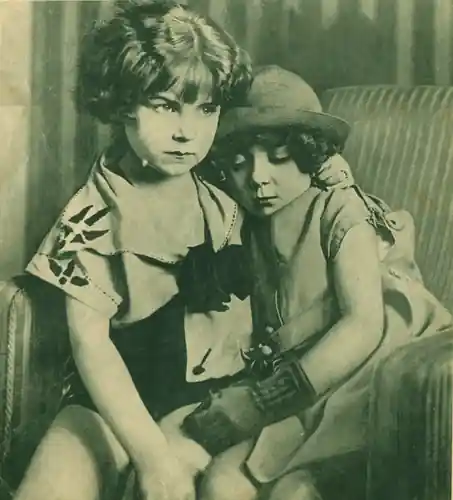
Where Starting Out in Life reassures us that grit breeds success, Baroncelli retorts that grit is more likely to breed gangrene. And while Puss in Boots distracts with fairy-tale levity, Roger insists folklore is just another indictment written in prettier ink.
The film’s thesis: shame is the last fungible currency, accepted in every boudoir and boardroom. Characters trade on it, hoard it, counterfeit it. Roger’s supposed treason inflates the moral stock of his enemies; Julien’s quest to clear the name is less filial devotion than speculative investment. When the final verdict arrives, it is delivered not as justice but as a hostile takeover.
Gender politics simmer beneath. Women possess no surnames of their own; they circulate like bearer bonds of disgrace. Héloïse monetizes her body to purchase a future free of male taint, while the mother clings to her married stigma as if it were a widow’s pension. The film’s most chilling line belongs to a peripheral seamstress: “A woman’s virtue is only the down-payment on her children’s shame.”
Contemporary critics, still tipsy on post-Liberation euphoria, dismissed the film as “un appel au masochisme”. Audiences stayed away, war-weary and unwilling to pay for another helping of existential claustrophobia. The print vanished for decades, rumored recycled into boot heels. Then, in 2018, a nitrate reel surfaced at a Montmartre flea market, soundtrack fused to the acetate like a tattoo. After a crowdfunding campaign that felt like penance, a 4K restoration premiered at Lyon’s Lumière Festival. Viewers reportedly emerged mute, some weeping into Breton scarves, others laughing the hollow laugh of those who recognize their own DNA in a stranger’s disgrace.
As of this month, the restored edition streams on Le Cinéma Club for a limited run, subtitle options include English, German, Japanese. A Criterion Blu-ray is slated for autumn, complete with a scholarly commentary that will inevitably over-psychoanalyze the parrot glimpsed in one scene. Seek the largest screen available; watch at night; silence your phone—because the film will silence everything else.
Roger la Honte is not a comfort but a contagion. It seeps into the cracks of your own lineage, asking what stains you’ve inherited, what verdicts you’ve accepted without trial. Long after the credits, you may catch yourself staring into a mirror at an angle that makes your reflection resemble someone you swore never to become. In that moment, the film’s final whispered line will echo: “Le sang n’oublie rien.” Blood forgets nothing—and neither, it seems, does cinema this merciless.
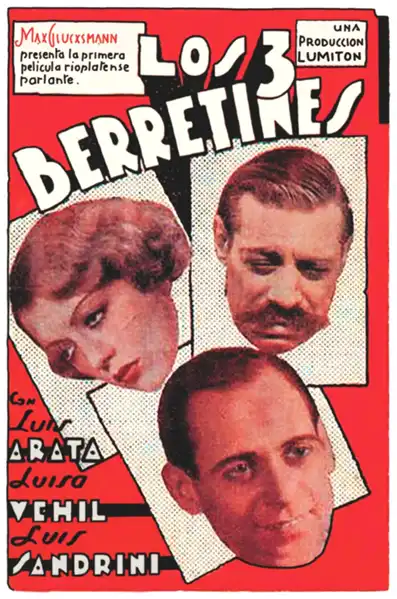
IMDb 6.5
1933
Community
Log in to comment.