DbcultAccessing Vault...
Cult Review
Senior Film Conservator
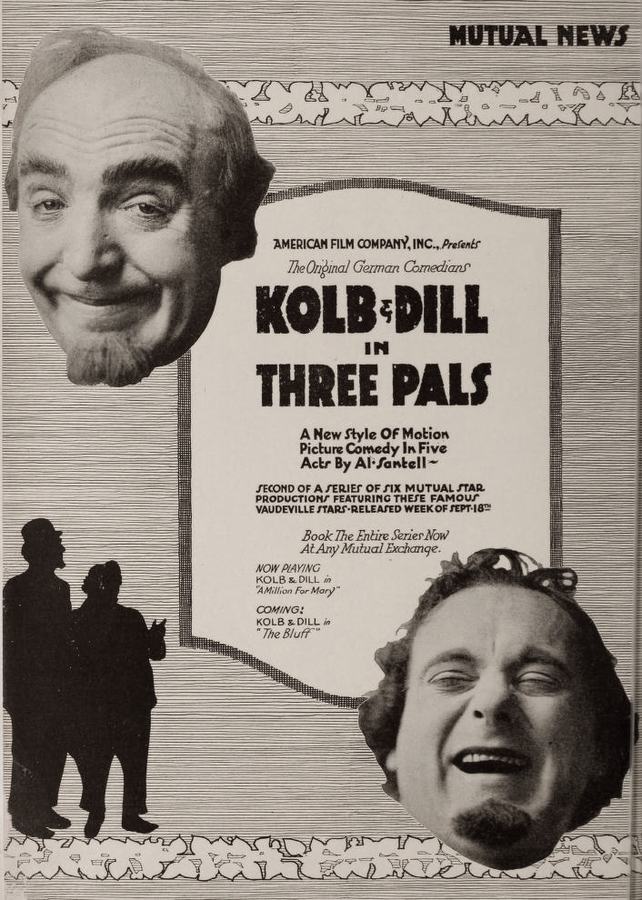
In the annals of early cinematic history, where narratives often embraced the broad strokes of human folly and the unyielding spirit of adventure, The Three Pals (1916) emerges as a delightful, if somewhat convoluted, testament to the era's unique storytelling sensibilities. Directed by the collaborative vision of its time and penned by the inventive minds of Daniel F. Whitcomb, Alfred Santell, and Robert Welles Ritchie, this silent film is a whirlwind of mistaken identities, grand deceptions, and an unwavering, if often misguided, loyalty that defines its central protagonists. It's a journey through a landscape both literal and metaphorical, where the dusty roads of the American West meet the deceptive boulevards of Chicago, all underscored by a comedic rhythm that speaks volumes without uttering a single word.
Our narrative commences with the quintessential image of rustic labor: Mike and Louie, two unassuming souls, diligently pitching hay. It's a tableau of bucolic simplicity, soon to be shattered by the intrusion of urban intrigue. A Chicago newspaper, a seemingly innocuous prop, becomes the catalyst for their extraordinary odyssey. Louie, acting as the literate conduit for his companion, deciphers a want ad that proclaims Mike Schultz the rightful heir to a fortune. This moment, pregnant with dramatic irony, sets the stage for a classic comedic setup – the sudden, bewildering ascent from obscurity to the precipice of wealth. The transition from the rural idyll to the bustling cityscape of Chicago is swift, a cinematic shorthand for the promise of a new life. Here, they encounter Clarence Kolb, embodying the oleaginous attorney Philo Markham, a character whose very demeanor exudes an almost theatrical duplicity. Markham, with a practiced ease, presents them with their $10,000 inheritance, only to swiftly re-route their newfound prosperity. His scheme to divest them of their funds by selling them a practically worthless Western ranch, 'El Reposo,' for an exorbitant sum – a mere $238.00 in actual legal fees transmuted into a staggering $23,800 on paper, then sold for $9,500 – is a masterclass in cinematic swindling. The pals are left with a paltry $500 for travel, a cruel jest of fate disguised as generosity. This early sequence masterfully establishes the film's tone: a blend of genuine peril and the inherent absurdity of human gullibility, a theme not uncommon in silent-era farces where the common man often found himself outmaneuvered by the conniving urbanite. It's a narrative thread that resonates with the classic 'fish out of water' trope, albeit with a particularly stinging financial bite.
As Mike and Louie embark on their ill-fated journey westward, fate orchestrates a parallel narrative thread involving Markham's own daughter, May. Portrayed with a touching vulnerability by May Cloy, May's story begins with an elopement, a classic romantic trope that swiftly devolves into disillusionment. Her husband, Chester, is revealed to be a profligate gambler, squandering his own resources with reckless abandon. This subplot introduces a layer of dramatic tension and social commentary, highlighting the precariousness of women's positions in a patriarchal society, especially when dependent on unreliable men. To escape her disappointing spouse, May makes an impulsive decision, alighting at a small way station near Crowntown, a destination that, by sheer narrative coincidence, aligns with Mike and Louie's trajectory. The cinematic convergence of these two distinct plotlines, a staple of early storytelling, builds anticipation for their inevitable meeting. The Western landscape, often depicted as a land of opportunity and peril, serves as a fitting backdrop for these converging destinies. Upon their arrival at El Reposo, Mike and Louie are confronted with the desolate reality of their purchase – a barren wasteland, a stark symbol of their complete deception. Their initial despair, a powerful, wordless expression of heartbreak characteristic of silent film performances, is compounded by a truly bizarre turn of events: a mischievous goat, an unexpected agent of chaos, devours their return tickets, then sets its sights on their life insurance policies. This moment, a sudden lurch into the purely farcical, underscores the film's willingness to embrace absurdity, transforming tragedy into a peculiar brand of slapstick. This escalating series of misfortunes, where even their last hopes are literally consumed, could easily descend into pathos, but the film maintains its comedic footing through the sheer outlandishness of the situation. It's a reminder that even in dire straits, life, and indeed cinema, often presents its own peculiar brand of humor.
Just as their fortunes seem to hit rock bottom, a new purpose emerges for Mike and Louie. May's screams pierce the quiet Western air, signaling her distress at the hands of her husband, Chester, and his accomplice, Pedro. The pals, springing into action, embody an unexpected heroism, routing the crooks and rescuing May. This pivotal scene transforms their characters from mere victims of circumstance into figures of protective strength. May, recalling her father’s renunciation of her marriage, asserts her independence by declaring herself fatherless, a poignant statement that further solidifies the bond forming between her and her rescuers. This moment of found family, where two naïve men embrace the responsibility of protecting a vulnerable woman, is a powerful thematic current running through the film. They escort May to the home of a farmer named Woods, a brief respite before the next wave of challenges. Woods, ever practical, secures May a job as a piano player in a local dance hall. However, Mike and Louie, now her self-constituted guardians, are wary of the morally ambiguous environment of such an establishment. Their decision to follow her, to watch over her, speaks volumes about their evolving sense of responsibility and their unwavering, if sometimes clumsy, devotion. This protective instinct, bordering on paternal, adds a layer of warmth to the otherwise comedic narrative. It’s a dynamic that echoes the protective instincts seen in other silent films where innocent heroines navigate perilous social landscapes, perhaps even drawing a spiritual kinship with the earnest, if often bumbling, heroes of early melodramas like The Unwelcome Wife, where a woman's virtue is constantly under threat. The world of the dance hall, with its inherent temptations and dangers, soon proves their fears well-founded.
The dance hall in Crowntown, a microcosm of frontier vice, becomes the next arena for May's trials and Mike and Louie's unwavering guardianship. Here, the charming but nefarious gambler, Steve Barton, aided by the equally cunning French Bessie, sets his sights on May, aiming to exploit her innocence for his own gain. This introduces a more sophisticated form of villainy than the crude thuggery of Chester and Pedro, highlighting the moral complexities of the urbanizing West. The scenes depicting Barton's attempts to ensnare May are skillfully rendered through the expressive pantomime of silent film acting, conveying menace and vulnerability without a single spoken word. Max Dill, as Mike, and his counterpart, portray their characters' escalating concern with a blend of slapstick humor and genuine anxiety. Once again, Mike and Louie prove to be May's salvation, intervening just in the nick of time to thwart Barton and Bessie's machinations. Their rescue of a weeping and repentant May underscores the film's moral compass, emphasizing themes of redemption and the protective power of true friendship. May's tears, a powerful visual cue in silent cinema, convey the depth of her distress and her gratitude. The pals, recognizing the persistent dangers that seem to follow May, conceive of a plan so outlandish, so profoundly absurd, that it transcends mere comedy and ventures into the realm of dark farce. They decide that the quickest, most altruistic way to secure May's future and save her from "total perdition" is to ensure she inherits their life insurance policies. This involves a truly bizarre act of self-sacrifice: they change the names on their policies, making May the sole beneficiary, and then determine to fight each other to the death, with the survivor then killing himself. This particular plot point, while undoubtedly designed for comedic effect, also speaks to a profound, if misguided, sense of loyalty and the lengths to which these simple men will go for someone they care about. It’s a darkly humorous twist that elevates the film beyond simple slapstick, adding a layer of tragicomic depth to their characters. This extreme measure, born of pure, if ill-conceived, devotion, is a testament to the writers' Daniel F. Whitcomb, Alfred Santell, and Robert Welles Ritchie's willingness to push the boundaries of conventional narrative, creating a scenario that is both ludicrous and strangely touching.
The sequence depicting Mike and Louie's attempt at mutual immolation is a masterclass in silent film comedy, relying on visual gags and exaggerated reactions to convey the inherent absurdity of their plan. They fire volley after volley at each other, a barrage of bullets that, through some miraculous cinematic contrivance, manages to injure neither. Both fall dramatically, presumably playing dead, only to rise unharmed, their embrace a testament to their unbreakable bond despite their failed suicide pact. This scene is a perfect example of the film's tonal dexterity, blending moments of genuine emotion with outright farce. However, their bizarre ritual is interrupted by the unwelcome arrival of Chester and Pedro, the very villains they had previously vanquished. In a moment of sheer opportunism, the crooks force Mike and Louie to exchange clothes, a classic trope of mistaken identity that sets the stage for the film's most dramatic reversal of fortune. No sooner have the pals been stripped of their identities than a posse appears, hot on the trail of Chester and Pedro for a bank robbery. The ensuing chase, a thrilling sequence that capitalizes on the dynamic action capabilities of early cinema, culminates in Chester and Pedro being chased off a cliff to their ultimate oblivion. The posse, naturally assuming the men in the crooks' clothes are the bank robbers, believes Mike and Louie have perished. This twist not only dispatches the recurring villains but also provides a convenient, if macabre, escape for our heroes. Now, with the clothes of the supposedly deceased criminals on their backs, Mike and Louie, presumed dead by the world, decide to hoof it back to Chicago. This section of the film, with its high stakes and rapid-fire plot developments, could be compared to the frenetic energy of other chase-driven silent comedies, perhaps even sharing a spirit of adventurous escapism with films like The New Adventures of J. Rufus Wallingford, where cunning and happenstance often dictate the characters' fates. Meanwhile, May, having secured the insurance payout (a testament to the efficacy of the pals' absurd plan, even if they didn't die), also makes her way to the bustling city, unknowingly on a collision course with her guardians.
The final act of The Three Pals brings our disparate characters back to the urban labyrinth of Chicago, setting the stage for a series of revelations and a satisfying, if somewhat implausible, resolution. Mike and Louie, having shed their Western attire and their presumed identities, secure positions in a grand hotel, one as a waiter, the other as a busboy. This return to a semblance of normalcy, albeit in menial roles, underscores their resilience and adaptability. Meanwhile, Philo Markham, May's estranged father, discovers her presence in Chicago. A reconciliation ensues, a moment of familial healing that provides a counterpoint to the earlier deceptions. To celebrate this newfound harmony, Markham hosts a lavish dinner at the very hotel where Mike and Louie are employed. The stage is perfectly set for a climactic reunion. May, catching sight of her devoted guardians, rushes to embrace them both, a spontaneous outpouring of affection that causes consternation among the other diners and, most notably, her father. Markham, initially perplexed by May's effusive display, soon recognizes Mike and Louie. The recognition is mutual, and the pals, with newfound confidence, charge him with his past fraud. This moment, where the tables are finally turned on the conniving attorney, is immensely gratifying, providing a moral rectification that the audience has been waiting for. Markham, cornered and perhaps genuinely repentant, offers restitution, presenting Mike and Louie with a substantial check for $20,000. This final act of financial justice brings the narrative full circle, restoring the wealth that was so cruelly taken from them at the beginning. The film concludes with a tableau of universal happiness, a testament to the power of friendship, loyalty, and the ultimate triumph of good over deceit. The journey of The Three Pals, from the hayfields of anonymity to the bustling streets of Chicago, from destitution to unexpected wealth, is a vibrant example of early cinematic storytelling. It’s a film that, despite its age, continues to charm with its blend of slapstick, adventure, and heartfelt human connection, reminding us of the timeless appeal of a good story well told. The performances by May Cloy, Max Dill, and Clarence Kolb, though silent, convey a rich tapestry of emotion and comedic timing, allowing the audience to fully invest in their plights and triumphs. The collaborative writing effort by Daniel F. Whitcomb, Alfred Santell, and Robert Welles Ritchie crafted a narrative that, while meandering at times, consistently delivers on its promise of entertainment and a satisfying resolution. In an era where cinema was still finding its voice, The Three Pals stands as a charming relic, a silent testament to the enduring power of narrative and the simple joys of a well-executed farce.
IMDb 5.4
1929
Community
Log in to comment.