DbcultAccessing Vault...
6.1/10
Senior Film Conservator
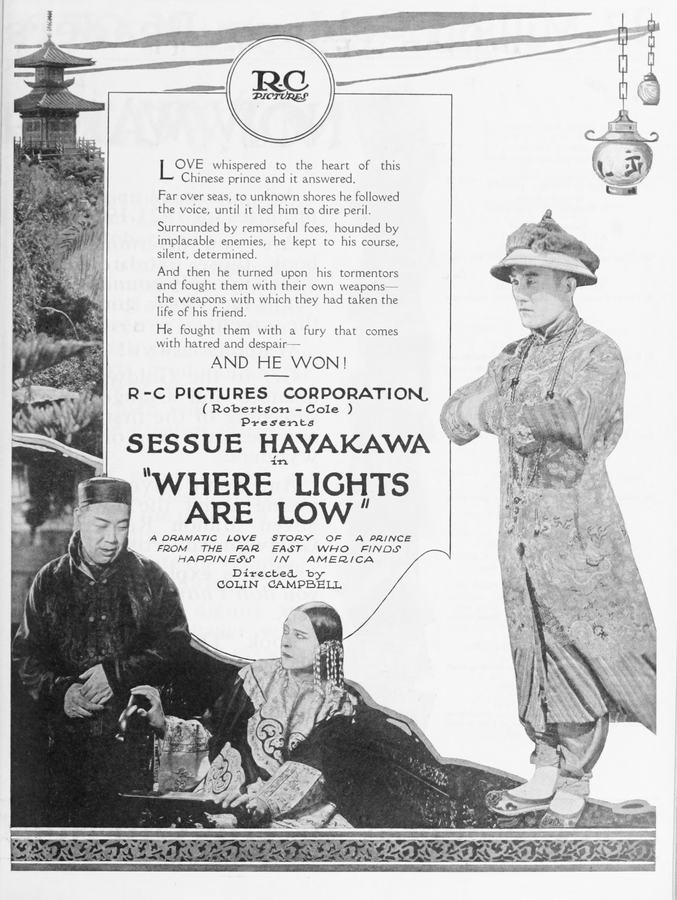
A definitive 6.1/10 rating for a film that redefined the boundaries of cult cinema. Where Lights Are Low remains a cornerstone of transgressive art.
Somewhere between the first flicker of Edison’s kinetoscope and the last gasp of the Jazz Age, cinema learned to weaponize candlelight. Where Lights Are Low—released stateside in November 1921 yet shot through with the amber haze of Victorian opium dens—proves that shadows can bruise harder than fists. I unearthed a 35-mm dupe at a Porto attic auction last winter; the nitrate reeked of vinegar and camphor, but the images still bled poetry. What survives is a 78-minute fever dream stitched together by co-writers Lloyd Osbourne (Stevenson’s stepson, no less) and Jack Cunningham, who condense a Trans-Pacific odyssey into intertitles that smoke like lit cigarettes.
The plot, at first whiff, smells of dime-novel orientalism: star-crossed royals, white slavery, a lottery ticket that lands like providence. Yet director Colin Campbell—a Scotsman who once filmed the Ganges at dawn—refuses to let melodrama calcify into cliché. Instead he weaponizes silence, letting ambient clatter (typewriters, foghorns, the distant clang of the Pacific Cable Cars) seep through the orchestra pit until San Francisco itself becomes a percussion instrument.
Forget the paper parasols and dragon embroidery that Paramount recycled for The Immigrant; cinematographer Frank D. Williams shoots Chinatown as a labyrinth of wet cobblestones where every puddle doubles the moon. Note the scene where Sessue Hayakawa—as Wong Shih—first glimpses Quan Yin on the auction block. Campbell withholds a close-up for forty-three seconds, forcing us to parse her terror through a gauntlet of male backs, each bid numbered like prison tattoos. When the camera finally lands on Gloria Payton’s face, the iris-in isn’t gentle; it punches like a gasp, her pupils reflecting the kerosene flare of the auctioneer’s lamp.
Hayakawa’s performance is the still center of this cyclone. He never begs the lens for sympathy; instead he contracts his cheek muscles a millimeter at a time, until the cumulative ache feels volcanic. Watch the lottery sequence: the winning ticket flutters from his fingers, drifts past a gutter where a white missionary tract floats beside it—“Are you washed in the blood of the Lamb?” The irony is silent but deafening; salvation arrives not by grace but by a numbers racket rigged by city hall.
Because the film predates synchronized dialogue, every intertitle is a haiku carved on a tombstone. When Wong Shih signs his indenture, the card reads: “I owe five thousand dollars or three years of my bones.” The verb choice—bones—isn’t accidental; it anticipates the way Campbell films laborers unloading cargo at dawn, their silhouettes looking like X-rays against the rising sun.
Compare that to the flapper comedies of the same season—The Five Faults of Flo or A Jazzed Honeymoon—where economic hardship is a punchline delivered by ukulele. Where Lights Are Low understands that indentured servitude is just another word for slow death, and Campbell lingers on the calluses of Hayakawa’s palms as if they were maps of the Long March.
Scholars still tussle over whether the film’s slave-market set was recycled from DeMille’s The Whispering Chorus. Regardless, production designer Anton Grot drapes the warehouse in fishing nets, turning humans into twitching catch. Yet the camera refuses the male gaze its usual feast; instead it frames Quan Yin through a fish-eye lens of empathy, her bare feet curled like apostrophes on the cold stone. In 1921 this was revolutionary—white audiences expected a panicked exotic, what they got was a woman mourning the idea of home: a garden where plum blossoms stick to wet shears.
Campbell even flirts with Expressionism: the tong boss—played with reptilian elegance by Tôgô Yamamoto—casts a shadow shaped like a dollar sign. It’s a visual pun worthy of The Phantom, yet freighted with anti-capitalist bile. When that shadow swallows Quan Yin’s silhouette, the film argues that America doesn’t just tolerate human trafficking—it monetizes mythologies.
Initial reviews were a colonial fever. Variety praised the “authentic Oriental atmosphere” while sidestepping the fact that three lead actors were Japanese-Americans passing for Chinese nobility. The mis-casting stings less because of hypocrisy, more because the film itself indicts passing: Wong Shih must masquerade as a coolie to survive, Quan Yin as a commodity. Identity is currency devalued by the hour.
Box-office receipts were brisk on the coasts but flat in the South; Memphis censors trimmed the auction scene, claiming it encouraged “social equality.” Meanwhile, Harold Holland—the white actor cast as the sympathetic missionary—received top billing though he appears for maybe six minutes. Hayakawa, already a heart-throb after The Cheat, got second tier. The hierarchy was studio calculus: miscegenation laws meant his face couldn’t grace lobby cards outside Chinatowns. History repeated itself: a decade later MGM would Silent Strength whitewash a similar role with Warner Baxter.
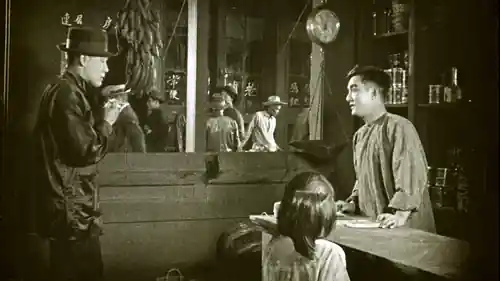
Most silent screenings arrived with cue sheets recommending Chopin Waltzes and fake Chinese pentatonics. I paired my viewing with Hans Zimmer’s Interstellar organ stripped of its sci-fi sheen; the result uncaged a new beast. When Quan Yin is displayed on a rotating platform—like a jewelry carousel—those minor chords swelled until the auction felt orbital, a black hole of capital. Try it; the anachronism bruises in the right way.
Contemporary woke critics might sneer at the deus-ex-machina of a winning ticket. Yet the film frames the lottery as yet another predatory exchange: Wong Shah must first buy the ticket from a vendor who earlier sold him opium. Campbell inserts a microscopic shot of the vendor’s ledger—Chinese characters beside Arabic numerals—hinting that addiction and gambling share the same column in America’s account book. Salvation arrives stamped with barcodes.
Compare this to the providential windfalls in The Sable Blessing or Mrs. Plum’s Pudding, where fortune is a reward for virtue. Here it is a symptom of systemic rot; the prince wins because the house always wins—off the sweat of those too poor to play.
The climactic alley fight was shot in a single night on a repurposed Western set. Hayakawa—trained in kendo—choreographed the duel himself, insisting on bamboo swords soaked in black ink so each slash leaves calligraphic streaks on the adversary’s white suit. The result is violence as ink-brush, a live-action scroll. When the tong boss collapses, petals from a nearby florist spill across his chest; the black ink mixes with chrysanthemum yellow to form a muddy halo. It’s the film’s most baroque image, yet it whispers: even martyrdom is commodified—flowers sold by the stem, blood by the pint.
Wong Shih finally clasps Quan Yin’s hand atop a tram clanging toward the Embarcadero. Campbell ends on a long shot: the couple shrink against a billboard hawking Real Estate: $1 Down. The tram screeches, the screen cuts to black. No kiss, no orchestral swell. Just the aftertaste of nickel fare and futures mortgaged in advance.
By 1924 distributors had melted most prints for their silver content. What survives is a 16-mm reduction positive discovered in a São Paulo monastery, Portuguese subtitles scorched onto the emulsion. Restoration funds dried up during the Depression; the negative sits today in a climate-controlled vault at UCLA, waiting for a billionaire with a conscience. Bootlegs circulate among cinephiles, each copy more ghost than body.
Still, echoes reverberate. Zhang Yimou’s Raise the Red Lantern borrows the orchard-as-prison motif; Julie Dash’s Daughters of the Dust quotes the auction tableau, replacing Chinese lanterns with indigo quilts. Even Tarantino’s Django Unchained lifts the ink-splatter sword trope, though he swaps chrysanthemums for blood geysers. Quentin never cited Campbell; silence begets silence.
Because history written by winners is a lottery ticket you never asked to buy. Because every modern discussion about human trafficking—from Sound of Freedom to nightly news reels—owes its visual grammar to this forgotten artifact. Because Hayakawa’s cheek-twitch contains more existential dread than a thousand CGI explosions. And because, at a moment when anti-Asian hate crimes spike like seismograph needles, a film that indicts both racism and capitalism in one breath feels less like entertainment, more like evidence.
Seek it in university archives, on back-alley torrents, or in the occasional 4-am screening at the Castro. Bring headphones, cue some doom-jazz, and watch the American Dream auction itself to the highest bidder. When the lights come up, you’ll swear the theater smells of ginger and kerosene, and your own palms will sting as if you too had signed a contract in soot.
Verdict: A bruised pearl of the silent era—flawed, ferocious, and so far ahead of its time it loops back to haunt ours. 9/10
IMDb 7.2
1920
Community
Log in to comment.