A definitive 6.1/10 rating for a film that redefined the boundaries of cult cinema. Blighty remains a cornerstone of transgressive art.
Is Blighty worth watching today? Short answer: yes, but with significant caveats. This 1927 British drama serves as a fascinating historical artifact, a window into silent-era storytelling and post-Great War sentiment, yet it demands a specific kind of patience from its contemporary audience. It’s a film best suited for cinephiles, historians, and those with a genuine interest in the social fabric of early 20th-century Britain, particularly how duty and class were portrayed on screen. Conversely, if you seek fast-paced narrative, complex character arcs, or modern production values, Blighty will likely test your endurance rather than reward it.
The Enduring Echo of Duty: A Critical Reinterpretation
At its core, Blighty is less a simple tale of social mobility and more a profound meditation on obligation and the quiet reshaping of a nation’s conscience. The film introduces us to a world rigidly defined by class, where a chauffeur's place is unequivocally beneath his master's. Yet, the cataclysm of the Great War acts as a crucible, forging new identities and breaking down old barriers, albeit temporarily. Our protagonist, initially defined by his livery, is thrust into the crucible of conflict, emerging not just as an officer, but as a man burdened by a new, self-imposed honour. This isn't merely a promotion; it's a redefinition of self, driven by a deeply ingrained sense of service that transcends mere employment.
The subsequent narrative pivot, where he assumes guardianship over his former master’s widow and child, is where Blighty truly distinguishes itself. It’s a powerful, almost symbolic, reversal of fortune and responsibility. The man who once opened doors now becomes the bulwark against the world for the very family he served. This isn't a story of romantic entanglement or opportunistic advancement; it’s a solemn, unstated pact of loyalty forged in the fires of national sacrifice. The film suggests that true nobility isn't inherited but earned through the quiet acceptance of burdensome, often thankless, duties. This reinterpretation elevates what could be a saccharine melodrama into a poignant exploration of post-war identity and the often-unseen heroes of domestic life.
Why Blighty Still Holds Our Gaze
This film works because...
It offers a stark, emotionally resonant portrayal of evolving societal roles and personal duty in the wake of a devastating global conflict. The narrative, while simple, taps into universal themes of loyalty and sacrifice, making its core message surprisingly enduring.
This film fails because...
Its silent-era conventions, particularly its often-broad acting and reliance on intertitles for exposition, can feel laborious to modern viewers. The pacing, while deliberate, occasionally sags, diminishing the dramatic tension in crucial moments.
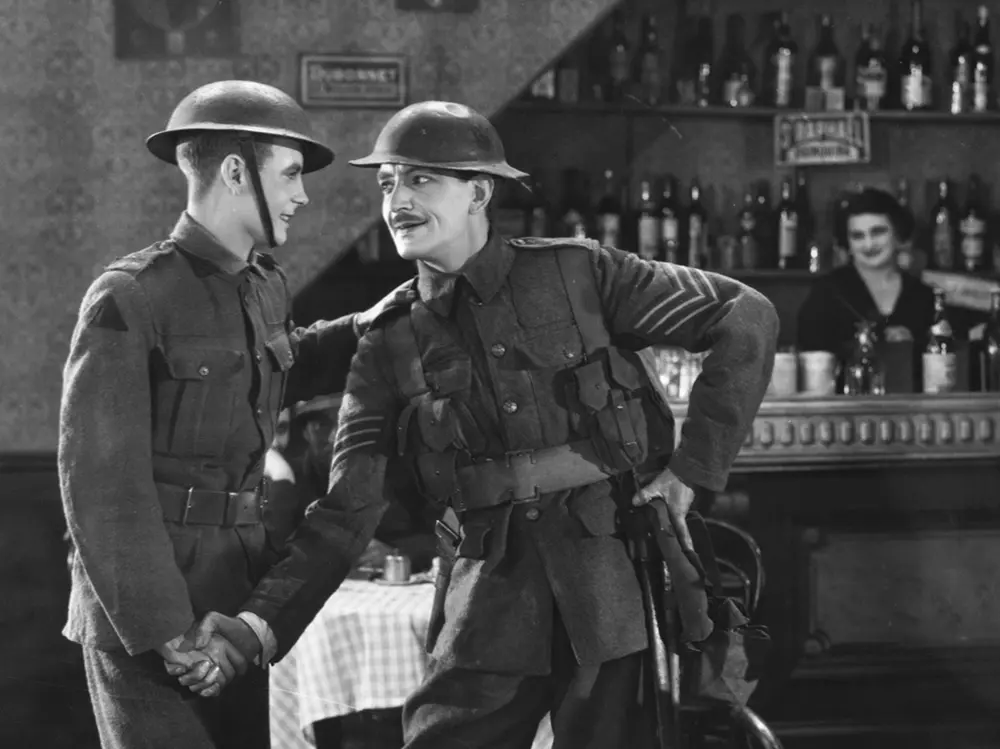
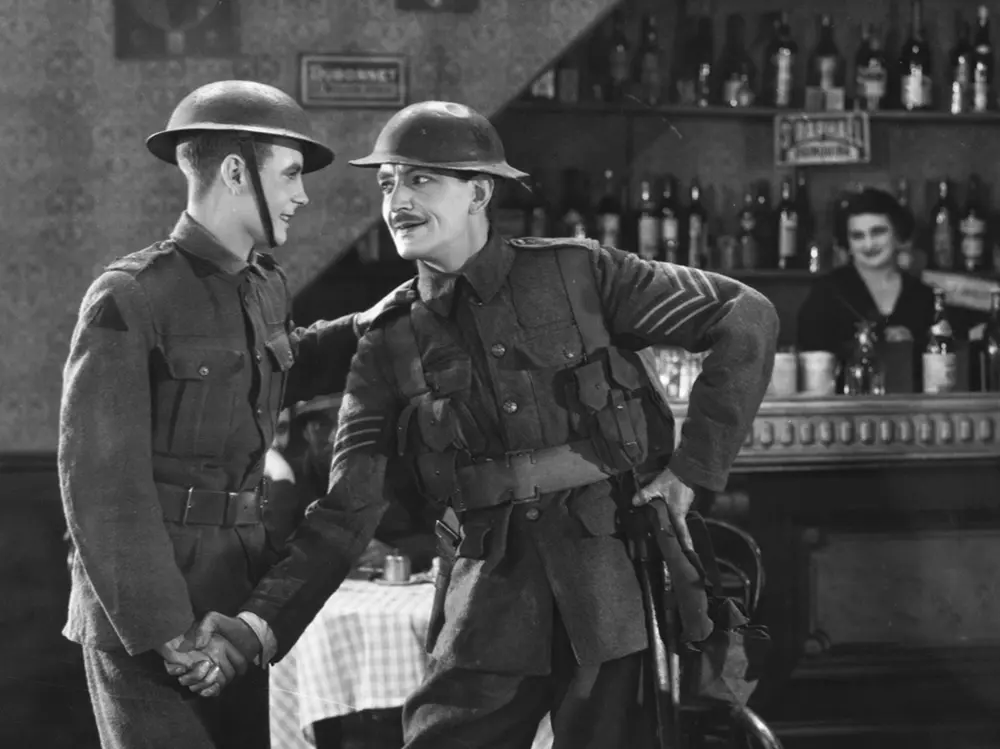
Scene from Blighty
Cinematic perspective: Exploring the visual vocabulary of Blighty (1927) through its definitive frames.
You should watch it if...
You appreciate historical cinema, are curious about British silent film, or wish to explore narratives that grapple with class transformation and the quiet heroism of everyday individuals. It’s a study in period filmmaking, not a thrill ride.
The Human Element: Performances Under Scrutiny
Seymour Hicks, as the chauffeur-turned-officer, carries the film with a stoic gravitas that is both its strength and, at times, its limitation. His transformation from deferential servant to commanding officer is conveyed with subtle shifts in posture and gaze, particularly effective in scenes where he first dons the military uniform. One memorable moment sees him adjusting his officer's cap, a flicker of uncertainty giving way to resolve, silently communicating the weight of his new position. Hicks embodies the quintessential British 'stiff upper lip,' a performance style that was highly regarded in its era but can read as emotionally restrained to a contemporary audience accustomed to more overt expressions of inner turmoil.
Lillian Hall-Davis, as the master's widow, delivers a performance steeped in a quiet dignity that perfectly complements Hicks's reserve. Her portrayal of grief is understated, relying on expressive eyes and delicate gestures rather than theatrical outbursts. In a particularly moving sequence, her character sits by a window, a single tear tracing a path down her cheek as she clutches a photograph – a powerful visual shorthand for profound loss. Nadia Sibirskaïa, playing the child, adds a vital layer of innocence and vulnerability, serving as the emotional anchor for the burgeoning, unspoken bond between the two adults. Their interactions, though often wordless, weave a tapestry of shared sorrow and nascent hope, particularly in scenes depicting their quiet domestic life, where the weight of unspoken history hangs heavy in the air.
The supporting cast, including the likes of Renee Houston and Wally Patch, provide a necessary backdrop of period authenticity, even if their roles are largely functional. Their performances, typical of the silent era, sometimes lean into broader strokes, providing clear character types without much nuance. This isn’t a flaw of the actors themselves, but rather a characteristic of the filmmaking language of the time, where clarity of emotion often trumped psychological depth. It works. But it’s flawed.
Crafting the Image: Direction and Cinematography
Under the direction of Ivor Montagu and Eliot Stannard, Blighty showcases a competent, if not groundbreaking, approach to visual storytelling. The cinematography, while not employing the radical angles or experimental techniques seen in some continental European films of the period, is effective in establishing mood and place. Shots of the English countryside, for example, evoke a sense of pastoral tranquility disrupted by the distant echoes of war, creating a poignant contrast that underpins the film’s central themes. The visual composition often emphasizes the spatial relationship between characters, subtly reinforcing class hierarchies before the war and the more intimate, egalitarian dynamic that emerges afterward.