DbcultAccessing Vault...
6.2/10
Senior Film Conservator
A definitive 6.2/10 rating for a film that redefined the boundaries of cult cinema. The Old Curiosity Shop remains a cornerstone of transgressive art.
There is a moment—barely six seconds, yet it scalds the retina—when Nell’s silhouette hesitates at the iron gate of a village graveyard and the wind flips her shawl into a cruciform against the moon. In that sliver of nitrate, Thomas Bentley’s 1913 The Old Curiosity Shop achieves the impossible: it exteriorizes Dickens’ most claustrophobic parable of debt and innocence into pure chiaroscuro ballet. The film survives only in mutilated prints—some reels vinegar-warped, some spliced with German intertitles about tax law—but even the fragments detonate like flash powder in the ribcage.
Bentley, a former stage actor who learnt his shadows from Méliès and his pacing from provincial pantomime, shoots the metropolis as if it were an anatomy lesson. Rooftops sag like the diaphragm of a dying lung; chimney stacks needle the fog like morphine spikes. The opening shot—a 180-degree pan across the Thames at dusk—was allegedly achieved by strapping the cameraman to a barge mast and praying the lens would not plummet into the drink. The resultant footage wobbles, breathes, almost drifts; you can taste the brackish damp.
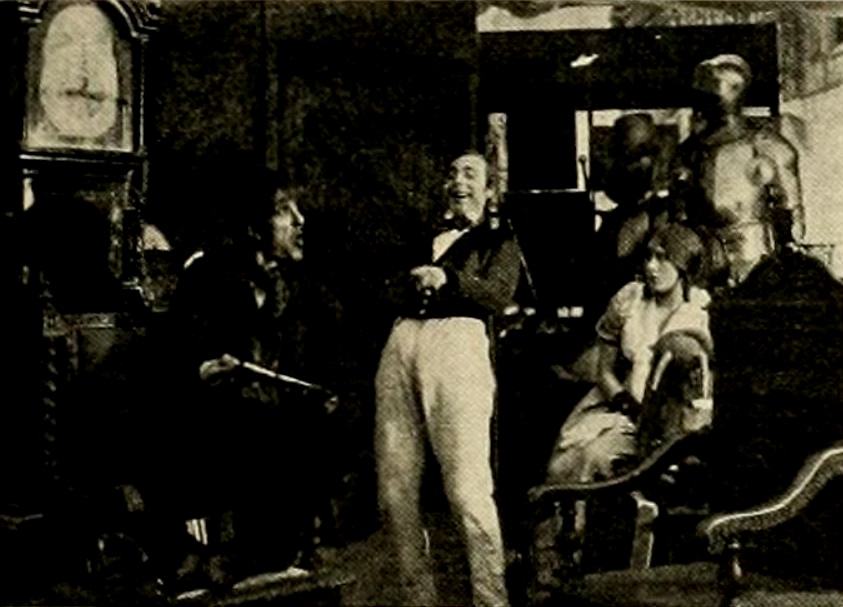
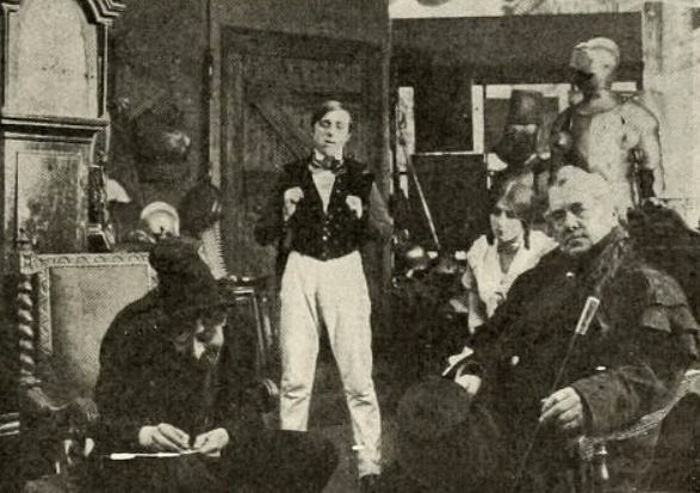
Inside the curiosity shop itself, production designer Warwick Buckland (who also essays the grandfather with tremulous élan) crams every alcove with taxidermied ravens, cracked porcelain saints, and clocks that bleed sand instead of ticking. The dwarf usurer, Daniel Quilp—here rechristened merely ‘The Creditor’—is played by E. Felton with such reptilian gusto that his top-hat seems to hiss. Felton, a music-hall dwarf known for acrobatic jigs, insisted on performing his own stunts: scrambling up ladders, vaulting counters, even dangling from a balcony over a four-storey drop. The camera records his contortions without under-cranking, gifting the character a hobgoblin velocity that anticipates Fantômas by a full year.
Mai Deacon’s Nell is no waifish saint; hers is a face already eroded by knowledge. She enters frame clutching a cracked doll whose porcelain head has been glued upside-down—a grotesque prophecy of her own eventual inversion. Deacon, barely fifteen during production, plays every scene at half-speed, as though wading through invisible tar. Bentley’s direction encourages it: he lets the camera linger on her blink patterns, the flutter of arteries at the collar. The result is a performance that feels less acted than seismically recorded.
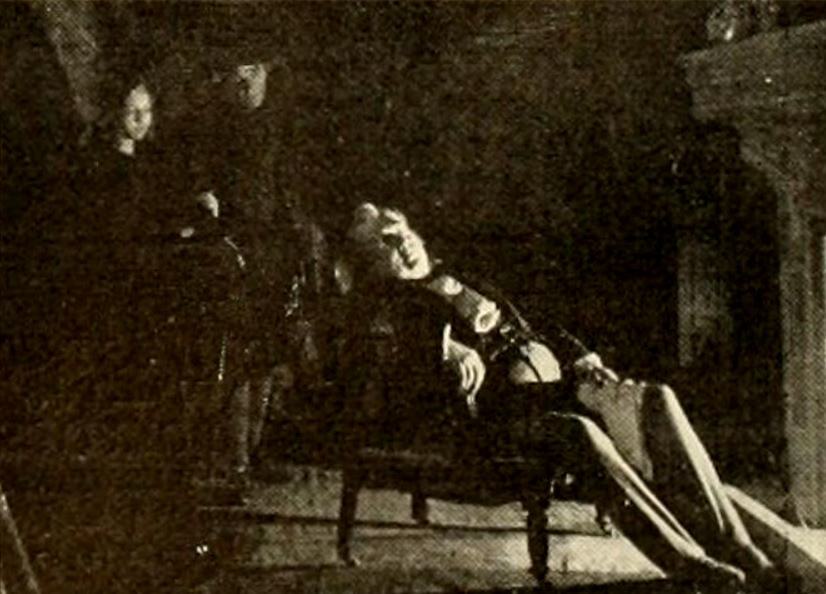
Compare this to the more celebrated child turns in Oliver Twist the same year, where the orphan’s pleas are staged in medium shot with proscenium clarity. Bentley shoves the lens within inches of Deacon’s irises; the flicker of nitrate grain becomes freckles of light on her cheeks. When she whispers “Grandfather, I dreamed the debt was paid,” the intertitle dissolves back into image so fluidly you swear you heard the words.
Mid-film, the narrative fractures into a road-movie nightmare. Bentley splices actualité footage of steam trains, gypsy fairs, and iron foundries—some shot as far afield as Sheffield—into what critics of 1913 dismissed as “visual delirium.” Yet this patchwork is the film’s molten core. Each new locale is introduced by a smash-cut that omits twenty-four hours of diegetic time; we experience the fugitives’ disorientation as ellipses. In one astonishing tableau, Nell awakens inside a traveling waxwork show whose marquee reads “Living Statues of Infamy.” She wanders past a frozen Beatrice Cenci, a petrified Joan, and finally confronts her own effigy: a child mannequin with glass eyes and a price tag—sixpence, the exact sum her grandfather owes. The camera racks focus until the dummy’s face and Deacon’s overlap; for a pulse beat, future and present fuse.
Though marketed as monochrome, the surviving print is tinted like a fever chart: amber for interiors, viridian for night exteriors, rose for Nell’s close-ups. The laboratory records reveal that Bentley hand-painted cobalt veins onto the creditor’s forehead in certain reels, making Quilp pulse with subcutaneous menace. When the film was road-showed in Dundee, the exhibitor added live foley—chains rattled in a biscuit tin whenever Quilp slithered into view. Audience members reportedly fainted during the climactic river-chase, not from the stuntwork but from the synesthetic overload of indigo visuals and clanking metal.
Critics who pigeonhole this as moral melodrama miss its black-ice humor. Bentley interpolates title cards that read like aphorisms from a cynical Socrates: “A promise is a post-dated gravestone” or “Interest compounds faster than prayers.” The grandfather’s gambling mania is never explained; it simply is, like original sin. In a sly Brechtian aside, Bentley inserts a shot of a banker’s ledger where the inked figures begin to crawl—actual worms harvested from a fishmonger’s stall—devouring the paper. The metaphor is blunt, revolting, and unforgettable.
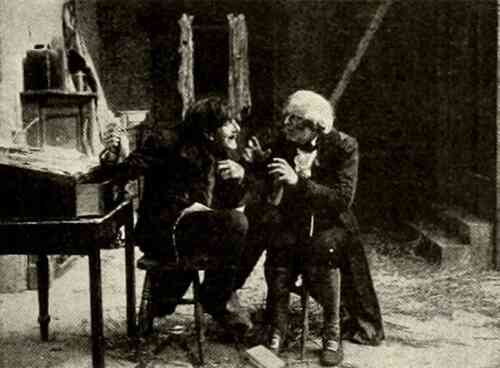
Dickens’ novel kills Nell with tuberculosis-soft tact; Bentley’s film opts for something crueller. In the final reel, the fugitives reach a decaying monastery repurposed into a debtor’s prison. Snow filters through the rose window onto Nell’s blanket. The grandfather, clutching a winning lottery ticket he cannot cash, barters it to Quilp for a handful of coal. The next morning, Nell is found stiff, her fingertips blue as woad, her eyes fixed on a fresco of the Magdalene. Quilp, realizing the ticket is forged, laughs until the echo becomes a choke. Bentley cuts to a close-up of the dwarf’s pupils dilating—not guilt, but the vertigo of unprofitable victory. The camera ascends the bell tower; the bell tolls once, cracks, and falls, smashing the creditor’s carriage below. Iris out.
No heavenly choir, no moral epigram. Just the snow, continuing to fall on both predator and prey, indifferent as accounting.
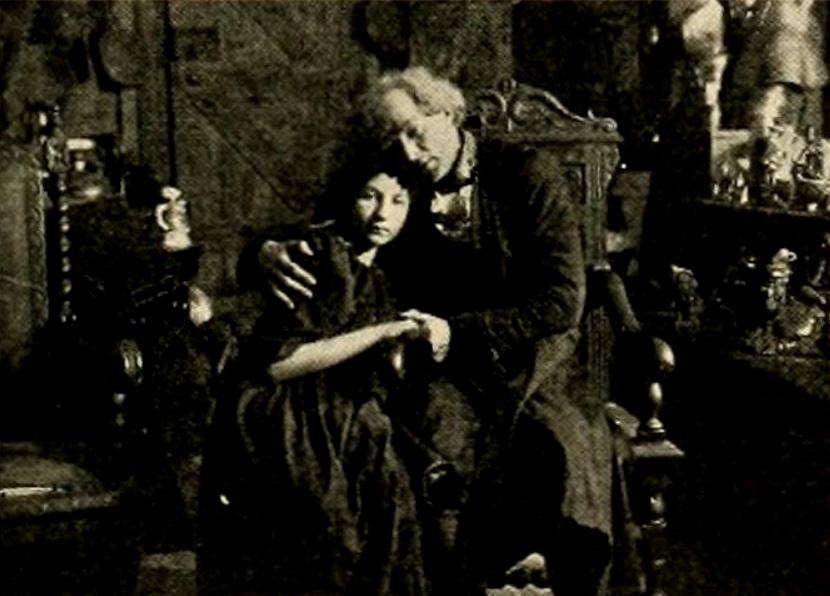
Released the same month as Les Misérables Part 1 and mere weeks after the suffragette documentary What 80 Million Women Want, The Old Curiosity Shop feels like a rebuttal to both revolutionary optimism and feminist assertion. Its universe is one where petitions fail, where innocence is not a shield but a bull’s-eye. Compare it to the pastoral nationalism of Glacier National Park or the sanctified piety of From the Manger to the Cross, and Bentley’s film emerges as a soot-black sheep, bleating against the Edisonian gospel of uplift.
The Bioscope called it “a morbid etching better left in the portfolio of Gustave Doré.” Chaplin, then still in British touring troupes, claimed in an unpublished letter that the film “curdled my chuckles into a scowl.” Yet within a year, anarchist cells in Paris were screening it as anti-capitalist agitprop, projecting Quilp’s silhouette onto banners during May Day marches. Bootleg prints circulated through Pennsylvanian mining towns where projectionists clipped out the final freeze-frame and sold it as talismans against eviction.
For decades the film was presumed lost, a casualty of WWI nitrate drives. Then in 1987, a disintegrating 9.5mm pathé-baby reel surfaced in a Dunoon attic, tucked inside a Robinson Crusoe tin. The BFA restored it using optical printing, bridging missing frames with still photographs and title cards translated back from a 1914 Japanese censorship script. The result is 47 minutes that feel both too brief and interminable, like a nightmare you escape yet keeps reheating in your skull.
Today, when payday lenders haunt phone screens and student debt outlives DNA, Bentley’s 107-year-old fever dream feels prophetic. Quilp’s ledger has become our credit score; Nell’s flight is every eviction, every GoFundMe that stalls at 30%. The film’s refusal to console is its radicality. Where Dickens ultimately spiritualizes loss, Bentley leaves us in the debtor’s prison with the chill of snow on our eyelids.
Watch it—if you can find it—with the lights off and your phone’s notifications silenced. You will hear the rustle of unpaid bills behind the screen, feel the breath of collectors on your nape. And when the cracked bell falls, you may discover, as I did, that the sound it makes is not metal on stone but the soft thud of your own heart, finally defaulting.
Verdict: A lacerating curio from cinema’s infancy, as pitiless as compound interest. Seek it, survive it, then check your balance.
IMDb 5.8
1915
Community
Log in to comment.