DbcultAccessing Vault...
Cult Review
Senior Film Conservator
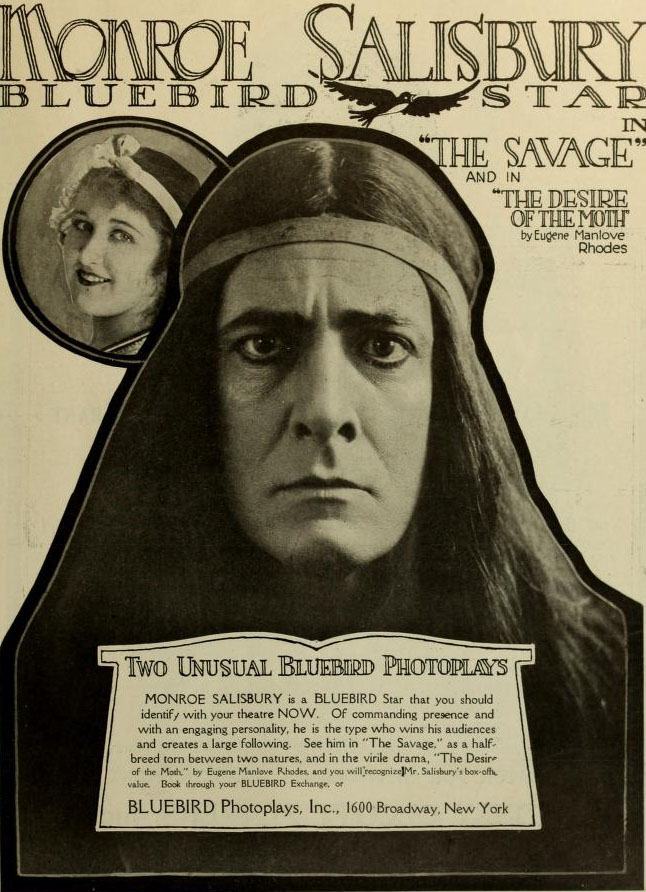
A fever dream shot through with cedar sap and gunpowder, The Savage (1917) detonates the polite drawing-room melodrama of its era.
Maurice Tourneur’s camera—never a mere recording device—becomes a mountain spirit, exhaling mist through fir needles, gliding over precipices, then lingering on Ruth Clifford’s porcelain profile as though the lens itself feared to break her. The plot, a skeletal frontier ballad, is fleshed out with chiaroscuro poetry: moonlight puddling on split-log floors, hearth embers that throb like guilty hearts, snowflakes drifting past windows like tiny verdicts.
Tourneur’s signature trick—shooting through foreground gauze so the world appears haloed—turns every frame into stained glass. When Julio (Arthur Tavares) first spies Marie among paper birches, the entire forest seems to vibrate at the frequency of his pulse; Tourneur double-exposes a slow zoom with a drifting cloud so the hero’s desire literally darkens the sky. Compare this to the interior parlor scenes: rigid, tableaux-like, the camera nailed to floorboards as if to say, civilization is where motion calcifies. The juxtaposition is shattering.
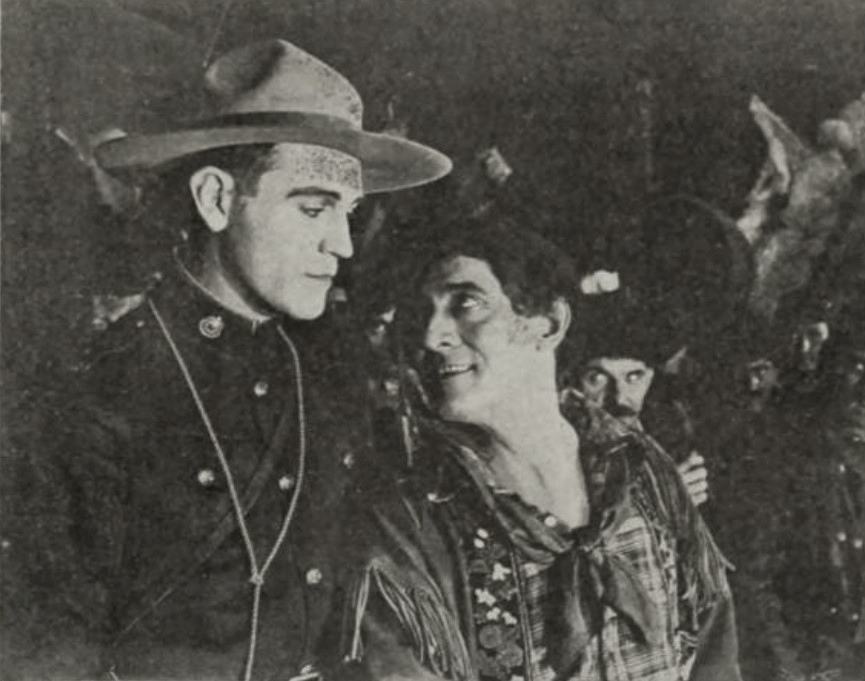
Ruth Clifford, barely twenty, performs a tight-rope act: her Marie is neither simpering victim nor proto-feminist rebel; she is curiosity incarnate, eyes widening at the wilderness as one might regard a forbidden novel. When she sponges Julio’s sweat-slick torso, the gesture is less erotic than taxonomic—she is mapping the boundary where gentleman’s education dissolves into zoological awe.
Arthur Tavares, bronzed and feral, moves with a shoulder-led predatory lope; yet in delirium he emits a child’s whimper, and that oscillation between threat and wounded beast is what magnetizes both Marie and the audience. Meanwhile, Allan Sears’s Captain McKeever, trussed up in a cave like a discarded marionette, has perhaps five minutes of screen time but manages to radiate such square-jawed decency that his off-screen peril feels genuinely dire.
Elliott J. Clawson’s intertitles are haiku-sharp: “The mountain took him in its teeth” flashes across a shot of Julio stumbling through scree. The screenplay’s masterstroke is rendering love itself as communicable disease—Julio’s fever is both literal and metaphoric, passed from his veins into Marie’s gaze, then transmitted again to the audience via Tourneur’s overheated visuals.
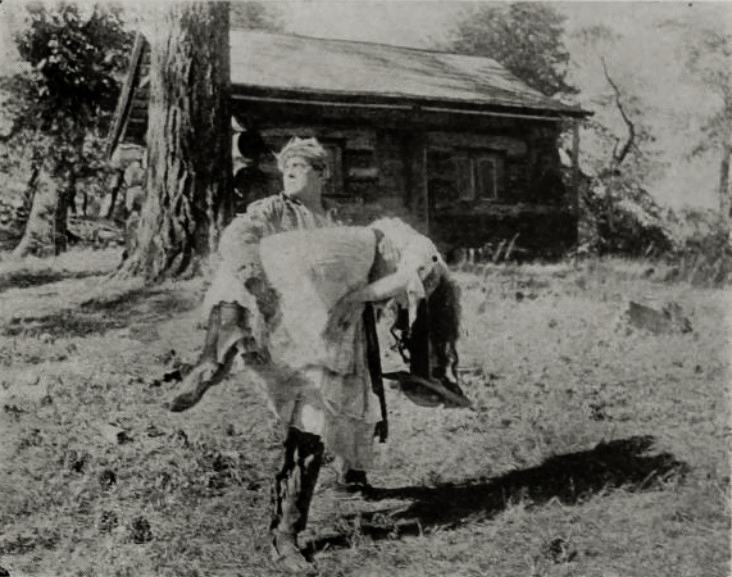
Notice the symmetry: Julio abducts Marie; Marie abducts Julio’s mortality. Both captor and captive swap roles inside the cabin’s crucible, a narrative Möbius strip that anticipates later psychological westerns like Diplomacy or the Alpine fatalism of Sperduti nel buio.
Marie is introduced as property—her father’s ledger lists her as “returned from finishing school, value incalculable.” Julio’s abduction is not merely lust but a rogue economic transaction: he steals the commodity, temporarily removes her from capitalist circulation. Yet Marie reclaims agency by refusing to denounce him, thereby collapsing the town’s binary of savage vs. citizen. In 1917, such a refusal would have felt almost seditious, akin to the anti-clerical rebellion simmering in Satan’s Rhapsody or the fallen-woman redemption arc of A Modern Magdalen.
Though original cue sheets are lost, archival notes suggest a live orchestra would hammer out a rumba during Julio’s ascent, then pivot to a slow waltz in the sickroom. Modern restorations often substitute Appalachian strings, but I urge curators to experiment: layer Tuvan throat-singing beneath the fever sequence and watch the entire film transmute into shamanic initiation.
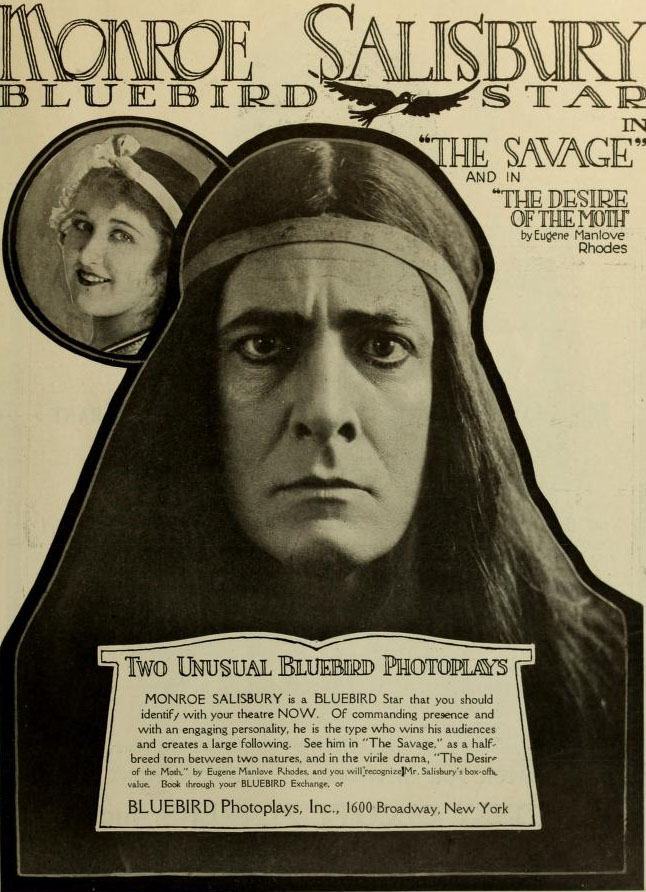
Tourneur would later refine his nature-as-destiny ethos in The Blue Bird, yet the DNA of The Savage courses through Salomy Jane’s golden-valley sensuality and even the operatic fatalism of Il Trovatore. Meanwhile, the half-breed-as-tragic-hero trope was recycled ad nauseam in 1920s westerns, but rarely again with such unflinching pathology.
Only two incomplete 35 mm nitrate prints survive—one in the Cinémathèque de Toulouse, another in the Library of Congress. Both terminate before the final sacrifice. Rumor has it a complete print languishes in a convent archive in Santiago, deemed too risqué by the sisters. Until some fearless archivist liberates it, the film’s apotheosis exists only in flickers: a torso convulsing against virgin snow, a woman’s glove dropped like a confession, the echo of a gunshot swallowed by canyon walls.
Is The Savage a relic? Hardly. Its DNA—desire as infection, rescue as self-immolation—predates the toxic eroticism of Vampire and the frontier nihilism of A Lass of the Lumberlands. Watch it for the bravura mountain photography, stay for the unsettling thesis that every civilization carries its counter-myth curled inside like a blackened seed. Tourneur doesn’t moralize; he inoculates. And the fever he injects—half lust, half lament—lingers for days.
Grade: A- | 1917 | USA | Dir. Maurice Tourneur | Cast: Ruth Clifford, Colleen Moore, Allan Sears, Arthur Tavares | Writers: Elliott J. Clawson | Runtime est. 58 min (incomplete)
IMDb —
1919
Community
Log in to comment.