DbcultAccessing Vault...
Cult Review
Senior Film Conservator
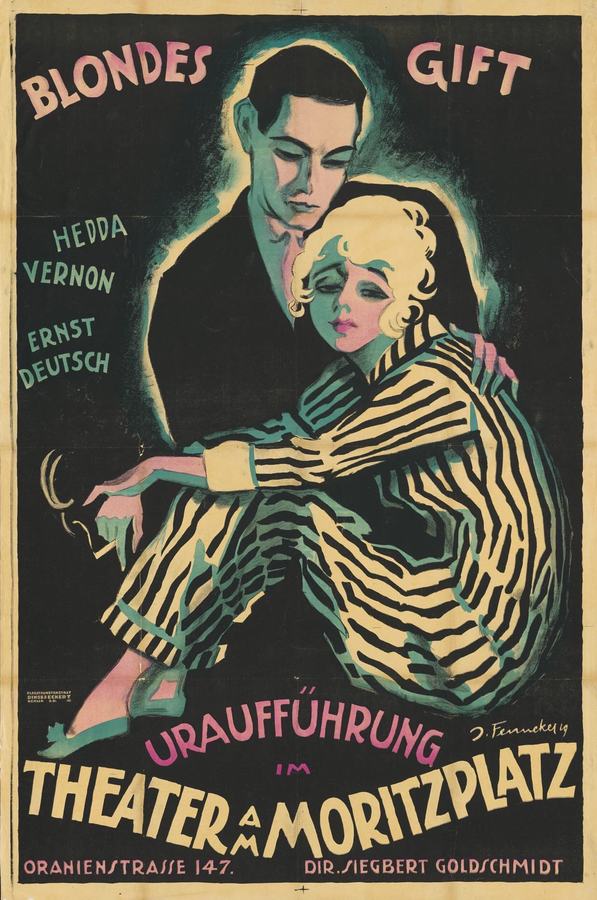
The year 1919 stood as a fractured threshold for German culture, a temporal space caught between the smoldering embers of the Great War and the kaleidoscopic, often terrifying vibrancy of the Weimar Republic. It is within this specific malaise that Blondes Gift (The Blonde Poison) resides, functioning as both a cautionary tale and a dark celebration of the 'vamp' archetype that would soon dominate the silent screen. Directed with a keen eye for psychological deterioration, the film presents us with Loni, a protagonist who defies the Victorian remnants of femininity to embrace a role that is purely, unapologetically predatory.
To watch Blondes Gift today is to witness the early DNA of the film noir. While many films of this era, such as The Betrothed, leaned into the sentimental or the strictly historical, Hubert Moest’s work here dives headlong into the muck of human infidelity. The narrative doesn't just depict a woman cheating; it depicts the systematic deconstruction of a man’s soul. Hedda Vernon, an actress of immense presence, imbues Loni with a stillness that is more threatening than any histrionic outburst. She is the eye of a hurricane, watching calmly as her husband’s world—financial, social, and emotional—is torn asunder by her whims.
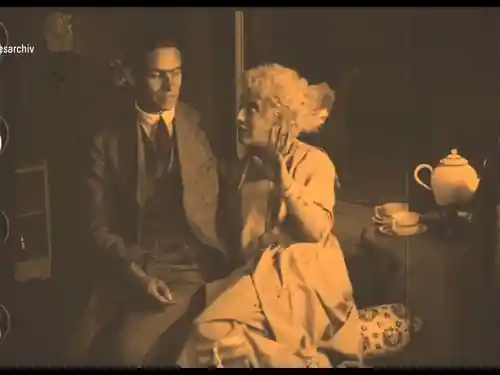
The strength of this production lies significantly in its ensemble. Ernst Deutsch, often remembered for his expressionistic fervor, provides a performance that serves as a perfect foil to Vernon’s cold calculation. His descent is not a sudden drop but a slow, agonizing slide. We see in his eyes the realization of his own obsolescence in Loni’s life. This thematic preoccupation with the 'ruined man' echoes through other contemporary works like The City of Purple Dreams, though where that film explores the corrupting nature of ambition, Blondes Gift focuses on the corrosive power of unreciprocated passion.
Furthermore, the inclusion of Reinhold Schünzel adds a layer of cynical sophistication. Schünzel, who would later become a renowned director himself, understands the rhythmic requirements of the silent era. He moves through the frames with a predatory grace that mirrors Loni’s, creating a sense of a world populated entirely by wolves. When compared to the more straightforward moral binaries of Should a Husband Forgive?, Blondes Gift feels remarkably modern. It refuses to offer the audience the comfort of a 'forgiveness' arc, suggesting instead that some betrayals are so foundational that they leave nothing behind but ash.
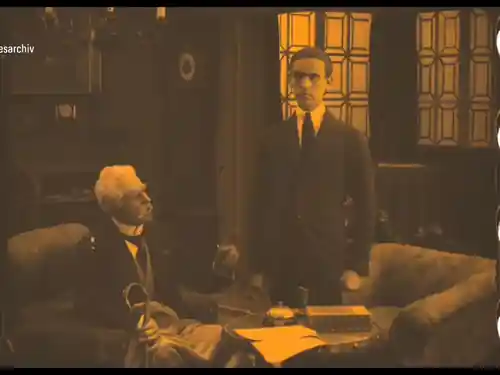
Visually, the film employs a chiaroscuro that hints at the coming Expressionist movement. The interiors, often cluttered with the trappings of bourgeois wealth, feel increasingly claustrophobic as Loni’s infidelities multiply. There is a specific scene involving a gambling den—a recurring motif in Weimar cinema—where the lighting shifts to emphasize the jagged, unstable nature of the characters' lives. This visual storytelling is far more sophisticated than the theatrical staging found in Manegens Børn, showcasing a director who understood that the camera must do more than record; it must interpret.
The script, penned by Paul Langenscheidt, is a masterclass in escalating tension. Each lover Loni takes is not just another body, but another step toward her husband’s bankruptcy. The film treats financial ruin as a physical ailment, a symptom of the moral rot at the heart of the household. This connection between the pocketbook and the heart is a trope we see reflected in the struggles of The Target, yet in Blondes Gift, the stakes feel more intimate and therefore more devastating. Loni isn't just spending money; she is spending her husband’s life force.
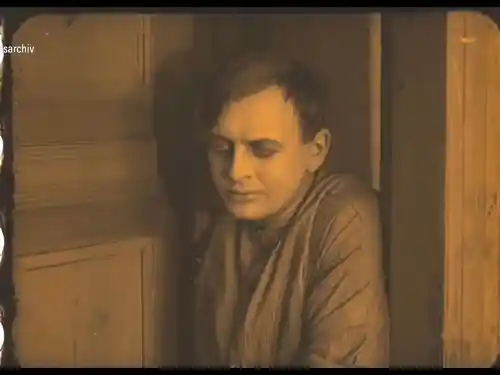
Why did audiences in 1919 flock to see such a bleak portrayal of womanhood? One could argue that Loni represents the perceived chaos of the post-war world—a world where the old rules of marriage and loyalty had been obliterated by the sheer scale of the conflict. In this sense, Blondes Gift is a sibling to Der Herr der Liebe, where obsession leads to an inevitable fracturing of the social contract. Loni is the personification of the 'New Woman' gone wrong, a figure who takes the agency afforded by the era and uses it as a weapon.
The film’s pacing is deliberate, almost agonizingly so. It forces the viewer to sit with the husband in his growing realization of his wife’s true nature. There are moments of silence that feel heavy with the weight of unsaid accusations. Unlike the more whimsical or adventurous tones of Hampels Abenteuer or the pulp thrills of The Arizona Cat Claw, Blondes Gift demands a somber, intellectual engagement. It is a film that asks us to consider the fragility of the domestic sphere when confronted with a sociopathic disregard for others.
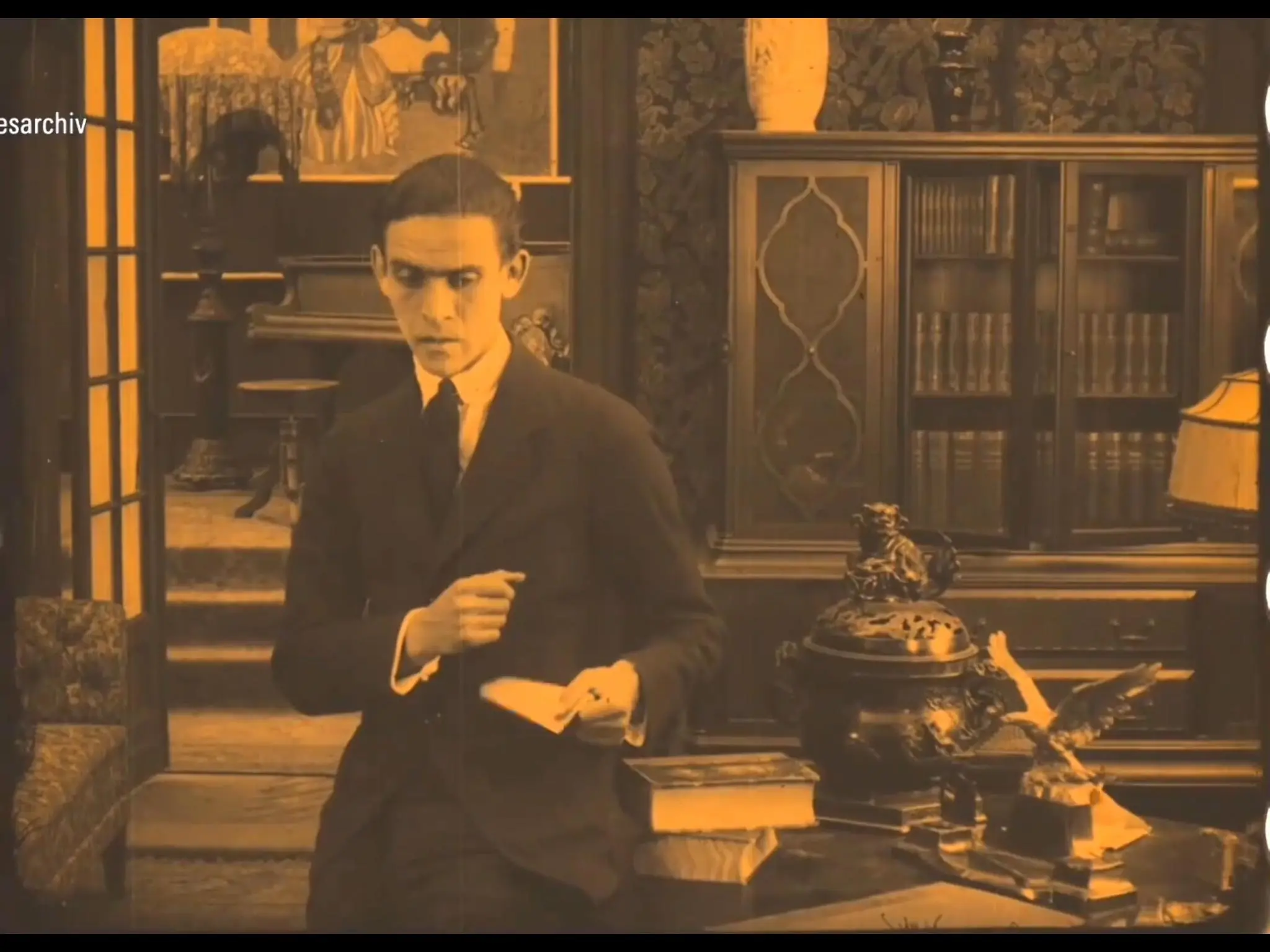
Hedda Vernon’s performance deserves a secondary analysis. In the silent era, actors often overcompensated for the lack of sound with exaggerated gestures. Vernon, however, understands the power of the micro-expression. A slight curl of the lip, a momentary narrowing of the eyes—these are the tools she uses to convey Loni’s utter lack of remorse. When she looks at her husband as he pleads for her affection, her gaze is as cold as a marble bust. It is a terrifyingly effective portrayal of emotional vacancy. This level of nuanced performance is what separates a mere 'vamp movie' from a psychological character study like Blodets röst.
The supporting cast, including Paul Hartmann and Olga Engl, provide the necessary social context. They represent the 'normal' world that Loni is so effectively destroying. Their presence serves to highlight her deviance, creating a contrast between the traditional values of the past and the nihilistic hedonism of the present. Even in the more fantastical or allegorical films of the time, such as Sleeping Beauty, we rarely see such a grounded, gritty exploration of the consequences of moral abandonment.
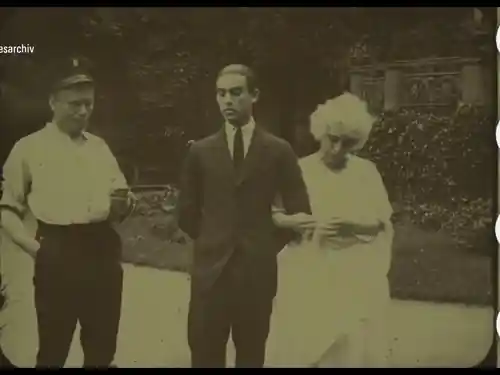
Ultimately, Blondes Gift is a difficult but essential piece of cinematic history. It doesn't offer the easy thrills of The Lion Man or the straightforward heroism of The Man Who Beat Dan Dolan. Instead, it offers a mirror to a society in the midst of a nervous breakdown. It is a film about the death of empathy and the rise of a new, more dangerous form of individualism. Loni is not a monster in the supernatural sense, but her ability to ruin those who love her makes her more frightening than any ghost or ghoul found in Pro domo, das Geheimnis einer Nacht.
As we look back at this 1919 gem, we see a film that was ahead of its time, predicting the cynical, shadow-drenched narratives that would define the next three decades of cinema. It remains a testament to the power of the silent image to convey the most complex and uncomfortable truths about the human condition. Whether you view it as a historical curiosity or a timeless tragedy, Blondes Gift is a potent reminder that some poisons don't kill the body—they kill the spirit, one betrayal at a time. It stands alongside works like Fifty-Fifty and Yehuda Hameshukhreret as a vital piece of the global cinematic puzzle, proving that the language of desire and destruction is truly universal.
Review by the Editorial Team – A deep dive into the archives of silent masterpieces.
IMDb 6.4
1930
Community
Log in to comment.