DbcultAccessing Vault...
Cult Review
Senior Film Conservator
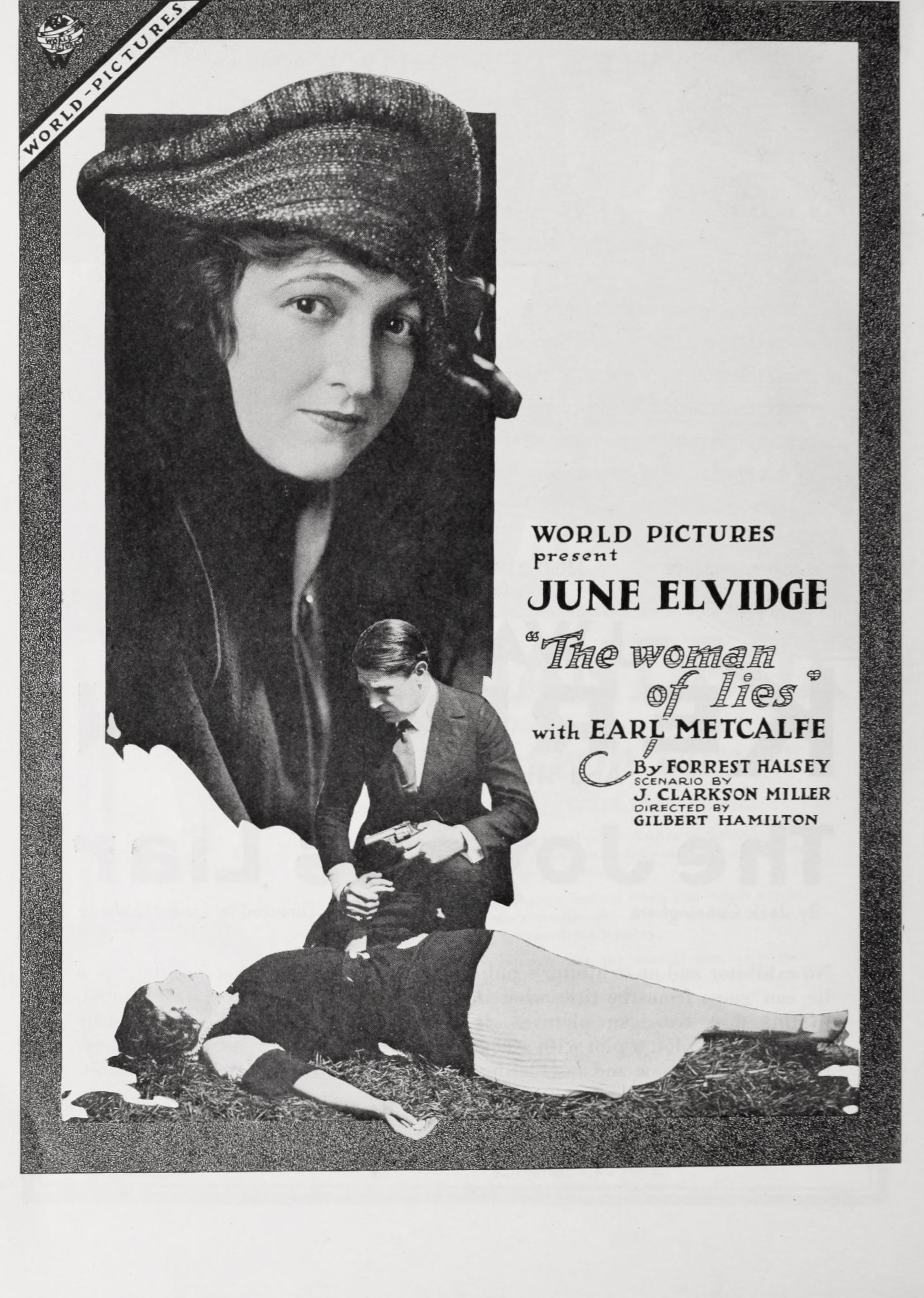
In the rich tapestry of early cinema, where moral tales often unfolded with stark simplicity and melodramatic flair, The Woman of Lies emerges as a compelling and morally complex narrative that transcends mere entertainment. This 1919 production, meticulously penned by the collaborative talents of Forrest Halsey and J. Clarkson Miller, and brought to vivid life by a dedicated ensemble including Alex Shannon, June Elvidge, and J. Arthur Young, offers a fascinating glimpse into the social anxieties and burgeoning undertones of female agency in its time. It is a film that dares to explore the devastating consequences of societal judgment, the corrosive nature of betrayal, and the arduous, often circuitous, path to personal absolution. Far from being a mere relic of a bygone era, its thematic resonance echoes through the decades, inviting contemporary audiences to ponder the enduring questions of justice, forgiveness, and the true, often immeasurable, cost of reputation.
At the emotional core of this intricate drama lies Olive Sherman, a character portrayed with an arresting intensity and nuanced vulnerability by June Elvidge. Her initial innocence and societal standing are not merely threatened, but brutally shattered, not by a single cataclysmic event, but by a compounding series of misfortunes and calculated cruelties. The sudden death of her father, a figure whose posthumous financial impropriety is scandalously revealed, plunges Olive into a state of destitution. This revelation acts as the immediate catalyst for her fiancé, Tracy Norton (J. Arthur Young), to summarily sever their engagement. Norton’s actions are not simply opportunistic; they are emblematic of a society where financial standing often dictated personal worth and matrimonial prospects, revealing a cynical underbelly to romantic commitments.
His subsequent act of circulating a damaging rumor about Olive—a vile fabrication designed to shield his new, wealthier fiancée from the perception that he was ever truly interested in Olive’s now-nonexistent fortune—is a particularly insidious form of social assassination. This malicious whisper campaign, orchestrated by a man who once professed love, effectively ostracizes Olive from her entire community. The film subtly, yet powerfully, illustrates the devastating impact of character assassination in an era before widespread media, where a well-placed rumor could destroy a life as effectively as a legal conviction. Olive's forced departure from town is not an act of surrender but a desolate, forced exile, a retreat into the shadows from a world that has judged and condemned her without mercy or due process. It is this crucible of betrayal and public shaming that forges the very essence of the “woman of lies.” The transformation of Olive Sherman from an innocent, wronged woman into a cunning, vengeful figure is one of the film's most potent narrative arcs. Her decision to embrace the art of blackmail, to weaponize deception, marks a profound psychological and moral shift. It is a desperate measure, born not of inherent malevolence, but of a profound, bitter understanding of the very mechanisms that brought about her ruin: social perception, financial leverage, and the precarious power of reputation.
Three years later, Olive resurfaces in Newport, a glittering playground for the affluent, transformed into a sophisticated “South American widow.” This new persona is not merely a disguise; it is a carefully constructed identity, imbued with an aura of mystery and exoticism that allows her to penetrate the very social circles she was once cast out from. Her target, Tracy Norton, now comfortably ensconced in his marriage to a wealthy woman, becomes ensnared in her intricately woven web. Olive's promise to introduce him into even higher echelons of society is a masterstroke of psychological manipulation, appealing directly to his avarice and social climbing aspirations – the very traits that led him to betray her in the first place. The irony is palpable, and the audience is invited to revel in Norton's unwitting descent into the trap he himself helped create.
The cinematic unfolding of this revenge plot is meticulously crafted. Olive does not resort to brute force or overt confrontation; instead, she employs the subtle, devastating power of social leverage. A seemingly innocuous photograph of her and Norton together becomes the instrument of his downfall, skillfully deployed to cause his wife to leave him penniless. This mirrored retribution is deeply satisfying in its poetic justice, as Norton experiences the very financial ruin and social humiliation he inflicted upon Olive. The film cleverly positions Olive not as a villain, but as an agent of karmic redress, albeit one operating outside the conventional bounds of morality. Her actions force the audience to confront uncomfortable questions about the nature of justice: when the established system fails, is personal vengeance justifiable? This moral ambiguity is a hallmark of the film's enduring appeal, challenging viewers to consider the complexities of human motivation.
Amidst her calculated machinations, Olive's path intersects with Jim Waldron, a newspaperman with a past as checkered as her own, having once been a burglar. This unlikely pairing introduces a crucial element of genuine human connection and potential redemption into the narrative. James Laffey’s portrayal of Jim provides a grounded, empathetic counterpoint to Olive's ethereal, vengeful persona. Their shared understanding of life's darker undercurrents, their experiences on the periphery of respectable society, forge a bond that transcends the superficialities and hypocrisies of Newport’s elite. Jim sees beyond Olive's carefully constructed facade, recognizing the resilience, the pain, and perhaps the lingering vulnerability beneath the hardened exterior. He offers her a glimpse of a life unburdened by deceit.
Their impending marriage signals Olive's yearning for a life beyond revenge, a desire for genuine connection and acceptance. However, the film, true to its exploration of societal judgment, introduces another formidable obstacle: Jim's mother (Lillian West). Her discovery of Olive's past, and her subsequent prohibition of the marriage, represents the enduring power of conventional morality and the almost insurmountable difficulty of escaping a tarnished reputation. This moment serves as a poignant reminder that even when one seeks to rebuild and find solace, the shadows of the past can loom large, threatening to engulf any nascent happiness. It's a powerful statement on the societal mechanisms that judge and condemn, often without understanding the full context of an individual's journey or the redemptive efforts they have made.
The film’s climax hinges on a moment of profound spiritual intervention, a narrative device not uncommon in early cinema, particularly in films grappling with deep moral dilemmas. Jim's mother experiences a vivid vision of Christ and the Magdalen. This scene, while potentially jarring or overtly didactic to a modern, secular audience, would have resonated deeply with the spiritual and moral sensibilities of its era. The Magdalen, a figure often associated with repentance and forgiveness despite a sinful past, serves as a powerful, archetypal symbol. Her inclusion in the vision directly challenges the mother's rigid moral stance, suggesting that even those who have erred are worthy of grace and a second chance. This divine intercession leads to a remarkable change of heart, and she ultimately consents to Olive and Jim's union, dissolving the final barrier to Olive's hard-won happiness.
This denouement, while providing a satisfying resolution, also elevates the film beyond a simple revenge drama. It transforms into a meditation on forgiveness, both societal and personal, and the possibility of transcending one's past. It posits that true redemption may not come from punitive justice, but from compassion, understanding, and the transformative power of love, even for those who have resorted to morally ambiguous means to right a profound wrong. The ending, therefore, is not merely a happy one; it is a hopeful one, suggesting the possibility of transcending past misdeeds through acceptance and spiritual grace. It offers a powerful counter-narrative to the relentless cycle of vengeance, ultimately affirming the human capacity for mercy.
For a silent film, the efficacy of its storytelling rests heavily on the expressiveness of its actors and the clarity of its visual direction. June Elvidge, as Olive Sherman, delivers a performance that masterfully oscillates between fragile vulnerability and steely resolve. Her transformation from a naive ingenue to a cunning avenger is conveyed through subtle shifts in posture, gaze, and gesture, allowing the audience to witness her profound internal journey without the aid of spoken dialogue. This required an immense skill in non-verbal communication, a true art form of the silent era. J. Arthur Young, as the duplicitous Tracy Norton, embodies the smarmy opportunism of a man driven purely by greed and social climbing, making his eventual downfall all the more gratifying and deserved. The supporting cast, including Lillian West as Jim's morally conflicted mother and Alex Shannon in an unspecified but undoubtedly impactful role, contribute significantly to the film's dramatic weight and emotional resonance.
The film's direction, while not explicitly detailed in historical records, would have relied on established silent film techniques: clear framing, dramatic close-ups to emphasize raw emotion, and well-paced intertitles to convey dialogue and crucial plot points. The visual language of the era, though often characterized by broad gestures by modern standards, was a sophisticated art form designed to communicate complex narratives non-verbally, relying on symbolism, tableau, and the actors' finely tuned expressions. The stark contrasts between the opulent settings of Newport and the desolation of Olive's initial ostracism would have been visually striking, underscoring the film's pointed commentary on class disparity and the precariousness of social mobility in a rigid hierarchical society.
The Woman of Lies stands as a compelling example of early 20th-century cinema's engagement with social justice and personal vendetta, themes that frequently captivated audiences. Its narrative echoes the dramatic intensity found in other films of the period where women, wronged by circumstance or male perfidy, seek to reclaim their agency. One might draw parallels to the powerful narratives of moral awakening or societal condemnation seen in films like The Christian, which also delves into themes of sin, repentance, and spiritual transformation, albeit from a more overtly religious standpoint. Or consider the intricate social dynamics and personal struggles against a backdrop of opulence and deceit, reminiscent of certain aspects of The Walls of Jericho, where societal barriers and personal integrity are constantly tested, often with dramatic consequences for those who defy convention.
The film's exploration of a woman's calculated revenge, moving beyond passive suffering to active manipulation, also resonates with the growing complexity of female characters in cinema. While not as overtly political as some suffragette-era films, Olive's journey from victim to orchestrator of her own justice speaks to a nascent desire for female empowerment, even if achieved through morally dubious means. This thematic thread can be found in other compelling dramas of the era, such as Passion, where intense personal grievances drive the narrative, or even in the more subtle psychological battles depicted in films like The Black Box, where secrets and hidden motives dictate the course of events from the shadows. The transformation of a character due to societal pressure and personal trauma, leading to a new, often darker, identity, is a recurring motif that The Woman of Lies executes with remarkable conviction, exploring the depths of human resilience.
Furthermore, the film's ultimate embrace of forgiveness, despite the preceding narrative of calculated vengeance, positions it within a broader cinematic tradition that sought to reconcile human failings with spiritual grace. This element aligns it with the redemptive arcs found in films like The Sunbeam, which often explored the power of kindness and understanding to heal past wounds, albeit with a gentler touch. While Olive's methods are certainly more aggressive than the protagonists in such films, the ultimate outcome underscores a belief in the possibility of moral rehabilitation and societal acceptance, even after significant transgression. The film thus navigates a precarious balance between portraying the harsh realities of human nature and offering a glimmer of hope for moral transcendence.
The meticulous construction of Olive's "South American widow" persona, a deliberate act of theatricality to infiltrate and dismantle, also bears a fascinating resemblance to the elaborate deceptions and hidden identities explored in other period thrillers and dramas. One could consider the intricate plotting and the use of disguise to achieve a specific goal, as seen in The Arrival of Perpetua, where the protagonist's true intentions and identity are carefully veiled behind a fabricated persona. This aspect of The Woman of Lies highlights the sophistication of narrative construction in silent cinema, demonstrating how filmmakers used every available tool to build suspense and character depth. The theme of individuals forging their own path, regardless of societal expectations, resonates with the spirit of films like Envar sin egen lyckas smed (Each Man His Own Blacksmith), emphasizing self-reliance and the shaping of one's destiny.
Moreover, the film's stark portrayal of social hypocrisy and the vulnerability of reputation finds parallels in the critical social commentary woven into stories like Mürebbiye, where class distinctions and hidden lives often lead to dramatic conflict. The tension between public image and private truth, a central conflict in Olive's journey, is also a compelling aspect of works such as The Painted World, which delves into the artifice of appearances. Even the rugged individualism and clash with societal norms seen in John Ermine of Yellowstone can be seen as a distant thematic cousin, exploring how characters navigate or defy established societal frameworks. The complexity of human relationships, often fraught with betrayal and unexpected alliances, further links it to dramas like Her Beloved Enemy, where personal history creates an intricate web of emotions. The silent film era, often underestimated in its narrative sophistication, consistently explored these profound human conditions, making The Woman of Lies a key example of its depth.
The Woman of Lies, with its intricate plot and morally challenging protagonist, remains a compelling work of early 20th-century cinema. It deftly weaves together themes of betrayal, class struggle, the devastating power of rumors, and the ultimately redemptive potential of love and forgiveness. The performances, particularly June Elvidge's nuanced portrayal of Olive Sherman, convey a depth of emotion and a complex character arc that transcends the limitations of silent film, allowing her internal world to unfold with compelling clarity. The narrative, meticulously crafted by Forrest Halsey and J. Clarkson Miller, avoids simplistic portrayals of good and evil, instead presenting a nuanced exploration of human motivation and the societal forces that shape individual destinies.
While its spiritual climax might strike some modern viewers as a convenient deus ex machina, it nonetheless powerfully reflects the prevailing moral sensibilities of its time and offers a profound statement on the possibility of grace and second chances. More than a century after its initial release, this film continues to resonate, not just as a historical artifact, but as a potent drama that explores the enduring human quest for justice, acceptance, and the difficult, often circuitous, path toward genuine peace. It reminds us that appearances can be deceiving, that vengeance can be a double-edged sword, and that true understanding often requires looking beyond the superficial judgments of society to the complex, often wounded, heart of an individual. Its narrative complexity and moral depth secure its place as a significant contribution to early cinematic storytelling, inviting continuous re-evaluation and appreciation for its timeless themes and powerful emotional journey.
IMDb 5.6
1936
Community
Log in to comment.