DbcultAccessing Vault...
Cult Review
Senior Film Conservator
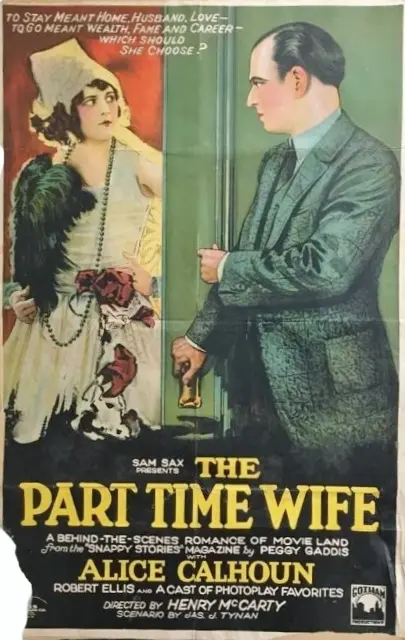
The Part Time Wife, a 1932 romantic drama film, presents a nuanced examination of the intricacies of marriage, professional identity, and the societal expectations that accompany them. This cinematic gem, though often overlooked, offers a thought-provoking narrative that resonates with audiences to this day.
In the film, Doris Fuller, portrayed by Patricia Palmer, is a noted screen star who finds herself at the crossroads of her career and personal life. Her marriage to Kenneth Scott, a poor newspaperman played by Freeman Wood, is marked by a significant disparity in their earnings. This chasm precipitates a crisis of pride for Kenneth, who feels emasculated by his wife's financial superiority. The situation is further complicated by the manner in which he is introduced to others, as 'Mr. Doris Fuller,' a sobriquet that serves as a constant reminder of his perceived inadequacy.
Doris, attuned to Kenneth's distress, makes the selfless decision to relinquish her career to become his 'full-time' wife. This sacrifice, however, proves to be a double-edged sword. As she immerses herself in domestic life, she begins to feel a void, a sense of purposelessness that had been fulfilled by her work. Meanwhile, Kenneth's struggles to craft a play to bolster their finances take a toll on his mental health, causing him to become a nervous wreck.
In an effort to support her husband, Doris returns to the screen, a decision that Kenneth misinterprets as a sign of infidelity. His erroneous conviction that she is having an affair with her leading man, DeWitt Courtney, played by Robert Ellis, sets in motion a chain of events that drives a wedge between them. Kenneth redirects his attention to Nita Northrup, a rising starlet played by Janice Peters, further exacerbating the rift in their relationship.
As the narrative unfolds, the consequences of Kenneth's actions come to fruition. His play, penned during his tumultuous period, achieves success, but he finds himself unfulfilled, a hollow shell of his former self. It is only after Doris suffers an injury on set that the couple reconciles, with Doris once again embracing her role as his 'full-time' wife. This reunion is not merely a consequence of circumstance but a testament to the depth of their love and commitment to one another.
In comparison to other films of its era, The Kiss and You Find It Everywhere, The Part Time Wife distinguishes itself through its thoughtful exploration of the complexities of marriage and professional identity. The film's portrayal of a strong, independent woman navigating the challenges of her career and personal life resonates with Aura o las violetas, a cinematic work that also explores the intricacies of love, identity, and societal expectations.
The performances in The Part Time Wife are noteworthy, with Patricia Palmer and Freeman Wood delivering nuanced portrayals of a complex, multifaceted couple. The supporting cast, including Edwards Davis and Charles West, adds depth to the narrative, creating a rich tapestry of characters that drive the plot forward.
In conclusion, The Part Time Wife is a timeless exploration of love, identity, and ambition, a cinematic work that continues to resonate with audiences today. Its thoughtful examination of the complexities of marriage, professional identity, and societal expectations makes it a must-see for film enthusiasts and scholars alike. As a testament to the enduring power of cinema, The Part Time Wife remains a captivating, thought-provoking work that invites viewers to reflect on the intricacies of the human experience.
The film's legacy serves as a reminder of the importance of empathy, understanding, and communication in relationships. As we navigate the complexities of our own lives, The Part Time Wife offers a poignant reminder that true fulfillment can only be achieved through a deep understanding of ourselves and those we love.
IMDb 4
1925
Community
Log in to comment.