DbcultAccessing Vault...
Cult Review
Senior Film Conservator
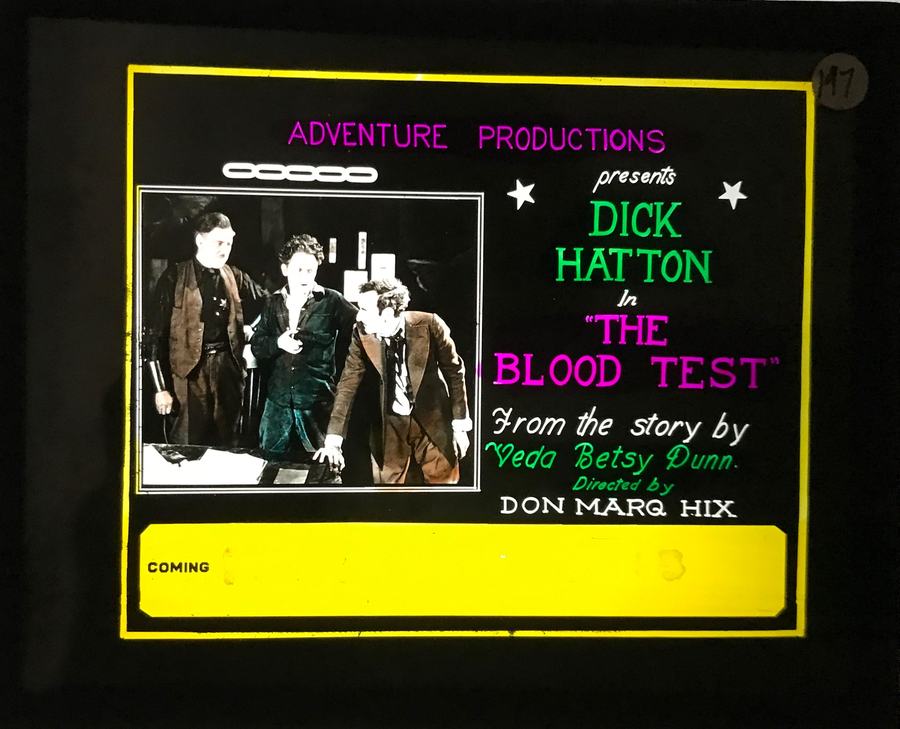
The silent era, often dismissed by casual viewers, frequently yielded narratives of profound emotional resonance and moral complexity. Among these, Blood Test (1919) emerges as a fascinating, albeit lesser-known, example of a Western that transcends mere genre conventions to explore the perennial human struggle for atonement and acceptance. It delves into the indelible marks left by a past life, questioning whether one can truly outrun the shadows of their former self, especially when those shadows are maliciously invoked by others. The film presents a poignant exploration of identity, societal prejudice, and the often-unseen machinations that seek to undermine genuine affection and honest living. It’s a testament to the power of early cinema to convey intricate emotional landscapes without uttering a single spoken word, relying instead on the nuanced performances of its dedicated cast and the universal language of visual storytelling.
At its core, Blood Test masterfully illustrates the arduous path of an outlaw seeking absolution. This central figure, burdened by a history of lawlessness, endeavors to shed his guns and embrace a 'straight' life, a journey fraught with both internal conflict and external skepticism. His decision to foster a young boy, subsequently, becomes a beacon of his reformed character, a tangible commitment to a future built on decency rather than depredation. Billie Bennett, as one of the pivotal figures, likely imbued her role with the stoicism and quiet strength characteristic of women in these frontier narratives, often serving as the moral compass or the emotional anchor. The film's narrative thrust gains significant momentum when this foster son, representing the outlaw's hopes for a clean legacy, falls for the daughter of a prominent, wealthy estate owner. This romantic entanglement immediately introduces a class divide and a clash of worlds, setting the stage for the dramatic tension that defines much of the picture. The outlaw’s past, once a private burden, now threatens to become a public scandal, jeopardizing not only his own hard-won peace but also the nascent happiness of his beloved foster son. It’s a familiar trope, perhaps, but one executed with a quiet intensity that captures the era's dramatic sensibilities, akin to the societal pressures examined in The Bright Shawl, albeit in a vastly different cultural setting.
The primary antagonist of Blood Test is not merely circumstance but a thoroughly venal character: the crooked manager of the wealthy estate. His motivations are chillingly clear and singularly self-serving. He covets the estate itself, envisioning a future where he can control its considerable assets upon the patriarch's demise, and he sees the daughter as a mere conduit to this power. His desire for the girl is transactional, devoid of genuine affection, making his villainy all the more repugnant. This manager, sensing an opportune moment to eliminate a rival and further his own nefarious agenda, seizes upon the outlaw's past. He cunningly reveals the foster son's true parentage to the unsuspecting estate owner, weaponizing the young man's origins against him. This act of calculated malice ignites the central conflict, forcing the audience to grapple with questions of inherited guilt and the corrosive power of rumor and insinuation. Lafe McKee, a prolific character actor of the era, would have brought a certain gravitas to his role, likely portraying the estate owner with a mixture of wisdom and vulnerability, making his eventual deception all the more impactful. The manager's manipulative tactics echo the intricate deceptions found in mystery-dramas like The House of a Thousand Candles, where hidden truths and cunning ploys drive the narrative forward.
Silent films, by their very nature, demanded a unique approach to narrative construction and character development. The absence of dialogue meant that emotions, motivations, and plot points had to be conveyed through exaggerated gestures, expressive facial movements, and meticulously crafted intertitles. In Blood Test, one can imagine how the tension would build through prolonged gazes, furtive glances, and dramatic physical confrontations. Florence Lee, likely playing the estate owner's daughter, would have had to embody innocence, burgeoning love, and eventual heartbreak with a clarity that transcended the spoken word, her every movement and expression a vital part of the storytelling. Frank Rice, Nelson McDowell, William F. Moran, Les Bates, and Dick Hatton, comprising a robust supporting cast, each contributed to the film’s texture, whether as loyal allies, skeptical townsfolk, or additional henchmen of the villain. Their collective performances, though often broad by modern standards, were essential for articulating the moral stakes and advancing the plot in a visually compelling manner. The dramatic revelations and ensuing complications would have been punctuated by carefully placed title cards, guiding the audience through the escalating crisis and the eventual confrontation. This reliance on visual cues and the actors' interpretive skills makes silent cinema an art form distinct from its sound-era successors, a form that, when done well, could be incredibly immersive and impactful. The narrative clarity and emotional directness are reminiscent of films like A Wild Goose Chase, where the plot moves with a certain undeniable momentum.
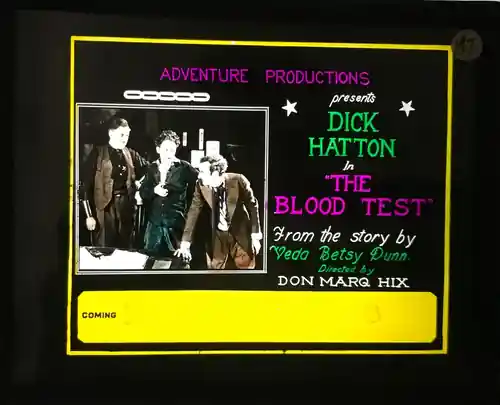
Beyond the immediate melodrama, Blood Test grapples with profound thematic questions. Can a person truly escape their past, or are they forever defined by their origins? The outlaw's journey is one of profound self-reinvention, yet the world, represented by the conniving manager and the prejudiced estate owner, struggles to accept this transformation. The title itself, 'Blood Test,' suggests an innate, perhaps inescapable, quality passed down through lineage, challenging the very notion of chosen identity and individual agency. It forces a contemplation on whether 'blood' truly dictates destiny, or if character is forged through action and intention. The film posits a poignant dilemma: is redemption a personal journey, or does it require societal validation? This struggle for acceptance, particularly within the rigid social structures of the early 20th century, lends the narrative a timeless quality. The foster son, caught between his adoptive father's checkered past and his own honorable intentions, becomes a symbol of this conflict, his love for the estate owner's daughter serving as the ultimate test of the community's willingness to look beyond superficial judgments. This moral quandary, a clash between inherent nature and acquired virtue, resonates with the introspective character studies found in films like Hilde Warren und der Tod, which also explored the deeper human condition.
Released in 1919, Blood Test belongs to a vibrant period in cinematic history, a transitional era where the nascent art form was rapidly evolving. Westerns, in particular, were immensely popular, offering audiences tales of rugged individualism, moral clarity (or sometimes ambiguity), and the vast, untamed American landscape. These films often served as allegories for societal changes, depicting the clash between civilization and wilderness, tradition and progress. While specific directorial flourishes are hard to ascertain without direct access to the film, one can infer certain conventions of the time: clear good-versus-evil dichotomies, dramatic rescues, and a strong emphasis on visual spectacle. The use of location shooting, characteristic of many Westerns, would have lent authenticity to the setting, immersing viewers in the dusty, expansive world of the frontier. The production values, though modest by today's standards, would have been considerable for the period, reflecting the industry's growing sophistication. This period saw a proliferation of diverse narratives, from exotic adventures like The Carpet from Bagdad to poignant dramas, and Blood Test stands as a testament to the genre's capacity for intricate character-driven storytelling within a seemingly simple framework.
As the plot of Blood Test thickens, the complications that ensue from the manager's malicious revelation naturally lead to a dramatic climax. The confrontation between the outlaw, his foster son, the estate owner, and the manipulative manager would undoubtedly have formed the emotional and narrative peak of the film. Such a scene would have necessitated intense physical and emotional performances, with each actor conveying their character's desperation, anger, or righteousness through their physicality. The resolution, typical of many films of this era, would likely have involved the exposure of the villain's deceit and the eventual vindication of the innocent parties. However, the lasting impact of the film lies not just in the triumph of good over evil, but in the exploration of the journey towards that triumph – the sacrifices made, the prejudices overcome, and the true nature of family and loyalty. The title, 'Blood Test,' may subtly hint at a literal test of lineage, or more likely, a metaphorical examination of true character, a 'test of blood' in the sense of one's inherent goodness despite their background. This metaphorical interpretation would elevate the film beyond a simple Western, imbuing it with a deeper philosophical undertone. It’s a narrative arc that speaks to the enduring human desire for justice and the power of truth to ultimately prevail, much like the intricate moral dilemmas presented in The Great Lover or the dramatic stakes in The Lure of the Bush.
While Blood Test may not be as widely remembered as some of its silent-era contemporaries, its narrative structure and thematic depth offer valuable insights into the storytelling conventions and societal concerns of its time. It’s a film that, even a century later, continues to pose relevant questions about judgment, forgiveness, and the persistent struggle to define oneself independently of inherited circumstances. The performances by Billie Bennett, Lafe McKee, Florence Lee, and the rest of the ensemble would have been crucial in conveying these complex ideas without the aid of spoken dialogue, relying instead on the universal language of human emotion. Films like Lost and Found on a South Sea Island or The Golden Fleece, while different in setting, similarly explored journeys of self-discovery and the challenges faced by individuals against formidable odds. The enduring appeal of such narratives lies in their ability to tap into fundamental human experiences, making them resonate across generations. Blood Test, in its quiet way, contributes to this rich tapestry of early cinema, reminding us that the quest for redemption and the battle against prejudice are timeless struggles, beautifully captured even in the absence of sound. The film's ability to weave a compelling tale of love, betrayal, and the fight for a new beginning with such economy of means is a testament to the artistry prevalent in the silent film era.
Ultimately, Blood Test stands as a compelling artifact from a bygone cinematic age, offering more than just a glimpse into the early days of Western filmmaking. It serves as a mirror reflecting enduring human dilemmas: the desire for a fresh start, the corrosive nature of envy, and the profound impact of love in the face of adversity. The performances of its cast, including Frank Rice's likely earnest portrayal of the foster son, and the nuanced villainy of the estate manager, would have been key to its emotional impact. This film, like many of its contemporaries such as Tigris or In a Pinch, showcases the foundational storytelling techniques that would later inform the entire medium. It reminds us that powerful narratives do not always require elaborate special effects or complex dialogue; sometimes, the most profound stories are told through the simple, yet potent, interplay of character, motivation, and the universal quest for justice and acceptance. It’s a film that, despite its age, continues to speak volumes about the human condition and the relentless pursuit of a life free from the shackles of a difficult past.
IMDb 6.8
1927
Community
Log in to comment.