Summary
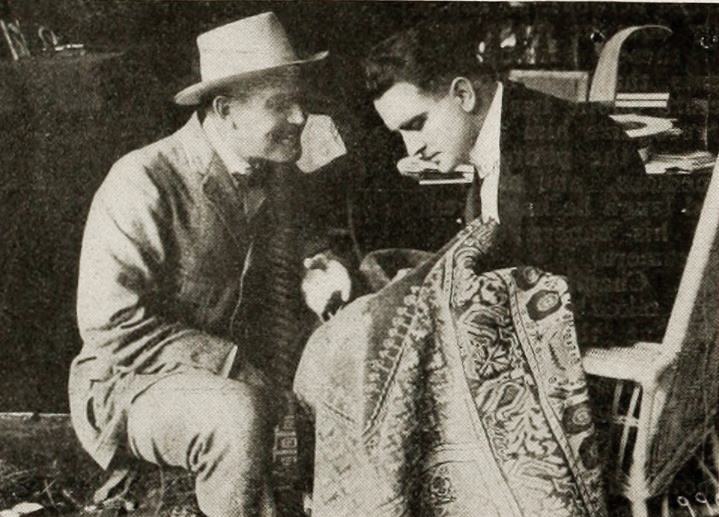
In a tapestry woven with threads of ancient tradition and burgeoning capitalist greed, Harold McGrath’s 'The Carpet from Bagdad' unfurls a sprawling narrative that traverses continents and moral landscapes. At its heart lies the formidable Mohamed, a loyal retainer tasked with safeguarding the fabled Sacred Carpet of Bagdad, a relic imbued with profound cultural and spiritual significance. Simultaneously, across the Atlantic in the bustling metropolis of New York, the avaricious banker Arthur Wadsworth orchestrates a familial betrayal, disinheriting his brother Horace. This act of fraternal perfidy propels Horace into the shadowy embrace of a criminal syndicate, their nefarious scheme revolving around the audacious robbery of the Wadsworth Bank. Their chosen vector of ingress? A subterranean tunnel originating from the seemingly innocuous adjacent residence of George P. A. Jones, an antique dealer whose life is about to become inextricably entangled with destiny. The narrative then takes an exotic turn, as the gang, with Horace in tow, tracks Jones to the sun-baked lands of Egypt and eventually the labyrinthine souks of Bagdad. Here, Horace executes the audacious theft of the Sacred Carpet, subsequently offloading it to the unsuspecting Jones. Amidst this escalating intrigue, Fortune Chedsoye, the guileless daughter of a gang member, finds herself captivated by Jones, her innocence a fragile counterpoint to the surrounding machinations. When the zealous Mohamed, driven by an unyielding sense of duty, threatens Jones’s life to reclaim the sacred artifact, Fortune, in a moment of protective ingenuity, secretes the carpet amongst her late mother’s effects. The ensuing desert ordeal, a harrowing crucible of torture inflicted by Mohamed upon Jones, Wadsworth, and Fortune, reaches a fever pitch before a cataclysmic sandstorm grants them a miraculous reprieve. The narrative circles back to New York, where Wadsworth, now a complicit participant, rejoins the gang at Jones’s abode. Fortune and Jones, stumbling upon the crooks' tunneling operation, are confronted with a moral quandary. Jones, demonstrating an unexpected streak of compassion, grants the would-be thieves a two-hour grace period before alerting the authorities. The Sacred Carpet, a witness to this cross-continental saga of avarice, loyalty, and redemption, remains with Fortune and Jones, its journey concluded. Meanwhile, in the distant East, Mohamed, a figure of stoic resignation, bows to the inscrutable will of Allah, acknowledging the capricious dance of fate that has played out.
Synopsis
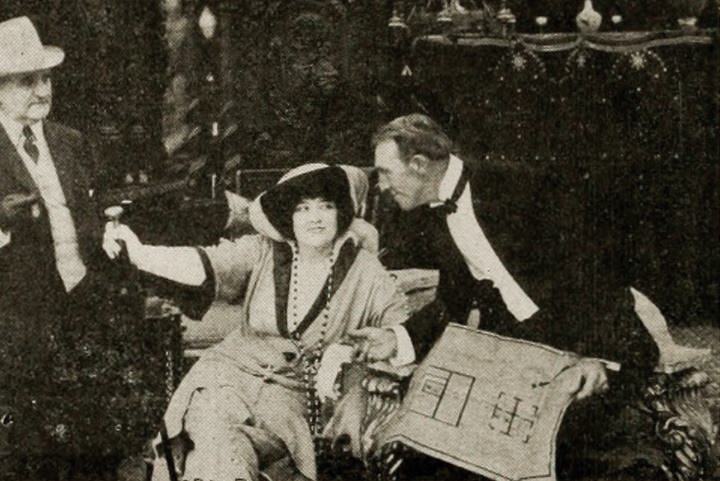
The Pasha's servant Mohamed, is entrusted to guard the Sacred Carpet of Bagdad with his life. In New York, after banker Arthur Wadsworth forces his brother Horace to give up his inheritance, Horace joins a band of crooks and plans to rob the Wadsworth Bank by tunneling from the adjacent home of antique dealer George P. A. Jones. The gang follows Jones to Egypt and Bagdad, where Horace steals the carpet and sells it to Jones. Fortune Chedsoye, the innocent daughter of a gang member, falls in love with Jones. When Fortune discovers that Mohamed plans to kill Jones to retrieve the rug, she hides it with her mother's belongings. Mohamed forces Jones, Wadsworth, and Fortune into the desert, but they escape his torture during a sandstorm. Wadsworth then rejoins the gang at Jones' home in New York. When Fortune and Jones catch the crooks tunneling, Jones, sympathetically, gives them a two hour head-start before informing the police. Fortune and Jones keep the carpet, while in the East, Mohamed bows in resignation to Allah's will.
Review Excerpt
"
A Tapestry of Treachery and Transcontinental Thrills: Unrolling 'The Carpet from Bagdad'
Step back in time, dear reader, to an era when cinema was a silent symphony, painting grand narratives with light and shadow, gesture and expression. It was a time of epic scope, of melodrama writ large, and of a burgeoning fascination with the exotic and the adventurous. Harold McGrath's 1915 cinematic endeavor, The Carpet from Bagdad, stands as a compelling artifact from this golden age, a sprawl..."