DbcultAccessing Vault...
Cult Review
Senior Film Conservator
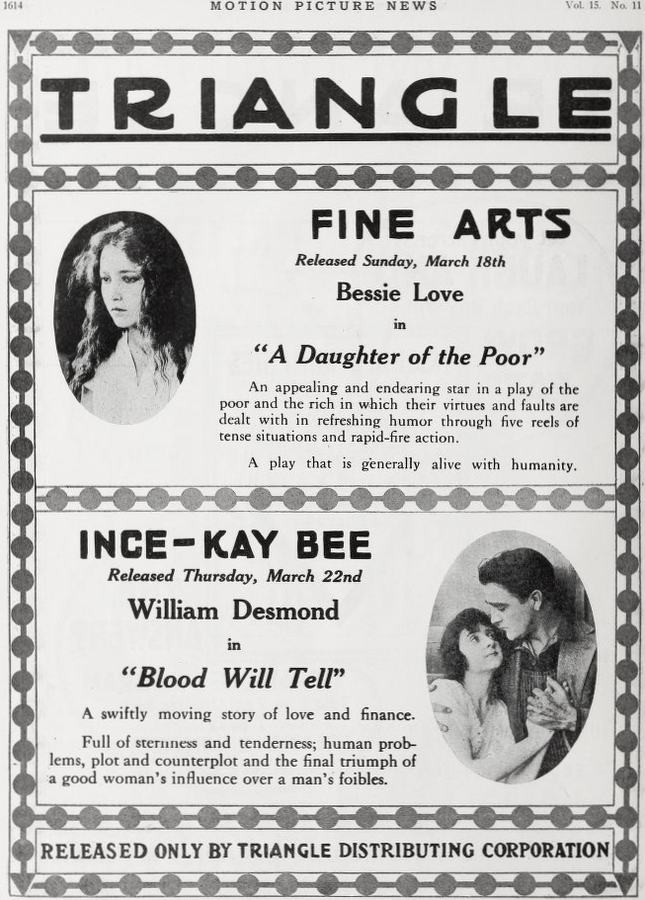
Stepping into the flickering, sepia-toned world of Blood Will Tell, one is immediately struck by the potent blend of melodrama, social commentary, and nascent thriller elements that characterized the golden age of silent cinema. This 1917 feature, a compelling narrative crafted by J.G. Hawks and John Lynch, plunges us into the tumultuous life of Samson Oakley III, a character whose journey from privileged scion to unlikely hero is as winding as the labyrinthine corridors of Wall Street itself. The film deftly navigates the treacherous waters of filial duty, societal expectation, and the surprising wellsprings of human ingenuity when pushed to the brink.
Our protagonist, Samson III, initially embodies the quintessential dilettante of the era—a young man born into the formidable shadow of his father, Samson Oakley II, a titan of the financial world. The elder Oakley, a figure of stern rectitude and unwavering adherence to established decorum, presides over a prominent Wall Street firm, his reputation seemingly unassailable. However, the first tremor in this seemingly stable existence arrives with Samson III's unjust expulsion from college. Though innocent of the offense, this perceived disgrace ignites his father's unyielding wrath. The consequence is swift and severe: a meager allowance and a de facto banishment from the inner sanctum of the family's esteemed social circle. This early act of paternal inflexibility sets the stage for a profound estrangement, a chasm between father and son that echoes the wider societal rigidities of the time. It's a poignant illustration of how easily reputation could be shattered and how unforgiving the upper echelons of society could be towards perceived failings, even those unjustly attributed.
The narrative deepens its exploration of class and expectation when Samson III, in a defiant act of personal autonomy, chooses to marry a chorus girl. In the stratified society of the early 20th century, such a union was not merely frowned upon; it was anathema, a scandalous affront to the Oakley name and its carefully constructed legacy. For Samson Oakley II, this transgression crosses an unforgivable line, leading to the ultimate severance: complete disinheritance. This pivotal moment is not just a plot device; it's a powerful commentary on the era's social strictures, where love and personal choice could be sacrificed at the altar of family honor and financial standing. The film asks us to ponder the true cost of such rigid adherence to class distinctions, and whether the 'blood' that is supposed to bind families can also be the very force that tears them asunder.
Cast adrift, stripped of his birthright and accustomed comforts, Samson III faces the stark reality of self-reliance. It is in this crucible of desperation that a most unexpected talent surfaces. Through sheer necessity, he discovers an innate, almost preternatural gift for safecracking. This isn't merely a skill learned; it's presented as an intuitive understanding of mechanisms, a unique aptitude that lies dormant until circumstances demand its awakening. The irony is palpable: the son of a Wall Street magnate, whose world is built on secure vaults and impenetrable ledgers, finds his salvation in the very art of breaching such barriers. This transformation evokes a fascinating parallel with films like Stolen Goods or even the thematic undercurrents of identity and circumstance found in Borrowed Plumage, where individuals find themselves navigating moral ambiguities or adopting new personas out of necessity. Samson III's journey challenges conventional notions of 'good' and 'bad,' suggesting that talent, regardless of its typical application, is ultimately a neutral force, its moral valence determined by its use.
The film masterfully pivots from personal drama to high-stakes corporate intrigue when Samson III's newfound, illicit skill is put to an extraordinary test. He uncovers a malevolent plot orchestrated by several of his father's supposedly trusted colleagues. These treacherous figures, driven by avarice and a thirst for power, are conspiring to seize control of the Oakley firm. Their nefarious scheme involves two principal components: disseminating false rumors of Samson Oakley II's demise to destabilize the market and the firm's standing, and, crucially, stealing valuable securities from the company's vault. This revelation places Samson III in an unenviable position. The very father who disowned him, the patriarch whose rigid principles led to his exile, is now vulnerable, his legacy and fortune hanging by a thread. The only person capable of thwarting this sophisticated corporate coup is the son he cast out, using the very skill he inadvertently fostered through his harsh judgment.
The tension escalates dramatically as Samson III, now operating in the shadows, must employ his expertise to infiltrate the very systems designed to protect his father's assets. The sequence of the safecracking, though conveyed through the lens of silent film conventions—perhaps through close-ups on tumblers, intense facial expressions, and rapid-fire intertitles—would have been a thrilling spectacle for contemporary audiences. It's a race against time, a silent battle of wits and dexterity against the forces of corporate malfeasance. The film cleverly inverts the traditional hero archetype; Samson III is no upright, law-abiding citizen. He is a man forced into a criminal act for a righteous cause, embodying a complex moral grey area that elevates the narrative beyond simple good-versus-evil. This nuanced portrayal of heroism is what gives Blood Will Tell its enduring resonance, exploring the idea that salvation can arise from the most unexpected, even illicit, quarters.
The performances, particularly from Charles Gunn as Samson Oakley III, would have been crucial in conveying the character's internal conflict and eventual resolve. Silent film acting, often characterized by exaggerated expressions and gestures, here serves to amplify the emotional stakes. One can imagine Gunn’s portrayal oscillating between the youthful indignation of the expelled student, the quiet despair of the disinherited son, and the focused intensity of the safecracker. J. Barney Sherry as Samson Oakley II would have projected the formidable, unyielding authority of the Wall Street magnate, his rigid posture and stern gaze communicating volumes without a single spoken word. Enid Markey, likely as the chorus girl, would have brought a necessary lightness and perhaps a touch of defiant charm, embodying the very 'unsuitability' that sparked the father's ire but also the unwavering loyalty that anchors Samson III. The ensemble cast, including David Hartford, Howard Hickman, and others, would have collectively contributed to the rich tapestry of this early cinematic world, each playing their part in the intricate dance of betrayal and redemption.
The narrative’s strength lies in its exploration of several timeless themes. Foremost among them is the notion of redemption. Samson III, initially branded a disgrace, finds his path to redemption not through conformity, but through an unconventional application of his talents. His actions force a re-evaluation of what constitutes 'honor' and 'loyalty.' Then there's the profound commentary on family and legacy. The title itself, "Blood Will Tell," resonates with the idea that inherent traits, good or bad, will eventually surface. Here, it’s the son's innate sense of justice and his surprising aptitude that ultimately save the family name, despite the father's initial rejection. The film also delves into social class and hypocrisy, contrasting the perceived moral high ground of the wealthy with the genuine villainy lurking within their ranks, while finding unexpected virtue in the ostracized. This mirrors the social critiques often found in contemporary works, pushing against the gilded cage of high society.
From a cinematic perspective, Blood Will Tell showcases the burgeoning sophistication of silent film storytelling. Directors and cinematographers of this era were mastering the art of visual narrative, relying on composition, lighting, and the rhythm of editing to convey complex emotions and intricate plot points. Intertitles, far from being mere dialogue substitutes, were often crafted with poetic flair, serving as narrative bridges or offering glimpses into characters' inner thoughts. The pacing would have been meticulously controlled, building suspense through extended sequences of tension followed by moments of dramatic revelation. One can imagine the use of parallel editing to show the conspirators' machinations juxtaposed with Samson III's desperate attempts to thwart them, amplifying the sense of urgency. The absence of spoken dialogue demanded a heightened visual language, making films like this a testament to the ingenuity of early filmmakers in engaging audiences purely through sight and emotion.
Comparing Blood Will Tell to other films of its time reveals its unique position. While films like The Education of Mr. Pipp might have explored social satire and personal growth within a more genteel framework, Blood Will Tell leans into the grittier realities of crime and corporate espionage. It shares a thematic kinship with films where individuals are wrongly accused or struggle against societal judgment, much like the premise of I Accuse, though the latter might have focused more on legal drama. The element of uncovering a hidden plot and using one's wits against a formidable foe could draw a faint line to the investigative spirit of something like The Hound of the Baskervilles, albeit shifting from gothic mystery to financial thriller. It stands out for its bold premise: a "criminal" as the unlikely savior, a trope that continues to fascinate audiences even today.
The enduring appeal of Blood Will Tell lies in its timeless exploration of character under duress. It challenges the rigid moral binaries often presented in early cinema, opting for a more complex portrayal of virtue and vice. The film argues that true character is forged in adversity, and that the bonds of family, though strained, can ultimately prove unbreakable. It’s a compelling reminder that appearances can be deceiving, and that the most unexpected individuals can rise to the occasion when faced with profound challenges. The narrative is a powerful testament to the idea that talent, regardless of its origin or initial perception, can be wielded for profound good, even in the most morally ambiguous circumstances. This silent film, therefore, is more than just a historical artifact; it's a vibrant, engaging piece of storytelling that continues to speak to contemporary anxieties about corporate power, familial responsibility, and the ever-present human quest for identity and redemption.
Furthermore, the sheer audacity of Samson III’s transformation from a disinherited wastrel to a masterful safecracker, and then to the clandestine guardian of his father's empire, is a narrative arc that captivates. It’s a story that subtly critiques the very foundations of the Gilded Age's moral fabric, where wealth often equated to virtue, and poverty or unconventional choices were signs of moral decay. The film flips this script, demonstrating that true integrity and competence can manifest in the unlikeliest of places and through the unlikeliest of skills. The dramatic irony inherent in Samson II being saved by the very "criminal" talent he indirectly fostered through his harshness is a masterful stroke of storytelling. It forces both the characters within the film and the audience to confront their preconceived notions about class, morality, and the nature of success.
The film’s title, Blood Will Tell, takes on multiple layers of meaning. On one hand, it refers to the idea that family traits, for better or worse, will always manifest. Samson III, despite his father's disappointment, ultimately demonstrates a deep-seated loyalty and intelligence that are arguably inherited. On another level, it hints at the truth eventually coming to light – the blood of the conspirators’ treachery will be revealed. This double entendre adds intellectual depth to what might otherwise be a straightforward crime drama. It elevates the film from a simple plot to a meditation on lineage, character, and truth. The silent era, with its reliance on visual metaphor and evocative intertitles, was particularly adept at conveying such layered meanings, inviting audiences to actively participate in the interpretive process.
In conclusion, Blood Will Tell stands as a compelling testament to the power of early cinema to weave intricate tales of human drama. It’s a rich tapestry of personal struggle, corporate perfidy, and unexpected heroism, all set against the backdrop of a rapidly changing American society. The film’s ability to imbue its characters with complex motivations and its plot with genuine suspense ensures its place as a noteworthy entry in the silent film canon. For those interested in the evolution of cinematic narrative, the interplay of social critique and thrilling plotlines, or simply a captivating story of a son's unlikely redemption, this film offers a deeply rewarding experience. It reminds us that even in the absence of spoken dialogue, the human story, with all its triumphs and tribulations, can be told with profound eloquence and lasting impact.

IMDb 7
1928
Community
Log in to comment.