DbcultAccessing Vault...
Cult Review
Senior Film Conservator
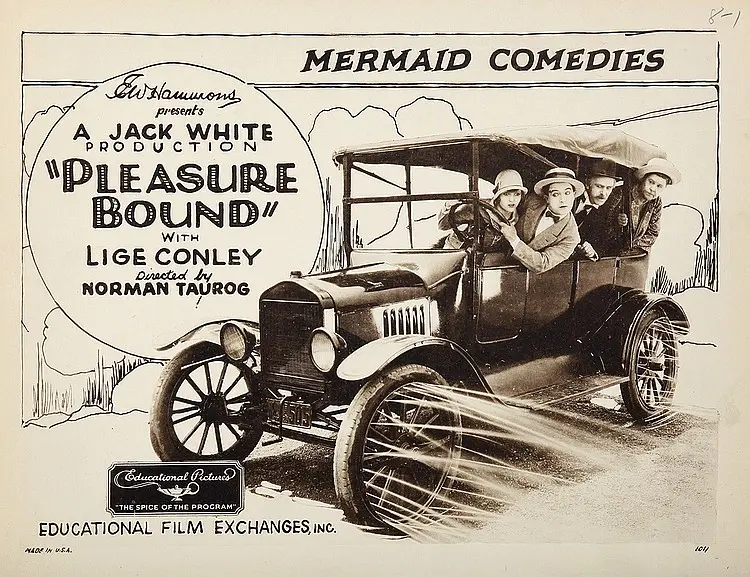
Is Pleasure Bound worth watching today? Short answer: yes, but with significant caveats. This 1923 silent short offers a fascinating, albeit brief, glimpse into the nascent slapstick comedy of Hollywood, making it ideal for film historians and silent era enthusiasts. However, for the casual modern viewer expecting intricate plots or nuanced character development, it may feel dated and largely forgettable.
This film works because of its sheer, unadulterated energy and Norman Taurog's early directorial flair for physical comedy, showcasing foundational chase mechanics. It fails because its narrative is paper-thin, even for a short, and its humor, while occasionally charming, lacks the timeless punch of its more celebrated contemporaries. You should watch it if you appreciate the historical context of early cinema and the foundational elements of chase sequences, particularly those involving early automotive and marine technology.
In the vast, often overlooked archive of early 20th-century cinema, Pleasure Bound emerges as a curious artifact. It’s not a film designed to be remembered for generations, nor does it possess the profound social commentary or artistic ambition of some of its more renowned contemporaries. Instead, it offers a window into the simple, unpretentious joy of physical comedy at a time when cinema itself was still finding its voice. Directed by a very young Norman Taurog, who would later helm classics like Skippy and Boys Town, this short showcases the raw, unfiltered energy that defined much of the era’s entertainment.
The film’s charm lies not in its sophisticated storytelling but in its earnest attempt to entertain through movement and exaggerated reaction. It's a relic. A snapshot, nothing more. Yet, within its brief runtime, it encapsulates a particular kind of cinematic innocence, a period when the novelty of moving pictures was often enough to captivate an audience.
The narrative backbone of Pleasure Bound is as straightforward as a silent film plot can be. The De Peyster family, seemingly representing a comfortable middle-class existence, embarks on a fishing trip. Their mode of transport – and indeed, a central element of the early plot – involves two 'flivvers,' a colloquial term for inexpensive automobiles, offered by two suitors vying for Daisy De Peyster’s affection: Lige and his unnamed rival. The choice of these early cars isn't merely functional; it speaks to the burgeoning automotive culture of the 1920s, where even a simple fishing trip became an opportunity to showcase personal conveyance.
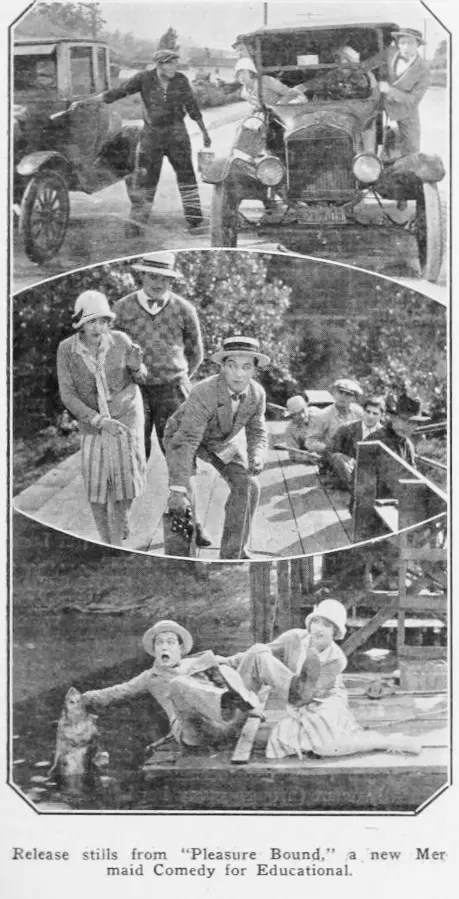
What begins as a leisurely outing quickly escalates into a frantic pursuit. The rival, in a move that feels both ludicrous and desperate, seizes Daisy and makes a getaway in a motorboat. This act of brazen abduction sets the stage for the film’s central conflict: a chase. Lige, alongside Daisy's parents, must then pursue them across the water. The discomfort and physical comedy that ensue during this pursuit form the crux of the film's humor. It's a narrative built on escalating stakes and physical exertion, a blueprint for countless chase sequences to follow in cinema history.
However, the plot's simplicity is also its biggest weakness. There's little room for character development or unexpected twists. The motivations are clear, the outcome predictable. This isn't a criticism unique to Pleasure Bound; many shorts of the era prioritized action over narrative depth. Yet, even within its limited scope, one wishes for a slightly more inventive resolution than the standard 'hero saves the damsel' trope, even if it is played for laughs.
Norman Taurog, at the helm of Pleasure Bound, demonstrates an impressive grasp of kinetic energy, particularly for a director in the early stages of his career. The film's pacing is relentlessly quick, driven by the urgency of the chase. From the moment the rival speeds off with Daisy, the film rarely pauses for breath. Taurog understands that in silent comedy, motion is paramount, and he orchestrates the sequence with a clear eye for dynamic movement.
The scenes involving the flivvers, and particularly the motorboat chase, are edited with a briskness that keeps the audience engaged. While not as technically sophisticated as the work of a Keaton or Chaplin, Taurog's direction here is effective. He uses wide shots to establish the geography of the chase and then cuts to closer views to emphasize the characters' reactions and the escalating chaos. One notable moment involves the parents' increasing distress aboard Lige's boat, their expressions of fear and discomfort perfectly captured through exaggerated pantomime, a hallmark of the era. The camera often feels like an active participant, tracking the boats across the water, imparting a sense of urgency that transcends the simplicity of the story.
My unconventional observation is that the real star of Pleasure Bound might not be its human players, but the early 20th-century internal combustion engines. The film, perhaps inadvertently, serves as an ode to the newfound freedom and speed offered by automobiles and motorboats, making them central to both plot and spectacle. It’s less about character and more about the exhilarating potential of technology.
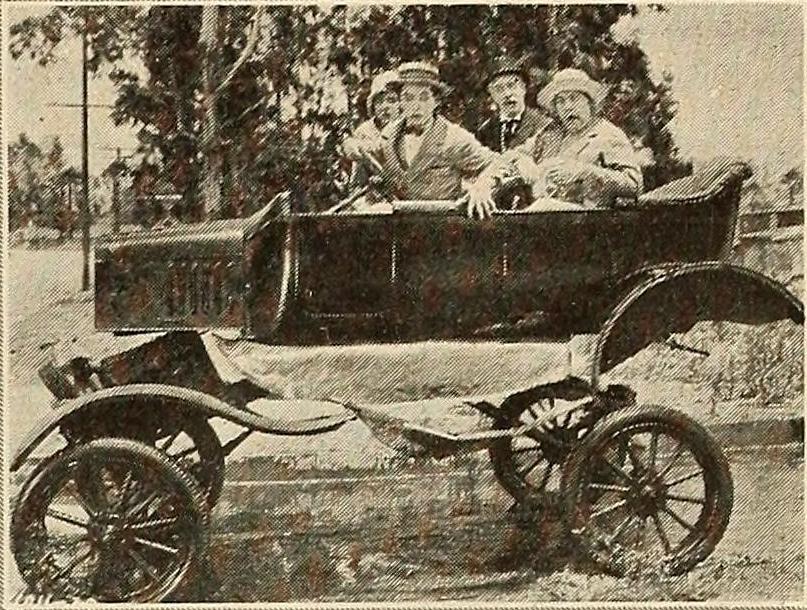
The performances in Pleasure Bound are, as expected for the era, broad and pantomimic. Lige Conley, as the heroic suitor, embodies the earnest, slightly clumsy protagonist typical of silent comedy. His physical comedy is central to the film's appeal, particularly during the arduous rescue sequence where he endures various forms of 'discomfort.' Conley's expressions are clear and legible, conveying determination, frustration, and eventual triumph with an almost childlike transparency.
Stanley Blystone, likely playing the rival, is suitably villainous in his one-dimensional portrayal, his actions driving the plot forward with a mischievous glee. Eva Thatcher and Jack Lloyd, as Daisy’s parents, provide much of the situational comedy through their exaggerated reactions to the unfolding drama. Their visible distress and physical struggles during the boat chase are genuinely amusing, offering a relatable anchor for the audience amidst the more outlandish antics. They are the audience surrogates, experiencing the chaos with palpable alarm.
While nuanced acting was rarely the goal in these shorts, the cast of Pleasure Bound delivers exactly what is required: clear, impactful physical performances that tell the story without words. It works. But it’s flawed. The performances are effective but lack the depth or pathos that would elevate them beyond mere comedic function. They are cogs in a slapstick machine, rather than fully realized individuals.
The cinematography of Pleasure Bound is functional, capturing the outdoor setting with a rustic charm. The film utilizes natural light and open spaces, which lend an authenticity to the fishing trip and subsequent chase. While not groundbreaking, the visual clarity allows the audience to follow the action without difficulty. The use of practical effects for the boat chase, though simple, adds a layer of tangible reality that modern CGI often struggles to replicate. You can feel the water spray, the jostling of the boats.
The tone is lighthearted and comedic throughout, never veering into genuine peril despite the abduction premise. The emphasis is always on the absurdity of the situation and the physical humor derived from it. Even the parents’ distress is played for laughs rather than genuine fear. This consistent tone ensures the film remains an enjoyable, if undemanding, watch. It’s pure kinetic energy, a testament to the era’s entertainment values.
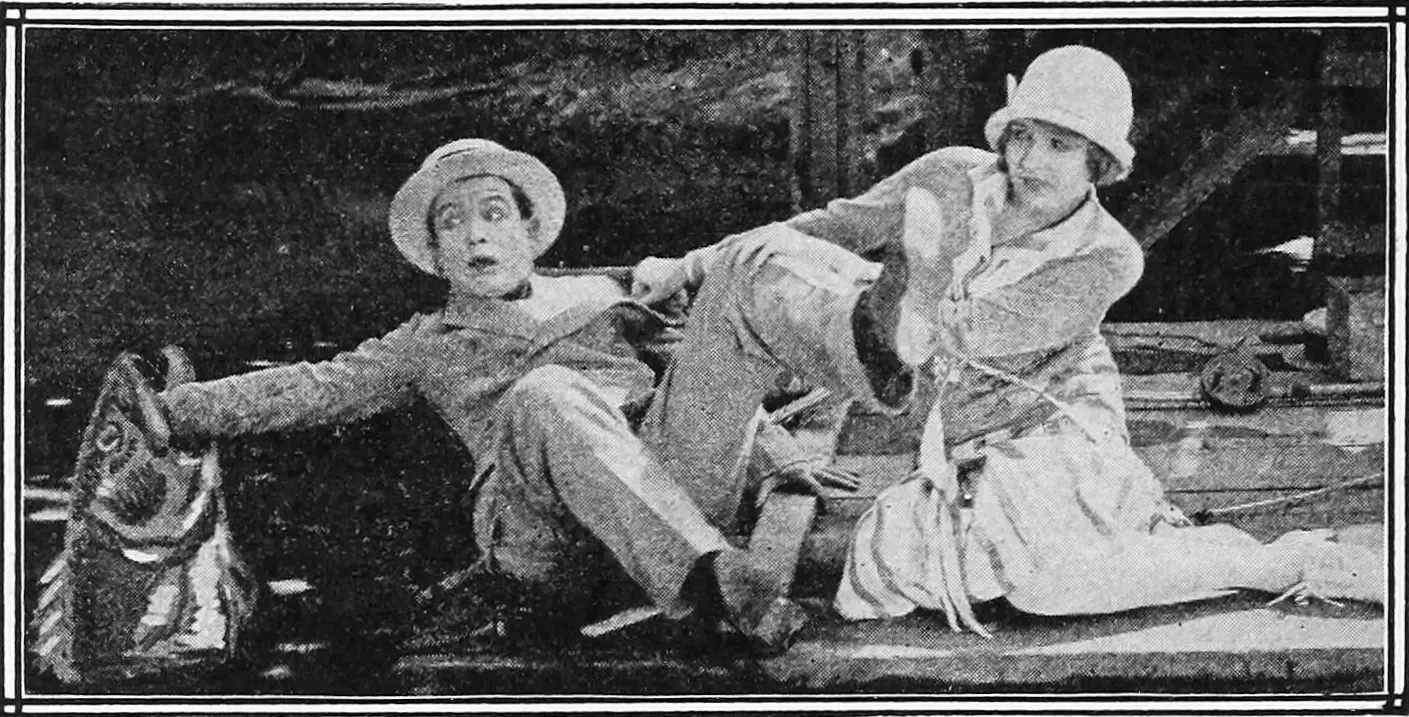
Compared to more ambitious silent films like A Crooked Romance or the dramatic intensity of The Eternal Magdalene, Pleasure Bound makes no pretense of high art. It exists solely to elicit chuckles through physical comedy and a fast-paced chase. This singular focus, while limiting its artistic range, also grants it a certain purity of purpose.
Should you invest your time in Pleasure Bound today? Yes, if you approach it with the right expectations. This film is a historical document. It’s a foundational piece of silent comedy, showcasing early techniques and comedic tropes. It’s short, punchy, and provides insight into Norman Taurog's directorial beginnings. It can be a delightful historical curiosity.
However, it is not a film that will resonate with everyone. Its humor is broad, its plot thin, and its characters are archetypes. Modern audiences accustomed to complex narratives and sophisticated humor might find its simplicity tedious. It requires a certain appreciation for the era's sensibilities.
The film's most enduring quality isn't its humor, which can feel dated, but its accidental historical documentarianism. It captures a slice of life, technology, and entertainment from nearly a century ago, offering a tangible link to cinema's formative years. For those interested in the evolution of film, particularly comedy, it offers valuable context. For others, it might just be a fleeting curiosity. It is certainly not a film I would recommend to someone new to silent cinema, but rather to an enthusiast looking to delve deeper into its lesser-known corners.
Pleasure Bound is an undeniably minor entry in the vast landscape of early cinema, yet it possesses a particular historical charm that makes it worthy of a brief viewing for the right audience. It’s a testament to the raw, unpolished energy of silent slapstick and an early showcase for Norman Taurog's directorial instincts for action and pacing. While it won't challenge your intellect or stir your emotions, it offers a delightful, if fleeting, glimpse into a bygone era of cinematic fun. It is not a forgotten gem, but rather a well-preserved pebble on the beach of film history. Seek it out if you're a serious cinephile or a student of early comedy; otherwise, you can pass without missing a grand experience. It's a film that exists, and that's often enough for history to be served.
IMDb —
1918
Community
Log in to comment.