DbcultAccessing Vault...
Cult Review
Senior Film Conservator
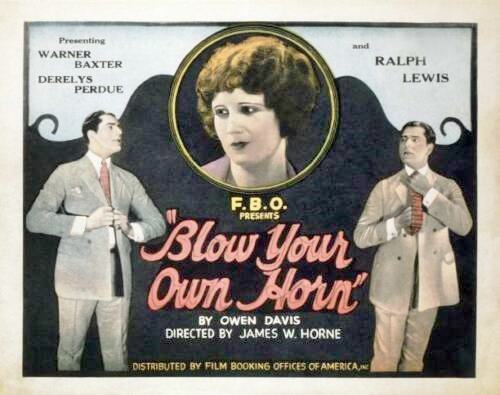
The cinematic landscape of the early 20th century was replete with films that delved into the intricacies of human relationships, often juxtaposing the allure of romance with the harsh realities of societal expectations. Blow Your Own Horn is a quintessential exemplar of this genre, weaving a complex narrative that masterfully intertwines the lives of its protagonists. At the helm of this intricate dance is Jack Dunbar, a character whose fortunes take a dramatic turn upon encountering the enigmatic millionaire Nicholas Small.
Small, with his vast wealth and influence, embodies the quintessence of power and control, qualities that he endeavors to exert over the life of his daughter, Anne. His desire to see Anne married to the ingenious inventor Gillen Jolyon is not merely a paternal whim but a calculated move, reflective of his broader ambitions. The introduction of Jolyon's revolutionary wireless power transmitting device serves as a catalyst, setting in motion a series of events that will challenge the very foundations of Small's plans.
Dunbar, with his innate ingenuity and determination, emerges as an unlikely hero, perfecting and successfully demonstrating Jolyon's invention despite Small's clandestine attempts to sabotage it. This act of defiance not only underscores Dunbar's resourcefulness but also marks a turning point in the narrative, as it sets him on a collision course with Small's villainous designs. The dramatic rescue of Anne from the perilous consequences of her father's machinations is a testament to Dunbar's valor, ultimately leading to the dissolution of her engagement with Jolyon and paving the way for a romantic union with Dunbar himself.
The character development in Blow Your Own Horn is a notable aspect of the film, with each protagonist navigating their own distinct arc. Anne's transformation from a pawn in her father's game to an independent individual capable of making her own choices is particularly noteworthy. Her journey serves as a powerful commentary on the societal expectations placed upon women during this era, highlighting the tensions between personal desire and familial duty.
In comparison to other films of the era, such as The Rage of Paris and Seven Keys to Baldpate, Blow Your Own Horn stands out for its nuanced exploration of themes and its well-crafted narrative. The film's use of the wireless power transmitting device as a plot device adds a layer of scientific intrigue, setting it apart from more straightforward romantic dramas like Dimples and Nan of Music Mountain.
The cinematography in Blow Your Own Horn is also deserving of mention, with the film's use of lighting and shadows adding depth and complexity to the narrative. The scenes depicting the demonstration of Jolyon's invention are particularly noteworthy, showcasing the film's ability to balance action and drama. In contrast to films like Skottet and Intrigue, which focus more on the mystery and suspense elements, Blow Your Own Horn achieves a balance between its various elements, making it a compelling watch.
In conclusion, Blow Your Own Horn is a film that embodies the spirit of its era, offering a captivating narrative that explores the complexities of human relationships, the power of innovation, and the enduring allure of romance. With its richly drawn characters, engaging storyline, and historical significance, it is a cinematic treasure that continues to captivate audiences with its timeless themes and universal appeal. For those interested in the cinematic heritage of the early 20th century, Blow Your Own Horn is an indispensable watch, a film that not only reflects the societal values of its time but also transcends them, speaking to fundamental human experiences that remain as relevant today as they were upon its release.
IMDb —
1932
Community
Log in to comment.