DbcultAccessing Vault...
Cult Review
Senior Film Conservator
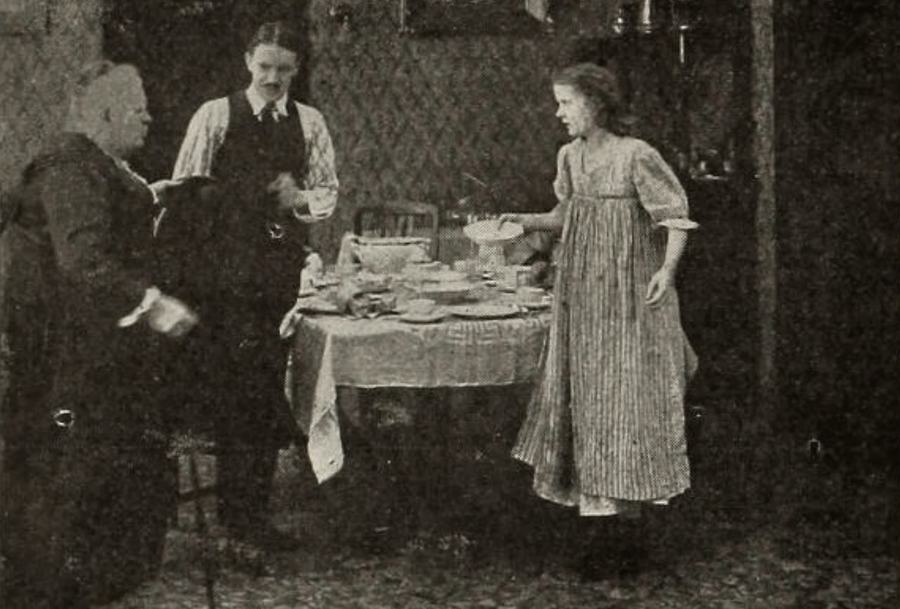
In the annals of silent cinema, where grand gestures and stark visual storytelling often spoke louder than any dialogue ever could, a film like 'The Little Liar' emerges not just as a narrative, but as a profound, gut-wrenching experience. Released in 1915, this cinematic offering delves into the darkest corners of human despair and societal indifference, weaving a tale that is as relevant today as it was over a century ago. It's a film that refuses to offer easy answers, instead plunging its audience into the tragic depths of a young life irrevocably marred by circumstance and misunderstanding. The raw power of its emotional landscape, painted with the broad strokes characteristic of its era yet imbued with an astonishing subtlety, leaves an indelible mark, challenging our perceptions of truth, fiction, and the often-cruel hand of fate.
At its core, 'The Little Liar' is a character study of Maggie, portrayed with heartbreaking vulnerability by 'Baby' Carmen De Rue, and later with a more nuanced despair by Mae Marsh. Maggie isn't born a liar; she is forged in the crucible of deprivation. Her existence in the squalid slums is a relentless assault on the spirit, a world devoid of beauty, hope, or even basic comfort. To escape this suffocating reality, she constructs elaborate fantasies, a vibrant inner world where imagination offers refuge from the harsh concrete and grime. What begins as a harmless coping mechanism, a child's innocent foray into make-believe, gradually escalates into a compulsive habit. Her lies become a second skin, a defense against a world that offers no solace, a way to imbue her bleak surroundings with a semblance of magic or excitement. This psychological genesis of her deceit is handled with remarkable insight, particularly for a film of its period, suggesting a deeper understanding of human behavior than one might typically expect from early cinema.
The tragedy deepens when this very coping mechanism becomes the instrument of her undoing. Accused of shoplifting, a crime she did not commit, Maggie's fervent denials are met with skepticism and scorn. Her reputation, meticulously (if unconsciously) built on a foundation of fictional narratives, stands as an insurmountable barrier to belief. The true culprits, shadowy figures lurking in the periphery, deftly shift the blame, and Maggie, the 'little liar,' finds herself ensnared in a cruel twist of fate. The scene of her conviction and subsequent incarceration is a masterclass in silent film pathos, the despair etched onto her youthful face speaking volumes about the crushing weight of injustice. The audience is left to grapple with the bitter irony: the one time she speaks the unvarnished truth, no one, absolutely no one, is willing to listen.
Into this vortex of despair steps Bobby, a reporter portrayed by Robert Harron, whose initial professional curiosity gradually transforms into a profound sense of empathy and a mission for justice. Bobby represents the external force of good, the one individual willing to look beyond Maggie's notorious reputation. His meticulous investigation, sifting through the layers of deceit and societal prejudice, becomes a beacon of hope in an otherwise bleak narrative. Harron imbues Bobby with a quiet determination, a journalistic integrity that refuses to let an injustice stand unchallenged. His presence introduces a glimmer of possibility, suggesting that perhaps, even in the most cynical of worlds, truth can still prevail.
Meanwhile, imprisoned and isolated, Maggie finds an unexpected outlet for her prodigious imagination: a journal. This act of writing, initially perhaps a continuation of her fantastical musings, evolves into a profound act of self-expression. It is here, within the confines of her cell, that Maggie truly finds her voice, not in spoken words, which have so often betrayed her, but in the written word. Her journal becomes a testament to her inner life, a vivid, heartfelt chronicle that transcends mere plot exposition. It reveals a soul brimming with creativity, a keen observer of human nature, and a spirit yearning for understanding. This pivotal element, the journal, elevates the film beyond a simple melodrama, imbuing it with a literary depth that is both surprising and deeply moving. It is through these written pages that Maggie's true character, her artistic sensibility, and the profound tragedy of her circumstances are finally laid bare.
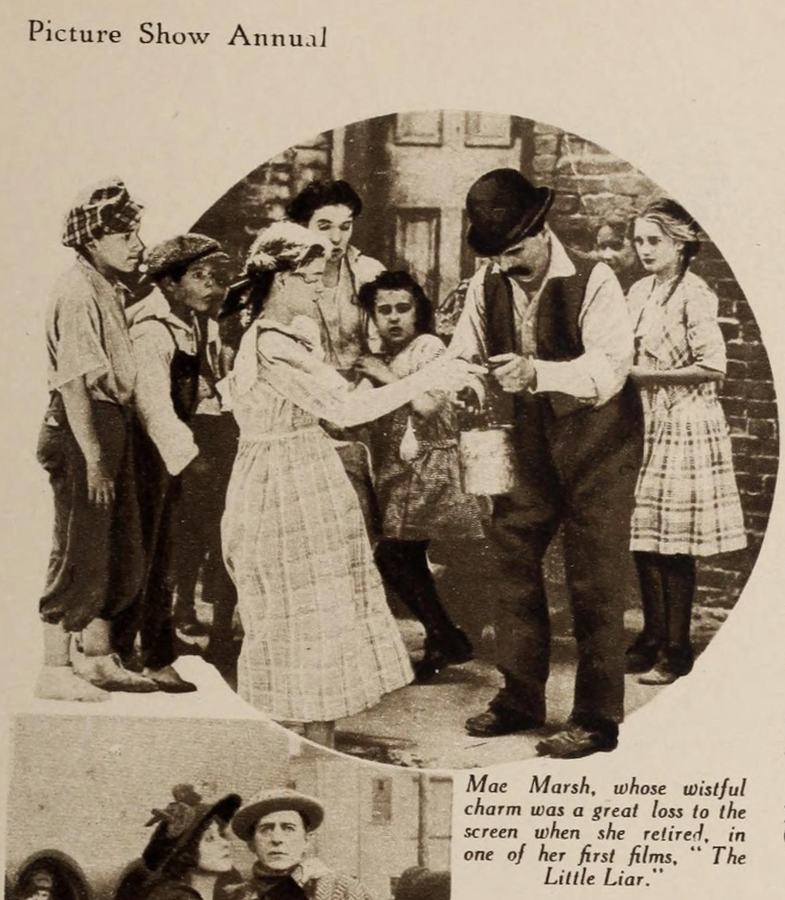
The narrative reaches its critical turning point when Maggie’s journal, a collection of her most intimate thoughts and imaginative flights, fortuitously lands in the hands of the very judge who had condemned her. This moment is fraught with dramatic tension and ironic resonance. The stern arbiter of law, initially swayed by Maggie’s established reputation for falsehoods, is confronted with an undeniable truth – not of her innocence, but of her profound talent. He recognizes in her writings the raw, unpolished brilliance of a gifted author, a voice stifled by poverty and misunderstanding. This realization sparks a profound shift in his perspective, transforming him from a symbol of rigid justice into an advocate for human potential. It's a powerful statement on the capacity of art to transcend prejudice and reveal deeper truths about the human spirit.
Simultaneously, Bobby, armed with irrefutable evidence that definitively clears Maggie of the shoplifting charge, converges with the now-enlightened judge. The stage is set for a dramatic race against time, a desperate dash to rectify a grievous error. The film expertly builds suspense, drawing the audience into the frantic urgency of their mission. This segment highlights the film's structural prowess, moving from introspective character study to a thrilling pursuit of justice. The performances here, particularly from Tom Wilson as the judge and Robert Harron as Bobby, convey a palpable sense of desperation and hope. They represent society's belated attempt at redemption, a frantic scramble to right a wrong before it's too late. The very existence of this race, however, underscores the tragic bureaucratic delays and the slow grind of a justice system that often fails to see the individual.
The climax of 'The Little Liar' is not merely a plot twist; it is a punch to the gut, a devastating culmination of systemic failure and individual despair. Bobby and the judge arrive at the prison, breathless with the news of Maggie's exoneration, their faces alight with the promise of freedom. But their hope is brutally extinguished. They discover Maggie, the gifted writer, the misunderstood child, has taken her own life within the cold, unforgiving confines of her cell. This ending, uncompromising in its bleakness, is a testament to the film's courage and its commitment to raw, unvarnished realism. It rejects the easy, saccharine resolutions often found in melodramas, choosing instead to confront the audience with the harsh, irreversible consequences of a world that failed to see, failed to believe, and failed to protect.
The impact of this ending resonates deeply. It's not just Maggie's death; it's the death of potential, the silencing of a unique voice, and a stark reminder that justice, when delayed, can be just as fatal as injustice itself. The film doesn't just show us a tragedy; it forces us to confront the societal mechanisms that allowed it to happen. The silent screams of Bobby and the judge, their faces contorted in anguish, mirror the audience's own profound sorrow. It's a moment that transcends the screen, forcing introspection on the viewer about empathy, judgment, and the profound responsibility we bear towards one another.
The emotional weight of 'The Little Liar' rests heavily on its cast, and they deliver performances that are both era-appropriate in their expressiveness and remarkably subtle in their emotional depth. 'Baby' Carmen De Rue, as the younger Maggie, captures the innocence and nascent escapism of a child finding solace in fiction. Her wide, expressive eyes communicate volumes about the harshness of her reality and the vividness of her inner world. Mae Marsh, who takes over the role for the later, more tragic phases of Maggie's life, embodies the character's descent into despair with heartbreaking authenticity. Marsh, a frequent collaborator with D.W. Griffith, brings a delicate vulnerability and a profound sense of resignation to the role, making Maggie's ultimate fate all the more devastating. Her performance is a masterclass in conveying complex internal states through purely visual means, a hallmark of great silent acting.
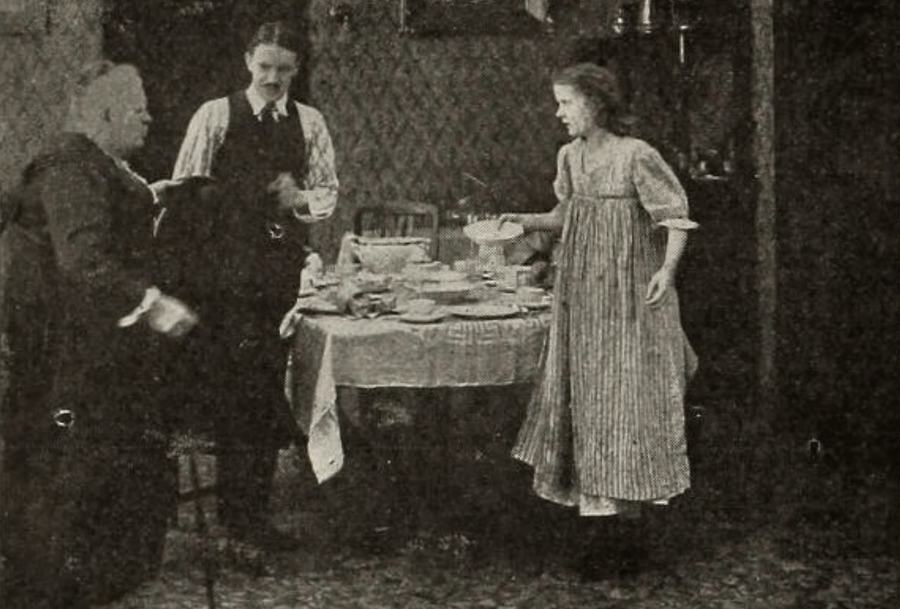
Robert Harron, as the earnest reporter Bobby, provides the film's moral compass. His transition from detached observer to committed advocate is nuanced, portraying a man genuinely moved by injustice. Tom Wilson's judge, initially a figure of imposing authority, undergoes a compelling transformation, his recognition of Maggie's talent and his subsequent race against time adding another layer to the film's exploration of human fallibility and redemption. The supporting cast, including Violet Wilkey, Loyola O'Connor, Olga Grey, Carl Stockdale, Jennie Lee, and Ruth Handforth, collectively paint a vivid picture of the harsh urban environment and the societal characters that populate it, from the indifferent to the truly malicious.
Credit must also be given to Anita Loos, the writer, for crafting such a poignant and psychologically rich narrative. Loos, known for her sharp wit and incisive social commentary, here crafts a story that is both deeply empathetic and unflinchingly critical of societal structures. Her screenplay avoids simplistic moralizing, instead presenting a complex portrait of a character shaped by her environment and a system ill-equipped to understand her. The narrative structure, from Maggie's initial escapism to her eventual tragic end, is meticulously constructed, ensuring that every plot point serves to deepen the emotional impact and thematic resonance.
'The Little Liar' stands as a powerful example of silent cinema's capacity for profound social commentary and emotional depth. It's a film that utilizes the unique aesthetic language of its era—expressive acting, evocative intertitles, and stark cinematography—to maximum effect. The visual contrasts between the dreary slums and Maggie's vibrant inner world, or the stark confines of the prison cell versus the bustling exterior world, are masterfully employed to heighten the dramatic tension and emotional resonance. The film's message about the dangers of prejudgment, the power of storytelling, and the devastating consequences of societal indifference remains startlingly potent even today.
While 'The Little Liar' carves its own distinct niche, it also participates in a broader conversation within early cinema regarding social justice and human struggle. The capacity of silent cinema to dissect the raw nerves of social inequity and individual despair is powerfully evident here, much like the stark realities explored in Within Our Gates, albeit through different lenses of oppression, or the grand, sweeping tragedies depicted in epics like The Last Days of Pompeii, which similarly plumb the depths of human suffering against an indifferent backdrop. These films, each in their unique way, leveraged the nascent art form to engage with profound human experiences, demonstrating the medium's immediate power to reflect and critique the world around it.
In conclusion, 'The Little Liar' is far more than a historical curiosity; it is a timeless tragedy that speaks to the enduring fragility of truth and the profound impact of empathy. It serves as a stark reminder that those on the margins of society, often dismissed and misunderstood, may harbor the most extraordinary inner worlds. The film's conclusion, while gut-wrenching, is not without purpose. It forces us to confront uncomfortable truths about our justice systems, our communal responsibilities, and the often-irreversible damage caused by our collective failures. It is a film that demands to be seen, not just for its historical significance, but for its potent, still-relevant message. The silent film era produced countless gems, but few resonate with the devastating power and emotional honesty of 'The Little Liar,' a film whose final, silent scream echoes across the decades, a poignant testament to a life tragically cut short by the very world it sought to escape.
IMDb 6.7
1930
Community
Log in to comment.