DbcultAccessing Vault...
Cult Review
Senior Film Conservator
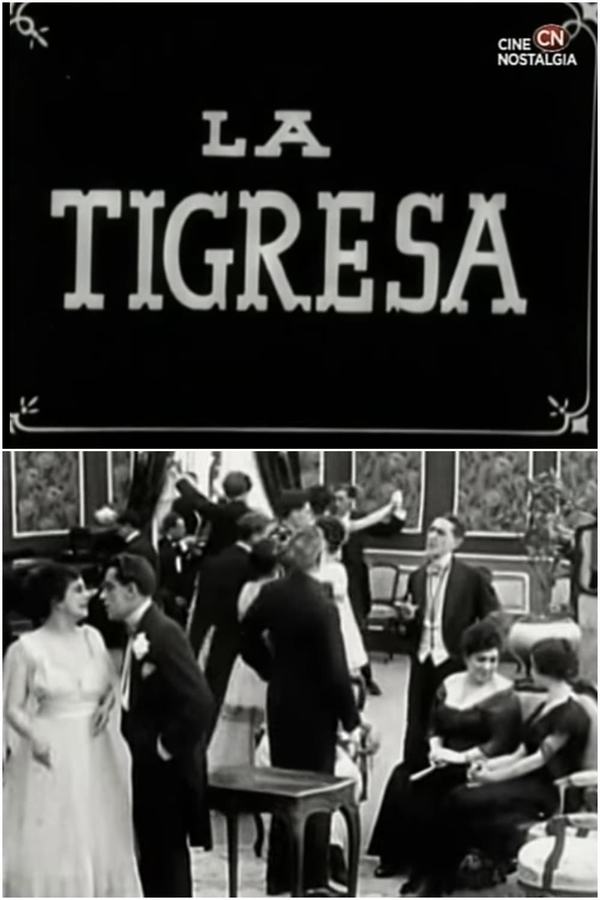
The first time you see Nelly Fernández’s La Tigresa she is haloed by footlights the color of rotten papaya, a voice like cracked obsidian slicing through the cigar haze of Salón Los Juárez. One expects the standard cabaret vamp; instead we meet a woman who has already died twice—once when her village was torched by federales, again when the ink on her marriage certificate dried. From that instant María Teresa Farias de Issasi’s screenplay refuses the audience a comforting moral polarity: every savior bears soot on their hands, every tyrant drips the honey of grievance. Director Fernando Navarro—working within the 1945 studio labyrinth of Clasa Films—shoots her introduction in a single dolly that pirouettes 270 degrees, letting the camera itself become a dancer complicit in the nightclub’s lies. The result is a noir steeped in indigenous myth, a folktale soaked in gunpowder and cheap rum.
Rather than unfold in straight chronology, the narrative fractures like a dropped mirror, each shard reflecting a different genre register. The opening act plays like a costumbrista sketch: dusty streets, itinerant musicians, church bells that clang the hour of resignation. Suddenly a crime-thriller pulse kicks in—Pedro de la Torre’s Don Alonso orders the forced conscription of villagers to his henequen plantation, and the camera’s civic placidity erupts into whip-pans and low-angle intimidation reminiscent of Barriers of Society. Mid-film detours into carnival grotesque anticipate the masked bacchanalia of Monna Vanna, while the final act’s nocturnal chase across agave fields channels the elemental fatalism of Emilio Fernández’s rural tragedies—yet Navarro keeps the tone sui generis by threading in pre-Columbian jaguar iconography: the heroine’s shadow on a crumbling convent wall sprouts spotted rosettes, an unmistakable omen that the colonized past is stalking the republican present.
Manuel Arvide’s journalist Andrés carries the weariness of a man who once believed words could outrun bullets; his cigarette-stained fingers tremble whenever he types the Tigresa’s name, betraying a voyeuristic guilt that complicates the viewer’s identification. In a bravura 2'40" monologue delivered to a broken typewriter, Arvide modulates from whispered confession to vitriolic scream without changing volume—an aural sleight of hand that makes the scene feel like it’s being carved directly into your eardrum.
Nelly Fernández counters with mercurial stillness. Watch her eyes during the plantation banquet: while her lips accept compliments, her pupils calculate exits, a duality echoed in the leopard-spot motif of her gown. The role demands she oscillate between chanteuse, avenger, mother, and nemesis; Fernández refuses to anchor the character to any single archetype, letting the contradictions seethe. When she ultimately kidnaps Don Alonso’s infant heir, her lullaby is so tender the act feels both monstrous and sacramental—an ambiguity that survives the film’s censor-imposed “punishment” ending.
As the browbeaten wife Teresa, Anita Omana utters not a syllable yet magnetizes every frame. Navarro often isolates her in doorframes, a visual refrain that accumulates pathos until the climactic moment when she finally locks eyes with the camera—an audacious fourth-wall fracture that implicates the viewer in her years of silence.
Shot by José Ortiz Ramos on a shoestring that forced ingenuity, the film’s chiaroscuro rivals the big-studio noirs north of the Río Grande. Candlelit close-ups bathe faces in molten gold, while broader plantation exteriors bleach to the pallor of bone ash. Particularly striking is the use of sodium-vapor flares during the train-yard climax: the normally warm Mexican night turns the color of bruised limes, an oneiric hue that prefigures the sodium nightmares in Avatar’s Hallelujah Mountains by six decades. Navarro often begins sequences with a static tableau—peasants in a field at dawn, bureaucrats beneath a cracked portrait of Porfirio Díaz—then ruptures the stillness with a lateral tracking shot that feels like history itself sliding off its axis.

The score by Raúl Lavista interpolates ranchera standards with dissonant string clusters that buzz like horseflies around a wound. In the pivotal La Feria de las Flores sequence, diegetic brass suddenly drops out, leaving only the staggered breathing of masked dancers—an aural void more unnerving than any scream. When the music returns it is in a distant, echo-laden variant, as though the band were playing inside a tomb, a sonic premonition that every carnival hides a funeral.
Unlike the reformist melodramas of the era, La Tigresa refuses to pin redemption on institutional change. Don Alonso’s empire topples not through legal justice but via a woman who weaponizes her own commodified body, a narrative jab that anticipates third-wave feminist readings without sermonizing. The film indicts machismo by exposing its symbiosis with feudal capitalism: the same system that grants Don Alonso droit du seigneur compels the peasant men to police their women’s sexuality, lest property deeds blur. In a sly insert shot, a torn mural of Venus is pasted over with a wanted poster for the Tigresa—an image that fuses desire, bounty, and sacrilege into one ironic glyph.
Yet the film’s radicalism is double-edged. The censors demanded a closing title card blaming the heroine’s “misguided” violence on foreign ideologies. Navarro undercuts this by fading from the card to a shot of children reenacting the Tigresa’s jungle chase—an unofficial, anarchic sequel the authorities failed to excise.
Cinephiles will catch echoes of The Two Edged Sword in the way moral binaries are knotted into Möbius strips, though La Tigresa roots its fatalism in specifically post-revolutionary Mexican disillusionment. Its carnival sequence rhymes with the masked absurdities of Den kulørte slavehandler, yet where the Danish film laughs at colonial guilt, Navarro’s lens snarls. Meanwhile the child-snatching subplot reverberates through The Innocent Lie, but while Hollywood restores familial order, Mexican noir of 1945 knew the abyss had deeper rungs.
For decades La Tigresa survived only in vinegar-splotched 16 mm dupes, missing Reel 4 entirely. The 2021 Cineteca Nacional 4K restoration stitched a surviving fine-grain print discovered in a Hidalgo convent with a collectors’ 9.5 mm Pathé fragment, restoring the infamous agave-field silhouette shot that the Franco-Mexican cut had excised. Blu-ray labels have yet to license it for international release; streamers cite “music clearance limbo” thanks to Lavista’s estate. Until then, region-free cineastes can snag the Mexican digibook brimming with essays, including a forensic breakdown of how the sodium-vapor sequence was achieved using war-surplus runway lamps.
Great films leave claw marks; La Tigresa leaves paw prints that scar your politics, your gender assumptions, your very sense of national narrative. It is both artifact and prophecy, a 78-year-old print that hisses fresh smoke each time light strikes its emulsion. Watch it once for the story, twice for the politics, a third time for the sheer voluptuous melancholy of Mexican noir when it still believed a song could detonate a dynasty. Then listen—really listen—to the silence after the end credits. Somewhere inside it, a woman is still singing about a country that never kept its promises, and her voice sounds disconcertingly like tomorrow.

IMDb —
1925
Community
Log in to comment.