DbcultAccessing Vault...
4.2/10
Senior Film Conservator
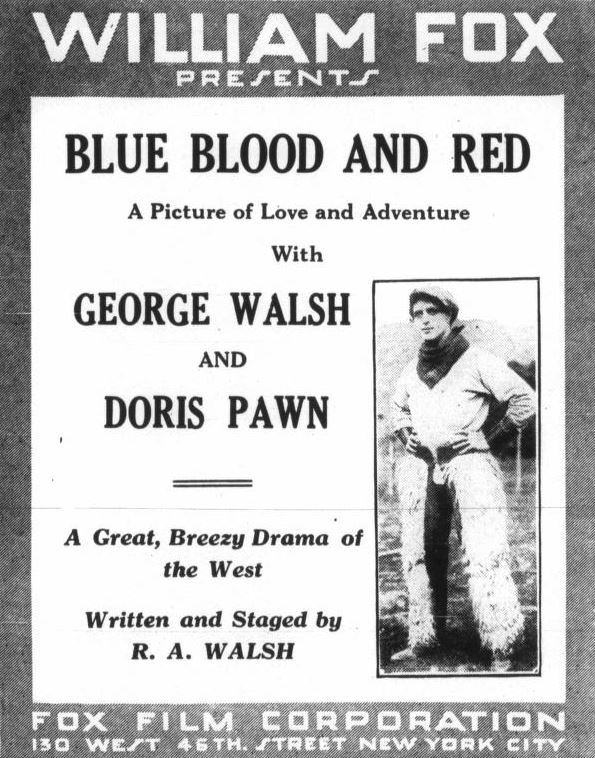
A definitive 4.2/10 rating for a film that redefined the boundaries of cult cinema. Blue Blood and Red remains a cornerstone of transgressive art.
In the annals of early American cinema, Raoul Walsh's "Blue Blood and Red" emerges not merely as a historical curiosity but as a potent examination of class collision and the crucible of the American West. Released in an era when film was rapidly evolving beyond mere spectacle, this picture carves out a compelling narrative that, even today, resonates with themes of identity, redemption, and the often-brutal realities of frontier justice. It's a testament to Walsh's nascent directorial prowess and a fascinating glimpse into the nascent tropes of the Western genre, rendered with a sincerity that belies its age.
Our protagonist, Algernon DePont, portrayed with a compelling blend of initial arrogance and eventual humility by James A. Marcus, is introduced as the quintessential scion of East Coast privilege. His world is one of Ivy League institutions and familial opulence, a sheltered existence abruptly shattered by a fateful expulsion from Harvard. This academic disgrace serves as the catalyst for his father's swift and unyielding decree: banishment from the hallowed grounds of the family estate. It's a dramatic, almost Shakespearean, turn of events, stripping Algernon of his comfort and forcing him into an unfamiliar wilderness, much like a modern-day King Lear casting off his pampered progeny. This initial setup immediately establishes a fascinating dynamic, positioning Algernon not as a hero by design, but as a reluctant adventurer thrust into a journey of self-discovery. His entitlement, a product of his 'blue blood,' is about to be tested against the 'red' of raw, untamed life.
The decision to venture West, accompanied solely by his unflappable butler, played by Vester Pegg, is a stroke of narrative brilliance. The butler, a silent sentinel of Algernon's former life, serves as a constant, almost comedic, reminder of the world Algernon has left behind. His presence underscores the absurdity of Algernon's initial unpreparedness for the rugged frontier, a stark contrast to the self-reliance demanded by the vast, untamed landscapes. This unlikely duo embarks on what is, in essence, a grand tour of self-reckoning, exchanging the manicured lawns of privilege for the dusty, unpredictable trails of the American frontier. The journey itself becomes a metaphor for shedding one's inherited identity and confronting the unvarnished truth of one's character, a theme that echoes the existential wanderings seen in other narratives of the period, albeit with a uniquely American twist.
Upon reaching the expansive plains, Algernon's quest for 'adventure' takes an unforeseen turn: he falls head over heels for the spirited daughter of a local cattle rancher, a role imbued with strength and independence by Doris Pawn. This romantic entanglement is not merely a plot device; it is the fulcrum upon which Algernon's transformation truly pivots. The rancher's daughter represents everything his former life lacked: grit, authenticity, and an intimate connection to the land. Their burgeoning relationship immediately establishes a cultural clash, pitting Algernon's refined, albeit superficial, sensibilities against the pragmatic, no-nonsense ethos of the Western ranching community. This kind of romantic tension, driven by societal differences, also forms the core of dramas like Sapho, though "Blue Blood and Red" grounds it firmly in the specific context of the American frontier.
The supporting cast, including Augustus Carney, George Walsh, Jack Woods, and Martin Kinney, populate this vibrant Western landscape, embodying the rugged individualism and sometimes volatile nature of the community. Their collective portrayal helps to build a credible world where Algernon's 'blue blood' is not a badge of honor but a mark of suspicion. The film adeptly portrays the inherent distrust of outsiders, particularly those perceived as effete or privileged, by the hard-working, self-made inhabitants of the West. This regionalism is not just a backdrop; it's an active character in the drama, shaping perceptions and fueling the brewing conflict. The romance, rather than softening Algernon's transition, accelerates his confrontation with the harsh realities of his new environment, drawing him inexorably into the local power dynamics and prejudices.
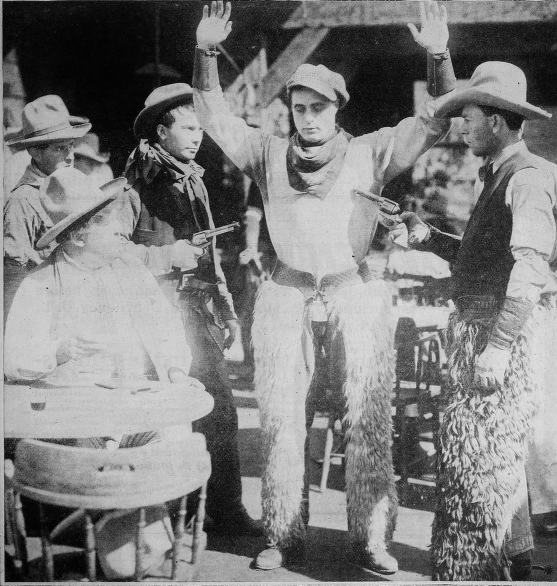
The narrative escalates dramatically as Algernon finds himself the target of a lynch mob. This chilling development is the ultimate test of his character, pushing him beyond the confines of his past and forcing him to confront raw, visceral danger. The lynch mob, a terrifying manifestation of unchecked frontier justice, represents the antithesis of the legal and societal structures Algernon once took for granted. It's a stark reminder that in the West, law and order were often dispensed by the community itself, sometimes with brutal efficiency. This predicament forces Algernon to shed his remaining vestiges of youthful arrogance and fight for his very survival, proving his worth not through inherited status but through courage and resilience.
"Blue Blood and Red" masterfully pits the individual against the collective, the civilized against the primal, and in doing so, crafts a compelling argument for the transformative power of adversity. The threat of the mob is not merely external; it's a mirror reflecting Algernon's own internal struggles and the prejudices he must overcome. His journey from an 'idler,' a character perhaps reminiscent of those in The Idler, to a man capable of facing down death, is the film's most profound achievement. The tension built around this climactic confrontation is palpable, a testament to Walsh's ability to orchestrate suspense even in the relatively nascent language of silent film. It’s a moment that resonates with the dire stakes often found in films depicting characters 'thrown to the lions,' such as Thrown to the Lions, where survival hinges on an individual's fortitude against overwhelming odds.
As both writer and director, Raoul Walsh demonstrates a remarkable grasp of narrative economy and visual storytelling in "Blue Blood and Red." Even in these formative years of cinema, Walsh's signature blend of robust action and character-driven drama is evident. He understands the power of contrast – the elegant Algernon against the rugged landscape, the refined butler against the rough-hewn locals, the swift romance against the looming threat of violence. His direction imbues the film with a kinetic energy, capturing the vastness of the Western plains and the intense human emotions playing out within them. Unlike the grand, theatrical spectacles of its time, such as The Fairylogue and Radio-Plays, Walsh prioritizes a coherent, character-focused narrative, using the visual medium to advance plot and develop arcs rather than merely to dazzle.
Walsh's screenplay, concise yet impactful, ensures that every plot point serves the larger theme of Algernon's transformation. The dialogue, though conveyed through intertitles, feels natural and propels the story forward without unnecessary exposition. His ability to craft compelling characters and place them in high-stakes situations would become a hallmark of his illustrious career, and "Blue Blood and Red" stands as an early, impressive example of this talent. The film's pacing, while reflective of early cinema conventions, maintains a steady build-up of tension, culminating in the thrilling confrontation with the mob. This narrative discipline sets it apart from many of its contemporaries, offering a more refined and purposeful cinematic experience.
James A. Marcus delivers a nuanced performance as Algernon DePont. His initial portrayal of a spoiled, somewhat effeminate youth gives way to a hardened, courageous man, a transformation that is subtly conveyed through facial expressions and body language, crucial elements in silent film acting. Doris Pawn, as the rancher's daughter, radiates a quiet strength and independence, making her a believable object of Algernon's affection and a formidable presence in her own right. Her character avoids the pitfalls of being a mere damsel in distress, instead embodying the resilient spirit of the frontier woman. The chemistry between Marcus and Pawn is understated but effective, lending credibility to their passionate, yet challenging, romance.
Vester Pegg's portrayal of the loyal butler is a masterclass in understated comedic relief and steadfast devotion. His calm demeanor amidst the chaos of the West provides a welcome counterpoint to the mounting tension, and his character, while secondary, is pivotal in highlighting Algernon's journey. The ensemble, including Augustus Carney, George Walsh, Jack Woods, and Martin Kinney, collectively create a believable and often menacing backdrop for the central drama. Their performances, though perhaps more broadly drawn than modern acting styles, effectively convey the raw emotions and motivations of the frontier community. Each actor contributes to the film's overall texture, solidifying the sense of a world distinct from Algernon's aristocratic past. Their collective presence contributes to the narrative's exploration of moral complexities, much like the intricate character dynamics found in films such as Saint, Devil and Woman, where individual actions intertwine with communal judgment.
"Blue Blood and Red" is more than just an adventure story; it's a profound meditation on class, identity, and the myth of the American West as a place of reinvention. Algernon's journey from aristocratic idler to courageous frontiersman encapsulates a quintessential American narrative: the shedding of old-world strictures for the rugged individualism of the new. The film subtly critiques the inherent weaknesses of inherited privilege, suggesting that true character is forged through adversity rather than bestowed by birthright. It posits the West not merely as a geographical location, but as a symbolic crucible where societal veneers are stripped away, revealing the raw essence of humanity.
The clash between Algernon's 'blue blood' and the 'red' of the frontier – representing both the passion of his new love and the violence of the lynch mob – is the film's central metaphor. It explores whether an individual can truly escape their past and assimilate into a radically different environment. The film suggests that while external circumstances can be changed, internal transformation requires a more profound struggle. This theme of personal transformation and societal pressure can be seen in other contemporary dramas, such as Fedora, which also explores the complex interplay between individual desire and the expectations of one's station.
While not as widely known as some of Walsh's later masterpieces, "Blue Blood and Red" remains a significant entry in his early filmography and a valuable piece of cinematic history. It showcases the burgeoning artistry of silent film, demonstrating how complex narratives and compelling character arcs could be conveyed without spoken dialogue. Its exploration of class, love, and justice in the rugged Western landscape continues to resonate, offering insights into the social dynamics and moral dilemmas of early 20th-century America. The film, like My Partner, another exploration of relationships and challenges in the West, contributes to the rich tapestry of early American storytelling.
For enthusiasts of early Westerns and students of film history, "Blue Blood and Red" is an essential viewing experience. It provides a fascinating window into the formative years of a genre that would come to define American cinema, propelled by a director who would become one of its most enduring voices. Its themes are universal, its drama compelling, and its execution a testament to the power of visual storytelling. It stands as a vibrant example of how early cinema, far from being a mere novelty, was already capable of producing works of genuine artistic merit and thematic depth, deserving of its place alongside other notable films of the era like The Circus Man in chronicling lives transformed by circumstance.
IMDb 6.4
1936
Community
Log in to comment.