DbcultAccessing Vault...
Cult Review
Senior Film Conservator
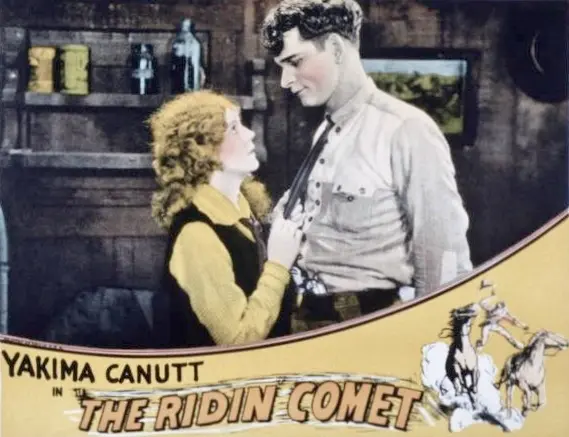
Is The Ridin' Comet worth your time in the modern era? Short answer: yes, but only if you view it as a historical artifact of stunt evolution rather than a narrative powerhouse.
This film is specifically for those who appreciate the raw, unpolished energy of silent-era Westerns and students of action choreography. It is emphatically NOT for viewers who require complex character arcs or high-fidelity production values. It is a lean, mean, and occasionally clumsy piece of 1920s genre filmmaking.
1) This film works because Yakima Canutt’s physical performance bridges the gap between acting and genuine athleticism.
2) This film fails because the central conflict regarding the irrigation project is resolved through generic action rather than thematic depth.
3) You should watch it if you want to understand the DNA of every Western hero from John Wayne to Clint Eastwood.
To talk about The Ridin' Comet is to talk about Yakima Canutt. Long before he was choreographing the chariot race in Ben-Hur or doubling for John Wayne, Canutt was a rodeo star trying to find his footing in the burgeoning film industry. In this 1925 outing, his performance as Slim Ranthers is less about emotive range and more about sheer presence. He moves with a calculated grace that feels distinct from the theatrical posing common in other films of the period, such as The Fatal Sign.
The way Canutt handles his horse, Meadowlark, is a masterclass in silent storytelling. In one specific scene where Slim is forced to navigate a rocky descent to avoid an ambush, the camera lingers on the horse’s footing and Canutt’s balance. It’s a moment that feels dangerously real. There are no safety nets here, no CGI, and very few camera tricks. It is just a man and his animal against the landscape. This level of authenticity is something modern cinema often struggles to replicate with its obsession with post-production polish.
However, the acting outside of the action sequences is admittedly stiff. Robert Walker, playing the antagonist Max Underly, leans heavily into the 'mustache-twirling' tropes of the era. While this provides a clear moral compass for the audience, it lacks the nuance found in more sophisticated silent dramas like Still Waters. The rivalry for Bess Livingston’s hand feels like a secondary concern, a box to be checked, rather than a burning passion that drives the plot forward.
One of the most interesting aspects of the script by George W. Pyper and William David Ball is the focus on an irrigation project. While many Westerns of this time focused on gold or simple land grabs, the focus on water rights feels surprisingly modern. It echoes the themes of later masterpieces like Chinatown, albeit in a much more primitive form. Slim Ranthers isn't just fighting a bad guy; he’s fighting a change in the way the world works.
The irrigation project represents the end of the open range. It represents fences, bureaucracy, and the slow encroachment of the city upon the wild. Slim’s objection is rooted in a desire for the status quo, making him a somewhat reactionary hero. This is a common thread in Westerns, but here it is handled with a bluntness that is fascinating. The developers aren't just businessmen; they are portrayed as inherently corrupt because they seek to alter the natural flow of the land.
The film’s pacing reflects this struggle between the old and the new. There are long stretches of dialogue-heavy intertitles that explain the legalities of the ranch, which can feel tedious. But when the action kicks in, the film finds its pulse. The night ambush, in particular, is a standout sequence. The use of low-key lighting (or what passed for it in 1925) creates a sense of genuine peril. When Slim is wounded in the arm, it isn't just a minor inconvenience; it’s a physical handicap that he must overcome in the final confrontation.
Does The Ridin' Comet hold up for a modern audience?
The Ridin' Comet is worth watching if you have an interest in the history of stunts and the evolution of the Western hero. While the plot is formulaic and the secondary characters are thin, the physical performance by Yakima Canutt is genuinely impressive. It provides a raw look at the kind of filmmaking that paved the way for the golden age of Hollywood Westerns. It is a sturdy piece of genre history, but not a narrative revelation.
Technically, the film is a product of its time, but that doesn't mean it lacks innovation. The cinematography by Archie Ricks captures the vastness of the landscape in a way that makes Slim feel isolated. Unlike the urban claustrophobia of Manhattan, the frames here are wide and unforgiving. The camera is often static, but the movement within the frame is dynamic. Canutt’s ability to mount and dismount a moving horse is captured in long takes that prove his skill.
The editing, however, is where the film shows its age. The transitions between the romantic subplots and the irrigation dispute are often jarring. We might jump from a tense discussion about water rights to a soft-focus moment with Bess Livingston without much connective tissue. This lack of flow is common in lower-budget silents, but it becomes more apparent when compared to the tighter editing found in films like The Masquerader.
Despite these flaws, the film’s climax is a triumph of practical effects. The final showdown between Slim and Max is a brutal, dusty affair. It’s not a choreographed dance; it’s a scramble for survival. You can feel the weight of the punches and the grit of the dirt. It works. But it’s flawed. The resolution comes perhaps a bit too quickly, with Max’s villainy being exposed in a way that feels convenient rather than earned through Slim’s detective work.
Max Underly is a villain who exists simply because the movie needs one. There is no attempt to justify his actions or give him a philosophy beyond greed and jealousy. In a way, this makes him a perfect foil for Slim’s uncomplicated virtue, but it limits the film’s intellectual reach. If the film had spent more time exploring why the irrigation project was necessary for the community, the conflict would have been much more compelling.
Instead, the project is framed as a purely evil endeavor because it is backed by an evil man. This black-and-white morality is the hallmark of the early Western, but it feels reductive here. Even in 1925, films like Anita Jo were experimenting with more complex character dynamics. The Ridin' Comet, however, is content to stay in its lane as a high-action crowd-pleaser.
Dorothy Wood as Bess Livingston is unfortunately given very little to do. She is the prize to be won, a static figure in a world of moving men. Her performance is fine, but the script gives her no agency. She is a witness to the action, not a participant in it. This is a recurring issue in the genre, and while it shouldn't be a surprise, it remains a disappointment for those looking for a more rounded story.
Pros:
The stunt work is legitimately dangerous and impressive to watch even 100 years later. Yakima Canutt has a screen presence that transcends the silent medium. The film’s focus on water rights provides a slightly more interesting backdrop than the standard ranch dispute.
Cons:
The pacing is uneven, with too much time spent on repetitive dialogue cards. The villain is a one-dimensional caricature. The female lead is entirely sidelined, serving only as a plot device.
The Ridin' Comet is a fascinating, if somewhat clunky, piece of Western history. It doesn't have the emotional depth of the era's great dramas, but it has something much more visceral: Yakima Canutt. His performance elevates a standard B-movie plot into something that feels essential for anyone who wants to understand how the Western genre was built. It is a film of moments—a horse’s jump, a silent glare, a desperate fight in the dark—rather than a cohesive narrative. If you can forgive its structural weaknesses, you will find a raw energy here that is missing from many of its more polished contemporaries. It isn't a masterpiece, but it is a vital link in the chain of action cinema.
IMDb —
1921
Community
Log in to comment.