DbcultAccessing Vault...
Cult Review
Senior Film Conservator
The Ontological Weight of the Silent Image
To witness René Leprince’s 1922 opus, Être ou ne pas être, is to step into a temporal rift where the ghosts of post-Great War Europe still wander the halls of cinematic ambition. While the title inevitably evokes the melancholy Prince of Denmark, this is no mere adaptation; it is a profound reimagining of the existential crossroads. In an era where cinema was rapidly evolving from a carnivalesque curiosity into a sophisticated art form, Leprince managed to capture a specific type of French gravitas that feels both ancient and startlingly modern. Unlike the sweeping, biblical grandiosity found in Judith of Bethulia, this film retreats into the intimate, finding its universe within the furrowed brow of its lead actor.
The narrative architecture is built not on explosions or rapid-fire editing, but on the accumulation of silent moments—the way a hand trembles near a letter, or the manner in which light from a high window dissects a room. It is a slow-burn experience that rewards the patient observer, a trait often lost in the contemporary rush for sensory overload. Here, the 'to be or not to be' is not just a question of life or death, but of authenticity versus the masks we wear in a polite, yet decaying, society.
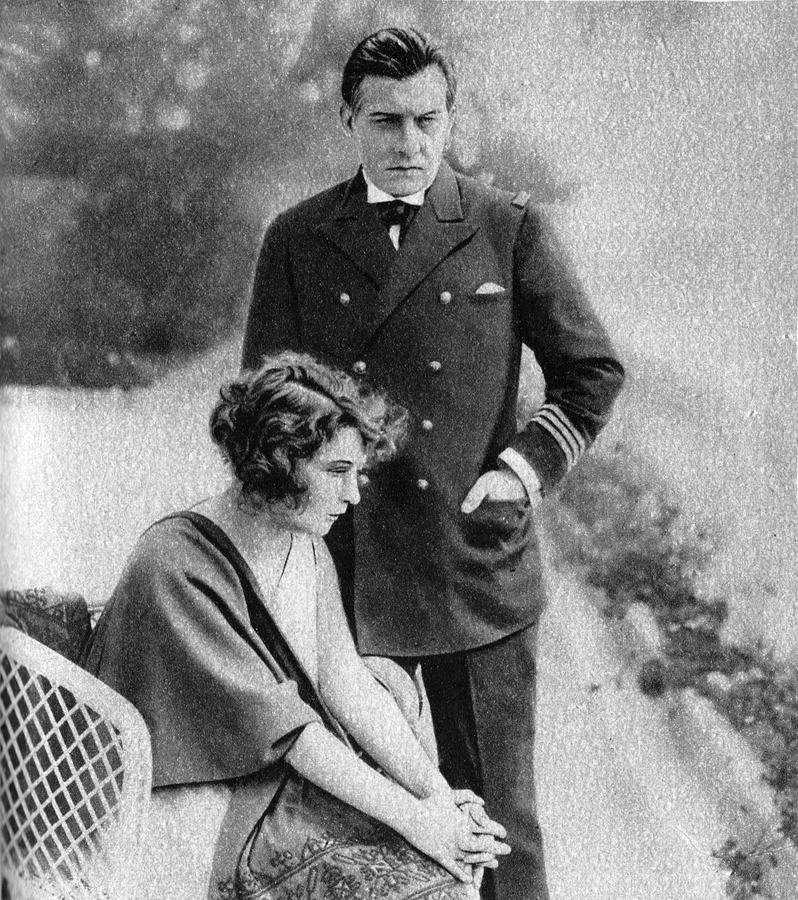
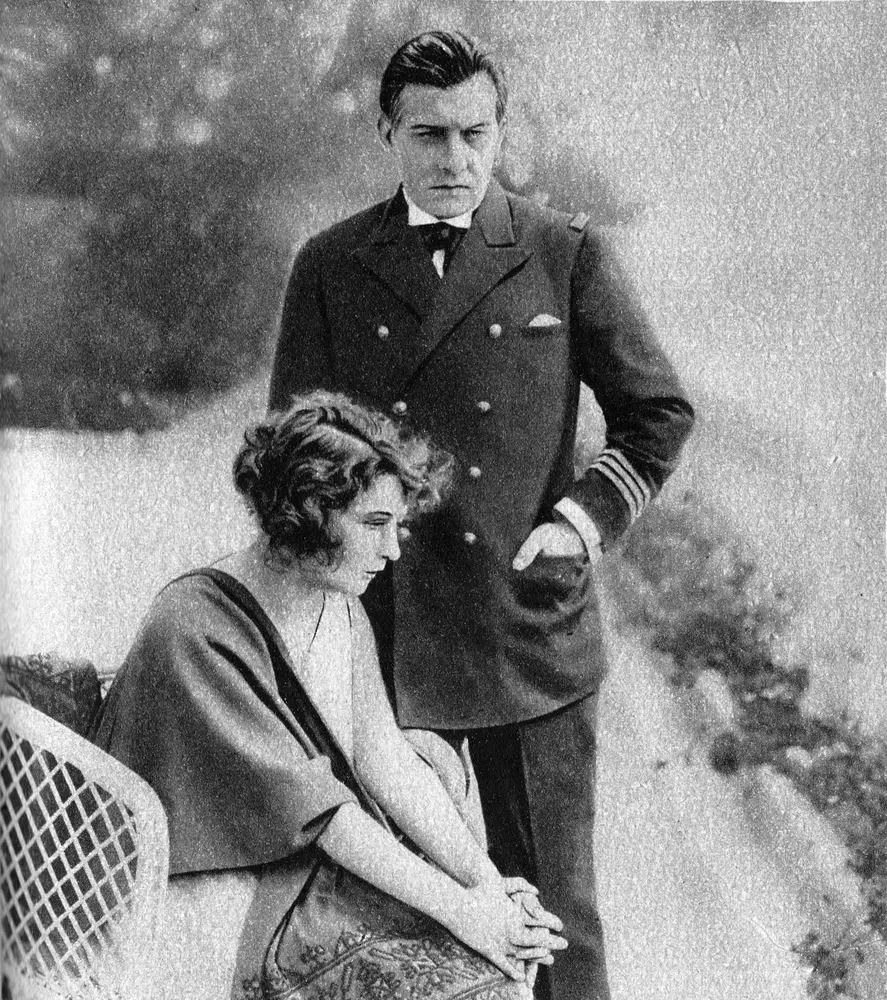
Léon Mathot, an actor of remarkable restraint, carries the film’s philosophical burden with a physicality that is both grounded and ethereal. His face becomes a map of the era’s anxieties. When compared to the more rugged, visceral performances seen in maritime dramas like The Shark, Mathot’s work is surgical. He doesn't just play a role; he inhabits a state of being. Every gesture is deliberate, every gaze heavy with the unspoken subtext of a generation trying to find its footing after the world had literally ended a few years prior.
Régine Dumien provides a luminous contrast, her presence acting as the emotional anchor in a sea of moral ambiguity. Her interactions with Pierre Denols create a friction that drives the plot forward, moving it away from pure philosophy into the realm of human drama. Denols, playing a character of dubious intent, avoids the mustache-twirling villainy common in early silents, opting instead for a nuanced pragmatism. This ensemble work elevates the film beyond the theatrical constraints of something like Mister Smith fait l'ouverture, reaching for a psychological depth that was pioneering for its time.
The supporting cast, including Maud Tiller and Renée Sylvaire, fleshes out a social tapestry that feels lived-in. There is a sense of history in these characters, a feeling that they existed long before the camera started rolling and will continue their struggles long after the final fade-out. This level of characterization is what separates a mere 'movie' from a piece of 'cinema.'
Technically, Être ou ne pas être is a masterclass in the use of natural light and shadow. Leprince, working with his cinematographers, utilizes the frame to isolate characters, creating a visual metaphor for their internal loneliness. The interiors are lush yet oppressive, echoing the sentiment found in Kærlighedsvalsen, but with a darker, more cynical edge. The camera doesn't just record; it interrogates.
Consider the sequences in the garden—a space typically reserved for romance and light. Under Leprince’s direction, the garden becomes a labyrinth, a place where secrets are buried and truths are obscured by the overgrowth. This inversion of tropes is a hallmark of the film’s sophisticated approach. It lacks the saccharine quality of Her Winning Way, choosing instead to bathe its characters in a cold, uncompromising reality.
The editing rhythm is equally deliberate. Unlike the frantic pacing of The Tail of a Cat, Leprince allows shots to linger. He understands that the true drama happens in the gaps between actions—the moment of hesitation before a door is opened, the long look shared between two people who know they are doomed. This is cinematic breathing, a technique that forces the audience to inhabit the same temporal space as the characters.
When we look at the landscape of 1922, we see a medium in flux. Films like So They Tell Me or The Waifs were exploring social strata, but often through a lens of melodrama or simple morality. Être ou ne pas être dares to be more opaque. It shares a certain DNA with the folkloric mysticism of Feathertop, yet it grounds its 'magic' in the alchemy of human emotion rather than the supernatural.
Furthermore, the film’s preoccupation with social standing and the consequences of one's past brings to mind The Paliser Case, but Leprince swaps out the procedural elements for a more poetic, almost liquid narrative flow. There is a fluidity to the scenes, a sense that we are drifting through a memory or a fever dream. This stylistic choice aligns it more closely with the revolutionary spirit of Zhizn i smert leytenanta Shmidta, though Leprince’s revolution is one of the spirit rather than the state.
The central conflict—the choice to 'be' or 'not to be'—manifests in the film as a struggle against the crushing weight of societal expectations. Mathot’s character is a man of high standing whose life is built on a foundation of lies and compromises. To 'be' would mean to tear down that foundation and face the raw, terrifying truth of his own identity. To 'not be' is to continue the charade, to remain a ghost in his own life. This psychological depth is rarely seen in the more straightforward narratives of the time, such as Silnyi chelovek.
Leprince handles this theme with a delicate touch. He doesn't offer easy answers. There is no triumphant climax where all wrongs are righted. Instead, we are left with a sense of ambiguity that is far more haunting. It is a film that lingers in the mind, much like the fog-heavy atmosphere of Fyrvaktarens dotter, suggesting that the truth is always just out of reach, obscured by the very tools we use to find it.
Even the more action-oriented subplots, which might have felt like a distraction in a lesser film, are integrated into this overarching theme. Where a film like The Lincoln Highwayman uses movement for excitement, Leprince uses it to emphasize the characters' inability to escape themselves. Every journey taken is a circle leading back to the same existential crisis. The 'tangled threads' of the plot—to borrow a title from Tangled Threads—are not just narrative devices; they are the webs we weave to trap ourselves in our own destinies.
Ultimately, Être ou ne pas être is a testament to the power of silent cinema to convey complex philosophical ideas through pure visual storytelling. It is a film that demands much from its audience—attention, empathy, and a willingness to sit with discomfort—but it gives back so much more. In the pantheon of 1920s French cinema, it stands as a towering achievement, a bridge between the theatrical past and the psychological future of the medium.
As the final title cards appear and the flicker of the projector fades, one is left with a profound sense of the ephemeral nature of all things. René Leprince didn't just make a movie; he captured a soul in transit. It is a work that remains as vital and challenging today as it was over a century ago, proving that the question of 'to be or not to be' is never truly answered—it is only ever lived.
IMDb —
1921
Community
Log in to comment.