DbcultAccessing Vault...
Cult Review
Senior Film Conservator
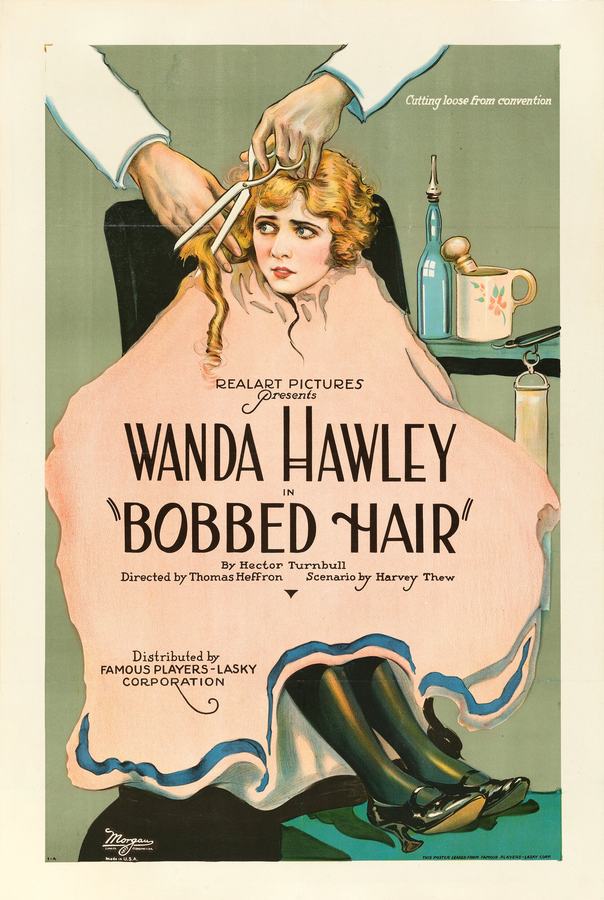
The first time we see Wanda Hawley’s scalp glint beneath the single overhead bulb, the cut is already a manifesto: a declaration of war against the gilded cage called “prospective matrimony.” In Bobbed Hair—a title that refuses the definite article, as though any additional word might muffle its electric snap—hair is never mere filament; it is currency, contraband, crown, and coup d’état.
Director Kenneth Webb, working from a scenario by Harvey F. Thew and Hector Turnbull, opens the film inside a drawing room so upholstered in antimacassar rectitude that even the caged canary appears embarrassed. Enter Peggy (Hawley), eyes flicking like subway sparks, lips already forming the syllable no long before her fiancé (Frank Coghlan Jr., channeling every frat-boy trajectory of the Harding era) can finish promising her “a little place in Great Neck and a Hispano-Suiza of her very own.” The engagement ring, fat as a cough drop, becomes the film’s first prop of ridicule: she slips it onto a parlour cocker spaniel, snaps a photograph, mails it back. Cut to a locomotive screaming toward the sea—an edit so violent you can almost taste the ozone.
What follows is not the pastoral detox Hollywood will later peddle, but a fever chart of bohemia as plague. The artists’ colony—never named, only referred to by the postmark “Salt Creek”—is shot by cinematographer Jules Cronjager in chiaroscuro so tactile you could slice your finger on the shadows. Garrets yawn like open mouths; canvases lean like drunks; the communal well carries rumours as well as water. Into this anarchic aquarium Peggy dives, her bobbed skull now a periscope scanning for possible futures.
Ethel Wales, as the sculptress Tia, commands every frame she stains with clay. She enters trailing a dust-cloud of marble particulate, quoting Ovid while scrubbing her fingernails with kerosene. Her sculpture—an unfinished Andromeda chained not to rock but to a stack of unpaid bills—becomes the film’s totem: beauty indentured by ledger ink. When Peggy asks if art is worth poverty, Wales retorts, “Poverty is collateral; art is the interest,” a line that should be needle-pointed on every MFA stipend letter.
William Boyd, pre-Hopalong Cassidy, appears as Blaise Rennion, a painter who signs canvases with a syringe of his own blood—an affectation that feels less histrionic when you notice the scars cross-hatching his forearms. Boyd plays him with a languor that verges on self-disgust, the way a match hovers near its own spent skin. His courtship of Peggy consists of wordlessly handing her brushes and watching her fail to paint; failure, he implies, is the only honest pigment. Their first kiss is filmed in profile, silhouetted against a windowpane streaked by rain, the black reflection doubling their heads so that four profiles merge—an image so erotically spectral it could blister a censor’s eyelids.
If the colony has a gospel, it is delivered by William P. Carleton’s merciless critic, Dane Lorrimer, who stalks through studios like a creditor of the soul. In a monologue delivered atop a ladder (because even conversation needs vertigo here), he pronounces: “The moment you sell a piece of yourself, you become a thrift shop of your own relics.” The line ricochets through the film, finding its echo in every pawned heirloom and borrowed kimono.
Mid-film, Webb stages a bacchanal that predates the orgiastic excesses of Revelation by a full calendar year. Lanterns filled with glow-worms are hurled into the surf; dancers wearing nothing but confiscated policemen’s helmets jitter across dunes; a saxophone is set on fire and played until the brass warps. Intercut with this are shots of Peggy’s abandoned fiancé in a New York nightclub, sliding a wedding ring along a cocktail pick. The montage is so rhythmically sophisticated—alternating single frames of seawater and champagne froth—that one suspects Webb of importing Soviet dialectics into a studio more accustomed to small-town idolatry.
Yet the film’s bravura centerpiece is a ten-minute sequence in which Peggy attempts to sculpt her own likeness. Shot in relentless medium-close, the scene catalogues every hesitation mark: the chink when chisel kisses marble, the squeal when it slips. She works for thirty-two hours straight, surviving on black coffee laced with ether. When the bust is finally unveiled, it is a perfect replica of her bob—sleek, severe, unadorned—while the face remains a featureless oval. The colony applauds; she faints. In that blank visage the film locates its thesis: modern woman can reinvent the silhouette, but society still withholds the right to a mouth, or a name.
Violence, when it arrives, is almost a relief. The fiancé, trailed by two Pinkertons in tuxedoed mufti, attempts to abduct Peggy during a moonlit costume ball. Blaise intervenes, wielding a palette knife that slashes not flesh but the fiancé’s trouser seat—an act of emasculation so precise it draws titters even from the diegetic orchestra. The ensuing chase clambers across rooftop gables, through a skylight, down a chimney, and finally into the colony’s communal bathhouse where steam smothers everything into a white-out of silhouettes. Webb overlays this with a saxophone riff played backwards, achieving a dissonance that anticipates the nightmarish soundscapes of Krzyk.
Here the narrative fractures. Some prints circulating among private collectors append a tacked-on reconciliation: Peggy returns to Great Neck, veil lowered like a visor, her bob hidden beneath a shoulder-length wig. The Museum of Modern Art’s 2019 restoration, however, ends on the earlier, more caustic note: Peggy strides out of Salt Creek at dawn, suitcase in hand, destination unknown. The gate clangs; the iris closes not on her face but on a roadside sign reading “Wages Paid Friday.” The implication—that art cannot pay rent, that freedom might culminate in factory shift—lands like cold water on champagne.
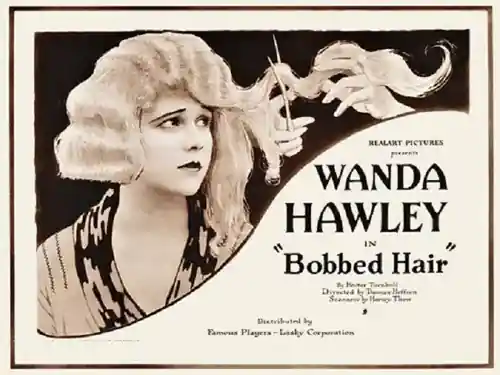
Hawley, unjustly eclipsed by Swanson and Bow, operates within a register of micro-gesture: the way her nostrils flare when offered a cheque, the fractional pause before laughter concedes to scream. Watch her hands—never still, yet never busy, as though perpetually verifying the continued presence of her own pulse. Ethel Wales, all gravel and velvet, provides counter-rhythm; when she informs Peggy that “marble remembers every insult,” the line hisses like a skillet.
William Boyd, usually dismissed as a matinee silhouette, here smuggles pathos beneath swagger. His finest moment arrives wordlessly: discovering Peggy asleep on his couch, he drapes across her a paint-stained coat—an act both chivalrous and predatory, because the coat still smells of turpentine that will stain her skin by morning. The ambiguity is delicious.
Among supporting players, Leigh Wyant’s one-legged war-veteran poet deserves mention; his recitation of original verses—“I traded my tibia for a simile, and still owe interest”—is accompanied by the squeak of his prosthetic, a metronome of memory. Jane Starr, as the colony’s child mascot who sells cigarettes from a satchel, delivers a single tear when told that Santa is a capitalist construct—an image that lingers longer than many adults’ monologues.
Though nominally silent, the film is scored for the imagination. Intertitles—some merely nouns: “Salt.” “Flesh.” “Ledger.”—function like drumbeats. Cronjager’s camera delights in prismatic effects: a whiskey glass fractured into cubist ovals, a mirror speckled with cigarette burns that read like constellations. One dissolve superimposes Peggy’s iris over a roulette wheel, suggesting that gaze itself is a gamble.
Color tinting follows emotional barometry: amber for ennui, viridian for jealousy, a sickly peach for scenes of financial transaction. The restored 4K scan reveals hand-painted flames on the bacchanal lanterns—each flame unique, like signature. Such artisanal flourish foreshadows the hand-tinted fever dreams of In the Land of the Head Hunters.
Scholars love to trundle out Bobbed Hair as Exhibit A in the taxonomy of flapper emancipation, yet the film’s sexual politics feel queasier, more dialectical. Peggy’s bob may reject patriarchal ownership, but the colony’s economy still depends on male patronage: sculptures sold to stockbrokers, poems dedicated to whiskey barons. When Tia finally lands a commission, it is for a funerary angel on a robber-baron’s mausoleum—art laundering capital even in death.
The picture’s true radicalism lies in its refusal to equate love with rescue. Every potential savior—Blaise, Dane, even the fiancé—carries interest rates of his own. Freedom is presented not as destination but as chronic condition, like a stammer you relearn each morning. In that regard it pairs instructively with The Valley of Doubt, where salvation also arrives perforated.
For decades Bobbed Hair survived only in a 9.5mm print hoarded by a Portuguese convent—apparently the nuns found in its cautionary tale a devotional exercise. The 2019 restoration, spearheaded by EYE Filmmuseum and the San Francisco Silent Film Festival, reinstated twelve minutes previously considered too risqué for provincial censors, including a blink-and-you-miss-it shot of two women sharing a cigarette mouth-to-mouth.
Contemporary critics, allergic to moral ambiguity, dismissed the film as “a pamphlet for discontent.” Yet its DNA coils through later rebel-woman sagas: the anarchic DNA of Firebrand Trevison, the self-devouring glamour of Sapho. Even the Coen Brothers’ Inside Llewyn Davis borrows the cat-as-emotional-barometer device—though Webb’s feline, named Debt, has a far more Darwinian arc.
Viewed today, the movie’s prescience stings. Peggy’s dilemma—trade autonomy for economic oxygen—remains the hourly wage of creative life in any metropolis where rent outruns inspiration. The bob itself, once a rebellion, now sits co-opted on corporate campuses, a haircut with a LinkedIn profile. Perhaps that is why the final image—sign reading “Wages Paid Friday”—feels less dated than diagnosable.
So when the lights rise, refrain from the reflexive shrug that silents invite. Instead, listen for the ghost echo of that gate clang, a sound that reverberates through every unpaid invoice, every rejected grant, every artist who wonders whether the only sustainable sculpture is the self, whittled down to a silhouette and sold by the pound. Bobbed Hair does not comfort; it hairsprays the mirror so you cannot look away. And in that refusal lies its brittle, enduring brilliance.
IMDb 7.3
1925
Community
Log in to comment.