DbcultAccessing Vault...
Cult Review
Senior Film Conservator
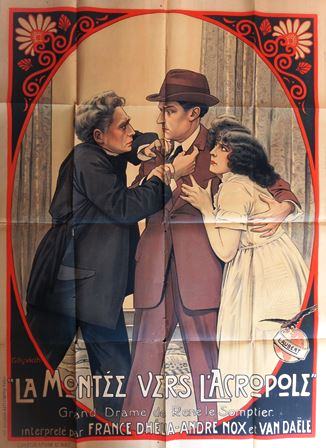
La montée vers l'Acropole is a cinematic masterpiece that transcends the boundaries of conventional storytelling, immersing the viewer in a world of profound introspection and philosophical inquiry. The film's narrative is akin to a rich tapestry, woven from the intricate threads of human experience, with each character representing a unique facet of the existential spectrum. The ascent towards the Acropole, a symbol of enlightenment and knowledge, serves as the catalyst for a journey of self-discovery, as the protagonists confront the complexities and mysteries of life, not dissimilar from the quests found in Le pied qui étreint and Dämon und Mensch.
Through the lens of dark orange hues and yellow undertones, the film's visual palette evokes a sense of warmth and intensity, drawing the viewer into the world of the narrative. The sea blue tones that periodically punctuate the visual landscape serve as a poignant reminder of the infinite and the unknown, underscoring the film's themes of existential inquiry and the search for meaning. This visual narrative is reminiscent of the expressive cinematography found in Moon Madness and Frisky Lions and Wicked Husbands, where the interplay of light and color becomes a character in its own right.
The cast, comprising Henri Duval, Pierre Frank, Émile René, France Dhélia, Edmond Van Daële, and André Nox, delivers performances that are as nuanced as they are captivating. Each actor brings a depth and complexity to their character, imbuing the narrative with a sense of authenticity and emotional resonance. The chemistry between the actors is palpable, lending credibility to the interactions and relationships that form the backbone of the story, much like the ensemble performances in A Child of the Wild and La Sultane de l'amour.
The thematic depth of La montée vers l'Acropole is a testament to the filmmakers' ability to craft a narrative that is both intellectually stimulating and emotionally engaging. The film's exploration of the human condition, with all its complexities and contradictions, resonates deeply with the viewer, inviting reflection and introspection. This is a film that not only entertains but also challenges, posing questions about the nature of existence, the meaning of life, and the human condition, echoing the philosophical debates found in God, Man and the Devil and Alias Mrs. Jessop.
In terms of cinematography, La montée vers l'Acropole is a feast for the senses, with each frame meticulously composed to evoke a specific mood or atmosphere. The use of dark orange and yellow hues creates a sense of warmth and immediacy, drawing the viewer into the world of the narrative. The sea blue tones, used sparingly but to great effect, serve as a poignant reminder of the infinite and the unknown, underscoring the film's themes of existential inquiry and the search for meaning. This interplay of color and light is a hallmark of the film's visual style, adding depth and complexity to the narrative, much like the expressive use of color in The Quickening Flame.
La montée vers l'Acropole is a film that will linger in the viewer's mind long after the credits have rolled. It is a testament to the power of cinema to inspire, to provoke, and to challenge our assumptions about the world and our place within it. With its rich narrative, nuanced performances, and stunning cinematography, this film is a must-see for anyone interested in exploring the depths of human existence. As a work of cinematic art, La montée vers l'Acropole stands alongside other classics of existential cinema, including Sperduti nel buio and His Picture in the Papers, as a profound and thought-provoking exploration of the human condition.
IMDb —
1923
Community
Log in to comment.