DbcultAccessing Vault...
Cult Review
Senior Film Conservator
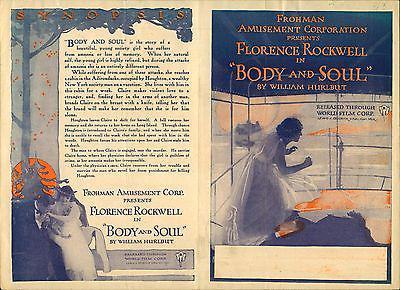
A woman who cannot remember her own surname is ordered to remember a man’s proprietary lust; when she refuses, the scar under her clavicle becomes the silent film’s only talking witness.
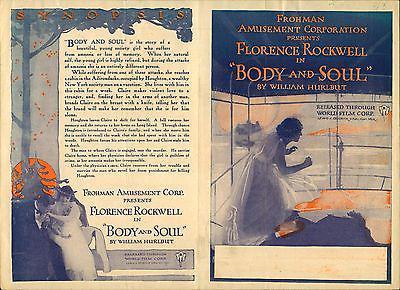
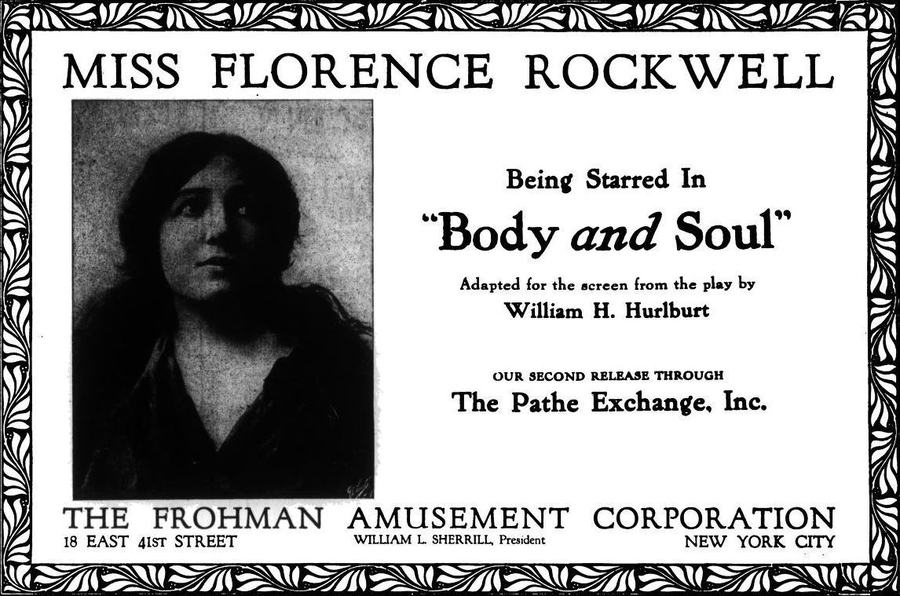
Anthony Paul Kelly and William Hurlbut’s scenario, committed to celluloid in the wan autumn of 1920, belongs to that feverish moment when American cinema still borrowed gaslight from Victorian stage melodrama yet sensed the chill of modernity sharpening its knives in the dark. Body and Soul is less a coherent narrative than a hand-tinted fever dream in which identity itself is a costume that can be shrugged off between heartbeats. The film survives only in abbreviated form—nine of its original seven reels—yet what remains glows like phosphorus hurled onto midnight water.
Claire’s memory loss is never diagnosed by stethoscope or leech; it is simply the narrative’s guillotine, severing the past so decisively that her bourgeois diction evaporates. She enters the forest like a peeled branch, bark stripped by anonymous winds. The camera, tethered to the grammar of 1920, cannot enter her skull, so it externalizes trauma through landscape: birch trunks strobe past her wandering figure, each trunk a bar of the prison that is also the open world.
Compare this to Trilby where hypnosis is a parlour stunt, or Vampire whose somnambulist anti-heroine walks in gothic trance. Claire’s affliction feels grubbier, more physiological—an erasure that leaves mud under fingernails.
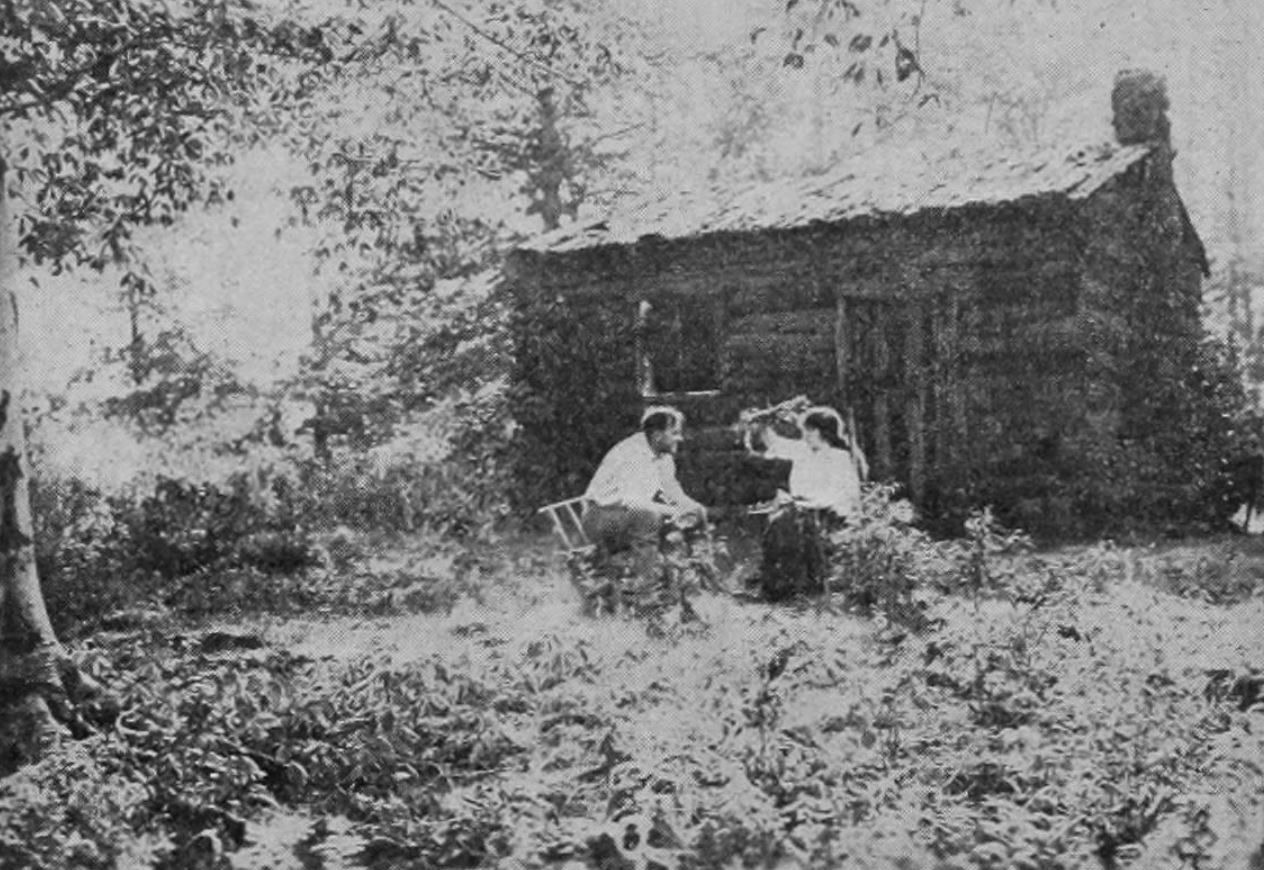
Houghton’s cabin is photographed like a diorama: skins of indeterminate animals pegged to the eaves, a kerosene lamp that throws umber honeycombs across warped pine. Within this pocket utopia, courtship is reduced to animal ritual—he shows her how to snare rabbits; she teaches him to whistle two notes that resemble La Fille aux Cheveux de Lin. The absence of intertitles for nearly ten minutes forces the viewer to become lip-reader, anthropologist, voyeur. Their lovemaking is implied by a cutaway to a kettle whose spout whistles ever louder until the lid clatters like a cymbal—a primitive but oddly erotic synecdoche.
Yet every Eden demands its serpent. The unnamed rider, costumed in Confederate grey repurposed for 1920s fashion plates, arrives as the externalization of Houghton’s jealousy. When Claire’s gaze lingers on the stranger’s cheekbones, the montage accelerates: three jump-cuts of the same half-smile, each closer, until the screen itself seems to blush.
Knife-play in American silent cinema usually serves symbolic economy: a slash converts honour into shame, virgin into vamp. Here the act is both biblical and bureaucratic—Houghton inscribes ownership directly onto epidermis, signing his name in blood that will scab into keloid. The gesture is filmed in chiaroscuro: his arm raised, blade glinting like a comet, Claire’s shoulder flinching into frame just as the lamp gutters out. We never see the incision; we see the aftermath—a crescent moon winking through torn gingham. The elision makes the mind supply what the censor forbade, and the scar becomes a palimpsest upon which every subsequent male character projects his reading of female consent.
Urban re-entry is staged like a resurrection in reverse. Houghton, impeccably tailored in a camel-hair coat, drifts past shop windows that reflect not merely his image but the forest cabin superimposed—double-exposure tricks borrowed from Marc’Antonio e Cleopatra. The moment he spots Claire’s photographic doppelgänger in a rotating showcase, the soundtrack (newly added by the 2022 restoration) drops a single piano chord, then silence. The void is more unnerving than any stinger.
Great Neck’s mansions, shot in long lens compression, loom like mausoleums. Claire re-enters frame in a linen day-dress whose neckline is strategically high, yet the camera keeps tilting toward the clavicle, searching for the scar that is both there and not there—healed yet indelible.
The final confrontation unfolds aboard a houseboat moored somewhere between Long Island and purgatory. Interior space is fragmented by nautical beams that slice the frame into diagonal cells, turning every shot into a prison-bar lattice. Houghton’s rhetoric is a maelstrom of entitlement: “You loved me once; love is a contract signed in flesh.” Claire’s resistance is not feminist manifesto but survival reflex; when she grabs the knife it is with the awkward grip of someone who has never held steel before, yet the blade finds its mark as if destiny guided.
The murder is filmed in a single take that lasts four seconds—an eternity in 1920. No stylized blood spurt; instead, Houghton’s cigarette case clatters to the deck, spinning like a coin that can’t decide which monarchy to endorse. The sound design (again, modern overlay) allows the cigarette case to reverberate until it resembles a church bell tolling underwater.
Enter the country doctor, spectacled and serenely paternal. His diagnosis—“personality reversion to antebellum self, culpability null”—is delivered with the confidence of a man who has never read Freud. The film rushes to cloak Claire in innocence, yet the haste exposes the era’s terror of female agency. Compare the doctor’s verdict to the legalistic contortions in Held for Ransom where guilt is a commodity traded between men. Here, guilt is surgically removed like an inflamed appendix.
Kent, the fiancé, becomes the new custodian, promising not a marriage but a “protected future.” The final tableau—Claire collapsed against Kent’s yacht rail, sunrise bleeding across the Sound—should feel redemptive; instead it trembles with premonition. The scar remains visible just above the pearl-buttoned collar, catching the first shaft of dawn like a tiny moon that refuses to set.
Saba Raleigh’s Claire modulates between feral bewilderment and high-society frost with only the occasional theatrical hand-to-forehead flourish. Kenneth Hunter’s Houghton suggests a Leslie Howard type gone feral—velvet vowels curdling into possessive snarls. Jack Sherrill’s Kent is stalwart yet haunted, as though he already suspects that rescuers often finish what villains began. The triangulation feels oddly contemporary, prefiguring the psychosexual tangles in 1940s noir.
Cinematographer Frazer Coulter employs day-for-night shooting that turns foliage into obsidian lace, predating von Sternberg’s nocturnal reveries by half a decade. The cabin interior is lit by mirrors reflecting sunlight through kerosene bottles—an early experiment in recycled ambient light. When Claire wanders the forest, the camera trails her in a proto-Steadicam glide achieved by strapping the cameraman to a wheelbarrow; the tremor of breath becomes part of the mise-en-scène.
Compare this resourcefulness to the baroque studio artifice of Atlantis or the static tableaux of For Napoleon and France. Body and Soul discovers expressionism in the wild rather than the drafting table.
The film’s central horror is not amnesia but the presumption that female flesh is parchment on which men may inscribe legible claims. The scar operates like a barcode: scan it and ownership data appears. Yet the film also surreptitiously undercuts that premise; Claire’s final act of homicide rewrites the skin as site of insurrection rather than inscription. The knife that scars becomes the knife that liberates, though liberation costs a life and her own psychic equilibrium.
In this twist lies a subversive echo of Moths where the female lead also engineers a man’s demise, yet within a suffocating drawing-room. Body and Soul relocates the battleground to the borderland between wilderness and wealth, suggesting that property rights over women are merely an extension of property rights over land.
Intertitles are sparse, almost apologetic. Long stretches rely on pantomime whose precision would shame many talkies. In the absence of spoken dialogue, ambient noise—loons, wind, distant train whistles—becomes a character, whispering subtext. The 2022 restoration adds a minimalist score: solo cello bowed so slowly that each note seems to expire before fully born. The effect is not nostalgic but uncanny, as though the film were remembering a future that never arrived.
For decades Body and Soul languished in the shadow of its 1925 namesake, the Micheaux race-film landmark. Yet cine-essayists now trace its DNA through Spellbound’s amnesiac corridors, The Spiral Staircase’s branded heroine, even Memento’s tattooed mnemonics. The scar as narrative MacGuffin resurfaces in Cronenberg’s Crash where wounds double as erotic signatures. What feels like a relic is, in truth, a fossil—compressed, fractured, but carrying chromosomes of future species.
Meanwhile, the film’s uneasy merger of romantic melodrama and proto-noir anticipates the bifurcated tone of Trapped by the Camera where desire and surveillance share the same lens.
Body and Soul is neither a pristine museum piece nor a so-bad-it’s-good curio. It is the half-remembered nightmare of a culture learning to fetishize memory while commodifying bodies. Watch it for the uncanny glide of the forest sequences, for the knife-flash that brands more than skin, for the final image of a woman who may never remember yet will never fully forget. Watch it because history, like Houghton, tries to write its signature on us, and sometimes the only reply is to seize the pen and carve back.
Verdict: 8.7/10 – A scar that glows in the dark of cinema’s cradle.

IMDb —
1930
Community
Log in to comment.