Summary
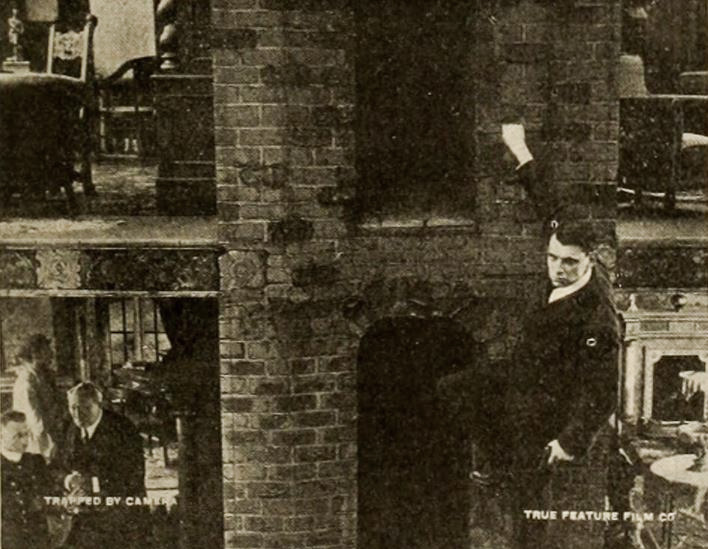
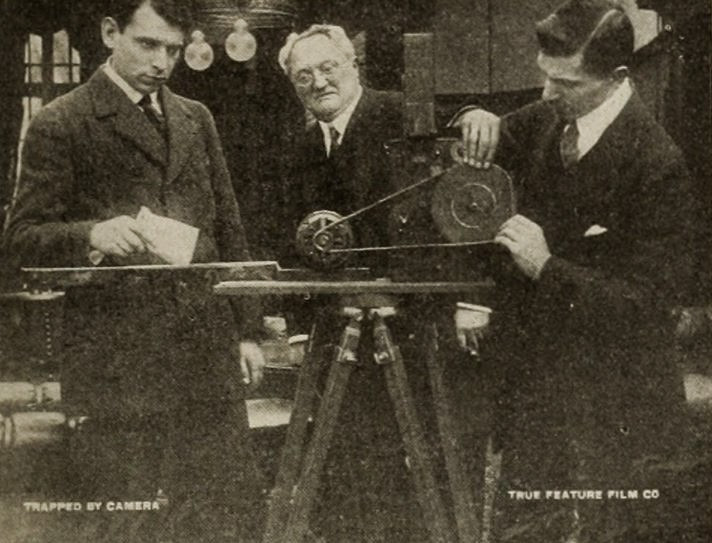
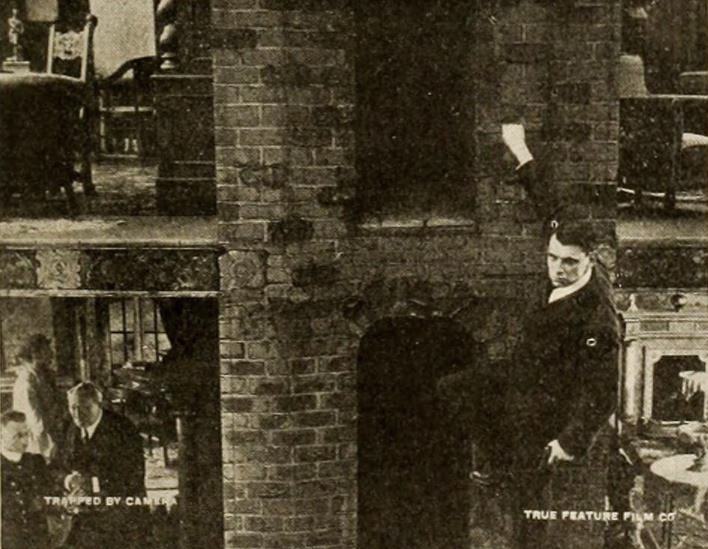
An octogenarian polymath, whose hearing has surrendered to the hush of parchment, discovers that twilight itself has grown fingers: each midnight a spectral silhouette rifles his escritoire, scattering quills like nervous birds. Police tramp through the baroque corridors, sniffing for footprints that have already evaporated; they exit shrugging, leaving only the stale perfume of defeat. Enter Stuart Webb—sartorial hawk, mind like a scalpel—who, instead of flesh, sets a trap of celluloid. A hair-triggered camera, crouched in the gloom, yawns awake at the faintest brush of cedar against brass; its magnesium flare detonates, birthing a single frame that imprisons the marauder’s beard in silver halide. Webb, divining the fugitive’s next haste, stations himself in the tonsorial sanctum next morning; the lathered chin rises, the razor gleams, and steel bracelets kiss the wrists mid-stroke. Revelation spills: the prowler is no petty ink-thief but a geopolitical pawn tunneling for defense schematics hidden upstairs, misled by a labyrinthine honeycomb of staircases that braid the house like secret veins. The edifice itself becomes co-conspirator, its baroque guts exhaling dust and conspiracy in equal measure.
Synopsis
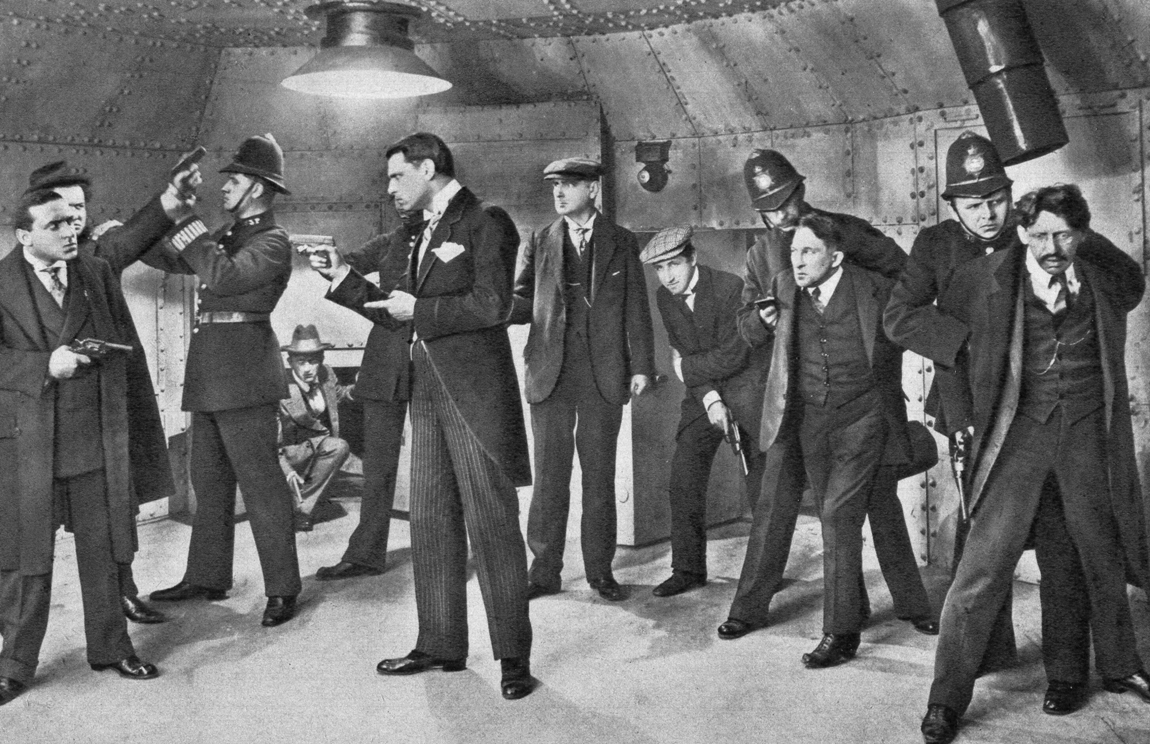
An elderly gentleman, a professor and savant, living in quiet retirement, is greatly mystified and annoyed by a nightly visitor, who flits through his study and rummages around his desk. In his growing embarrassment the professor appeals to the police, who make a thorough search of the professor's apartments, but fail to discover even the faintest clue to the solution of the mystery. Thereupon the professor appeals to the master detective, to the brilliant and profound Stuart Webb, who can fathom the motives of men and follow the devious paths of the criminal. At first, however, Webb is puzzled as much as the police were. After much thinking he hits upon a novel plan which he hopes will bring good results. He installs a motion picture camera in the professor's haunted chamber and by a most ingenious device arranges the machinery such a way that the slightest touch of the desk sets off a flashlight and puts the camera into action at the same time. The plan succeeds to this extent. The detective now has a picture of the strange intruder. The latter is revealed by the film as a man with a big beard. Rightly concluding that the man of mystery would want to change his appearance as quickly as possible after being caught by the camera and would therefore go to the first barber shop to effect the change, Webb and his assistant are ready. The mysterious intruder sits down in a chair and when he is lathered and Webb holds the razor poised above his head, Webb's assistant slips the handcuffs on him. Now, the veil of the mystery lifts rapidly. The midnight visitor, it turns out, was not after the professor's desk at all; he was the agent of a foreign government in search of important plans. These plans were in the possession of a famous military engineer, who lived on the floor above the professor. There were secret passages in the old house and in the confusion of the winding steps the thief had mistaken the professor's study for the room of the engineer. The discovery that the whole house was mined, so to speak, with parallel stairs and shafts is brought home to the spectator with unique and startling effect.
Review Excerpt
"
A house that breathes secrets, a camera that never blinks, and one bearded spy who steps into the trap of his own reflection—Trapped by the Camera is a 1914 time-capsule that feels algorithmically injected into our surveillance-saturated century.
Watch it today and you half-expect the grain to resolve into 4K, for the intertitles to sprout subtitles in emoji. Yet the tremor it leaves is purely analog: the chill of being observed without consent, a sensation we now shrug at through glass-screen..."