DbcultAccessing Vault...
6/10
Senior Film Conservator
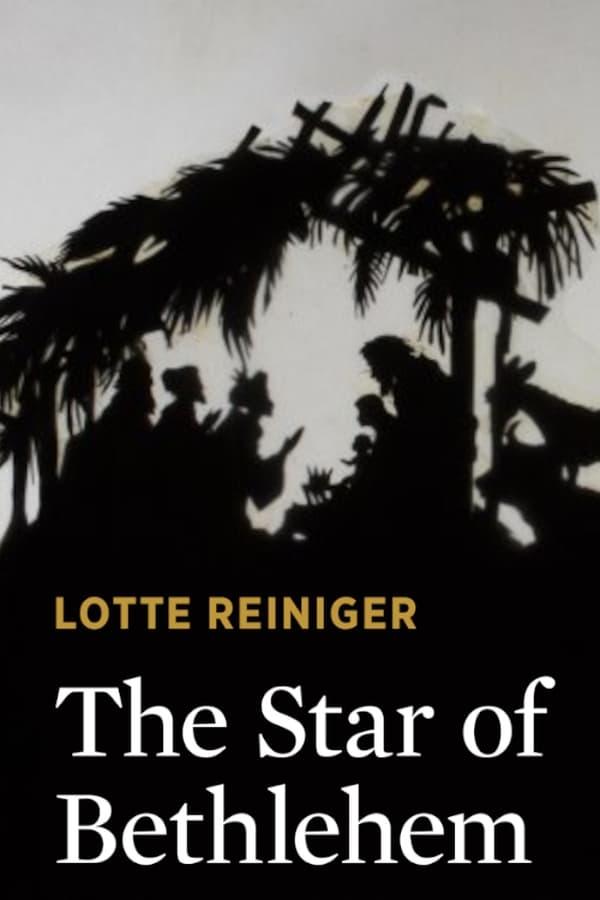
A definitive 6/10 rating for a film that redefined the boundaries of cult cinema. The Star of Bethlehem remains a cornerstone of transgressive art.
The first time the screen exhales, you do not see the Star—you hear it: Barbara Ruick’s wordless cadence sliding through the orchestral hum like warm wax slipping down a wine bottle. Only then does the heavenly compass appear, a trembling snowflake of back-lit cardboard, and every subsequent silhouette feels magnetized to that tremor. Lotte Reiniger, high priestess of scissor-craft, never allows her figures to merely move; they migrate, refugees of negative space, across a sky inked so deeply indigo it feels illegal.
In The Star of Bethlehem—originally a segment of the 1956 anthology ‘The Living Bible’ but now rightfully prized as a standalone miniature—Reiniger compresses the entire gospel arc into 651 seconds. Yet the brevity feels oceanic. Compare it to the lumbering biblical spectacles that Hollywood was churning out at the same epoch: The Kingdom of Love with its elephantine sets, or Fire and Sword with its bombast of MGM choruses. Reiniger counters with lace, scissors, and a candle. The result irradiates more awe than any 70-mm pageant.
Theologically speaking, a silhouette is perfect heresy: presence proved by absence, flesh declared via void. Reiniger exploits that paradox until it sings. When Mary’s profile bends over the manger, the infant is literally missing—just a vacant oval where paper once was—yet the maternal curve contains more ache than a thousand CGI cherubs. You grasp incarnation not because you see a baby, but because you witness the idea of a baby, the lacuna that bends spines and galaxies.
There is, of course, precedent in her canon. The same year she released Mästerkatten i stövlar, a frolicsome Puss-in-Boots that pirouettes on the same hinged joints but to comic ends. Yet Star eschews whimsy for reverence without curdling into piety. The difference lies in rhythm. Where Puss gallops, Star drifts; where the cat tips his feathered hat, the Magi tilt their crowns in slow genuflection, paper limbs trembling like reeds under an unseen breeze.
Never forget: 1955. Europe still coughs up rubble; displaced persons huddle in repurposed barracks; the Hungarian revolution is a year away. Against that backdrop, a German artist chooses the Nativity—not as escapism but as covert manifesto. The silhouettes are undocumented; they possess no passports, only camels and rumors. When Herod’s cardboard sword slashes the sky, you feel the chill of every post-war border. The Holy Family flees not to Egypt but to the viewer’s conscience, a jurisdiction no decree can annex.
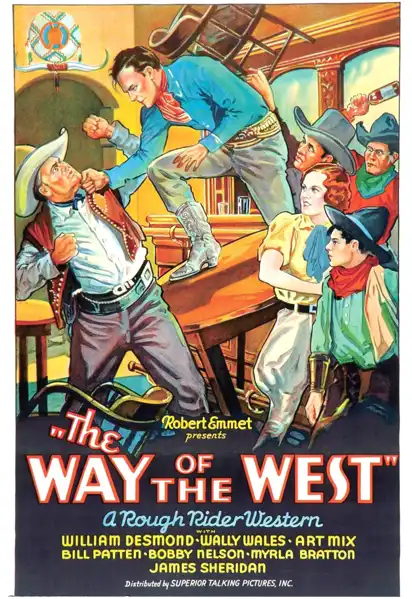
Compare Herod’s moment to the sheriff’s badge in The Law’s Outlaw or the cattle baron’s decree in Kentucky Brothers: both use authority as blunt theater. Reiniger’s tyrant is more terrifying precisely because he is weightless—a paper cut that still manages to draw blood. His silhouette appears for perhaps four seconds, yet the after-image lingers like a scar.
Barbara Ruick—later known to mainstream audiences as the singing voice of Cinderella’s stepsister in Disney’s 1950 classic—provides narration here that is half lullaby, half coronach. She never describes events; she hovers inside them. When the angel announces “Fear not”, Ruick drops the consonant ‘t’ so the phrase becomes a sigh rather than command, as though reassurance itself were out of breath.
The technique anticipates by decades the sprechgesang of modern indie docs, yet predates even the similar choral detachment in The Lonely Woman. Voice and image circle each other like twin stars locked in orbital doubt; neither dares outshine the other.
Reiniger’s animation table was a horizontal aquarium of light. Underneath, her hands danced with the precision of a watchmaker assassin. Each frame of Star required a fresh micro-movement: a camel’s knee bent an extra millimeter, a shepherd’s crook tilted by the width of a filament. The cumulative effect is not fluidity but calligraphic tremor—characters quiver as though written by an anxious quill.
That tremor matters. It baptizes the viewer in temporal fragility. You sense that the entire tableau could crumple if someone coughed in the projection booth. Contrast this with the industrial smoothness of contemporary Disney features, where cels slide across the screen like greased porcelain. Reiniger refuses comfort; she offers parchment precarity instead.
Yes, the figures are black, the background often indigo, yet the film is not monochromatic. Reiniger back-lights her paper with gels whose hues shift scene by scene: umber for the census road, cyan for Herod’s court, bruised violet for the flight. The Star itself is a negative halo—an absence ringed by yellow so saturated it feels biblical, a chromatic trumpet blast.
These chromatic decisions prefigure the symbolic palettes of later auteur experiments—think 99 with its expressionist washes or Back of the Man with its chiaroscuro duels. Yet Reiniger achieves her chromatic rhetoric without pigments; she merely removes light, teaching us that color can be a ghost story told by darkness.
Listen beyond Ruick. Between her phrases the soundtrack drops to a hush so absolute you can almost hear the paper rustling—an illusion, of course, yet the mind supplies the fibrous whisper. That negative space functions like the spandrel in Byzantine domes: ostensibly structural, secretly devotional. The silence cradles the viewer in a hush normally reserved for catacombs or snowfall at 3 a.m.
Contemporary Christmas cinema—overstuffed with bells, choirs, and marketable carols—could learn from this austerity. Even Beauty and the Rogue, for all its swashbuckling charm, drowns in orchestral syrup. Reiniger proves that reverence often begins where orchestration ends.
Cinephiles will catch whispered callbacks to earlier Reiniger shorts: the way the Magi’s sleeves billow reprises the prince’s cloak in Der Graf von Cagliostro, while the Virgin’s posture mirrors the sleepwalking heroine of Die Abenteuer des Prinzen Achmed. These rhymes form a private mythology, a cosmology of cut-paper constellations across decades.
Meanwhile, the grazing sheep echo the pastoral calm of A Desert Wooing, though relocated from Mojave dunes to Judean hills. Such echoes remind us that Reiniger’s universe—though fragmented across disparate projects—operates like a sprawling silken web; tug one thread and the entire loom trembles.
Reiniger, often pigeonholed as a “feminine” craftsman, subverts gendered expectation by rendering Mary not as fecund icon but as absorber of cosmic light. The Virgin’s silhouette is frequently back-lit so that her center literally drops out; she becomes a portal rather than person. In that cavity the viewer projects every unspoken annunciation: refugee mothers, trans teens seeking shelter, night workers praying for dawn.
Contrast this with the frontier matriarchs of The Cowboy and the Lady, whose agency is asserted through dialogue and whip-cracking bravado. Reiniger’s Mary wields silence like a scalpel, carving sanctuary out of vacuum.
Eleven minutes. Yet frame-by-frame analysis reveals compression ratios worthy of DNA helixes. A single camel trek across the horizon carries: historical memory of Silk-Road caravans, post-war trauma of displacement, and esoteric nod to the ship of the desert trope recycled in orientalist pulp like Hidden Dangers.
Density of this caliber converts runtime into elastic phenomenon; the film ends yet continues expanding inside your skull like a poppy seed lodged between molars—minute, persistent, impossible to extract.
Upon release, the short served as preshow filler for parish halls and YMCA Christmas pageants. Critics of the era—busy heralding widescreen Technicolor—dismissed it as quaint. Only in the 1970s did academics re-discover the print, thanks largely to feminist film festivals who championed Reiniger alongside Beyond the Law’s proto-feminist outlaw tropes.
Today, the film proliferates in GIF loops on Advent TikTok, its paper Star re-appropriated as lo-fi yuletide glitch art. The migration from celluloid to 15-second vertical bursts should feel sacrilegious, yet somehow the core incandescence survives—a testimony to the film’s algorithm-proof soul.
Recent 4-K scans threaten to iron out the very tremor that grants the piece its breath. Over-stabilization risks converting poetic wobble into clinical glide. Purists argue for preserving gate-weave, the slight horizontal drift that reminds us human wrists once maneuvered these silhouettes. After all, the Nativity is nothing if not an embrace of imperfect conditions—mangers, stench, straw—rendered luminous through acceptance rather than denial.
To watch The Star of Bethlehem is to be scalpeled open by scissors. You exit the theater—or phone screen—carrying negative space in your pocket, a hole shaped like hope. Feature-length sagas may bludgeon you with sentiment; Reiniger merely hands you a paper lantern, lights it, and lets the draft of history do the rest.
In an age when CGI saturates every cranny of vision, the film whispers a rebellious truth: that revelation often arrives not in plenitude but in perforation. Seek it out. Preferably on 16 mm, projected against a crumbling parish wall, wind rattling the stained-glass. Let the bulb flicker. Let the silhouettes stumble. Let the Star burn its paper wound across the sky of your insured, climate-controlled life. And when the lantern finally snuffs, notice the after-glow—an amber ghost floating inside your eyelid—proof that absence, too, can be incarnate.
IMDb —
1927
Community
Log in to comment.