DbcultAccessing Vault...
Cult Review
Senior Film Conservator
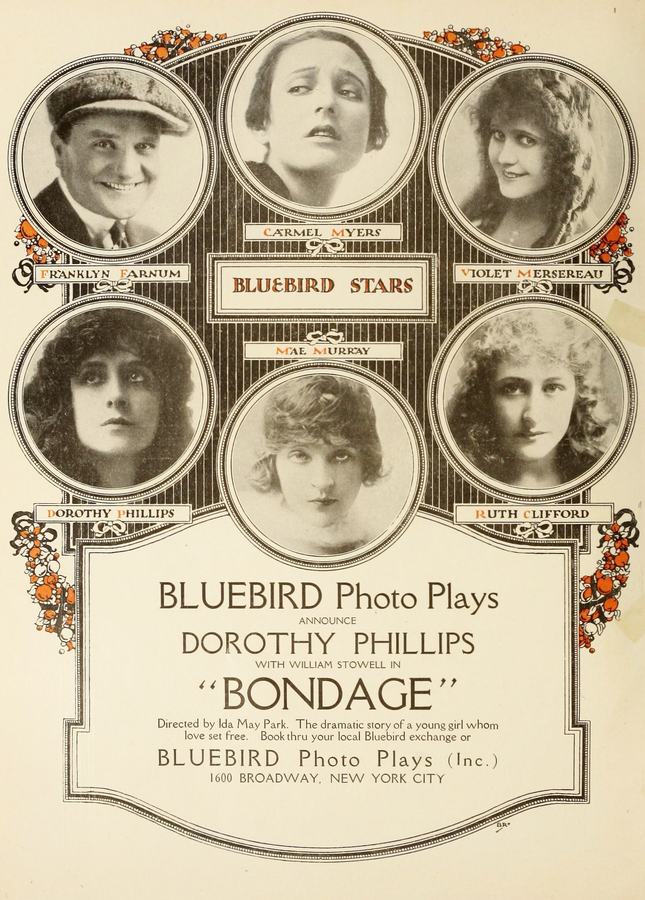
The silent era, often erroneously relegated to the dusty archives of cinematic history, was in fact a fertile ground for profound emotional storytelling and daring social commentary. Within this rich tapestry, the 1917 drama Bondage emerges as a particularly poignant and disquieting artifact. More than a mere plot, it is a visceral journey through the labyrinthine corridors of human ambition, disillusionment, and the invisible yet formidable societal shackles that bind the aspiring spirit, especially that of a woman navigating the treacherous currents of early 20th-century urban life. Directed with an acute sensitivity to psychological nuance and meticulously penned by the insightful duo of Edna Kenton and Ida May Park, this film transcends its century-old vintage to offer a timeless, unsettling commentary on the relentless struggle for self-definition against a backdrop of rigid conventional expectations and deeply personal betrayals.
At the very core of Bondage lies the compelling figure of Elinor Crawford, a character portrayed with a remarkable blend of wide-eyed naiveté and nascent defiance by Jean Porter. Her odyssey from the placid, perhaps stifling, confines of country life to the pulsating, often ruthless, heart of New York City is not merely a geographical transition but a profound spiritual metamorphosis. Elinor arrives armed with lofty literary aspirations, carrying a romanticized vision of urban intellectualism, only to find herself abruptly ensnared in the sensationalist, often morally ambiguous, world of a scandal sheet. This initial plunge into journalistic sensationalism, far removed from the eloquent prose she undoubtedly envisioned, immediately establishes the film's central conflict: the jarring collision of idealistic aspiration with pragmatic, often demeaning, reality. This persistent struggle for artistic integrity in the face of commercial demands is a theme that resonates throughout cinematic history, from the earnest young artists grappling with their craft in Just Out of College to the more cynical portrayals of compromised talent in later Hollywood narratives. It speaks to the universal dilemma of how one maintains their creative soul when external pressures demand compromise.
Elinor’s initial, fraught encounter with Evan Kilvert, played by Eugene Owen, a lawyer hailing from her shared hometown, serves as a crucial point of ideological friction. Kilvert embodies the conservative, conventional world she has ostensibly left behind, a world of predictable morality and rigid social structures. His palpable shock at her 'Bohemian mode of existence' is not merely an expression of personal disapproval but a potent societal judgment, a reflection of the era’s deeply entrenched expectations for women, particularly those audacious enough to venture into independent careers in the sprawling, morally ambiguous metropolis. Elinor’s scorn for him is entirely understandable; she perceives him as a living embodiment of the very constraints she ardently seeks to escape – the binding expectations of small-town propriety and a life predetermined by societal norms. This dynamic establishes a fascinating exploration of societal perception versus individual choice, a perennial tug-of-war that silent films, with their inherent reliance on visual storytelling, heightened emotional expressions, and the nuanced language of performance, were uniquely equipped to convey. The silent medium, through the subtle shifts in body language and the intensity of a gaze, could articulate the unspoken judgments and internal rebellions that define such encounters with a powerful, wordless eloquence.
Her subsequent, ill-fated entanglement with Bertie Vawtry, the editor of a 'racey weekly' – a euphemism hinting at a publication pushing the boundaries of moral propriety and public taste – marks the true genesis of Elinor’s profound disillusionment. Vawtry, portrayed by Nigel De Brulier, perfectly embodies the superficial charm and insidious opportunism that often lurked beneath the glittering surface of the urban landscape. He professes love with convincing fervor, promising an intellectual and emotional partnership that aligns far more closely with Elinor’s initial, idealized dreams. Yet, his abrupt, calculated marriage to a wealthy widow shatters this fragile illusion, brutally exposing the transactional nature of his affections and, by extension, the often-cruel realities of social climbing and financial pragmatism in the unforgiving metropolis. This act of betrayal is a pivotal moment, stripping Elinor of her remaining romantic ideals and leaving her profoundly adrift, both conceptually and literally. The film subtly, yet trenchantly, critiques the illusion of freedom and boundless opportunity that New York often presented, especially to young women seeking more than the traditional confines of domesticity. Vawtry's character is a masterclass in the silent villain, his actions speaking volumes where words were absent, his manipulative charm echoing the treacherous figures found in dramas like The Love Thief.
The devastating aftermath of Vawtry’s betrayal sees Elinor disappear into the city’s vast anonymity, her precise fate unknown, leading to the swift and damning societal assumption that she has, indeed, run off with him. This immediate societal misjudgment – a classic trope of the 'fallen woman' – powerfully highlights the precarious and vulnerable position of independent women in that unforgiving era. Without a visible male protector or a clear, respectable narrative, her disappearance is automatically interpreted through the lens of scandal and moral failing. It is here that the film’s evocative title, Bondage, resonates with particular force. Elinor is not physically bound, but she is constrained by the invisible chains of societal assumptions, by the severely limited choices available to her, and by the deep emotional scars inflicted by her experiences. The insidious bonds of reputation and expectation prove far more potent and suffocating than any literal restraint, demonstrating how a woman's perceived morality could dictate her entire existence.
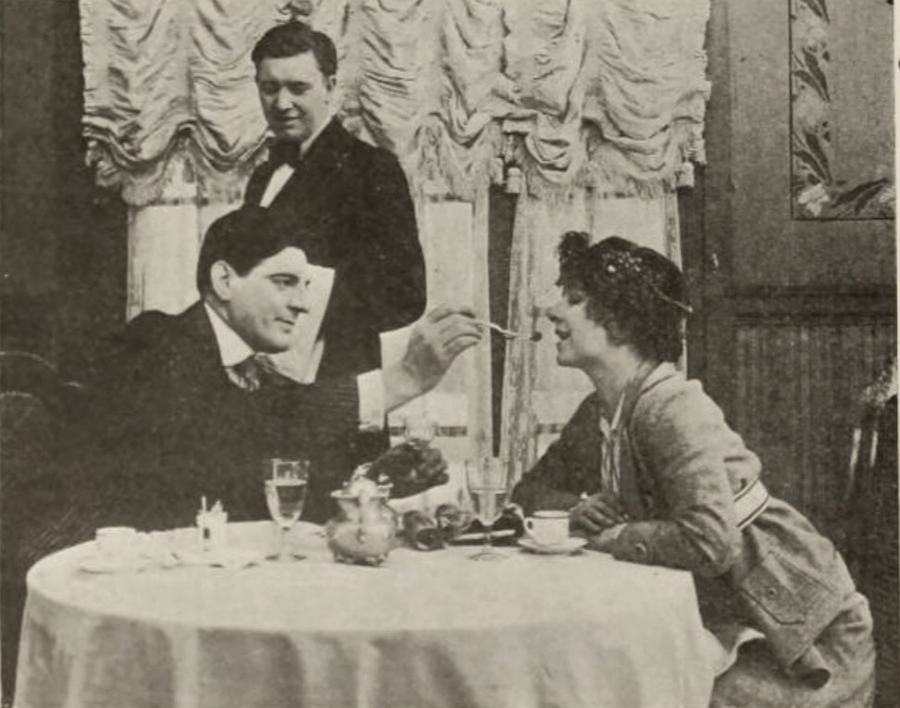
It is Evan Kilvert, the very man Elinor once scorned, who ultimately discovers her 'poverty-stricken in the slums.' This act of rescue is fraught with complex and perhaps contradictory motivations. Is it born of genuine concern, a desire for personal redemption, or a reaffirmation of his deeply ingrained conventional values? Their subsequent marriage, while offering a semblance of stability and a lifeline from destitution, is nevertheless tinged with the lingering residue of their past and the unspoken compromises made. For Elinor, it is likely a pragmatic choice, perhaps a weary acknowledgment that her bohemian dreams have led only to hardship, and that a return to conventionality, even if unfulfilling, offers a pathway to survival. However, the stark, honest admission that 'married life palls upon her' is a particularly daring narrative choice for its time. It boldly challenges the romanticized, often saccharine, view of marriage as the ultimate salvation for a woman, suggesting instead that even within the confines of a seemingly respectable union, a woman’s spirit can remain unfulfilled, restless, and yearning for something more. This candid sentiment was rarely explored with such raw honesty in contemporary dramas like The Marriage of Kitty, which often favored more conventionally 'happy' endings.
The cyclical nature of Elinor’s struggles and her inability to fully escape her past is underscored by her seemingly innocuous visit to an old haunt, where she coincidentally encounters Vawtry again, now a widower. This reunion is a moment of profound temptation and moral reckoning. Despite the deep heartbreak and betrayal she suffered at his hands, the insidious allure of a familiar, albeit treacherous, connection might have been incredibly strong. Yet, Elinor, demonstrating remarkable growth and newfound resolve, spurns him decisively. This powerful act of rejection is not merely a personal victory but a defiant statement against the manipulative forces that once held sway over her. She has learned from her painful past, recognizing the inherent hollowness and opportunistic nature of Vawtry’s promises. This moment marks a significant turning point in her journey towards self-respect and autonomy, showcasing a resilience forged in the fires of adversity.
However, the shadow of suspicion, a recurring motif throughout the film, looms large once more. Kilvert, witnessing or learning of this encounter, 'suspects the worst,' driven by the very same conventional judgments and societal anxieties that initially defined their fraught relationship. This immediate leap to suspicion, despite Elinor’s proven fidelity and her clear rejection of Vawtry, is a tragic commentary on the fragility of trust and the enduring, corrosive power of societal prejudice. It forces Elinor to leave him, once again cast out, not for her actions but for the mere perception of them. This second exile is perhaps more painful and deeply wounding than the first, as it stems from a profound betrayal of trust within what should have been a safe haven, a union meant to offer solace. It echoes the themes of unjust accusation and the devastating impact of rumor found in films such as The Stronger Love, where reputation often tragically outweighed truth and justice.
The film’s dramatic climax sees Kilvert, finally and belatedly learning of his wife’s unwavering fidelity, discovering her 'in the street depressed and dazed,' a poignant image of a spirit broken by relentless hardship and societal judgment. His subsequent act of bringing her home and administering a violent beating to her 'would-be seducer' (presumably Vawtry) is a deeply ambiguous and morally complex resolution. On one hand, it represents a vindication of Elinor’s honor and a belated, albeit forceful, recognition of her innocence. It provides a sense of justice, however rough, for the wrongs she endured. On the other hand, Kilvert’s violent intervention, while perhaps intended as a heroic act of protection and a reassertion of his marital rights, simultaneously reasserts a patriarchal dominance that is uneasy to reconcile with Elinor’s arduous journey towards independence. It subtly underscores the limitations of her agency; even in her moment of vindication, she is ultimately rescued and defended by a man, rather than fully asserting her own power or achieving self-sufficiency. This ending, while providing a conventional sense of closure and moral order for the era, leaves a lingering, uncomfortable question: has Elinor truly broken free from 'bondage,' or has she merely exchanged one form of constraint for another, albeit one now cloaked in the veneer of marital security and male protection? The film dares to suggest that true freedom might be more elusive than a happy ending implies.
The performances in Bondage are a powerful testament to the evocative and often understated power of silent acting. Jean Porter, as Elinor, navigates a complex emotional landscape with remarkable subtlety and depth. Her expressions of nascent hope, crushing disillusionment, and quiet, defiant resilience are conveyed through a masterful command of gesture, posture, and facial nuance, allowing the audience to intuit her intricate inner turmoil without a single spoken word. Eugene Owen, as Kilvert, successfully portrays the evolving consciousness of a man grappling with his own ingrained prejudices and a genuine, if initially misguided, affection. His initial rigidity slowly gives way to a more empathetic understanding, making his eventual vindication of Elinor all the more impactful and resonant. Nigel De Brulier’s Vawtry is a perfectly calibrated villain, his smooth, unctuous charm masking a truly callous and opportunistic heart, a performance that relies heavily on nuanced body language and subtle shifts in demeanor to communicate his insidious duplicity. His portrayal is a chilling reminder of how easily appearances can deceive.
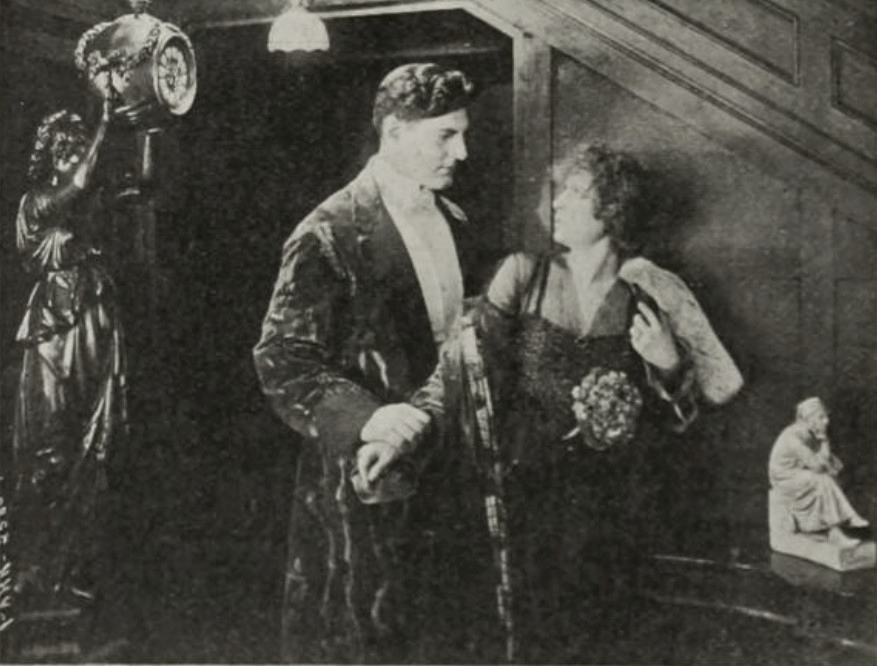
The contributions of Dorothy Phillips, Lon Chaney, William Stowell, Gertrude Astor, Gretchen Lederer, and J.B. MacLaughlin in supporting roles undoubtedly added vital layers of authenticity and rich societal texture to the narrative. While specific details of their individual characters are not extensively provided in the plot summary, their presence in the cast list suggests a robust and capable ensemble, typical of the silent era's reliance on a strong supporting cast to fully flesh out the world of the story. Lon Chaney, in particular, already known even by 1917 for his transformative characterizations and intense screen presence in films like The Lash of Destiny, would undoubtedly bring a unique intensity and memorable quality to any role, however minor, lending an additional gravitas and dramatic weight to the film's most pivotal moments. The ensemble work would have been crucial in grounding Elinor's personal drama within a believable, bustling social environment.
Edna Kenton and Ida May Park’s screenplay is remarkably prescient and sophisticated for its time, tackling complex themes of female agency, urban disillusionment, and the pervasive societal double standards with a nuanced and unflinching hand. They deftly avoid simplistic moralizing, instead presenting a protagonist whose choices are often flawed, driven by circumstance, but always deeply human and understandable. The direction, while naturally adhering to the cinematic conventions and technological limitations of 1917, likely employed innovative techniques to convey emotional depth and narrative progression without the benefit of dialogue. The judicious use of intertitles would have been absolutely crucial, not merely for advancing the plot but for revealing inner thoughts, societal judgments, and the unspoken emotional currents, thereby guiding the audience through Elinor’s tumultuous and often bewildering journey. The visual language of the film – its meticulously designed sets, period-appropriate costumes, and evocative cinematography – would have been carefully crafted to reflect the stark contrast between Elinor's soaring aspirations and her grim realities, and to powerfully evoke the bustling, yet often isolating, atmosphere of early 20th-century New York City, a character in itself.
Bondage, as a title, is deeply symbolic and meticulously chosen, encapsulating not just the literal constraints Elinor faces in her impoverished state, but the far more insidious metaphorical ones of societal expectation, rigid gender roles, and the painful compromises one is forced to make in the relentless pursuit of dreams. It is a film that boldly challenges its audience to look beyond the superficial veneer of romantic narratives, to question the idealized stories of success and love, and to confront the often-harsh, unvarnished realities that lie beneath. The profound emotional journey of Elinor Crawford, from starry-eyed idealist to jaded survivor, is a powerful testament to the indomitable resilience of the human spirit, even when battered by relentless circumstance, profound betrayal, and the crushing weight of societal judgment.
In an era when cinema was still very much in its nascent stages, experimenting with its own voice and narrative capabilities, Bondage offered a surprisingly complex, mature, and unflinching narrative. It stands as a vital piece of cinematic history, not merely as a quaint relic of the past but as a potent mirror reflecting enduring human struggles that continue to resonate today. For those interested in the fascinating evolution of cinematic storytelling, the nuanced portrayal of women in early cinema, or simply a compelling and deeply human drama, Bondage remains a film eminently worthy of rediscovery and critical re-evaluation. Its profound exploration of ambition thwarted, love betrayed, and redemption desperately sought, continues to resonate with powerful contemporary echoes, reminding us that the binds of society, both visible and invisible, have always shaped, and continue to shape, our individual and collective paths.
The film’s ultimate message is not one of simple triumph or unambiguous liberation, but rather of enduring struggle and the fragile, often elusive, nature of true freedom. Elinor’s path is a circuitous one, marked by relentless setbacks, painful compromises, and moments of quiet despair – a far more realistic and gritty portrayal than many of its more saccharine contemporaries. It implicitly asks its audience a profound question: what does it truly mean to be free, when social norms, economic realities, and deeply ingrained personal histories continue to exert their formidable influence? The resolution, while offering a form of marital peace and stability, doesn't entirely erase the deep scars or fully answer the complex questions raised by Elinor's tumultuous journey. Instead, it suggests that true liberation is not a final destination, but an ongoing, often arduous, process – a remarkably profound insight for a film hailing from 1917. The enduring power and lasting significance of Bondage lie precisely in its courageous refusal to offer easy answers, instead inviting viewers to ponder the intricate, often contradictory, nature of human desires and the inexorable demands of society.
IMDb 5.8
1917
Community
Log in to comment.