DbcultAccessing Vault...
Cult Review
Senior Film Conservator
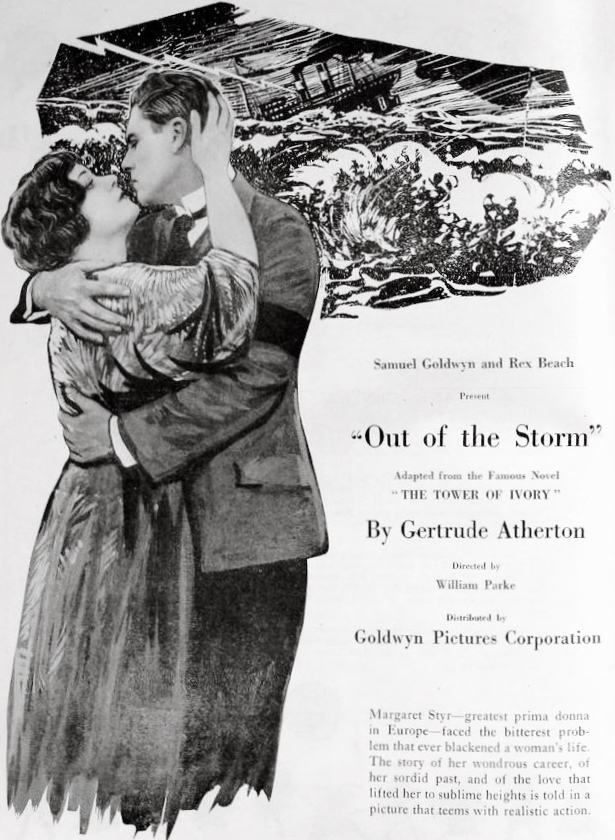
There is a moment, roughly two-thirds through Out of the Storm, when the camera forgets to blink: Margaret—now lauded as Margherita di Lago—stands in a pool of limelight, mouth agape, while the orchestra freezes on a suspended dominant. The iris contracts to a trembling halo, and for eight flickering seconds the film becomes pure tableau vivant, as if someone had pressed a shellac record of Puccini against nitrate and asked both to burn together. That single arrested chord encapsulates the picture’s morbid majesty—its willingness to let melodrama swell until it hemorrhages into myth.
Director William C. Dowlan, never a household name even in the era when households first acquired names, here wields chiaroscuro like a gambler who has already pawned the daylight. Interiors are cavernous; exteriors—shot around rickety San Pedro wharves—reek of kelp and creosote. The result is a universe perpetually water-logged, where even ball-gowns seem to drip. You can almost smell the mildewed tulle, a sensory intrusion rare in 1920 silent cinema.
Al Levering—played by Lawson Butt with the bulk of a Caravaggio bruiser and the eyes of a man who has memorized every IOU in existence—doesn’t merely discover Margaret. He acquires her, the way one might acquire a rare Stradivarius that happens to be covered in dockside grime. Their first transaction occurs in a cellar where gin-soaked patrons use broken chair-legs as rhythm section. Levering peels bills from a roll fat enough to choke a foghorn, purchases the entire joint for the night, and commands the trembling girl to sing like the rent is due tomorrow. She obeys; her vibrato wobbles between octaves, yet somewhere inside that tremor Levering hears the overture to his own social legitimacy.
What follows is a crash-course Pygmalion conducted in conservatories where dust-motes pirouette in shafts of borrowed sunlight. Cuts are abrupt, almost Soviet: a scale exercise dissolves into a ticket-stub stamped MILAN; a breath-control drill smash-cuts to a couture salon where seamstresses bristle at the patron’s insistence on more ostrich plumes, less modesty. The montage is so caffeinated it feels like the celluloid itself has been dipped in espresso, yet it never loses the acrid aftertaste of debt. Every trill Margaret perfects is a coin chiseled from Levering’s future indictment.
When the fraudster is finally manacled, the film indulges in an iris-shot of Dickensian sentiment: Margaret visits the granite maw of the penitentiary, presses her gloved hand against the visitor-booth glass, and whispers a vow that the intertitles render in curlicued font: I will be yours when the stone walls forget your name. It is a promise both heroic and hideous, a self-inflicted sposa nella morte minus the death part—at least for now.
Enter John Ordham, essayed by Ashton Dearholt with the languid grace of a man who has never needed to cash a check. Their meet-cute transpires on the storm-lashed deck of a steamer bound for Buenos Aires. He mistakes her practicing scales for the ship’s siren; she mistakes his flirtation for ballast against Levering’s shadow. The chemistry is immediate, but Dowlan refuses to let the romance ossify into starry cliché. Instead he frames them against a backdrop of coiling rope and winch-cranked moonlight, suggesting love itself is another form of maritime labor—hauling, knotting, hauling again.
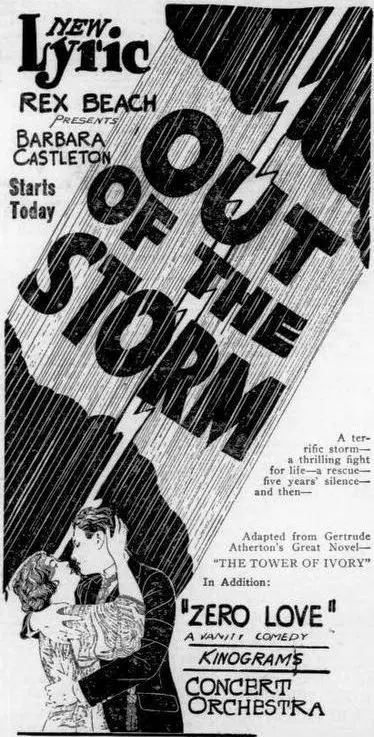
Then comes the rupture: a torpedo—never fully explained, perhaps a leftover from U-boat paranoia—splits the hull. Dowlan intercuts archival footage of listing lifeboats with close-ups of Margaret’s sheet-music dissolving in brine. The lovers are separated not by death but by bureaucracy: Ordham is listed missing; Margaret, rescued by a Portuguese freighter, spends five years believing herself widowed by the sea. Time itself becomes a villain, gnawing like bilge-rats at the hull of every certainty.
The five-year ellipsis is conveyed via a bravura sequence: a single rose on a stage window wilts, petals falling in hyper-lapse while posters outside the opera house swap Margaret’s name from footnote to headline. The camera tilts up to a snow-globe London where electric billboards announce Margherita di Lago returns in La Gioconda. It is the silent era’s answer to the modern time-lapse skyline, yet drenched in fin-de-siècle melancholy.
Ordham resurfaces in the stalls on opening night, moustache flecked with premature silver, eyes carrying the eroded humility of a man who has haunted his own obituary. Their reunion is staged as a tableau within a tableau: the curtain rises on the opera’s final act, but Dowlan withholds the sung duet; instead he cross-cuts to the couple’s eyes locking across footlights, the aria becoming a silent telepathy. It is one of those crystalline instances where silence out-sings any score.
Complication arrives wearing a bespoke tuxedo two sizes too tight: Levering has bribed, blackmailed, and clawed his way out of prison. His re-entrance into Margaret’s life is shot from a low angle that balloons his silhouette into something mythic, a Minotaur stalking the wings. He demands she honor her vow, not out of love but as restitution for the years he invested in her larynx. The moral algebra is merciless: one woman’s gratitude must balance another man’s ruined prime.
In the climactic standoff, Levering drags Margaret toward a getaway steamer moored on the Thames. Fog swirls like gin in a bathtub; the gaslights flicker like gossip. Just as she prepares to surrender her future, Scotland Yard detectives emerge from the murk, revolvers raised. The gunfire is not the cathartic release of a western but a grim necessity, a bureaucratic full-stop. Levering slumps, blood mingling with river-sludge, and in his dying iris we glimpse the ledger of his life: assets—one diva; liabilities—everything else.
Critics who dismiss this dénouement as deus ex machina miss the film’s bleak wager: society will only sanction love if it first eradicates the creditor. The bullet is not divine grace but forensic accounting. Dowlan underscores the point by cutting from the corpse to a close-up of Ordham’s signet ring, its crest now unshadowed. The aristocracy survives, sanitized by gunsmoke.
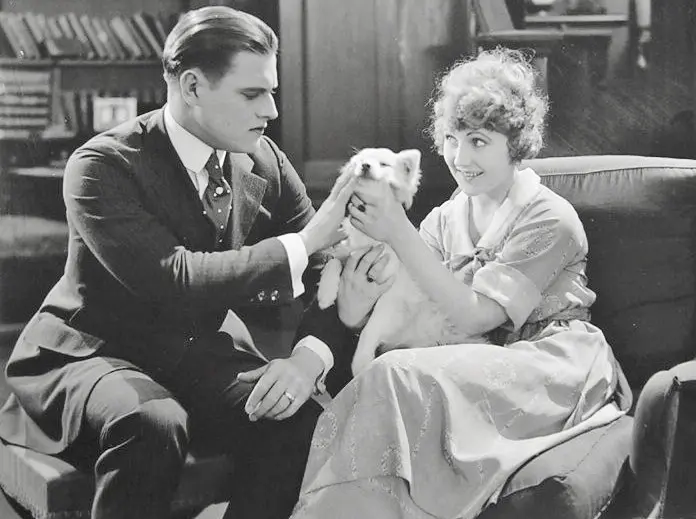
Clarissa Selwynne’s Margaret is a masterclass in silent soprano: every breath visible in the lift of clavicles, every trill suggested by the quiver of gloved fingers. She never once over-mimes; instead she lets the costume do half the acting—opera cloaks that swallow her like storm clouds, tea-gowns that seem to whisper installment plan. Watch her hands during the prison visit: they flutter around the glass barrier like moths that have forgotten the existence of flame.
Ashton Dearholt’s Ordham could have lapsed into drawing-room caricature, but he underplays, allowing microscopic tics—a tightening of starched collar, a blink held half a second too long—to telegraph the terror of losing caste. Compare his restraint to the volcanic glare Lawson Butt brings to Levering; the film becomes a study in two modes of masculine possession: the aristocrat who internalizes shame and the parvenu who externalizes it.
Cinematographer Edward Paul shoots London as if it were already a memory: streetlamps bleed into cobblestones, hansom cabs dissolve into charcoal smears. The palette anticipates the chiaroscuro of later crime pictures, yet retains the amber warmth of gaslight. Note the repeated motif of mirrors: Margaret rehearses before a cracked glass that fractures her reflection into a triptych of doubt; Levering, pre-escape, polishes a tin cup until it becomes a fun-house mirror warping his face into gargoyle.
The intertitles, penned by novelist Gertrude Atherton, eschew the usual ”Meanwhile” banalities for lapidary aphorisms: ”Gratitude, when chained, becomes a dirge only the debtor can hear.” Each card is framed within art-nouveau borders of thorned roses, suggesting every benediction carries burrs. The typography itself swells or shrinks depending on emotional voltage—an early form of responsive design.
Though silent, the film demands an internal soundtrack. Try humming Bellini’s Casta Diva during Margaret’s first triumphant aria—the image syncs uncannily, as if Dowlan had timed the edits to the aria’s cadential suspension. Conversely, Levering’s final march to the docks syncs to the second movement of Berlioz’s Symphonie Fantastique—the ”March to the Scaffold”—a macabre in-joke for musically literate viewers.
Place Out of the Storm beside The Christian and you notice both films weaponize vertical space: staircases become moral axes, balconies the precipice of ruin. Yet where The Christian moralizes, Storm monetizes—every emotion carries compound interest. Beside Through the Wall, another tale of lovers separated by penal systems, Dowlan’s picture feels bleaker; the wall here is not stone but obligation.
For decades the sole surviving print languished in a Moscow archive, misfiled under ”Angiiskaya Melodrama—Unknown”, its tinting so faded that the Thames resembled strawberry milk. A 2018 restoration by EYE Filmmuseum returned the blues to police uniforms and the sulfuric yellow to Levering’s waistcoat. Today it streams on niche services, usually wedged between slapstick one-reelers, waiting for some insomniac to click and be undone.
Watch it at 2 a.m. when your own debts—student, moral, romantic—feel like escaped convicts rattling the door. You will emerge humming a tune you cannot name, unsure whether you have witnessed a love story or an audit. That uncertainty is the film’s triumph: it refuses to decide whether the storm ever truly ends, or merely moves offshore to gather new interest.
IMDb —
1926
Community
Log in to comment.