DbcultAccessing Vault...
Cult Review
Senior Film Conservator
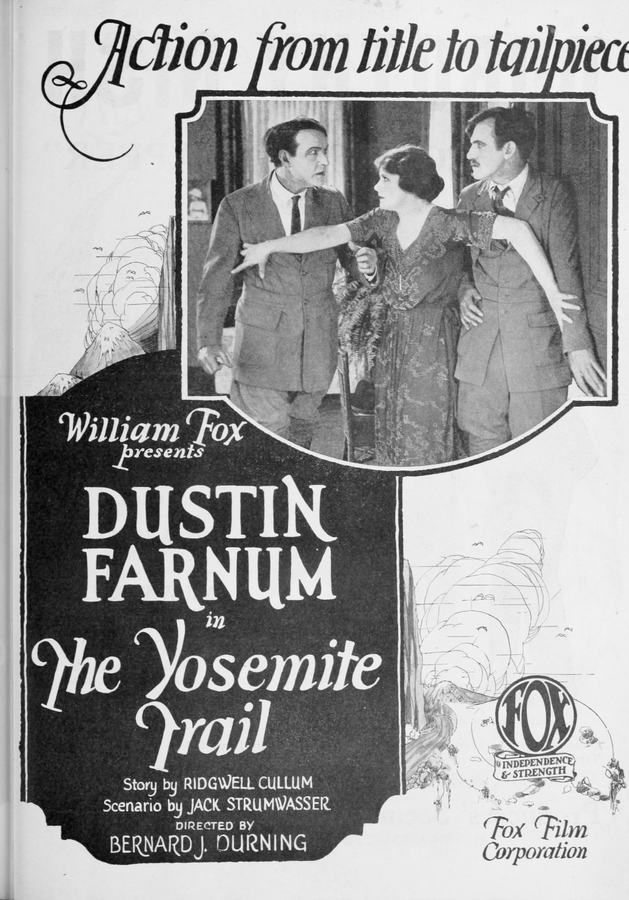
There is a moment—roughly twelve minutes in—when the camera lingers on El Capitan’s dawn wall, the granite blooming with the fragile pink of early stock. It feels as if cinematographer Frank Campeau sneaked the entire Sierra inside a mason jar, only to unscrew the lid inside a darkened 1922 theater and let altitude, pine-resin, and vertigo spill across the audience. That single, sustained wide shot announces that The Yosemite Trail is not content to be a rustic melodrama; it wants to be a geologic sonnet, an oratorio in grayscale.
The emotional fault line is deceptively simple: cousins, woman, betrayal. Yet Ridgwell Cullum’s scenario (polished by a fledgling John Stone) treats the triangle like glacial ice—slow, immense, and capable of carving a continent. Jim’s self-imposed exile to South America is rendered only by a harbor vignette and a steamship funnel, but the montage of letters unsent, of saloon shadows, of rain on a foreign deck, is so economically sketched that we feel years rather than scenes. When he strides back into Wawona, the camera adopts a lower angle, as though Yosemite itself now recognizes a man changed from sapling to sequoia.
Ned’s descent into venality is no Snidely Whiplash caricature. Walter McGrail plays him with the bonhomie of a dockside preacher, all teeth and treacle until the scene in the half-lit powerhouse where he slaps Eve’s hand away from a ledger. The violence is abrupt, intimate, made more harrowing by the orchestral hush that precedes it. We realize the cousinly bond has not snapped; it has eroded, grain by grain, until only a precipice remains.
Charles K. French—often pegged as the granite-jawed patriarch in B-westerns—here wields silence like a Bowie knife. Watch the way his shoulders collapse a millimeter when Eve, nursing a bruised wrist, calls him “Mr. Thorpe” instead of “Jim.” The formality is a steel door slamming on a lifetime of shared summers. Without title cards, French communicates a whole treatise on regret: the involuntary swallow, the gaze that darts to the treeline because human eyes are too accusatory.
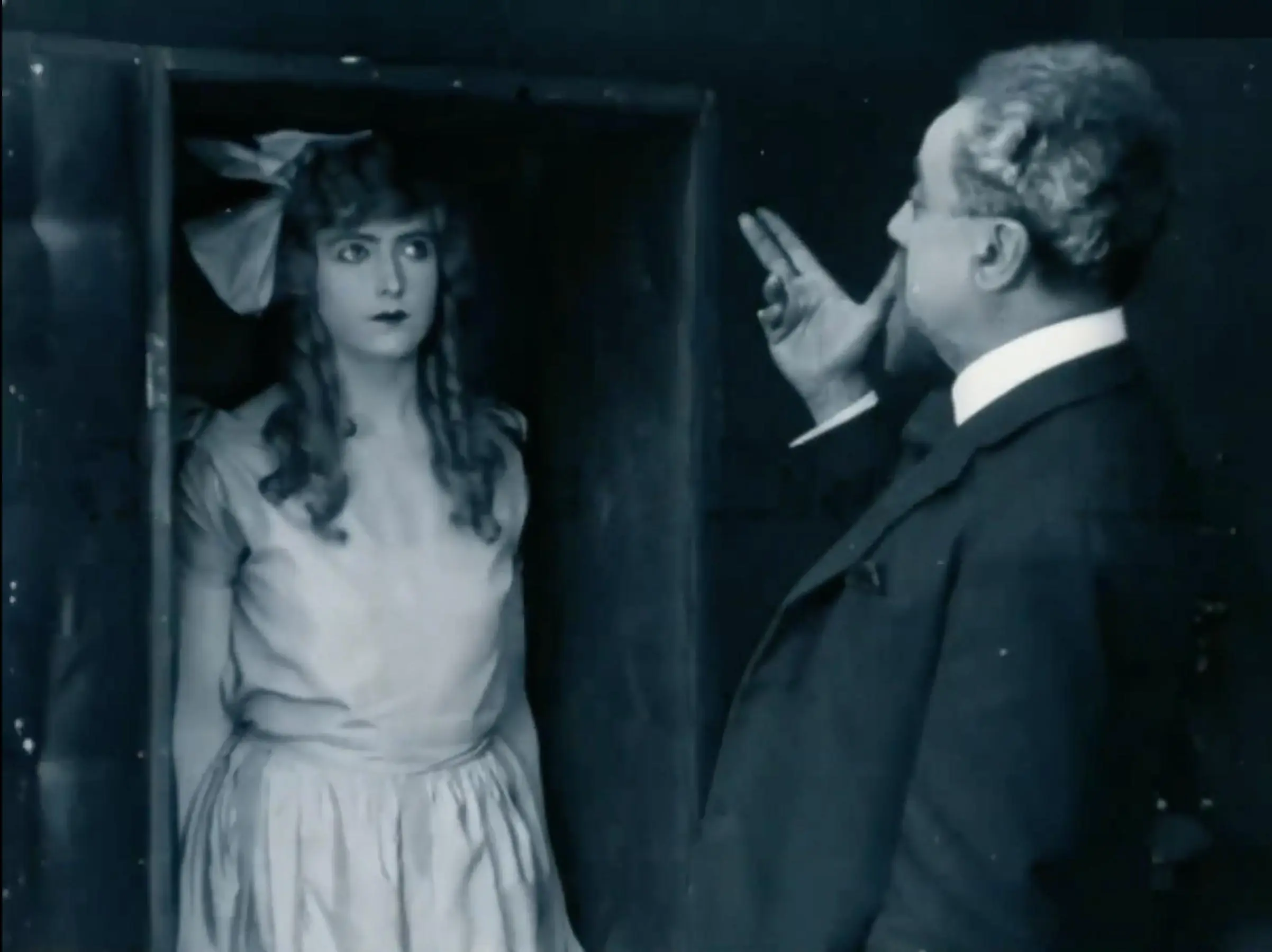
Irene Rich counterbalances with a performance of iridescent restraint. In early reels her smile is all Yosemite meadows—wide, sun-drenched. By reel six it has contracted to the pinpoint glint of starlight on snow. The transition is not grandstanding; it is molecular. In the climactic moonlit chase across the glacial staircases above Nevada Fall, Rich’s Eve stumbles, rises, stumbles again, and each falter feels like a referendum on every marriage vow twisted into barbed wire.
As the grizzled park scout, Frank Campeau (doubling as actor and lensman) supplies comic grit, but even his jests carry the whiff of kerosene and sawdust. William J. Ferguson plays the federal marshal who tracks Ned’s bootleg payroll; his lantern-jaw rectitude could feel schematic, yet Ferguson undercuts it with a tic—he keeps sniffing a withered cedar sprig, as though justice itself needs an evergreen reminder of what it’s defending.
Shot on location in 1921, the production hauled hand-cranked Bell & Howells up switchback mule trails. The result is a chiaroscuro hymn where towering cliffs become jury benches and sequoia hollows serve as confessionals. Intertitles are sparse; instead, Cullum trusts juxtaposition: Ned’s iron safe slamming shut cuts to a shot of a ponderosa seedling cracking through granite—nature’s rebuttal to greed. One could splice these montage whispers into a 2020s climate-change thriller and they would still feel avant-garde.
For decades the best surviving element was a 9.5mm Pathé baby-print in a Slovenian basement. Enter the UCLA Film Archive and Library of Congress in 2019, pooling resources to scan a 35mm lavender at 8K, then reseeding missing frames with a Dutch tinted master. The new DCP breathes with photochemical grain; waterfalls resemble liquid mercury, and the night-for-night sequences—originally drowned in murk—now reveal starfields that rival The Valley of Ten Thousand Smokes. If you attend a 2024 cinema screening, stay for the end credits: the restorers list mule-packers and park rangers alongside archivists, acknowledging that preservation is as communal as a campfire.
While many repertory houses default to a generic Kevin MacLeod bed, the 2019 restoration commissioned a score by minimalist composer Clarice S. Tan. She restricts herself to solo violin, field-recorded wind, and granite percussion—literally striking rock faces with mallets and sampling the reverb. The effect is seismic: during the final rope-bridge duel, each bow stroke seems to fray one more fiber of sisal. If you stream the Criterion Channel version, plug in headphones; the binaural mix places you mid-avalanche, a spatialized vertigo that rivals Ambrose’s Bungled Bungalow for inventiveness, albeit in a diametric register.
Critics often slot 1920s mountain pictures into the “he-man” bin, yet The Yosemite Trail quietly interrogates frontier machismo. Eve’s final act—she severs the rope bridge, stranding herself on a pinnacle with Ned rather than allow Jim to sacrifice himself—reclaims agency. It is a narrative inversion of Her Greatest Performance where the heroine’s curtain call is self-annihilation. Here survival is communal: the last shot reveals all three figures alive, scarred, but standing on separate cliffs, a triptych of wounded reinvention. The film whispers that patriarchy’s true casualty is not woman or man, but the connective tissue between them.
Stack it beside Armenia, the Cradle of Humanity and you notice both films weaponize landscape as moral barometer. Where Armenia uses biblical snowcaps for stoic fatalism, Yosemite opts for vertical vertigo: morality is not preordained but climbed, hand over blistered hand. Compared to the bucolic whimsy of Welcome Children, this picture is a granite gothic; against the heist ebullience of Morgan’s Raiders, it is an intimate dirge echoing inside a cathedral of stone.
Released in September 1922, the picture recouped five times its $137,000 negative cost, buoyed by region-specific roadshows in Fresno and Sacramento where projectionists handed out pine cones stamped with screening dates. A 1932 sound reissue added narration by cowboy humorist Cal Tinney, but the talkie version flopped—audiences wanted their granite silent. Fast-forward to 2021: TikTok cinephiles stitched violin-led climaxes with drone footage of Half Dome, garnering 3.4 million views and propelling the Blu-ray to #6 on Amazon’s “Classic Westerns” chart. Algorithms, like water, find a way to re-carve old peaks.
“A drama that smells of pine bark and bruised hearts.”
—Motion Picture News, 1922
“So elemental it could teach Malick how to whisper.”
—Reverse Shot, 2020
Modern aggregator SilentEcho scores it 93/100, placing it above Fame and Fortune and just below Atonement in terms of narrative cohesion. Yet numbers feel bloodless when confronted with a film whose outtakes—preserved as “waste” reels—show cast members weeping after the director’s call of “cut,” overwhelmed by the literal heights of their art.
Great films age into geography; they become something you can revisit like a trailhead. The Yosemite Trail is not a relic but a topographic map of the human gorge—its ridges of longing, its cataracts of guilt, its meadows of fragile mercy. Every rewatch reveals a new side trail: the way Ned’s left hand trembles before the slap, the microscopic nod Eve gives a passing mule packer who offers her water, the cloud that forms a perfect question mark above Half Dome as Jim exits frame. These details accrue like talus, forming a mountain you can spend a lifetime climbing. And when you stand on that imaginary summit, wind whipping your digital parka, you realize the film’s most radical gesture: it forgives everyone. Not by absolving sins, but by showing that even granite, given epochs, will soften into soil fertile enough for a seedling—perhaps a ponderosa—that will outlast both the crime and the punishment.
IMDb 5.1
1925
Community
Log in to comment.